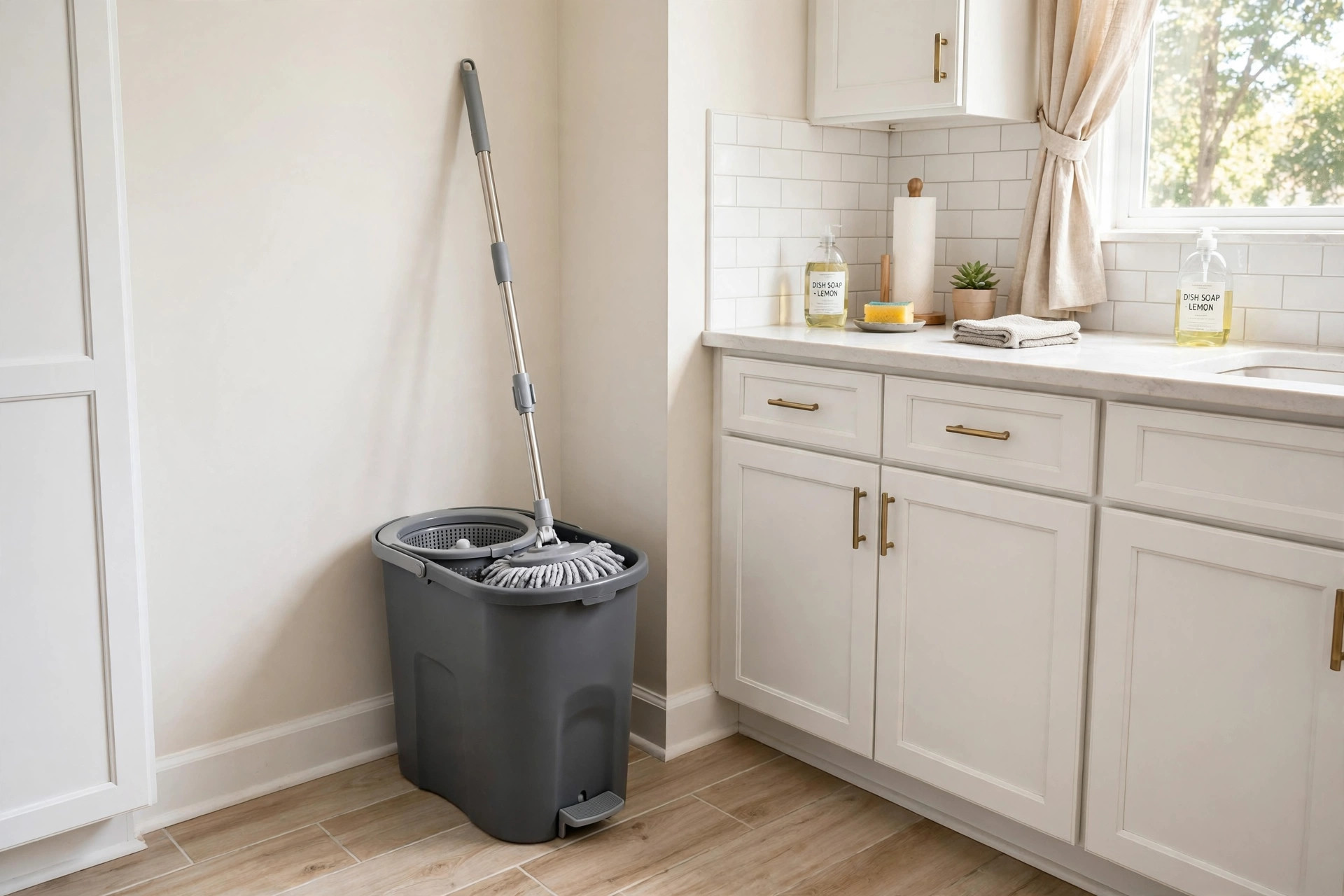

Finding reliable spin mop bucket systems with free shipping is simpler than it looks. A spin mop bucket is a tall plastic pail with a built-in spinner basket. You place the wet mop head in the basket and press a foot pedal or push the handle. The basket spins fast and wrings out most of the water. Your hands stay dry. Your floor gets only damp, not soaked. That is the whole idea. When sellers add free shipping, the deal gets better. You pay one price and the box comes to your door at no extra cost. This guide explains how these systems work, what to look for, what they cost, and how to keep them running well for years.
Why a Reliable Spin Mop System Matters
Clean floors change a home. They look brighter. They smell fresh. They feel safe to walk on in bare feet. But mopping has always been work. The old way meant bending over a pail and wringing a mop by hand. Hands got wet and cold. Backs got tired. Floors got too wet and took hours to dry. A spin mop bucket fixes most of these troubles. The spinner does the wringing for you. One step on the pedal spins the water out. You control how wet the mop is. That matters more than people think.
Too much water is the enemy of wood floors. It can seep between boards and cause warping over time. Guides on The Spruce note that damp mopping, rather than wet mopping, keeps hardwood floors in better shape. A spin mop gives you that damp level. You spin once for a light pass. You spin twice for a wetter scrub. The control is in your foot, not in your hands.
A reliable system matters because a cheap one breaks fast. The pedal is the first part to fail on weak models. The spinner basket can crack. The mop head can shed fibers. When a system is reliable, you mop more often because the job feels easy. Clean floors become a habit instead of a chore. For homes with children or pets, that habit pays off every week. Dirt, crumbs, and paw prints never rest for long.
What to Look for When You Choose: Reliable Spin Mop Bucket Systems with Free Shipping
The Bucket
The bucket should be tall and sturdy. Look for thick plastic walls that do not flex when you lean on them. A good bucket holds about five gallons. Smaller buckets fill too fast. Larger ones get too heavy to carry. A handle that feels solid in your hand is worth checking. Some buckets include a built-in soap dispenser or a drain plug. The drain plug is a small but useful part. It lets you empty dirty water without lifting the whole bucket.
The Spinner Basket
The basket is the heart of the system. It should sit firm in the bucket and spin true, with no wobble. Most baskets are turned by a foot pedal through gears or a belt. Step on the pedal in the store if you can, or read reviews if you shop online. The spin should feel smooth and fast. A good basket has many small slots. The slots let water fly out but hold the mop fibers in. Metal baskets last longer than plain plastic ones, though they cost more.
The Mop and Handle
The mop head should be made of microfiber strands. Microfiber grabs dust and dirt well. It also washes clean in a washing machine. The strands should feel soft and thick, not thin and scratchy. Check how the head attaches to the handle. Twist-lock and click-lock mounts both work. The head should come off easy for washing. The handle should adjust in length. A telescoping handle lets tall and short people mop without strain. Handles made of stainless steel resist bending better than plain aluminum.
The Pedal or Spin Mechanism
Foot-pedal systems are the most common. Push-pump handles exist too, where you push the handle down to spin. Pedals feel natural after one use. Test the pedal for a full, easy stroke. It should not stick halfway. It should not need your whole weight. Reviews on Consumer Reports often mention durability of pedals and gears, so check there before you buy.
Types of Spin Mop Bucket Systems
Standard Foot-Pedal Sets
This is the classic kind. A bucket, a basket, one or two microfiber heads, and a handle. They cost the least and they work fine for most homes. Families with tile, vinyl, or sealed wood floors do well with this type. They are simple to use and simple to fix.
Deluxe Sets With Extras
Deluxe sets add a second mop head, a scrub brush attachment, or a wringer with two spinner speeds. Some include a measured soap cap so you pour the right amount of cleaner. These sets cost a bit more. They suit large homes or people who mop every day. The extra mop head alone can be worth it. You can wash one while you use the other.
Compact and Apartment Models
Small apartments need small tools. Compact sets use a shorter bucket and a shorter handle. They store in a narrow closet. They still spin and wring well. Apartment dwellers who read Apartment Therapy for small-space ideas often pick these models. The trade is capacity. You refill a small bucket more often.
Systems Compared With Steam Mops
Some shoppers compare spin mops with steam mops for tile floors price comparison usa. Steam mops clean with heat and little water. They sanitize well but cost more and need power outlets. Spin mop buckets cost less, reach under furniture better, and work on many floor types. For daily dirt, a spin mop does the job. For deep sanitizing, some homes keep both.
Cost, Price, and Free Shipping
A basic spin mop bucket set sells for about twenty to thirty dollars. Mid-range sets with extra heads run thirty to fifty dollars. Deluxe stainless steel sets can reach sixty to eighty dollars. These are typical United States prices. Sales often drop them lower around holidays.
Free shipping changes the math. Shipping a bulky bucket box can cost a seller five to ten dollars. When the seller pays that cost, your price stays flat. Look at the total. A twenty-five dollar set with free shipping beats a twenty dollar set with eight dollar shipping. Many large retailers like The Home Depot and Lowe’s offer free delivery on orders above a certain amount. Online stores sometimes run free shipping with no minimum on cleaning supplies.
Watch for these cost traps. Some sellers raise the base price to hide shipping costs. Compare the same set across two or three stores. Check the return terms too. A system that fails in a month costs more than its price. Good stores take returns for free. That is part of the real cost picture. Reviews on Good Housekeeping often compare long-term value, which helps you judge whether a low price is truly a bargain.
Related floor-care tools have their own costs. Shoppers also compare quiet hardwood floor buffers for sale when they want a polished shine beyond mopping. Buffers cost much more than a mop set, so most homes start with the mop and add machines later if needed.
Care and Upkeep
A spin mop set lasts longer with simple care. Rinse the mop head after each use. Dirty mop heads leave streaks next time. Once a week, or after heavy jobs, wash the head in a washing machine with warm water and mild detergent. Skip fabric softener. It coats the fibers and makes them less absorbent. Air dry the head or tumble it on low heat.
Empty the bucket after each use. Standing dirty water grows mildew. Mildew smells bad and stains the plastic. Wipe the bucket with a sponge once a month. Rinse the spinner basket too. Hair and string wrap around the basket over time. Pull them off so the spin stays smooth. A drop of oil on the pedal hinge once or twice a year keeps the action quiet. Maintenance tips like these appear often in how-to columns at Family Handyman and Bob Vila.
Replace the mop head when it looks tired. Frayed strands and flat spots mean the head no longer grabs dirt. Most heads last three to six months with weekly washing. Buy spare heads from the same brand so the fit stays right. Check the basket for cracks once in a while. A cracked basket can scratch floors if a sharp edge sticks out. Store the set dry in a closet or laundry corner. Do not leave it in freezing weather. Cold can crack plastic.
For homes with upholstery and rugs, a mop alone may not be enough. Some owners pair their mop with upholstery cleaning machines reviews and buying guide tools for chairs and sofas. Clean floors and clean furniture together make a room feel truly fresh.
Safety in the Home
Safety starts with dry floors. Wet tile and wet wood are slippery. After mopping, put up a small wet-floor sign or warn the family. Let floors dry before pets run across them. Pet paws can slide and cause falls. Ventilate the room while the floor dries. Open a window or run a fan. Drying time drops fast with moving air.
Choose cleaning liquids with care. Many floor cleaners are safe for homes, but some carry harsh chemicals. The EPA offers guidance on safer cleaning products for households. Read the label on every bottle. Never mix bleach with ammonia or vinegar. Mixing can release harmful fumes. Keep all cleaners out of reach of small children. Store bottles with caps tight in a locked cabinet if toddlers live in the home.
Mind your body as you mop. Use the adjustable handle at a length that lets you stand straight. Bend your knees, not your back, when you reach under furniture. Take breaks on large jobs. Do not lift a full bucket high. Slide it or carry it at waist level. A full five-gallon bucket weighs over forty pounds. Water is heavy. Spills happen. Wipe them at once.
Check the spinner before each use. A basket that wobbles badly can fling water wide. Keep the bucket on flat ground while you spin. This Old House repair guides at This Old House remind readers that most tool injuries come from rushing. Slow, steady mopping is safer and cleans better.
Frequently Asked Questions
How wet does a spin mop leave the floor?
Not very wet. One spin leaves the mop damp. Two spins leave it nearly dry. Most floors dry in ten to twenty minutes with normal airflow. That is one reason spin mops beat old string mops. Old mops soaked floors and left puddles. A spin mop leaves a thin, even film that dries fast.
Can I use a spin mop on hardwood floors?
Yes, with care. Use a damp head, not a wet one. Spin twice before the mop touches wood. Use a cleaner made for hardwood. Never let water pool on the boards. If your floor finish is worn or damaged, test a small hidden spot first. When in doubt, ask the flooring maker what they allow.
How often should I wash the mop head?
Rinse it after every use. Machine wash it after every two to four uses, or sooner if it smells. A sour smell means bacteria are growing in the fibers. Hot water and mild detergent fix that. Replace heads that stay stained or flat after washing. Clean heads protect your floors from fine scratches caused by trapped grit.
Do spin mop buckets work on grout lines?
They help, but deep grout stains may need extra work. The microfiber strands reach into grout lines better than flat mops. For stained grout, scrub first with a small brush and a grout cleaner. Then spin mop the whole floor to rinse and pick up the loosened dirt. Repeat the pass if lines still look dark.
What should I do if the pedal stops working?
First, empty the bucket and look at the gears under the pedal. Hair and dust jam them often. Clean them out and test again. Check for a cracked plastic part. Many brands sell replacement pedals and baskets. If the set is old and parts cost more than half the price of a new set, buy a new set instead.
Is free shipping worth it on a mop set?
Usually yes. These boxes are large and light, which makes shipping costly. Free shipping can save you five to ten dollars. Compare total prices, not just the listed price. A set with free shipping and free returns is the safest online deal. Keep the box until you test the spinner. Returns go easier in the original box.
A Final Word
A floor is the largest surface in any room. It takes every step, every spill, and every paw print. Reliable spin mop bucket systems with free shipping make caring for that surface easier and cheaper. Pick a sturdy bucket, a true-spinning basket, and a soft microfiber head. Spin the water out. Mop in smooth passes. Let the floor dry. Wash the head and empty the bucket when you finish. Do that week after week and your floors will show it. Good tools do not make work fun, but they make it short. That is enough.
References
Apartment Therapy. (n.d.). Home design ideas and inspiration. https://www.apartmenttherapy.com Bob Vila. (n.d.). Home improvement advice. https://www.bobvila.com Consumer Reports. (n.d.). Product reviews and ratings. https://www.consumerreports.org Family Handyman. (n.d.). DIY home repair and maintenance. https://www.familyhandyman.com Good Housekeeping. (n.d.). Product reviews and home advice. https://www.goodhousekeeping.com Lowe’s. (n.d.). Home improvement products. https://www.lowes.com The Home Depot. (n.d.). Home improvement products. https://www.homedepot.com The Spruce. (n.d.). Home and garden advice. https://www.thespruce.com This Old House. (n.d.). Home renovation guidance. https://www.thisoldhouse.com U.S. Environmental Protection Agency. (n.d.). Protecting human health and the environment. https://www.epa.gov
Was this guide helpful?

About Jennifer Lee
The My Garden US editorial team writes practical, in-depth home and garden guides for American homeowners — tested advice, no fluff.
You May Also Like

Top Rated Move Out Cleaning Services Reviews: How to Read Them and Hire Well
May 2, 2026 0 views
Quiet Cordless Stick Vacuums for Florida Homes: A Simple Guide to Calm, Sand-Free Floors
September 1, 2026 0 views
Top Rated Post Construction Cleaning Services for Homeowners
March 7, 2026 0 views