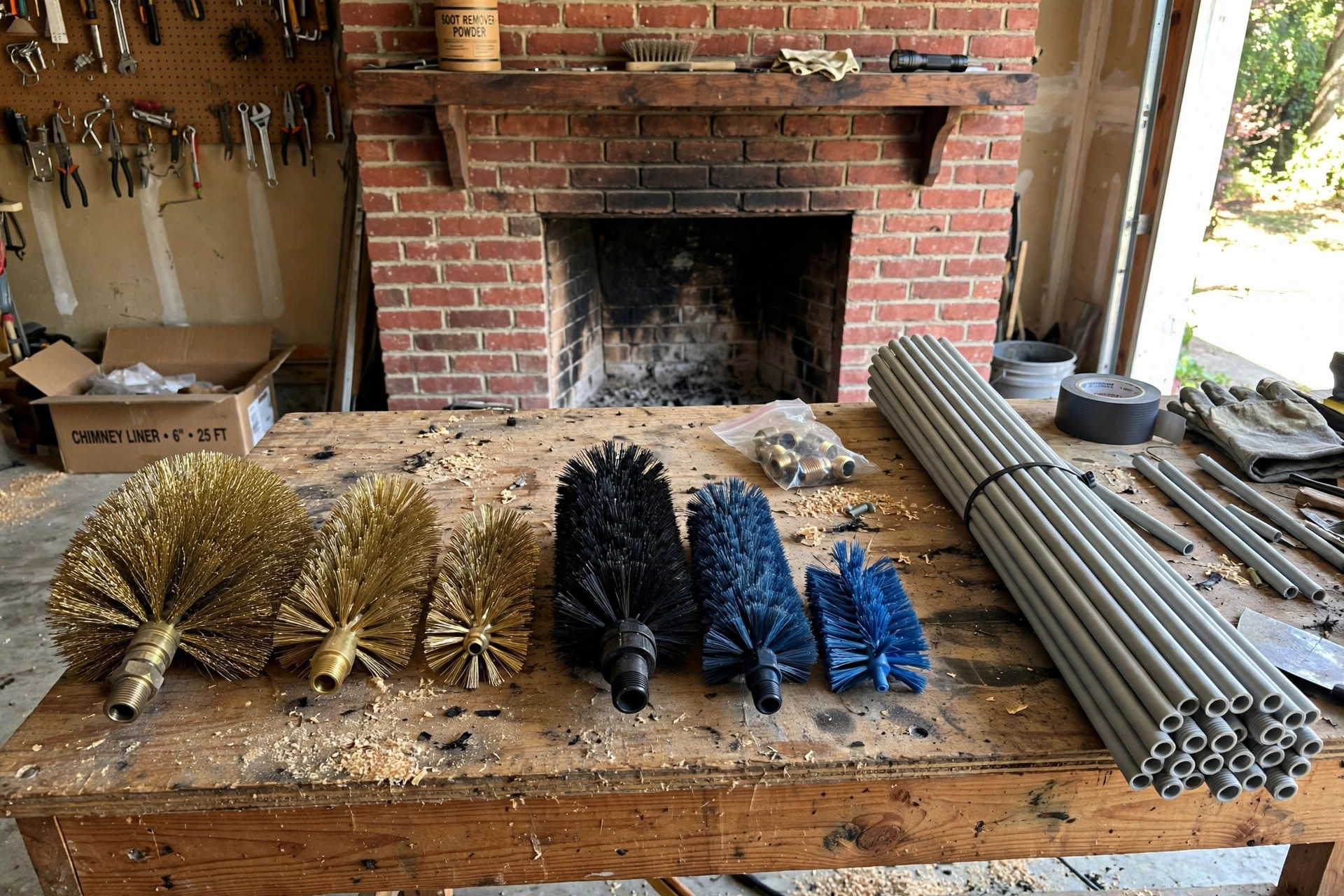

A chimney cleaning brushes price comparison usa buyers can trust starts with a simple fact. Not all brushes cost the same, and not all brushes do the same work. Prices in the United States range from under ten dollars for a single small brush to well over one hundred dollars for a full kit with rods. This guide lays out the real price bands, the types of brushes you will see on store shelves, and how to pick the one that fits your flue. You will also find care tips, safety notes, and answers to common questions. Every section is written in plain words so you can read it once and shop with care.
Why It Matters
A chimney that is not cleaned will build up soot and creosote. Creosote is the dark, flaky or tar-like layer that coats the inside of a flue. It forms when wood burns and the smoke cools on the walls of the chimney. A thick layer of creosote can catch fire. Chimney fires are hot, loud, and risky. They can crack flue liners and spread heat to wood frames around the chimney.
Regular cleaning lowers this risk. A brush made for chimney work scrapes the walls of the flue and loosens the soot. The loosened matter falls down into the firebox or stove, where you can sweep it out. The United States Fire Administration and other fire groups have long urged home owners to clean their chimneys before each heating season, as noted in safety guides for home heating.
Price matters too. A brush that is too cheap may shed bristles or break at the threads. A brush that costs too much may be built for chimney sweeps who clean ten flues a day. Most home owners need something in the middle. A fair price comparison helps you avoid both traps. You want a brush that fits your flue, holds up for years, and does not cost more than it should.
What to Look for When You Buy: Chimney Cleaning Brushes Price Comparison Usa
Match the Brush to the Flue
Measure your flue before you shop. A square or round brush must be close to the size of the flue opening. A brush that is too small will miss the corners. A brush that is too large will be hard to push and may fold its bristles back. Round flues need round brushes. Square and rectangular flues need square or rectangular brushes. Masonry chimneys often have square flues. Metal chimneys and stove pipes often have round ones.
Pick the Right Bristle Material
Brushes come in two main bristle types. Wire bristles are stiff and tough. They work well on hard, baked-on creosote in masonry flues. Poly bristles, made of stiff plastic, are softer. They suit metal flues and stove pipe, where wire could scratch the lining. Flat wire brushes exist for rectangular flues and for scraping stubborn spots. When you compare prices, note the bristle type. Wire brushes often cost a few dollars more than poly brushes of the same size.
Check the Rods and Threads
Most brushes attach to rods. The rods screw together so you can reach up the flue. Common rod sets are made of fiberglass. They are light and strong. Some kits use flexible rods that can bend around a slight curve. Check the thread size and type before you buy. Most rods and brushes sold in the United States use standard threading, but it is wise to buy the brush and the rods as a matched kit. Home project guides often stress this point for chimney tools.
Think About the Full Kit
A single brush alone may not be enough. Many home owners buy a kit that holds a brush, several rods, and sometimes a weight or a drop cloth. Kits cost more up front, but the price per part is often lower than buying each piece on its own. If you already own rods, you can buy a spare brush alone and save money.
Types of Chimney Cleaning Brushes
Round Wire Brushes
Round wire brushes are the most common type. They have stiff steel bristles set around a twisted steel core. Sizes run from four inches to twelve inches across. They fit round metal flues and many stove pipes. They are the top choice for masonry chimneys with heavy buildup.
Round Poly Brushes
Round poly brushes look much like wire brushes, but the bristles are stiff plastic. They are kinder to stainless steel and metal flue liners. They cost about the same as wire brushes, sometimes a little less. They last for many cleanings if you keep them dry and clean.
Square and Rectangular Brushes
Square and rectangular brushes fit the flues found in older brick chimneys. They are often made with wire bristles for tough work or with poly bristles for gentler cleaning. Prices run a bit higher than round brushes because they are less common and harder to make.
Flat Wire Scrapers
Flat wire scrapers are narrow tools with stiff steel fingers. Chimney sweeps use them to knock off heavy, glassy creosote that a round brush leaves behind. Home owners rarely need one, but it is good to know they exist. They cost about the same as a mid-size round brush.
Brush and Rod Kits
Kits bundle a brush with a set of fiberglass rods, often six to ten rods of four feet each. Some kits add a second brush, a centering device, or a bag. Kits are the best value for a first-time buyer. A kit for a standard eight-inch flue is the most common item on the shelf.
Cost and Price Comparison
The table below shows typical United States prices as of 2026. Prices move with the store and the season. Brushes cost more in late fall, when every one is buying before the cold sets in.
| Item | Typical USA Price Range | |—|—| | Single round poly brush, 6 to 8 inch | $10 to $25 | | Single round wire brush, 6 to 8 inch | $15 to $35 | | Square or rectangular brush | $20 to $45 | | Flat wire scraper | $15 to $30 | | Fiberglass rod set, 6 rods | $25 to $60 | | Full kit, one brush plus rods | $35 to $90 | | Pro-grade kit with extras | $90 to $150 |
A few rules of thumb can help you read this price comparison with a sharp eye.
First, size drives price. A twelve-inch brush costs more than a six-inch brush because it holds more bristles and more steel. Do not buy a larger brush to “cover more ground.” Buy the size that matches your flue.
Second, kits beat single parts on price. A kit at sixty dollars may hold a brush worth twenty dollars and rods worth fifty dollars if bought alone. If you need rods anyway, the kit is the better deal. Many hardware retailers sell both kits and single brushes, so you can check the math on the spot.
Third, the brand name adds a few dollars. Brushes from well-known makers cost more than store-brand brushes. The extra cost often buys thicker bristles, stronger cores, and threads that do not strip. Consumer testing groups have long noted that the cheapest tool in a class is rarely the best value over time.
Fourth, watch for seasonal sales. Stores cut prices on chimney tools in late spring and summer. If you plan ahead, you can buy the same kit for twenty to thirty percent less than you would pay in October. Online stores run similar sales, and a second large retailer is worth a look before you settle on a price.
Fifth, compare the full cost, not just the brush. Add the rods, a drop cloth, a dust mask, and a shop vacuum if you do not own one. A full first-time setup for do-it-yourself cleaning may run one hundred to two hundred dollars. That is still far less than a single visit from a chimney sweep, which often costs two hundred to four hundred dollars in most states. Many home owners clean their own flue each year and hire a sweep every two or three years for a deep check.
When you weigh the numbers, think about your chimney. A small wood stove with a six-inch metal flue needs only a small poly brush and a short rod set. A large brick fireplace with an eight-by-twelve-inch flue needs a bigger brush and more rods. The right tool is the one that fits, not the one with the lowest price tag.
Care and Upkeep
A chimney brush lasts longer if you treat it well. Shake off loose soot after each use. A garden hose can wash off sticky dust, but let the brush dry fully before you store it. Wire brushes left damp will rust, and rust eats away at the bristles.
Store rods in a dry place. Fiberglass rods can bend if they lean in a corner for months. Lay them flat or hang them on wall hooks. Keep the threads clean. A quick wipe with an oiled rag keeps the threads turning smoothly year after year.
Check the brush before each season. Look for bent or missing bristles. Look at the core where the bristles join the wire. If the core feels loose, replace the brush. A worn brush cleans poorly and can leave loose bristles in the flue. Home care writers at The Spruce remind readers that chimney tools, like all cleaning gear for the home, work best when they are kept clean and dry.
Safety
Cleaning a chimney is real work, and it carries real risks. Read these safety notes before you start.
Wear a dust mask and safety glasses. Soot is fine black dust. You do not want it in your lungs or eyes. Wear old clothes and gloves. Cover the floor and furniture near the fireplace with a drop cloth or plastic sheet.
Seal the fireplace opening before you push the brush up from below. Most home owners tape a piece of plastic over the opening and cut a small slot for the rod. This keeps soot from blowing into the room. If you work from the roof, use a secure ladder and wear non-slip shoes. Never step onto a wet or icy roof. The Chimney Safety Institute of America advises home owners to treat any roof work with care and to call a sweep when in doubt.
Do not burn trash, painted wood, or treated lumber in the fireplace. These fuels leave heavy, sticky deposits and can give off harmful fumes. Burn dry, seasoned wood only. The EPA guidance on wood heating backs this advice.
Know your limits. If the chimney has a thick, glassy layer of creosote that a brush will not move, stop. That kind of buildup needs a professional sweep or a chemical treatment. If you see cracks in the flue liner or loose bricks, call a sweep before you light another fire. A brush cannot fix a broken chimney.
Cleaning tools are only one part of home care. For other upkeep jobs around the house, you may also want to look at our notes on commercial grade cordless stick vacuums for small apartments, eco friendly carpet deep cleaning machines for sale, and top rated gutter cleaning service providers reviews. A clean chimney pairs well with a clean home.
Frequently Asked Questions
How often should I clean my chimney?
Most fire groups say once a year, before the heating season starts. If you burn wood every day, check the flue midway through winter as well. A quick look with a flashlight from the firebox can show you how much buildup is there. If the soot layer is thicker than an eighth of an inch, it is time to clean.
Can I clean my chimney myself?
Yes, if the chimney is in good shape and you have the right brush and rods. Work slowly and keep the dust sealed in. Many home owners do this job each year without trouble. Hire a sweep if the chimney is tall, the buildup is heavy, or you feel unsure on a ladder. DIY project resources walk through the steps in detail.
Do wire brushes damage metal flues?
They can. Wire bristles may scratch stainless steel liners, and scratches can catch more soot later. Use poly brushes on metal flues and stove pipe. Save wire brushes for masonry flues with clay liners, which can take the rough treatment.
How do I know which brush size to buy?
Measure the inside of the flue at the top or bottom. Round flues are measured by inside diameter. Square flues are measured by inside width and depth. Buy the brush that matches those numbers. A brush one half inch smaller is fine. A brush that is much smaller will leave dirty corners.
How long does a chimney brush last?
A good brush lasts five to ten years of yearly use. Wire brushes wear faster on rough masonry. Poly brushes last longer but slowly lose their stiffness. Replace any brush with bent bristles, a loose core, or worn threads. Good Housekeeping notes that cleaning tools in general last longer when stored dry and checked each season.
Is a kit better than a brush alone?
For a first-time buyer, yes. A kit gives you the brush and rods that fit together, often at a lower total price. If you already own good rods, buy the brush alone and save the extra cost. Check the thread type before you mix brands.
A Final Word
A chimney cleaning brushes price comparison usa home owners can use does not need to be complex. Know your flue size. Pick wire for masonry and poly for metal. Buy a kit if you need rods, or a lone brush if you do not. Shop in the off season for the best price. Keep the brush clean and dry, and it will serve you for years. A clean chimney burns better, wastes less wood, and keeps your home safe through the cold months.
References
Bob Vila. (n.d.). Home improvement advice. https://www.bobvila.com Chimney Safety Institute of America. (n.d.). Chimney sweep certification and safety. https://www.csia.org Consumer Reports. (n.d.). Product reviews and ratings. https://www.consumerreports.org Family Handyman. (n.d.). DIY home repair and maintenance. https://www.familyhandyman.com Good Housekeeping. (n.d.). Product reviews and home advice. https://www.goodhousekeeping.com Lowe’s. (n.d.). Home improvement products. https://www.lowes.com The Home Depot. (n.d.). Home improvement products. https://www.homedepot.com The Spruce. (n.d.). Home and garden advice. https://www.thespruce.com This Old House. (n.d.). Home renovation guidance. https://www.thisoldhouse.com U.S. Environmental Protection Agency. (n.d.). Protecting human health and the environment. https://www.epa.gov
Was this guide helpful?

About James Carter
The My Garden US editorial team writes practical, in-depth home and garden guides for American homeowners — tested advice, no fluff.
You May Also Like

Antibacterial Disinfectant Sprays Price Comparison USA: A Practical Buying Guide
June 27, 2026 0 views
Powerful Mold Removal Sprays for Texas Homes: A Practical Guide
March 5, 2026 0 views
Where to Buy Fireplace Ash Vacuums in Colorado
February 1, 2026 0 views