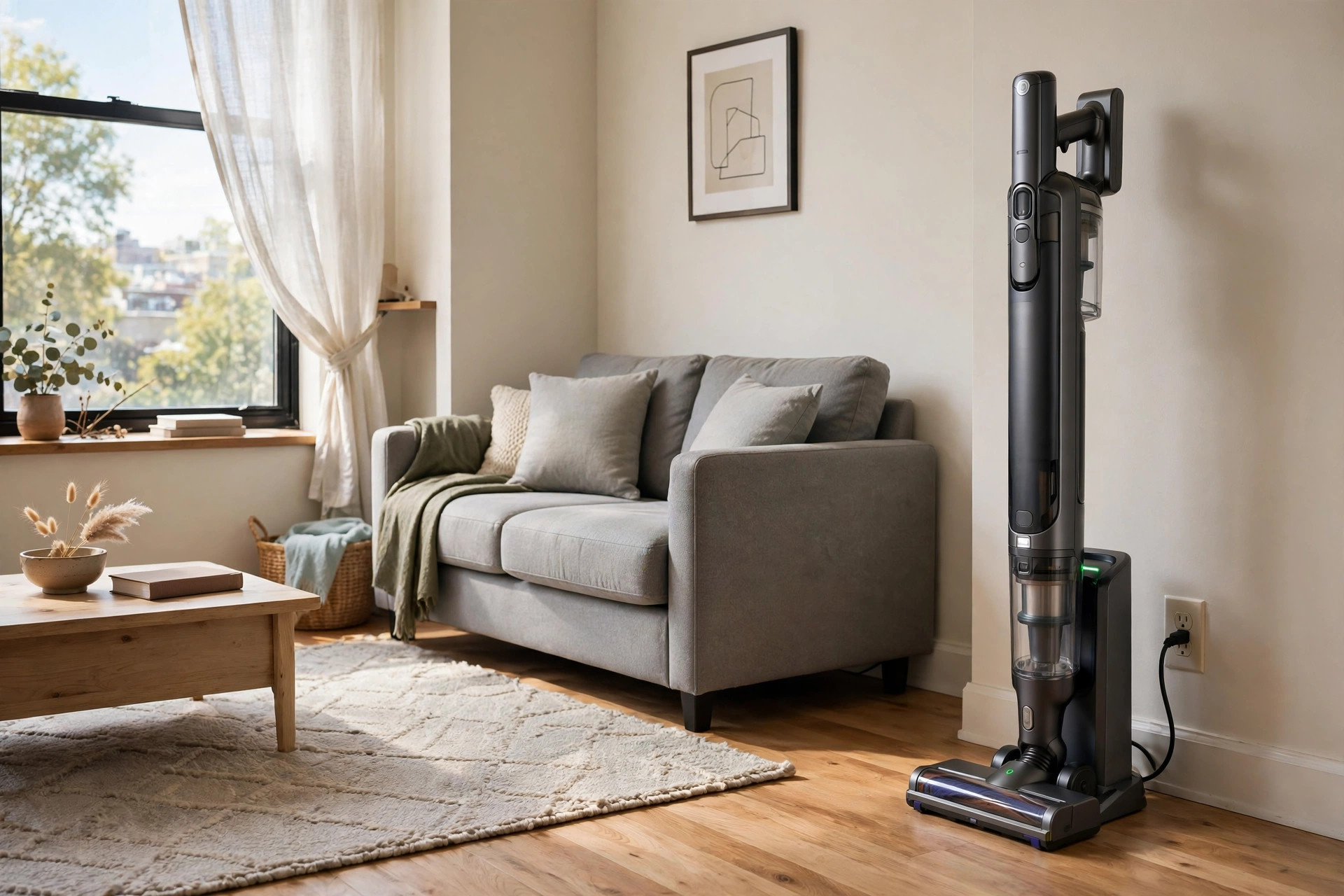

Apartment living calls for tools that work hard without taking up room. Commercial grade cordless stick vacuums for small apartments answer that call. They bring the power of hotel and office machines into a slim, light body that stores in a closet corner. For anyone who keeps a small home, this kind of vacuum changes the daily routine.
Most people think of commercial machines as big and loud. That was true years ago. Today the best cordless stick models weigh less than eight pounds. They run on strong batteries. They pick up dirt from wood floors, tile, and low rugs with ease. They are built for daily use, so they last longer than cheap store brands. In a small apartment, where every square foot counts, that mix of power and small size matters.
Why This Type of Vacuum Suits Small Apartments
Small homes fill with dust fast. Kitchens sit near living rooms. Pets track in dirt from one short hallway. A full-size canister vacuum takes up too much closet space. A cheap broom leaves fine dust behind. A commercial grade cordless stick vacuum solves both problems at once.
The “commercial grade” part means the motor and parts are built for long hours. Hotels and cleaning crews use this class of machine all day. That build quality gives the home user a longer life from the purchase. Bearings, switches, and brush rolls are stronger. The battery holds its charge through more cycles. When reviewers at Consumer Reports test stick vacuums, the machines that survive longest almost always use commercial-style motors and filters.
The cordless part brings freedom. There is no cord to wind, no outlet hunt in a small room. You grab the vacuum from its wall dock and clean the whole apartment in ten minutes. The stick form lets you reach under sofas and beds without bending far. Many models turn into a handheld unit for stairs, shelves, and car seats.
Storage is the third win. A stick vacuum stands upright on its own or hangs on a wall mount. It needs about one square foot of floor space. In a studio or one-bedroom apartment, that is often the difference between keeping a good vacuum and settling for a broom.
How to Choose the Right Model: Commercial Grade Cordless Stick Vacuums for Small Apartments
Suction Power and Motor Design
Suction is the first thing to check. Commercial grade models state their power in air watts or Pascals. Look for at least 150 air watts for bare floors and area rugs. Models that list 200 or more handle pet hair and deep carpet with ease. Digital motors spin faster than older brushed motors. They give more suction per pound of weight.
The brush roll matters too. A soft roller works best on hard floors. It polishes as it cleans and does not scatter crumbs. A stiff bristle bar lifts hair from rugs. Some machines include both heads, which is a plus in an apartment with mixed floors. Guides at The Spruce walk through how brush rolls affect cleaning on each floor type.
Battery Life and Charge Time
Battery run time decides how the vacuum fits your routine. Most quality stick models run 30 to 60 minutes on low power and 8 to 15 minutes on full power. For a small apartment under 800 square feet, 25 minutes of real run time is enough to clean every room.
Check the charge time as well. A battery that takes five hours to fill is fine if you charge it overnight. A model with a spare battery or a fast 90-minute charge helps if you clean in bursts. Look for batteries that pop out for replacement. A vacuum with a sealed battery dies when the battery does, and that shortens the machine’s true life.
Dust Bin Size and Filtration
Small apartments still make a full bin of dust. A bin of 0.5 to 0.8 liters suits most small homes. It empties with one press, and a larger bin means fewer trips to the trash. Make sure the bin and filter wash under the tap. Machine-washable parts cut the cost of upkeep.
Filtration counts for health. Sealed HEPA filtration traps fine dust and allergens instead of blowing them back into the room. The EPA notes that good filtration and regular cleaning reduce indoor dust and the allergens that ride with it. If you compare hepa vacuum cleaners price comparison usa guides, sealed systems are the mark of a serious machine.
Weight and Handling
You will carry this vacuum up stairs and around furniture. Anything under seven pounds feels light in the hand. Check where the motor sits. A motor placed low near the floor head keeps the stick balanced. A top-heavy design tires the wrist fast. Trigger locks, so you do not hold a button the whole time, are a small comfort that adds up over years of use.
Types and Options Worth Knowing
Cordless stick vacuums come in a few clear families. Knowing the families helps you shop with a level head.
The first family is the soft-roller hard-floor stick. It shines in apartments with wood, tile, or laminate floors. It runs quiet and gentle. It is not the pick for thick carpet.
The second family is the multi-surface stick with a carpet head. This is the most common commercial grade choice. It swaps heads or changes brush speed for rugs and floors. It suits the typical small apartment: a living room rug, a bedroom rug, and hard floors elsewhere.
The third family is the convertible stick that breaks into a handheld unit. You pull the stick off and get a small motor with a brush for car seats, window sills, and kitchen drawers. Apartment dwellers use the handheld half as much as the stick half, so this design earns its keep.
A fourth option is the wet-dry hybrid stick that vacuums and mops in one pass. It holds a small clean-water tank and a dirty-water tank. For kitchen and bath floors in a small home, one tool does the whole job. Reviews of wet dry shop vacuums reviews and buying guide show how the wet-dry idea grew from garages into homes, and the stick versions bring it to apartments.
Specialty models fill the edges. Pet-focused sticks add de-tangling brush rolls. Allergen-focused models seal every joint so nothing leaks. If you burn wood in a fireplace, a separate ash tool is safer than the main vacuum; see reliable fireplace ash vacuums with free shipping for that job.
Cost and Price: What to Expect
Prices run in wide bands. Entry cordless sticks sell for 100 to 200 dollars. They work, but motors and batteries fade after two or three years. Mid-range models at 250 to 450 dollars bring stronger suction, better filters, and two or three year warranties. True commercial grade cordless stick vacuums for small apartments usually start near 400 dollars and climb to 800.
The higher price buys three things: a stronger motor, a longer-life battery, and a thicker warranty. A five-year warranty on the motor is common in this class. Spread over seven or eight years of daily use, the cost per year often beats the cheap model that must be replaced twice. Wirecutter testing often finds the same pattern: paying more up front for a proven stick vacuum pays back in years of service.
Watch for the hidden costs. Spare filters run 15 to 30 dollars a set. A spare battery can cost 80 to 150 dollars. Brush roll replacements run 25 to 50 dollars. Check parts prices before you buy the machine. A brand with cheap, easy parts is cheaper to own than a brand that hides its spares.
Sales bring real savings. Floor care models drop in price during spring cleaning season and the holiday sales. Refurbished commercial units from the maker can save a third of the price and still carry a full warranty. Avoid no-name sticks at bargain prices; their batteries and motors are where the maker cut corners.
Care and Upkeep That Keeps It Running
A commercial grade machine rewards simple care. Empty the dust bin after each full cleaning, or when it reaches the max line. A full bin chokes airflow and makes the motor work harder. Wash the filter once a month and let it dry a full day before you put it back. A damp filter grows mold and blocks air.
Clear the brush roll each week. Hair wraps around every brush, even on models with anti-tangle claims. Cut it free with small scissors and pull it off in one ring. Check the wheels and the head for stuck debris. Wipe the sensors on robot hybrids with a dry cloth.
Battery care sets the life of the machine. Store the vacuum at room temperature, not in a hot garage. Charge it after each use rather than letting it sit empty for weeks. Most lithium batteries keep their health best between 20 and 80 percent charge, so avoid leaving the machine on the charger for months unused. If the model has a removable battery, take it out for long storage.
Deep-clean the machine twice a year. Take off the brush roll and wash it. Wipe the bin with a damp cloth. Check the seals for cracks. The Family Handyman site carries step-by-step guides for keeping stick vacuums in top shape, and This Old House covers the same habits in its home care articles.
Safety in a Small Home
Cordless vacuums are safe machines, but small homes add a few points to watch. Batteries are the main one. Use only the charger that came with the vacuum. Off-brand chargers can overheat a lithium battery. If the battery swells, smells hot, or the case cracks, stop using it and recycle it through a proper battery program. The Consumer Product Safety Commission tracks battery incidents and posts recalls for faulty packs, so check their site if your model shows odd behavior.
Keep cords and chargers off walkways. A charging dock in a narrow hall is a trip hazard. Mount the dock inside a closet or on a wall near an outlet that is out of the walking path. Keep the vacuum and its small parts away from toddlers and pets; brush rolls and crevice tools are choking risks.
Watch water. A standard cordless stick is not a wet vacuum. Do not run it over spills, wet bath mats, or damp garage floors. Water in the motor voids the warranty and can shock the user. If you need wet pickup, use a true wet-dry model built for it.
Noise is a neighbor issue in apartments. Stick vacuums run quieter than old canisters, but full-power mode still carries through thin walls. Clean during daytime hours when you can. Low-power mode is enough for daily dust and keeps the peace with neighbors below.
Frequently Asked Questions
How long do commercial grade cordless stick vacuums last? With normal home use and basic care, expect six to eight years. The motor and battery are the limiting parts. Brands that sell spare batteries and brush rolls stretch that life. Cheap sticks last two to three years by contrast.
Can one stick vacuum clean a whole small apartment? Yes. A single charge of 25 to 40 minutes covers 600 to 900 square feet of mixed floors. Most small apartments fall in that range. For larger spaces or thick carpet throughout, plan on a second battery or a mid-clean charge.
Are commercial grade models much heavier? No. Commercial grade refers to build strength, not size. Most weigh five to eight pounds, the same as good home models. The difference is inside: stronger motors, thicker plastic, and better seals.
Do I still need a full-size vacuum? For most small apartments, no. A strong stick with a carpet head and a handheld mode covers floors, rugs, stairs, and furniture. Keep a separate shop or canister vacuum only if you have wall-to-wall thick carpet or a workshop corner. Bob Vila guides note the same trend: sticks have replaced full-size machines in small homes.
How often should I replace the filter? Wash the filter monthly and replace it once a year, or sooner if it looks torn or stays gray after washing. A fresh filter keeps suction strong and air clean. Good Housekeeping test labs find that clogged filters are the top cause of weak suction complaints.
Is a commercial grade stick worth it for a renter? Often yes. Renters move often and clean often. A tough, light vacuum survives moves, stairs, and daily use without breaking. When you move to a bigger place, the same machine keeps working. ENERGY STAR also lists efficient battery charging tips that help renters keep power costs low.
A Short Final Word
Commercial grade cordless stick vacuums for small apartments earn their place. They clean like bigger machines, store like small ones, and last like tools should. Pick strong suction, a fair battery, sealed HEPA filtration, and a weight you can lift with one hand. Check the warranty and the price of spare parts. Then clean with confidence, knowing the machine will be ready again tomorrow.
References
Bob Vila. (n.d.). Home improvement advice. https://www.bobvila.com Consumer Reports. (n.d.). Product reviews and ratings. https://www.consumerreports.org ENERGY STAR. (n.d.). Energy efficient products. https://www.energystar.gov Family Handyman. (n.d.). DIY home repair and maintenance. https://www.familyhandyman.com Good Housekeeping. (n.d.). Product reviews and home advice. https://www.goodhousekeeping.com The Spruce. (n.d.). Home and garden advice. https://www.thespruce.com This Old House. (n.d.). Home renovation guidance. https://www.thisoldhouse.com U.S. Consumer Product Safety Commission. (n.d.). Product safety information. https://www.cpsc.gov U.S. Environmental Protection Agency. (n.d.). Protecting human health and the environment. https://www.epa.gov Wirecutter. (n.d.). Product reviews from The New York Times. https://www.nytimes.com/wirecutter
Was this guide helpful?

About James Carter
The My Garden US editorial team writes practical, in-depth home and garden guides for American homeowners — tested advice, no fluff.
You May Also Like
Powerful Spin Mop Bucket Systems for Texas Homes
April 15, 2026 0 views
Reliable Carpet Stain Remover Kits With Free Shipping: A Practical Home Guide
April 25, 2026 0 views
Reliable Blind Cleaning Tools for Small Apartments
July 20, 2026 0 views