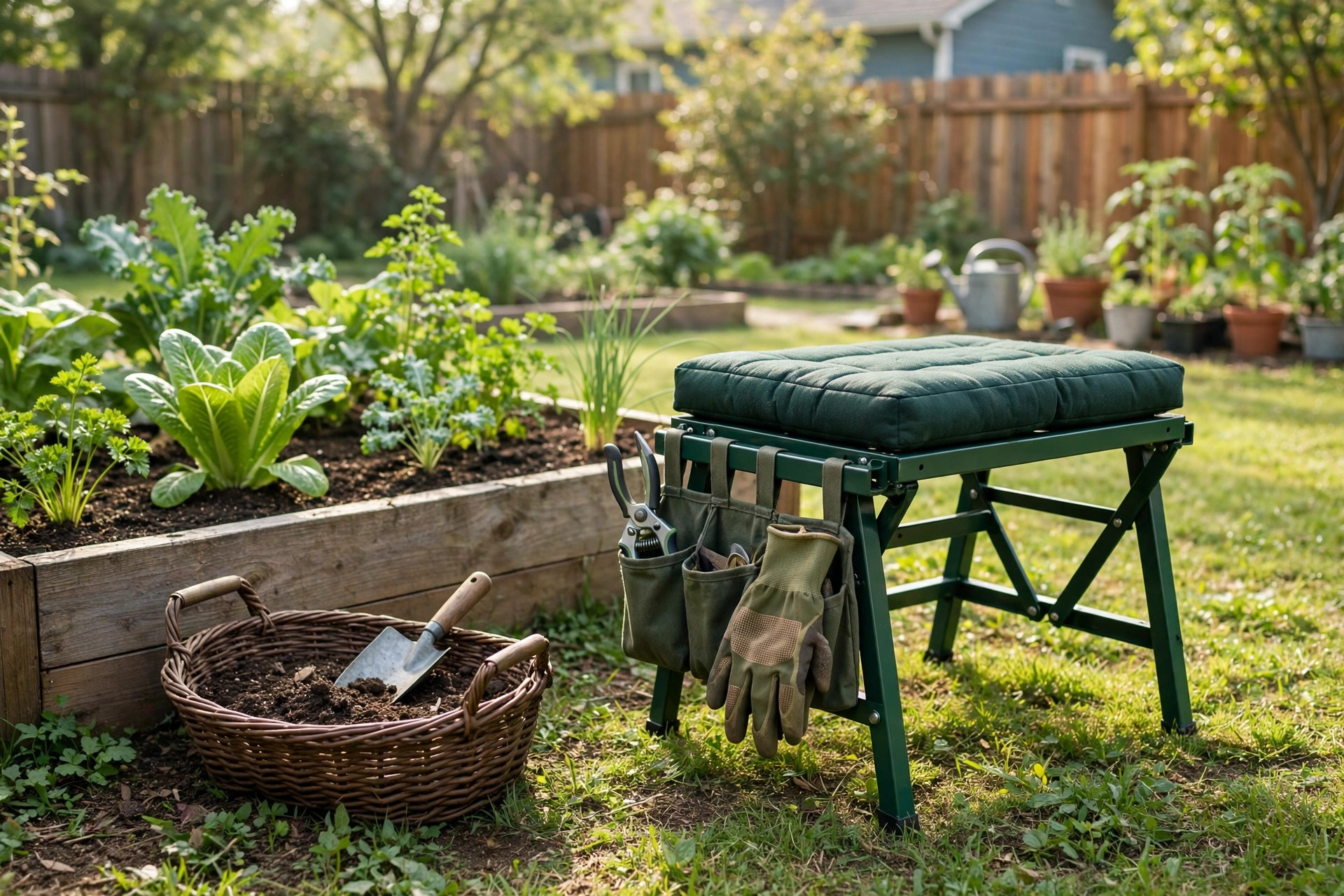

A good garden deserves steady hands, but it also needs healthy knees and a sound back. Many gardeners spend hours on hard soil, on paths, and on cold stone. The work is pleasant. The ache that follows is not. That is why the best garden kneeler seat combo reviews matter to so many people. A kneeler seat combo is a simple frame that works two ways. Flip it one way and it is a thick padded cushion for the knees. Flip it the other way and it is a raised seat for rest or for low tasks. It lifts you off the ground and saves your joints.
Gardeners of all ages buy these tools, but they are most loved by older gardeners and by anyone with knee or back trouble. The best garden kneeler seat combo reviews come from men and women who want to keep gardening for years to come. This guide looks at what makes a good one, how to choose, what it costs, and how to keep it in good shape.
Why a Garden Kneeler Seat Combo Matters
Kneeling on bare soil puts your full weight on two small spots. The pressure builds fast. Knees grow sore. Ankles turn stiff. Getting up from the ground becomes a chore in itself. A kneeler pad spreads the weight across a wider area. The thick foam takes the sharp edge off stones, roots, and gravel.
The seat side does just as much good. When you prune, deadhead flowers, or sort plants, a raised seat keeps the back straight. You do not bend double. You do not crouch on sore heels. Many gardeners also use the seat side as a step when they need a few extra inches to reach a low branch. The two jobs in one tool mean less gear to carry around the yard.
Garden doctors and physical therapists often suggest these tools for people with arthritis and joint pain. The idea is plain. Less impact means less swelling. Less swelling means you can work longer and walk better the next day. The best garden kneeler seat combo reviews often mention this point with thanks. A small tool can add years to a gardening life.
What to Look For When You Choose: Best Garden Kneeler Seat Combo Reviews
Not every combo unit is built the same. Some are strong and steady. Others wobble or wear out in one season. Read on for the points that matter most before you spend your money.
Padding and Comfort
The pad is the heart of the tool. Look for thick foam or EVA rubber, at least an inch and a half deep. Press it with your hand. It should give a little and spring back. Thin pads flatten out fast and leave knees on hard frame parts. A waterproof or water-resistant cover is a wise choice. Morning dew, wet soil, and rain will find any gap. The home and garden range at Lowe’s shows how makers list pad thickness and cover material, so compare those figures before you buy.
Frame Strength and Weight Limit
Most frames are steel tube. Steel is heavy but solid. Some units use aluminum or resin, which are lighter but may flex. Check the listed weight limit. Good combos hold 250 to 330 pounds. A strong frame also means steady arms. Side rails help you lower down and push up again. If handles matter to you, our notes on best garden kneeler with handles reviews go deeper on grip styles and arm rests.
Size and Height
Kneeler pads come in many widths. A wide pad lets you shift your weight. A narrow pad suits tight rows between plants. Seat height matters too. Seats that sit 18 to 20 inches off the ground suit most adults. Taller seats help people with stiff knees stand up with less effort. Shorter seats fit smaller gardeners better. Think about your own height and your most common tasks.
Tool Pouches and Extras
Many combos hang small pouches from the frame. These hold shears, twine, gloves, and seed packets. A pouch saves trips back to the shed. Some units fold flat for storage or hanging on a wall hook. Folding legs also make the tool easier to carry. Product listings and reviews from Consumer Reports often test how fast a unit folds and whether it stays shut in storage.
Types and Options
Garden kneeler seat combos fall into a few plain groups. Each has its strengths.
Folding Steel Frame Combos
The steel frame type is the classic. It opens like a small bench. One side has the knee pad. Flip it over and the pad becomes a seat. Steel frames last for years. They stand up to sun, rain, and rough storage. The price is fair. The weight is the trade-off. A steel unit can weigh eight to twelve pounds. That is fine in a small yard but tiresome on long walks to a far bed.
Lightweight Foam Combos
Some makers use thick molded foam over a simple resin frame. These weigh far less, often under five pounds. They suit gardeners who carry their tools across a large plot. The seat may sit lower than a steel unit. The frame may also flex under heavier users. Check reviews for notes on wobble before you order one.
Kneeler Bench Combos
The bench style sits wider and higher. It works well for pruning shrubs and for potting work on a bench. The seat feels more like a chair. The kneeler side is deep and soft. These units cost more, but many older gardeners say the extra height is worth it. For more on this style, see our round-up of best garden kneeler bench combo reviews. Tips from The Spruce on choosing garden seating also help you judge seat depth and back support.
Cost and Price
Prices run from about twenty dollars to well over a hundred. A basic steel frame combo with thin padding often sells for twenty to forty dollars. Mid-range units, with thick foam and tool pouches, run forty to eighty dollars. Heavy-duty bench styles with wide seats can cost eighty to one hundred fifty dollars.
Price follows build quality most of the time. Thicker pads, stronger steel, and better hinges cost more to make. But a high price alone does not prove quality. Read buyer reviews with care. Look for notes about the frame bending, the pad splitting, or the folding pins breaking. A fifty-dollar unit that lasts five years is a better buy than a one-hundred-dollar unit that fails in one season. Sale seasons help too. Spring and late fall often bring garden tool discounts at stores such as The Home Depot. The buyers’ guides at Bob Vila often list fair price ranges for garden tools, which helps you spot a bad deal.
Do not forget the cost of doing nothing. Kneeling on hard ground wears out knees. A brace or a doctor visit costs far more than any kneeler. Good gardeners count the tool as health gear, not a luxury.
Care and Upkeep
A kneeler seat combo asks little of you, but a little care goes far. Brush soil off the pad after each use. Hose it down now and then. Let it dry fully before you fold it and put it away. Damp foam grows mold and starts to smell. Keep the unit out of long sun when you can. Strong sun breaks down foam and fades fabric covers.
Oil the hinges once a season with a drop of light oil. This keeps the folding action smooth and stops rust on the pins. Check the bolts and screws twice a year. Tighten any that have worked loose. If the cover tears, patch it with repair tape before water gets inside. A small tear grows fast once foam is exposed.
Store the unit dry through winter. A garage wall hook or a shed shelf works well. Folding models take little space. Advice from Family Handyman on storing garden tools through winter applies here too. Simple habits add years to the tool.
Safety
A kneeler combo is a simple tool, but use it with sense. Set it on level ground. Soft, wet soil can let a leg sink and tip the frame. Always fold and lock the legs before you put weight on the seat. Test the lock with a push of your hand first.
Use the side rails to lower yourself and to stand up. Do not step on the pad with shoes to reach higher spots. The pad is made for knees, not boots. It can slide or tear under a boot sole. Keep the tool clear of paths where others walk. A low frame in a dark corner is a trip hazard. Wear knee guards too if your knees are tender. For the thickest standalone pads, our page on best garden kneeling pad thick reviews compares deep foam options. Guidance from Gardener’s Supply Company also covers safe posture for low garden tasks.
Frequently Asked Questions
How do I use a garden kneeler seat combo?
Set the frame on firm, level ground. For kneeling, place the pad side up and rest both knees on the cushion. Grip the side rails when you lower down. For sitting, flip the unit over so the pad side faces down and the seat side faces up. Lock the legs first. Sit down slowly and keep your feet flat. When you stand, push up through the rails and keep your back straight.
Are kneeler seat combos good for bad knees?
Yes, they help many people. The thick pad spreads weight and softens pressure points. The raised seat cuts out deep bending. The rails give you support when you stand. That said, a tool cannot replace medical care. If knee pain is sharp, new, or getting worse, see a doctor. Makers such as Fiskars and Corona design their ergonomic tools with the same goal of cutting strain on joints.
What is the best weight limit to look for?
Look for a listed limit of at least 250 pounds. Units rated for 300 pounds or more suit most adults with a margin to spare. A higher rating usually means thicker steel and stronger joints. Remember that the rating covers your weight plus the force of pushing down when you stand. More margin is better.
Can I leave it outside in the rain?
Short spells of rain do little harm to a good unit. But do not leave it out for weeks. Water soaks into foam through seams. Steel legs rust. Sun fades covers and weakens stitching. Bring it under cover after each garden day. It will last much longer.
Do I need tool pouches on the frame?
Pouches are handy but not required. They keep shears, gloves, and twine within reach. If you carry a garden apron or a trug basket, you may not need them. Many gardeners start without pouches and add a clip-on bag later. Planting advice and tool lists from Burpee often note which hand tools you will reach for most, which helps you decide.
A Short Final Word
The best garden kneeler seat combo reviews tell the same story in different words. Comfort, strength, and fair price beat fancy extras. Pick a thick pad, a steady frame, and a seat height that suits you. Care for the tool and it will care for your knees for many seasons. The garden will still ask for hard work. Your body does not have to pay so dearly for it.
References
Bob Vila. (n.d.). Home improvement advice. https://www.bobvila.com Burpee. (n.d.). Seeds, plants, and gardening supplies. https://www.burpee.com Consumer Reports. (n.d.). Product reviews and ratings. https://www.consumerreports.org Corona Tools. (n.d.). Garden and landscape tools. https://www.corona-tools.com Family Handyman. (n.d.). DIY home repair and maintenance. https://www.familyhandyman.com Fiskars. (n.d.). Garden and cutting tools. https://www.fiskars.com Gardener’s Supply Company. (n.d.). Gardening tools and supplies. https://www.gardeners.com Lowe’s. (n.d.). Home improvement products. https://www.lowes.com The Home Depot. (n.d.). Home improvement products. https://www.homedepot.com The Spruce. (n.d.). Home and garden advice. https://www.thespruce.com
Was this guide helpful?

About James Carter
The My Garden US editorial team writes practical, in-depth home and garden guides for American homeowners — tested advice, no fluff.
You May Also Like

Cold Frame Plans for DIY Builders: A Practical Guide to Designing and Building Your Own
October 4, 2026 1 views
Best Garden Labels for Plant Identification
January 10, 2026 0 views
How to Save Seeds from Vegetables
April 14, 2026 0 views