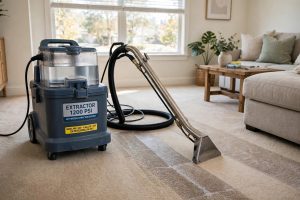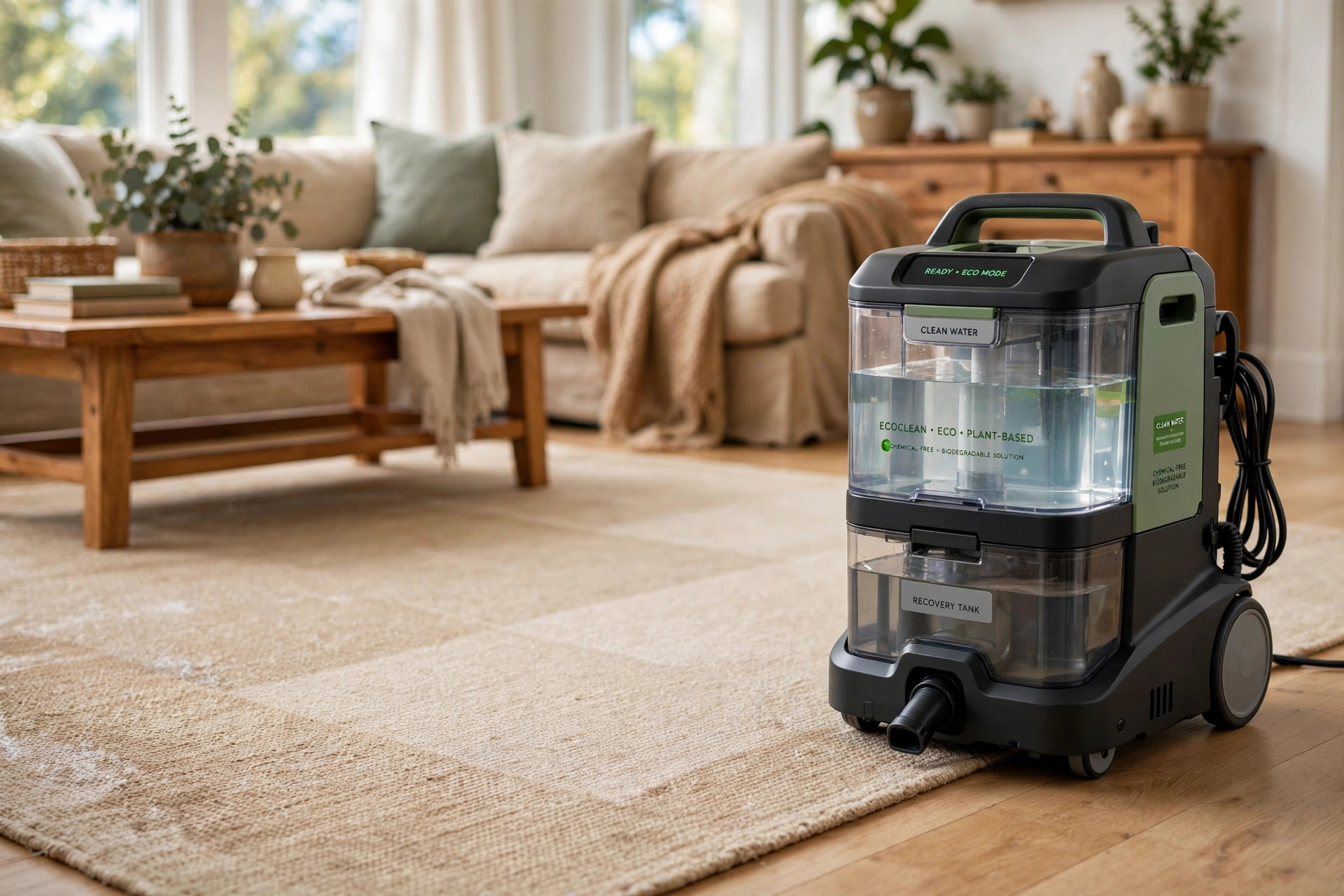

Carpets take more abuse than almost any other surface in an American home. Shoes track in road dust. Pets leave hair and odors. Spilled coffee, muddy footprints, and years of foot traffic press soil deep into the fibers where a regular vacuum cannot reach. When homeowners search for eco friendly carpet deep cleaning machines for sale, they want a machine that pulls that buried dirt out without filling the house with harsh chemical fumes. This guide explains what these machines are, how they work, what to look for before you buy, and how to keep your carpets clean and healthy for years.
Why It Matters
A deep carpet cleaner is not a luxury. It is a health tool. Dust mites, pollen, and pet dander settle into carpet pile. They stay there until something pulls them out. Children play on the floor. Babies crawl on it. Pets sleep on it. Clean carpet means cleaner air in the rooms where your family spends the most time.
Older machines and rental units often rely on strong chemical detergents. Those formulas can leave residue in the fibers. Residue attracts new dirt faster, so the carpet looks dirty again within weeks. It can also irritate sensitive skin and bother people with allergies or asthma. Green machines change that math. They use plant-based or low-toxicity formulas and less water per pass. The result is a carpet that stays clean longer and a home that smells like nothing at all.
Buying your own machine also beats renting. A rental from the hardware store costs money every time you use it, and rental tanks are seldom cleaned well between users. Owning a green machine lets you clean on your schedule: a quick pass on the hallway each month, a full room before guests arrive, or an emergency spot clean the day the dog comes in muddy. The cost usually pays for itself within a year for a busy household.
What to Look For When You Choose: Eco Friendly Carpet Deep Cleaning Machines for Sale
Water Tank Size and Low-Water Design
Eco friendly machines often use less water per cleaning pass. This is a feature, not a weakness. Less water means faster drying, and faster drying means less chance of mold under the carpet. Look for a model with separate clean-water and dirty-water tanks of at least half a gallon each. Separate tanks keep dirty water from being pumped back onto the carpet, which is exactly what you want from a green cleaner.
Cleaning Formula Type
Check what the machine is designed to use. Many green machines accept plant-based carpet formulas that carry the EPA Safer Choice label. These products leave fewer residues and release fewer volatile chemicals into your air. Avoid machines that require brand-only proprietary formulas with undisclosed ingredients. Open systems that accept third-party green solutions give you more choice and lower running costs.
Brush System and Suction Power
The brush roll does the scrubbing work. A good green machine has a rotating brush that works the solution gently into the pile without soaking it. Strong suction then pulls the dirty water straight out. High airflow matters more than heat for drying, because heat bakes residue into fibers. Read reviews that test real drying times, such as those published by independent testing groups like Consumer Reports.
Weight and Ease of Use
Full-size deep cleaners can weigh 25 pounds or more when filled. If you have stairs, a lighter compact model is worth the trade-off in tank size. Look for a machine with a comfortable handle, simple controls, and tanks that lift out without spills. A long power cord and hose save you from moving the machine room to room for every job.
Energy Use and Noise
Most deep cleaners run on a standard outlet and draw about the same power as a vacuum. Look for a model rated under 75 decibels if you clean while children nap or pets rest. A well-designed motor cleans just as deep without the roar of older machines. Energy use is small on any single clean, but a machine you use four times a year costs little to run, which is one more reason a green model fits a careful household budget.
Attachments for Upholstery and Stairs
A machine that only cleans floors is half a machine. A flexible hose with a stair tool, crevice tool, and upholstery nozzle lets you clean sofas, car seats, and the steps themselves. For more on machines that handle soft furniture, see our guide to upholstery cleaning machines.
Also check the warranty before you buy. A two-year parts-and-labor warranty is common in the mid band, and premium models often add a year or two more. A long warranty matters because pumps and brush motors are the parts that wear first. Makers that sell spare tanks, brush rolls, and filters separately are a good sign; they expect the machine to last and make it easy to keep.
Keep your receipt and register the machine online the day it arrives. Registration speeds up any warranty claim and sometimes extends coverage. If a model is sold only through one store with no spare parts listed, treat that as a warning. A green machine you cannot repair becomes landfill, which defeats the purpose of buying green in the first place.
Types and Options
Full-Size Upright Cleaners
These are the workhorses. An upright deep cleaner looks like a vacuum with two tanks. It covers large rooms quickly and carries the most water, so you refill less often. It suits homes with wall-to-wall carpet in several rooms. The downside is weight and storage space.
Compact and Spot Cleaners
Compact machines are shorter and lighter, often half the weight of full-size models. They clean just as deep per pass, but you refill the tanks more often. They are a good fit for apartments, single-story homes, and anyone with limited storage. Spot cleaners, the smallest class, target single stains on carpets and rugs and excel at pet messes.
Green Certified Models
Some makers earn third-party certifications for their machines or formulas. The Carpet and Rug Institute, for example, tests and rates deep cleaning equipment for cleaning effectiveness and fiber safety. Models that pass CRI testing appear on the institute’s list of approved products. Buying a listed machine is a simple way to be sure you are getting a true green performer rather than a marketing claim.
Combination Steam and Extraction Units
A few machines offer both hot-water extraction and steam-only modes. Steam-only passes use no detergent at all, which is the greenest option for light freshening between deep cleans. For deeper soil, a mild green solution in extraction mode still keeps chemical load far below a traditional cleaner.
Cost and Price
New eco friendly carpet deep cleaning machines for sale in the United States generally fall into three bands.
Budget band, under 150 dollars. Compact spot cleaners and small carpet washers. Fine for one or two rooms, pet spots, and car interiors.
Mid band, 150 to 300 dollars. Full-size green uprights from major makers. This is where most American families land. Machines here clean whole houses and carry the features that matter: separate tanks, heated or unheated extraction, and a full attachment set.
Premium band, over 300 dollars. Professional-style units with bigger tanks, stronger suction, and faster drying. Worth it for large homes, rental properties, or pet-heavy households that clean monthly.
Compare prices across large retailers, since prices move with sales. Check current listings at Home Depot and Lowe’s before you buy, and read hands-on cleaning tests at Good Housekeeping to see which models dry fastest in real rooms.
Running costs matter too. Green formulas cost a bit more per bottle than cheap detergents, but you use less per clean, and the carpet stays cleaner longer. A mid-band machine plus a gallon of plant-based formula usually costs less than three rental trips a year.
Care and Upkeep
A green machine stays green only if you maintain it. After every use, empty the dirty-water tank, rinse both tanks, and run a tank of plain warm water through the machine to flush the brush roll. Let the tanks air dry open before you store the machine, or mildew will grow inside them.
Clean the brush roll every few months. Pull off wrapped hair and string with scissors. Check the filters and replace them when they look clogged. A clogged filter forces the motor to work harder and weakens suction.
Between deep cleans, vacuum twice a week and treat new spills at once. For humid homes where spots keep returning, our article on carpet stain remover kits explains which green sprays work best for touch-ups. If your home has bare wood floors as well, a dedicated buffer keeps them safe; see our look at quiet hardwood floor buffers before using any wet cleaner on wood.
Store the machine in a dry place. Freezing temperatures in a garage can crack pumps and tanks. Drain all water before winter storage.
Safety
Unplug the machine before any maintenance, even simple tank rinsing. Keep the cord out of standing water and never run a wet cleaner over electrical outlets or floor registers.
Use only formulas approved for your machine. Mixing chemicals from different bottles can create fumes and void the warranty. Even green products deserve respect: keep them out of reach of children and pets, and follow the dilution on the label. Test any new formula on a hidden patch of carpet first, especially on wool or delicate natural fibers.
Practical how-to guides at The Spruce, Family Handyman, Bob Vila, and This Old House all stress one point: ventilation. Open a window or run a fan while you clean. Fresh airflow shortens drying time, and that is the single best defense against musty carpet.
FAQ
How often should I deep clean my carpets? Most homes need a full deep clean once or twice a year. Homes with pets, children, or allergy sufferers do better with three to four cleans a year. High-traffic paths like hallways can get a light pass monthly.
Do green machines clean as well as traditional ones? Yes, for normal household soil. They rely on agitation and extraction rather than harsh solvents. Independent tests show well-designed green units remove dirt, stains, and allergens on par with chemical machines. Very old or greasy stains may need a second pass.
Can I use my own homemade solution in a green machine? Only if the maker allows it. Vinegar and dish-soap mixes can foam badly and damage pumps. Stick to formulas rated for your machine, preferably ones with a recognized green label.
How long does carpet take to dry after a green clean? Low-water machines typically dry in two to six hours with good airflow. Full-soak rentals can take a full day. Drying time is the biggest practical reason to choose a low-water green model.
Are green machines safe for wool and natural fiber carpets? Many are, but always check the label. Wool needs cool water and gentle agitation. Test in a closet corner first and skip heat settings on natural fibers.
Should I buy or rent a carpet deep cleaner? Buy if you clean more than twice a year or have pets. Owning pays for itself quickly, and you control the formulas you use. Rent only for a one-time move-out clean.
A Short Final Word
Eco friendly carpet deep cleaning machines for sale today give American families a clean middle path: carpets as fresh as a professional service would leave, without the chemical load of older machines and without the cost and hassle of rentals. Choose a model with separate tanks, honest green certification, strong suction, and the attachments your home needs. Treat it well, ventilate while you work, and your carpets will repay you with years of clean, quiet comfort underfoot.
References
Bob Vila. (n.d.). Home improvement advice. https://www.bobvila.com Carpet and Rug Institute. (n.d.). Carpet information and standards. https://www.carpet-rug.org Consumer Reports. (n.d.). Product reviews and ratings. https://www.consumerreports.org Family Handyman. (n.d.). DIY home repair and maintenance. https://www.familyhandyman.com Good Housekeeping. (n.d.). Product reviews and home advice. https://www.goodhousekeeping.com Lowe’s. (n.d.). Home improvement products. https://www.lowes.com The Home Depot. (n.d.). Home improvement products. https://www.homedepot.com The Spruce. (n.d.). Home and garden advice. https://www.thespruce.com This Old House. (n.d.). Home renovation guidance. https://www.thisoldhouse.com U.S. Environmental Protection Agency. (n.d.). Protecting human health and the environment. https://www.epa.gov
Was this guide helpful?

About Emily Rodriguez
The My Garden US editorial team writes practical, in-depth home and garden guides for American homeowners — tested advice, no fluff.
You May Also Like
Powerful Mold Removal Sprays for Texas Homes: A Practical Guide
March 5, 2026 0 views
Powerful Drain Clog Remover Tools With Free Shipping
March 10, 2026 0 views
Where to Buy Upholstery Cleaning Machines in Arizona
September 14, 2026 0 views