The best fireplace log holders for first time homeowners do a simple job well. They keep a small supply of firewood close to the hearth, off the floor, and safe from falling. A new homeowner with a first fireplace often piles wood on the floor or on the porch. That works for a week. Then the floor gets scratched, the wood leaves bark and dirt, and damp logs make a weak fire. A log holder solves these problems at once. It costs little and can last for many years.
If you bought your first home with a wood-burning fireplace, you have a lot to learn about fires. Start with the basics. A log holder is one of the first tools you should buy. This guide explains what a log holder is, why it matters, the kinds you can buy, what to look for, what they cost, how to keep them in good shape, and how to use them safely.
Why a Log Holder Matters in a First Home
Firewood is dirty. Bark flakes off, and dirt from the yard clings to the ends. When wood sits on the floor, all of that goes onto your carpet or hardwood. A holder lifts the wood off the floor. Most holders sit on short feet. Air moves under the pile. That helps keep the wood dry inside a house. Long-term tests published by Consumer Reports show that simple iron designs outlast most painted steel models, which makes build quality worth a look.
A log holder also keeps wood near the fire. Without one, you walk outside to the woodpile each time the fire gets low. On a cold night, that means going out into the snow with the door open. Heat leaves the house. With a holder, you keep enough wood for the whole evening within arm’s reach.
There is also a safety point. Loose piles of wood can roll. A holder with sides keeps the logs in place. Some holders have a canvas sling that cradles the wood. Others have iron bars on the sides. Both keep the pile neat and still.
What to Look for When You Choose One: Best Fireplace Log Holders for First Time Homeowners
Look at size, material, weight, and design. Match the holder to your fire and your room.
Size. Think about how much wood you burn on a normal evening. A small holder that fits six to ten split logs is right for most people. If you heat with wood all day, you may want a bigger one. Measure the space next to your fireplace. The holder should fit with room to spare. Leave space between the holder and the firebox. Do not push it right against the hot glass or screen.
Material. Iron and steel are the most common. Wrought iron is strong and heavy. It will not tip over. Steel with a dark finish is lighter and costs less. Some holders use wood frames with iron rails, which match rustic rooms. Canvas slings are light and easy to carry, which helps when you bring wood in from outside.
Weight. A heavier holder stays put when you take a log out. A very light holder may slide or tip. A weight of about ten to twenty pounds is a good middle ground for indoor use.
Handles. If you plan to carry wood from the porch to the fire, handles help. Some holders have wood handles that stay cool. Canvas carriers with long handles let you bring a full load in one trip. For a guide to matching firewood carriers with indoor storage, see budget-friendly indoor firewood holders.
Design. The holder will sit in your living room all winter. Black iron fits almost any room. Brass and bronze fit classic rooms. Modern rooms pair well with simple steel shapes. Retail guides at The Home Depot show many styles side by side.
Feet and floor protection. Check the feet. Sharp iron feet can scratch wood floors. Look for holders with ball feet, rubber caps, or flat pads. You can also place a small hearth rug under the holder. Many buyers at Lowe’s add a rug with their holder purchase.
Types of Fireplace Log Holders
Log holders come in a few main types. Each suits a different home and habit.
Iron Log Racks
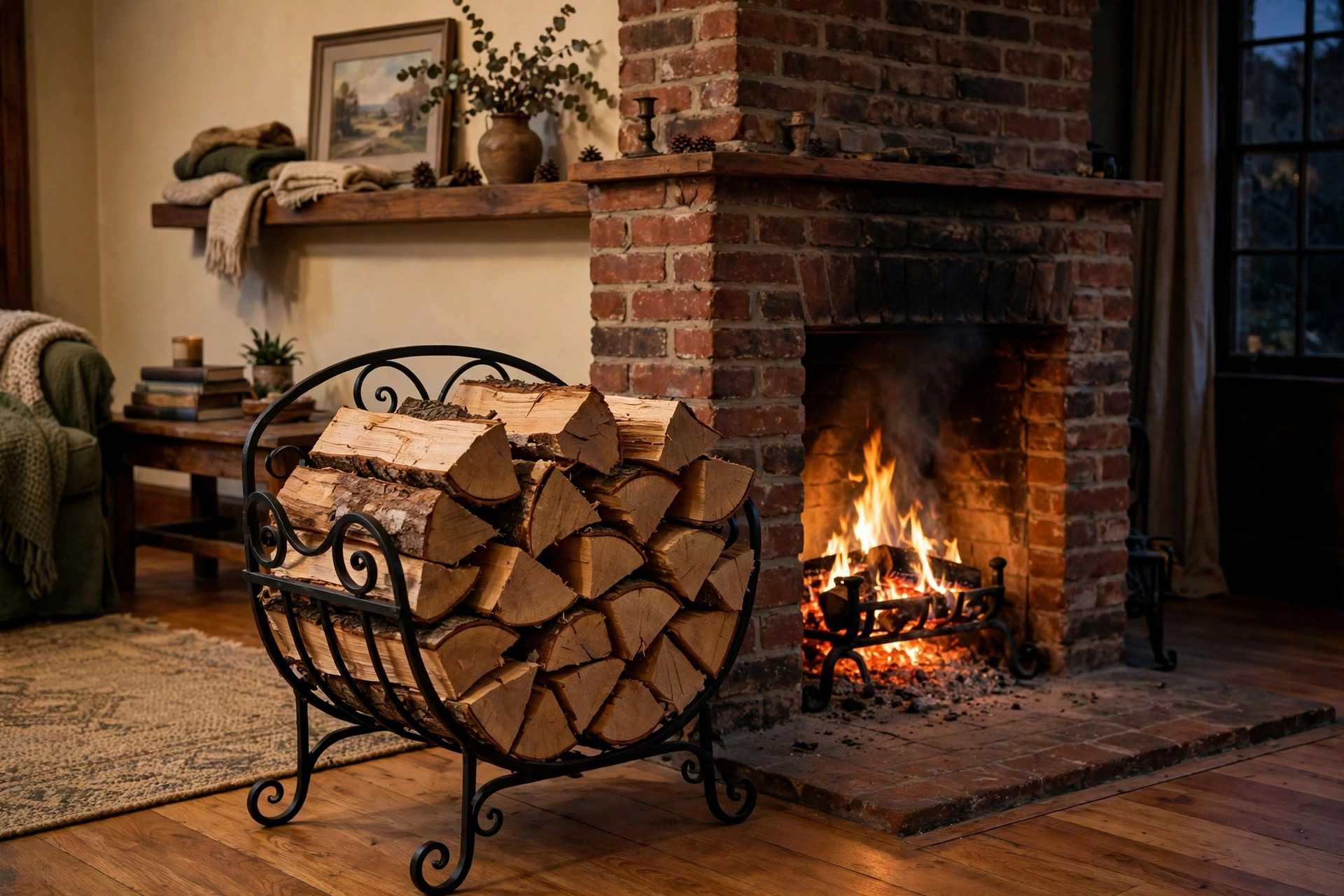
The iron rack is the classic choice. It is a frame of iron bars that holds logs off the floor. Most stand about two feet wide and two feet tall. They are sturdy and simple. They last for decades. Wrought iron racks are the strongest. They hold heavy oak and hickory without bending. Steel racks cost less and still do the job. Many first-time buyers start here because the rack is cheap and needs no care.
Canvas Log Carriers and Sling Holders
A canvas carrier is a sling of heavy fabric with handles. You set it in a stand, or you hang it between two iron arms. It cradles the wood and is soft on floors. Carriers are good for people who bring wood in from a porch pile. You load the canvas outside, carry it in by the handles, and set it down by the fire. Some models fold flat in summer. This type is one of the best fireplace log holders for first time homeowners who live alone or in small homes, because it is light and easy to move.
Basket-Style Holders
Baskets hold wood in a woven or slatted body. They look warm and homey. Iron baskets last longer than wicker, which dries out near heat over years. A basket with tall sides keeps bark from spilling and adds safety for homes with pets or small children.
Large Indoor Storage Racks
Some homes burn wood every day. For them, a small holder is not enough. Large indoor racks hold a quarter of a cord or more. They are taller and wider. They often have a lower shelf for kindling and tools. If you plan to heat with wood all winter, pair a small daily holder with a bigger indoor rack. For bigger storage options, see affordable firewood storage racks.
Fireplace Tool Set Combos
Many stores sell a log holder with a matching tool set. The set has a poker, tongs, a brush, and a shovel, often on a stand. Buying them together saves money and keeps the look matched. For first-time buyers who own nothing yet, a combo is a smart buy. A guide to tool sets that meet safety marks can be found at EPA-certified fireplace tool sets.
Cost and Price Guide
The best fireplace log holders for first time homeowners need not cost much. Prices fall into clear bands.
Under 30 dollars. Simple steel racks and small canvas carriers sit in this range. They work fine. The finish may be plain and the metal thinner. For a first winter, this is enough.
30 to 80 dollars. This is the sweet spot for most buyers. You get solid wrought iron or thick steel, better welds, and nicer finishes. Many sling holders with stands and most iron baskets fall here. This range gives the best value.
80 to 150 dollars. At this level you find large racks, hand-forged iron, and matched sets with tools. The build is heavier and the design more refined.
Over 150 dollars. These are large or custom pieces. They suit homes that burn wood as the main heat source. First-time homeowners rarely need this tier.
Where you buy also changes the price. Big home stores carry house brands that cost less than name brands. Online sellers run sales in fall, before the heating season. If your budget is tight, buy in spring, when fireplace goods go on clearance. Check shipping costs, since iron is heavy.
Care and Upkeep
A log holder needs little care, but a few habits will keep it in good shape for years.
Clean it once a month in the burning season. Shake out the bark and dust. Brush the ash off the bars. If it is iron, wipe it with a dry cloth. Do not wash iron with water and leave it wet. Iron can rust. If you see a rust spot, rub it with fine steel wool and touch up with high-heat paint made for stoves and grills. Family Handyman has simple guides for repainting iron fireplace tools and racks.
Canvas slings need more care. Take the sling off the frame and shake it outside. Most canvas slings can be spot-cleaned with a damp cloth and mild soap. Let them dry fully before you put them back. Check the stitching where the handles meet the body. That is where wear shows first.
Wood frames need a look now and then. Tighten any bolts or screws once a year, since wood shrinks and loosens joints over time. A drop of wood oil keeps the frame from drying out, but keep oil away from the fire side of the holder.
Store extra wood off the ground and under cover. Seasoned wood burns best. The EPA notes that dry, seasoned firewood burns cleaner and makes less smoke.
If you stop using the fireplace in summer, clean the holder and store it in a dry place. Canvas parts store best indoors. Iron racks can stay in place if the room is dry.
Safety Tips for New Fireplace Owners
A first fireplace brings joy, but fire needs respect. These rules matter most.
Keep the holder at least three feet from the firebox opening. Sparks can jump. Wood should never touch the hot face of the fireplace. A hearth rug under the holder catches stray embers and bark.
Do not overload the holder. Stack logs no higher than the sides. A tall, wobbly stack can fall. Heavy logs go on the bottom. Lighter, smaller pieces go on top.
Never store kindling, paper, or lighter fluid in or on the log holder. Keep matches and lighters away from children. Teach everyone in the house how the fireplace tools work.
Use only dry, seasoned wood. Green or wet wood makes more smoke and leaves more buildup in the chimney. The U.S. Department of Energy and ENERGY STAR explain how clean burning saves fuel and keeps chimneys safer. Have the chimney checked and cleaned by a professional each year.
Keep a fire screen or glass doors in place when the fire burns. Sparks cause most living-room fire damage. Install smoke and carbon monoxide alarms on each floor and test them each month.
If you own a gas fireplace with fake logs, a small holder still works as decor if you like the look. Make sure the venting and gas line are checked by a professional each year.
Frequently Asked Questions
How much wood should a log holder hold? For most first-time homeowners, a holder that fits six to ten split logs is right. That is enough for one evening of fires. If you burn wood all day for heat, get a larger rack or refill twice a day.
Can I keep the log holder outside on the porch? A holder meant for indoors should stay indoors. Rain will rust iron and rot canvas. If you want porch storage, buy a rack made for outdoor use with a weather-safe finish or a cover. Project guides at This Old House show racks built from treated wood or coated steel for this reason.
What is the difference between a log holder and a wood rack? A log holder is usually a small indoor piece that holds a day of wood near the fire. A wood rack is usually bigger, often outdoors, and holds a larger supply. Many people use both: a rack on the porch for the week and a holder by the fire for the night.
Will an iron holder scratch my hardwood floor? It can if the feet are bare metal. Look for holders with rubber or felt caps on the feet. Or set the holder on a small hearth rug. Never drag an iron holder across wood floors. Lift it when you move it to clean.
Is a canvas sling as safe as an iron rack? Yes, for normal use. Heavy canvas made for firewood holds a full load well. Keep the sling away from open flame and hot surfaces. Check the stitching now and then and replace the sling when it shows thin spots.
How do I clean bark and dirt that falls under the holder? Lift the holder and sweep under it once a week in winter. A small hearth rug under the holder catches most of the mess. Shake the rug outside each week.
A Short Final Word
The best fireplace log holders for first time homeowners share a few traits. They are sturdy, the right size for the room, easy to clean, and kind to floors. You do not need the most costly one. A mid-price iron rack or a canvas sling with a stand will serve a first home well for many years.
Buy the holder before the first cold night. Learn your fireplace with dry wood, a clean chimney, and safe habits. Sites like The Spruce offer plain guides for new owners that cover the whole first winter. Manuals from Napoleon and Heatilator are worth reading before your first fire if you own one of their units. With the right holder by the fire, each evening gets a little simpler: bring in the wood once, stack it neat, and enjoy the fire.
References
Consumer Reports. (n.d.). Product reviews and ratings. https://www.consumerreports.org ENERGY STAR. (n.d.). Energy efficient products. https://www.energystar.gov Family Handyman. (n.d.). DIY home repair and maintenance. https://www.familyhandyman.com Heatilator. (n.d.). Fireplaces and fireplace products. https://www.heatilator.com Lowe’s. (n.d.). Home improvement products. https://www.lowes.com Napoleon. (n.d.). Fireplaces, grills, and heating products. https://www.napoleon.com The Home Depot. (n.d.). Home improvement products. https://www.homedepot.com The Spruce. (n.d.). Home and garden advice. https://www.thespruce.com This Old House. (n.d.). Home renovation guidance. https://www.thisoldhouse.com U.S. Department of Energy. (n.d.). Energy efficiency and renewable energy. https://www.energy.gov U.S. Environmental Protection Agency. (n.d.). Protecting human health and the environment. https://www.epa.gov
Was this guide helpful?

About Jennifer Lee
The My Garden US editorial team writes practical, in-depth home and garden guides for American homeowners — tested advice, no fluff.