
A Simple Start for New Grill Owners
Buying a first grill can feel like a big task. A pellet grill for beginners buying guide makes the task smaller. It breaks the choice down into plain parts. You will learn how pellet grills work, what features matter, and what price to expect.
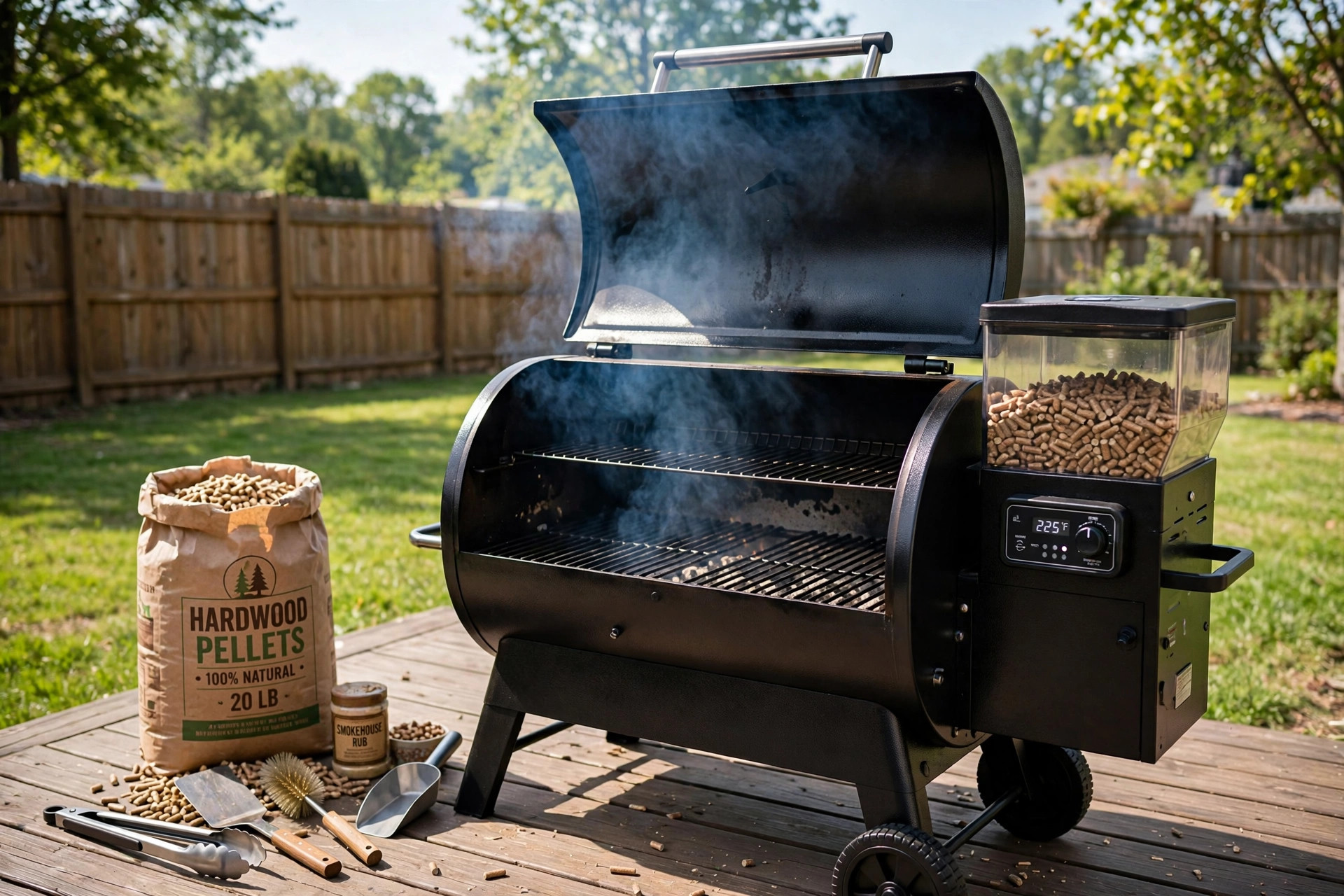
A pellet grill burns small wood pellets for heat and smoke. An electric auger feeds the pellets into a fire pot. A fan keeps the fire going. A digital panel holds the heat steady. You set the temperature the way you set an oven. The grill does the rest.
That ease is why so many new cooks choose this type of grill. You do not need to learn fire control the way charcoal asks you to. You also get real wood smoke flavor. It is a friendly first step into outdoor cooking.
Why a Pellet Grill Makes Sense for a Beginner: Pellet Grill for Beginners Buying Guide
A pellet grill fits a beginner because it asks for little skill at the start. Set the dial, wait for the heat, and cook. The grill keeps the fire level on its own. You can watch the food instead of the flames.
It also cooks in more ways than one. A pellet grill can smoke, roast, bake, and grill. You can slow cook ribs for six hours. You can also sear a steak at high heat. That range gives you room to grow.
The flavor is another clear gain. Wood pellets come in many kinds. Hickory gives a strong smoke. Apple gives a sweet and mild smoke. Mesquite gives a bold taste. You can try a new bag of pellets each time you cook.
Clean up is plain too. Ash falls into a small cup under the fire pot. You pull the cup and dump it. Grease drains into a bucket. A weekly wipe keeps the grill in fine shape.
New owners should still read the manual. Even an easy grill has rules. Keep the hopper full during long cooks. Keep the lid closed as much as you can. Small habits make the food better. Read a few trusted grill guides too. Solid basics save you from common first-cook errors.
What to Look for Before You Buy
Hopper Size and Pellet Use
The hopper is the box that holds the wood pellets. It feeds the fire during the cook. A small hopper holds about 8 pounds. A large hopper holds 20 pounds or more.
A pellet grill burns about 1 to 3 pounds of pellets per hour. Low heat uses fewer pellets. High heat uses more. A 20-pound hopper can feed a long smoke without a refill. That matters when you cook a brisket overnight.
Check how easy the hopper is to empty. Some grills have a clean-out door. You slide it open and the old pellets drop out. That is handy when you want to change wood flavor.
Temperature Range and Control
Most pellet grills run from about 180 to 500 degrees. Some reach 600 degrees or more. The low end gives you slow smoke. The high end gives you a good sear.
A digital PID controller holds heat within a few degrees. Older panels swing wider. The tighter the hold, the more even your cook. Look for a model that shows the actual grate temperature.
Many new grills link to a phone app. You can watch the cook from the kitchen. Some apps send an alert when the food hits a set point. These are nice extras, not needs. A simple dial still cooks fine.
Size and Cooking Space
Cooking space is measured in square inches. A small grill offers about 300 to 400 square inches. That cooks for two to four people. A mid-size grill offers 500 to 700 square inches. That feeds a family of six. A large grill offers more than 800 square inches. That suits big parties.
Think about what you cook most. Burgers and hot dogs need less space. Racks of ribs and whole turkeys need more. A second upper rack adds space without a bigger footprint.
Also check the lid height. Tall lids fit a beer-can chicken or a standing roast. Low lids limit what you can close the lid over.
Build Quality and Materials
Steel thickness matters more than brand names. Thick steel holds heat well. Thin steel swings with the wind. Lift the lid. A heavy lid is a good sign.
Look at the grates. Porcelain-coated steel cleans well. Cast iron holds heat and marks food nicely. Stainless steel lasts long and resists rust.
Wheels matter too. A grill with locking casters moves where you need it and stays put when you cook. Pellet grill vs gas grill pros and cons can help you weigh these trade-offs against other grill types before you spend your money.
Assembly and Warranty
Most pellet grills arrive in a large box and take one to two hours to build. Check the manual for the parts list. A second pair of hands helps with the lid and the hopper. If you dislike assembly, some stores offer setup for a fee.
The warranty tells you what the maker trusts. Look for three to five years on the steel body. Electronics often carry a shorter term. Keep your receipt. Register the grill online when you can. A good warranty is quiet insurance on a big buy.
Types of Pellet Grills
Vertical Pellet Smokers
A vertical smoker looks like a tall box. Racks stack one above the other. It takes up little floor space. It smokes well but grills poorly. Heat rises, so the top racks run hotter than the bottom ones.
These suit people who mainly smoke. If you want ribs, brisket, and pork shoulder, a vertical unit is worth a look.
Horizontal Barrel Grills
The barrel is the classic shape. It looks like a drum on legs. Heat moves from the fire pot across the grate. Most beginners choose this shape. It grills, smokes, and roasts with ease.
Barrel grills come in many sizes. They are the most common type in stores. Parts and pellets are easy to find.
Portable and Tabletop Models
Small pellet grills run on a car battery or a wall plug. They cook for two. They suit camping, tailgating, and small patios. The hopper is small, so they suit short cooks best.
Some owners buy a tabletop model first. It teaches the basics at a low cost. Later they move up to a full-size grill.
If you also want true smokehouse flavor on a budget, best smoker for beginners under 300 is worth reading side by side with this guide.
Cost and Price
Pellet grills cost more than basic gas or charcoal grills. Entry models start near $400. Mid-range grills run $600 to $1,000. Large and premium grills can pass $1,500.
The price buys ease and control. It also buys more steel and a better controller. Cheap models can swing in heat. They can also rust fast.
Pellets are a running cost. A 20-pound bag costs about $15 to $25. Food-grade pellets are a must. Heating pellets have fillers and glue. They are not safe for food.
Plan on a few extras. A good cover costs $40 to $80. A meat thermometer costs $20 to $50. Drip pan liners save scrubbing. These small buys add up, so set a full budget before you shop.
Watch for sales in late summer and fall. Stores clear grills before winter. You can often save a fifth of the price. A floor model can cut the price more, but check the grates and the controller first.
Care and Upkeep
Clean the grill after each cook. Brush the grates while they are warm. Empty the grease bucket. These two steps take five minutes.
Every three to five cooks, vacuum the ash from the fire pot. Ash buildup can kill the flame. A small shop vacuum works well. Wear a dust mask if the ash is fine.
Season the grates when they are new. Rub them with a thin coat of cooking oil. Heat the grill to 350 degrees for an hour. This is the same basic task you would do on any iron surface, and how to season cast iron grill grates walks through the steps in detail.
Once a year, deep clean the whole grill. Pull the grates and the heat plate. Scrape the grease from the walls. Check the auger for stuck pellets. Damp pellets can swell and jam the feed. Store pellets in a dry sealed bin.
Cover the grill between cooks. Sun and rain wear out paint and steel. A cover is the cheapest repair you will ever buy.
Safety
A pellet grill is a live fire. Keep it at least ten feet from the house. Keep it away from wood decks with low rails and from dry leaves.
Never use the grill in a garage. Pellets give off carbon monoxide. That gas has no smell. It can build up fast in a closed space.
Keep children and pets away from the hot grill. The outside gets hot during a long cook. The grease bucket can drip. A clean area under the grill cuts fire risk.
Do not leave a long cook fully unwatched. Check the grill every hour or two. Glance at the hopper level. A dry hopper kills the fire. A fire that restarts on old pellets can flare.
Have a fire extinguisher nearby. Baking soda also smothers grease fires. Never throw water on a grease fire. It spreads the flames.
Questions New Buyers Ask
Are pellet grills hard to use?
No. They are among the easiest grills to use. Fill the hopper, set the temperature, and let the grill work. The digital panel holds the heat. You focus on the food and the clock.
Do pellet grills need electricity?
Yes. The auger, fan, and controller need power. Most plug into a standard outdoor outlet. You need an outlet near the grill. A long cord can trip a breaker, so keep the run short.
Can a pellet grill sear a steak?
Yes, but with limits. Many pellet grills top out near 500 degrees. That sears fine for most cooks. Grills with a direct-flame zone sear better. Look for a sliding heat plate if searing matters to you.
What wood pellets should a beginner buy?
Start with a competition blend. It mixes hickory, maple, and cherry. It suits most meats. Buy 100 percent food-grade hardwood pellets. Store them dry. Wet pellets crumble and jam the auger.
How long do pellet grills last?
A well-kept grill lasts 5 to 10 years. Thick steel and a good cover add years. Clean the ash often. Keep water out of the hopper. Small care pays off in a long life.
Are pellet grills worth the higher price?
For many beginners, yes. You pay more up front. You get set-and-forget cooking and real wood flavor. You also get one cooker that smokes, roasts, and grills. That can replace two or three separate cookers.
A Short Final Word
A pellet grill for beginners buying guide ends with one plain rule. Match the grill to your cooking, not to the ads. A family of four does not need a grill built for a block party. A renter with a small patio does not need a grill that needs a truck to move.
Start with a mid-size barrel grill from a known maker. Learn the basics. Try new pellets. Cook often. The grill will teach you the rest.
For more background, see The Spruce Eats, Consumer Reports, and Weber. For more background, see Char-Broil, Traeger, and Napoleon. See Big Green Egg for more detail.
References
AmazingRibs.com. (n.d.). Barbecue and grilling science. https://www.amazingribs.com Big Green Egg. (n.d.). Kamado grills and outdoor cooking. https://www.biggreenegg.com Char-Broil. (n.d.). Gas and charcoal grills. https://www.charbroil.com Consumer Reports. (n.d.). Product reviews and ratings. https://www.consumerreports.org Napoleon. (n.d.). Fireplaces, grills, and heating products. https://www.napoleon.com The Spruce Eats. (n.d.). Recipes and cooking guides. https://www.thespruceeats.com Traeger. (n.d.). Wood pellet grills. https://www.traeger.com Weber. (n.d.). Grills and outdoor cooking. https://www.weber.com
Was this guide helpful?

About Lisa Anderson
The My Garden US editorial team writes practical, in-depth home and garden guides for American homeowners — tested advice, no fluff.
You May Also Like
Best Grill for Tailgating Portable Reviews
March 19, 2026 0 views
How to Grill Pineapple for Dessert: A Simple Step-by-Step Guide
June 1, 2026 0 views
Best Grill Thermometer for Thick Steaks
February 27, 2026 0 views