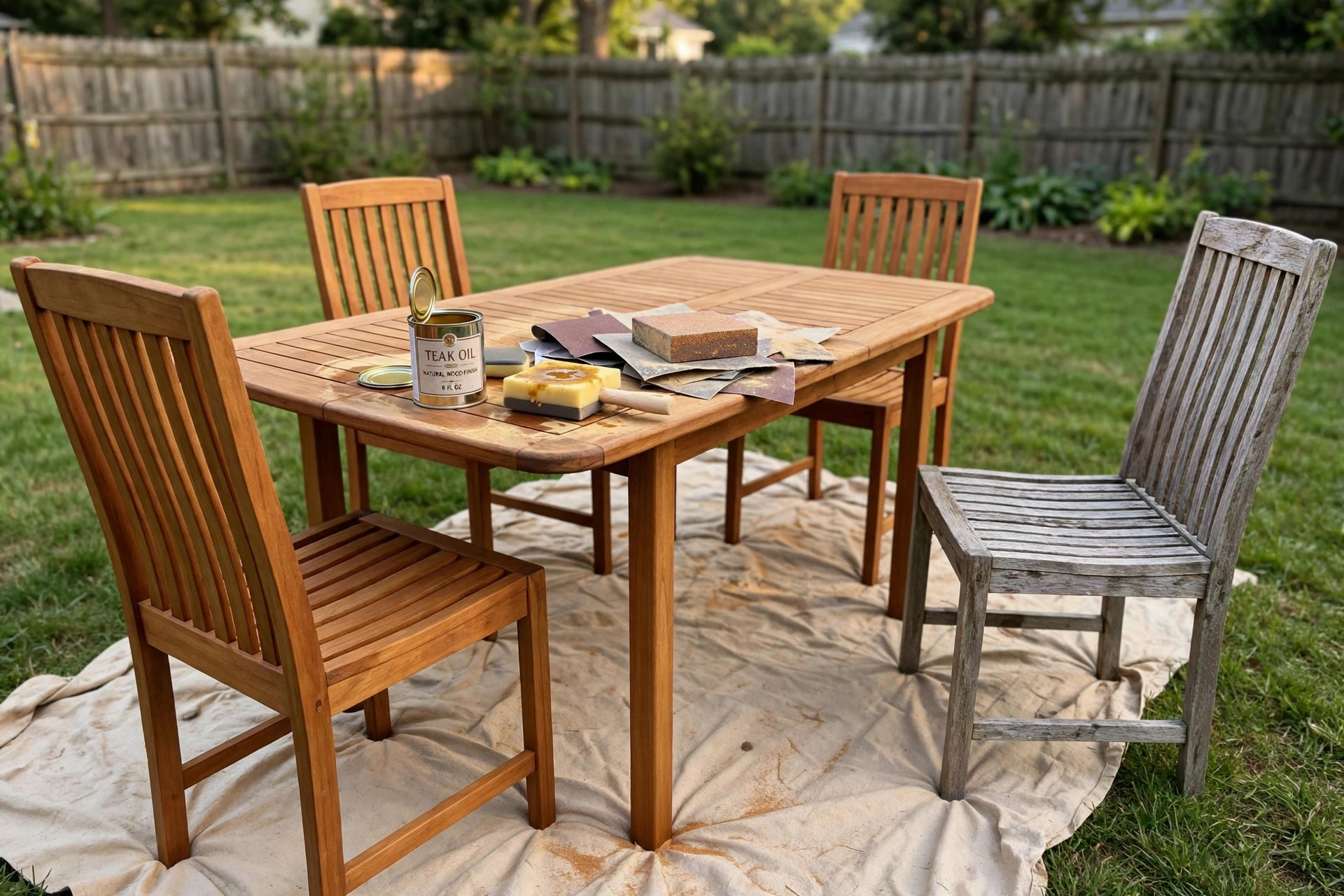

Teak outdoor furniture is built to last for decades. The wood is dense and strong, and it holds natural oils that resist rot and insects. But after a few seasons in the sun and rain, even the finest teak chair or table starts to look tired. The golden color fades. The surface turns a flat silver-gray. Dirt settles deep into the grain. At that point many owners wonder how to refinish teak outdoor furniture and restore its warm, honeyed look.
The job is simple and takes only basic tools. With a cleaner, some sandpaper, and a good teak oil or sealer, most people can finish a chair in an afternoon and a full dining set over a weekend. This guide walks you through each step in plain terms.
Why Teak Needs Refinishing
Teak begins life with a rich brown-gold color. Sunlight breaks down the surface fibers over time, and rain washes away the natural oils. Within a year or two, the wood takes on a silver-gray tone. This change is harmless. The wood beneath is still sound. Many owners like the gray patina and let it stay.
Refinishing is a choice about looks and care. A fresh coat of oil brings back the deep honey color that made the piece attractive in the first place. A refinished surface wipes clean easily and resists daily spills.
There is no rule that says you must refinish. Teak can survive fifty years with no finish at all. But if you want the original color back, or if the surface feels rough and dry, refinishing is the right move.
What You Need Before You Begin: How to Refinish Teak Outdoor Furniture
Gather your supplies before you start. A trip to the store in the middle of the job wastes a good drying day. You will need:
– A teak cleaner, sometimes sold as a two-part cleaner and brightener – Sandpaper in 80, 120, and 150 grit – A sanding block or a random-orbit sander – A stiff brush and a soft sponge – A bucket of water and a garden hose – Clean rags or a foam applicator pad – A quality teak oil or teak sealer – Rubber gloves and a dust mask – Drop cloths to protect the ground
Buy a teak cleaner made for outdoor wood, not a general deck stripper. Deck strippers are too harsh and can tear the soft grain. Teak oil and teak sealer are different products. Oil feeds the wood and gives a deep, rich color, but it needs reapplication. Sealer forms a light shield that lasts longer but looks a little less natural. You will read more about the choice later in this article.
Check the weather before you begin. You need two or three dry days in a row, with temperatures between 60 and 85 degrees Fahrenheit. Sun helps the wood dry between steps. Do not refinish in direct hot sun while applying oil, though. Work in the shade or in morning light so the finish does not dry too fast and turn streaky.
If you own a full set, you may want to read a teak patio set maintenance tips guide after this project. Routine care between refinishings keeps the wood in good shape and stretches the time before the next big job.
How to Refinish Teak Outdoor Furniture, Step by Step
Step 1: Clean the Furniture Thoroughly
Start by brushing off loose dirt, leaves, and cobwebs. Mix the teak cleaner according to the label. Work on one piece at a time. Apply the cleaner with the grain, let it sit ten to fifteen minutes, and do not let it dry on the surface.
Scrub gently with a stiff brush. The cleaner will lift years of gray oxidation and grime. You will see the color change under your brush. Rinse well with a garden hose. If the directions include a brightener as a second step, apply it now and rinse again. A brightener evens out the tone and opens the grain so the finish soaks in well.
Step 2: Let the Wood Dry Completely
The wood must be fully dry before sanding, since teak is dense and hides water deep inside. Wait at least 24 to 48 hours after washing. In humid weather, give it three days. The surface should feel bone dry to the touch, with no cool or damp spots.
Sanding damp wood clogs the sandpaper and tears the grain. If you rush this step, the finish will fail early. Use the waiting time to buy any supplies you missed.
Step 3: Sand With the Grain
Sanding removes the last of the gray layer and smooths the surface. Start with 80-grit paper on rough or heavily weathered spots. Move to 120 grit for the general surface, then finish with 150 grit for a silky feel. Always sand in the direction of the grain, never across it. Cross-grain scratches show through the finish and are hard to remove.
Use a sanding block for flat areas and fold the paper for curved rails and spindles. Do not press hard. Let the paper do the work. Teak sands easily, and heavy pressure creates dips and uneven spots.
Corners and joints need care. Sand lightly around screws and plugs so you do not tear them out. If a piece has deep stains from a wet glass or a rusted screw, sand that area a little longer. Most stains come out with patience. For hardware or metal frames on mixed pieces, the same care helps; a guide on how to remove rust from patio furniture covers the metal side of the job.
Step 4: Wipe Away All Dust
Sanding dust keeps oil from bonding. Brush the piece off, then wipe every surface with a tack cloth or a rag dampened with mineral spirits. Get into the joints and under the rails. Let any dampness evaporate for half an hour. The surface should be clean, dry, and smooth.
Step 5: Apply Teak Oil or Sealer
Stir the product well. Do not shake it. Shaking makes bubbles that end up in the finish. Dip a foam applicator or a clean rag into the oil and apply a thin, even coat, working with the grain. Cover one section at a time and keep a wet edge so you do not leave lap marks.
Let the first coat soak for fifteen to twenty minutes, then wipe off the excess with a clean dry rag, since pooled oil turns gummy and attracts dirt. A second thin coat gives a deeper color. Most makers suggest two coats, and some allow three on very dry wood. Wait the time the label says between coats.
Work in the shade. Hot sun makes oil dry before it soaks in, and the result looks blotchy. If the day turns windy, move the work or wait. Wind-blown dust sticks to wet oil.
Step 6: Let the Finish Cure
Fresh oil feels dry to the touch in a few hours, but it is not cured. Keep the furniture out of rain for at least 48 hours. Do not set plates, glasses, or cushions on it for two or three days. Curing hardens the finish and locks in the color. Once cured, the surface should feel smooth and dry, with no tackiness.
Choosing Between Teak Oil, Sealer, and the Natural Gray Look
Owners face three honest choices, and none is wrong.
Teak oil gives the deepest, warmest color. It looks the most like new furniture. The trade is upkeep. Oil breaks down in sunlight, so most owners reapply every three to six months in sunny climates, or once a year in milder ones. If you love the golden look and do not mind a weekend of work each year, oil is the classic pick.
Teak sealer lasts longer, often a full year or more. It contains pigments and UV blockers that slow graying. The color is pleasant but a touch less rich than oil. If you want color with less work, sealer is the practical middle road. Consumer testing groups such as Consumer Reports review outdoor wood finishes and can help you compare brands.
Letting teak go gray costs nothing and needs no work. The silver patina is a natural, respected look. Many high-end hotels and coastal homes choose it on purpose. The wood lasts just as long. If you dislike maintenance, embrace the gray. You can always change your mind later. A gray piece can be sanded and oiled back to honey in a day.
Some owners mix woods. If you are shopping for a second set in a lighter wood, look at eucalyptus outdoor furniture reviews to see how that wood compares for cost and care.
How Much Does It Cost to Refinish Teak Outdoor Furniture?
A do-it-yourself job is cheap. A quart of teak cleaner costs about ten to fifteen dollars. A quart of good teak oil or sealer runs fifteen to thirty dollars and covers several chairs or a small table. Sandpaper, rags, and gloves add another ten to twenty dollars. Most single pieces cost twenty to forty dollars in materials. A full six-chair dining set with a table usually needs sixty to one hundred twenty dollars in supplies.
Hiring a professional changes the math. Furniture refinishers charge by the piece. A single chair may cost fifty to one hundred dollars. A full dining set often runs three hundred to six hundred dollars, depending on size and condition. Professionals are worth it for large or badly damaged pieces, or when you simply lack the time.
Compare that to replacement: a quality teak dining set sells for two to four thousand dollars, so a one-hundred-dollar refinish is a small price to protect it. Retailers like IKEA and Wayfair sell replacement covers and cushions if your wood is fine but the fabric is worn.
Care and Upkeep After Refinishing
Refinishing is not the end of the story. Simple habits keep the new finish looking good for a long time.
Wipe the furniture down every few weeks with a damp cloth. Wash it twice a year with mild soap and water, then rinse well. Keep food and drink spills from sitting overnight. Acidic things like wine and citrus can mark a fresh oil finish.
Use breathable covers in winter or during long rainy spells; plastic tarps trap moisture and cause mildew. Clean and dry the set before shed storage.
Re-oil on schedule. In hot, sunny places, check the color each spring, and when the honey tone fades, clean the piece, scuff it lightly with fine paper, and apply one coat of oil. This light refresh takes an hour.
Keep the furniture off bare soil where you can. Set chairs and tables on a patio, deck, or gravel pad. Constant ground moisture shortens the life of any finish and can stain the feet.
Safety
This is a safe project, but a few cautions matter.
Wear a dust mask while sanding; teak dust irritates lungs and eyes. Work outdoors or in a ventilated space, and wear safety glasses with a power sander.
Used oil rags can catch fire on their own. This is a real and documented danger with drying oils. Never toss oily rags in a pile or a trash can. Spread them flat outdoors to dry completely, or soak them in water in a sealed metal container before disposal. This one habit prevents a serious hazard.
Wear gloves when handling cleaners and oil. Teak cleaners contain acids that sting cuts and dry out skin. Read every product label and follow the directions. Keep children and pets away from wet finish until it cures.
Frequently Asked Questions
How often should I refinish teak outdoor furniture?
Most owners refinish every one to two years. In strong sun, oil fades in three to six months, so a yearly light recoat keeps the color, while sealer may last two years. If you like the gray look, you may never refinish at all.
Can I use regular paint or varnish instead of teak oil?
You can, but it is not the best choice. Paint and hard varnish crack and peel outdoors as the wood moves with heat and moisture. Teak is oily, and many finishes will not stick well. Oil and sealer are made for this wood. They soak in rather than sit on top, so they cannot peel.
Should I let my teak turn gray or keep it golden?
It is a matter of taste. Gray is natural and needs no work. Golden is warmer and shows care. Both are fine for the wood. Many owners keep the pieces near the house golden and let a distant bench go gray. You can switch from gray to golden at any time by cleaning, sanding, and oiling.
Can I pressure wash teak furniture?
A gentle rinse is fine, but a strong pressure washer is risky. High pressure tears the soft grain and leaves a fuzzy, rough surface that is hard to fix. If you must use one, keep it on the lowest setting, hold the wand at least a foot away, and use a wide fan tip. Hand washing is safer.
Is refinishing teak difficult for a beginner?
No. The steps are simple: clean, dry, sand, wipe, oil, cure. A first-timer can do a chair in one afternoon; start small to build confidence.
How do I keep the finish from turning blotchy?
Blotchiness comes from uneven sanding, damp wood, or oil applied in hot sun. Sand evenly with the grain, let the wood dry fully, work in the shade, and always wipe off excess oil. Thin coats beat thick ones every time.
A Final Word
Teak asks for little and gives decades of service. Refinishing is the simplest way to repay it. A weekend of work, a can of oil, and some sandpaper will take a gray, tired set and make it glow again. Follow the steps, respect the drying times, and mind the safety notes.
References
Consumer Reports. (n.d.). Product reviews and ratings. https://www.consumerreports.org IKEA. (n.d.). Home furnishings and outdoor furniture. https://www.ikea.com Wayfair. (n.d.). Furniture and home goods. https://www.wayfair.com
Was this guide helpful?

About Sarah Mitchell
The My Garden US editorial team writes practical, in-depth home and garden guides for American homeowners — tested advice, no fluff.
You May Also Like

The Best Outdoor Storage Shed for Cushions: A Complete Buying Guide
September 3, 2026 0 views
Best Patio Furniture for Beach House Living
August 28, 2026 0 views
Best Rectangular Patio Umbrella for Table: A Plain Guide to Shade
May 21, 2026 0 views