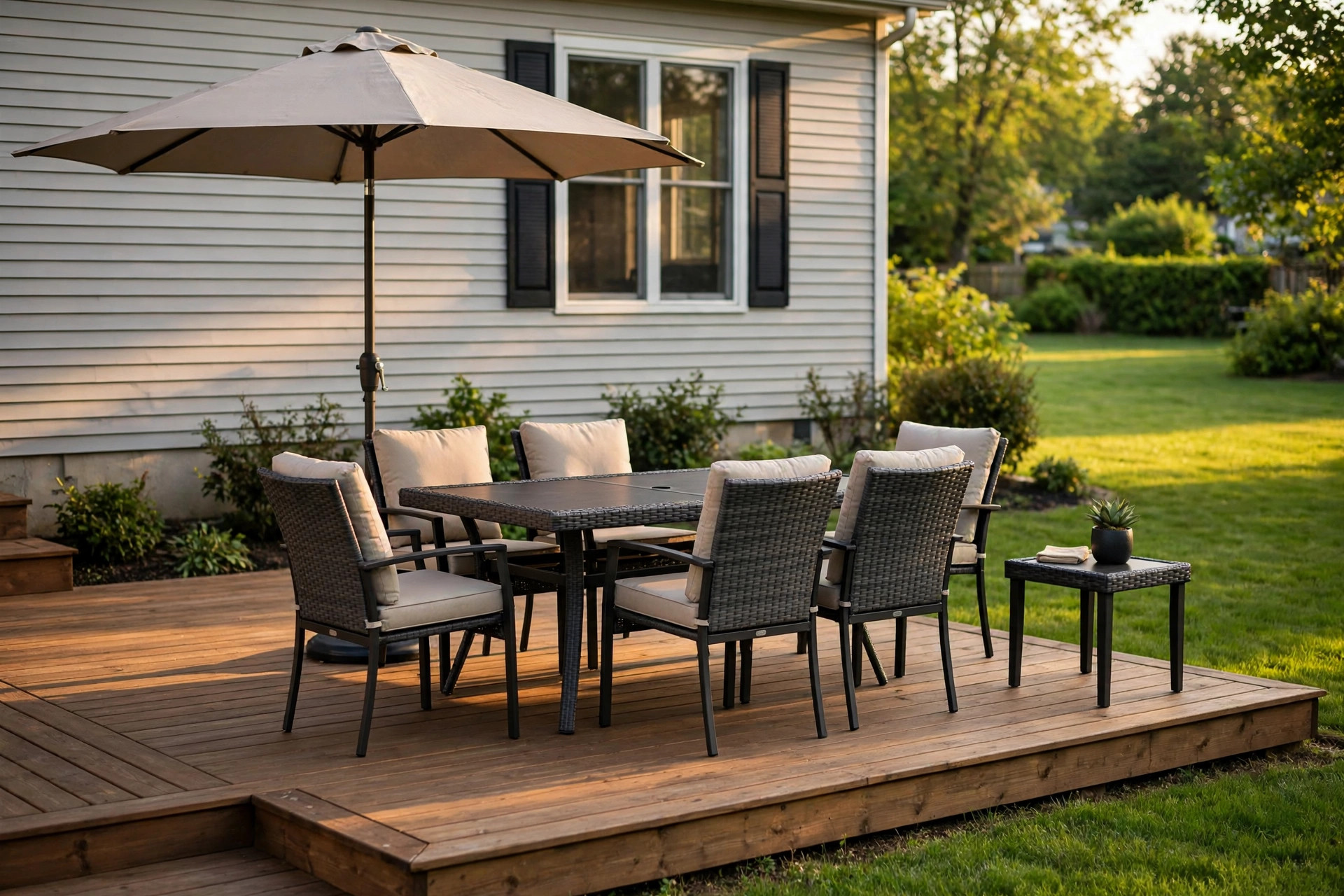

A search for a patio furniture assembly service near me often begins on a Saturday morning. The boxes are on the patio. The tools are spread across the lawn. The directions seem to have been written for a smaller set. By noon, the need for help is clear. A good local assembler can turn that pile of parts into a finished set in a few hours. This guide explains how to find one, what to pay, what to prepare, and how to get the best result.
Why It Matters
Outdoor furniture is heavier and more complex than it looks. A full patio set can include a table, six chairs, a bench, and an umbrella base. Some pieces use steel frames. Others use teak or resin wicker. Many sets arrive in three or four large cartons with dozens of bolts.
Putting these pieces together takes time. It also takes the right tools. A socket wrench, a level, and a second pair of hands make the work faster and safer. When bolts are tightened out of order, frames can twist. When frames twist, chairs wobble. A wobbling chair is not only annoying. It can be unsafe when guests lean back or children climb up.
A professional assembler has done the job many times before. Most can read the hardware chart in seconds. Most bring their own tools. Many can also spot missing parts before they become a problem. For large sectionals, pergolas, and multi-piece dining sets, the value of experience is plain to see. What takes a family a full weekend can take a pro a single afternoon.
There is also the matter of warranties. Some makers void the frame warranty if the set is built in a way that bends the parts. An assembler who knows the common mistakes can protect that coverage. Homeowners who plan to keep their furniture for many years have good reason to start with a square, solid build.
What to Look For and How to Choose: Patio Furniture Assembly Service near Me
Not every handyman is a good fit for patio furniture. The best choice is someone who has built the same kind of set before. Ask what kinds of sets the assembler has put together. A person who has handled steel dining sets, resin wicker sectionals, and wooden benches will know where the weak points are.
Read reviews before you call. Look for notes about punctuality, care with new parts, and clean work. A few bad reviews about scratched frames or missing bolts should raise a flag. One bad review among fifty good ones is normal. A pattern of complaints is not.
Ask about tools and supplies. A prepared assembler arrives with a drill, socket sets, levels, and spare hardware. Some also carry touch-up paint for minor scratches. Ask if they haul away the boxes and packing foam. Many do, and this small service saves the homeowner a trip to the recycling center.
Check insurance and references. A serious business will have liability coverage. It will also share past customers as references. You can also ask how long the job should take. A full dining set usually needs two to three hours. A large sectional can need four. A simple bench may take under an hour. An answer that is far off these ranges may signal a lack of experience.
Finally, ask about pricing in writing. A clear quote names the job, the price, and what is included. It also states the fee if the job runs long. This short piece of paper prevents most arguments.
Types of Assembly Services
Several kinds of services can help with outdoor furniture. Each suits a different need.
Furniture assembly specialists focus on one task: building furniture. Many work for several stores at once. They are fast and familiar with common sets. They often book online and arrive with all needed tools.
General handymen offer a wider range of work. They can assemble a set and also hang a light, fix a gate, or stain a deck. This is a good choice when the patio needs more than one job. The cost may be higher per hour, but the visit covers several tasks at once.
Moving companies sometimes add assembly to their services. If new furniture is arriving with a move, one crew can handle both. This saves the homeowner from booking two visits.
Store-linked installers come through the retailer. When you buy from a large chain such as Home Depot or Lowe’s, the checkout page may offer assembly at the time of purchase. This is convenient. The price is fixed. The installer is backed by the store. Keep in mind that store schedules can run days or weeks out during spring and summer.
Online marketplaces connect local workers with homeowners. These sites let you read reviews and compare prices side by side. They work well in larger towns and cities where many workers compete.
For renters and owners of small spaces, a compact piece such as a bistro set is often the easiest to assemble. See the best bistro set for small patios for ideas before you order.
Cost and Price
Prices for a patio furniture assembly service vary by region and by job size. Most local services charge in one of two ways: a flat fee per piece or an hourly rate.
Flat fees are common for standard sets. A simple bench or side table may cost $40 to $75 to assemble. A four-chair dining set often runs $100 to $180. A large sectional with eight or more seats can cost $200 to $350. Umbrella bases and side tables are usually priced at the low end.
Hourly rates tend to fall between $50 and $100 per hour in most markets. Rates are higher in large cities and lower in small towns. Most jobs take between one and four hours. A handyman who quotes three hours at $75 per hour should finish within that time for a normal set.
Several factors push the price up. Oversized pieces cost more to move and position. Sets with fabric panels, glass tops, or gas fire pits need extra care. A job on a third-floor balcony with no elevator adds labor. So does a long walk from the street to the yard.
Ask what the price includes. Some quotes cover only the build. Others include box removal, light cleanup, and moving the finished set into place. Haul-away is worth real money. A sectional can arrive in boxes that fill a small truck.
To save money, gather the parts before the visit. Open the cartons. Sort the hardware. Read the parts list. Report any missing pieces to the store right away. When the assembler arrives to an organized site, the clock runs faster. You pay for fewer hours.
Watch for hidden fees. Some services add a trip charge for homes far from town. Others charge extra for weekend or evening visits. A few charge by the box rather than by the piece, which can inflate the cost of sets that ship in many small cartons. A written quote protects against all of these.
Care and Upkeep After Assembly
Once the set is built, simple care keeps it looking new. Dust the frames each month with a soft cloth. Wash metal and resin pieces with mild soap and water twice a year. Rinse wood pieces in spring and apply oil or sealant as the maker directs.
Check the bolts once a year. Outdoor furniture moves with wind, weight, and temperature change. Bolts can loosen over a season. A quick pass with a wrench each spring keeps chairs and tables tight. This small habit also extends the life of the joints.
Cover the set in harsh weather. Even weather-proof pieces last longer under a cover. Covers also keep pollen and bird droppings off the fabric. Remove cushions before a storm. Store them in a dry box or shed.
For homes in hot, dry regions, material choice matters as much as care. Steel can grow hot to the touch. Some plastics fade in strong sun. Read the desert climate patio furniture reviews to compare materials that hold up in extreme heat.
If the assembler left you with spare bolts, keep them in a labeled bag. Future repairs are much easier when the exact hardware is on hand. Tape the bag to the underside of the table or store it in the garage.
Safety
Safety starts before the first box is opened. Clear the work area of toys, hoses, and garden tools. Give the assembler a flat space to lay out the parts. Keep children and pets away from the work zone. Small bolts are a choking hazard for young children.
Watch the lifting. Steel table tops are heavy. Glass tops are heavier and breakable. Let the assembler bring a helper for large pieces. Never lift a glass top by its edges alone.
Place the finished set with care. Keep chairs clear of pool edges and stair steps. A chair that tips backward near a pool can cause a bad fall. Leave room behind each chair for guests to stand and push back. Anchoring tall umbrellas is wise. A strong gust can turn a loose umbrella into a sail.
Check the ground under the furniture. Pavers should be level. Deck boards should be sound. A wobbling table on soft soil will only get worse. Ask the assembler to adjust the leveling feet where the set provides them.
For corded tools or nearby outlets, keep cords out of puddles and wet grass. If the job involves a fire pit table, follow the gas hookup rules printed by the maker. When in doubt, call a licensed gas fitter. Guidance on safe assembly practices is also shared by sources such as Bob Vila and Consumer Reports.
FAQ
How far in advance should I book a patio furniture assembly service near me? Book one to two weeks ahead in spring and early summer. That is the busy season. In fall and winter, same-week visits are often possible. Store-linked installers may need more lead time than independent workers.
Do I need to be home during the assembly? Yes, in most cases. The assembler may need to ask about placement. You should also check the finished work before they leave. If you cannot be home, leave clear written notes about where each piece should go.
What should I do if parts are missing? Count the parts against the manual before the visit. If pieces are missing, call the store or the maker first. Many will ship the part free. Do not let the assembler start with missing load-bearing parts. The set will not be safe.
Can the assembler also move old furniture away? Many can, for an added fee. Ask when you book. Old metal sets may have scrap value. Some charities will pick up usable pieces. This is a good way to clear the patio before the new set arrives.
Is assembly worth it for a small set? For one bench or a pair of chairs, many homeowners do the work themselves. For a full dining set, a sectional, or anything with a glass top, hiring help is often worth the cost. The risk of damage and the time saved tip the balance.
How should I pay, and should I tip? Pay by card or check when you can. Keep a receipt. Tipping is not required but is common for excellent work. Ten to fifteen percent is a typical range when the worker is on time, careful, and tidy.
A Short Final Word
A finished patio invites people outside. The chairs face each other. The table is level. The umbrella stands straight. Getting there should not cost you a whole weekend. A local assembler does the heavy work in hours, not days.
Start with a clear list of what you own and what needs building. Read reviews. Get a written quote. Prepare the site. Then let the professional work. When the boxes are gone and the set is arranged for conversation, you will be glad you made the call.
Retailers such as IKEA, Wayfair, Article, POLYWOOD, Frontgate, and HGTV all publish buying and care guides that can help you choose the right set before the assembler arrives.
References
Article. (n.d.). Modern furniture. https://www.article.com Bob Vila. (n.d.). Home improvement advice. https://www.bobvila.com Consumer Reports. (n.d.). Product reviews and ratings. https://www.consumerreports.org Frontgate. (n.d.). Outdoor furniture and decor. https://www.frontgate.com HGTV. (n.d.). Home and garden ideas. https://www.hgtv.com IKEA. (n.d.). Home furnishings. https://www.ikea.com Lowe’s. (n.d.). Home improvement products. https://www.lowes.com Polywood. (n.d.). Outdoor furniture. https://www.polywood.com The Home Depot. (n.d.). Home improvement products. https://www.homedepot.com Wayfair. (n.d.). Furniture and home goods. https://www.wayfair.com
Was this guide helpful?

About Emily Rodriguez
The My Garden US editorial team writes practical, in-depth home and garden guides for American homeowners — tested advice, no fluff.
You May Also Like

Outdoor Bar Stools for Patio Counter Height: A Practical Buying Guide
June 22, 2026 0 views
Best Rectangular Patio Umbrella for Table: A Plain Guide to Shade
May 21, 2026 0 views
Best Outdoor Sectional for Rainy Weather
July 18, 2026 0 views