A cold evening should not end the day you spend outside. Many people own a small balcony, and they want to use it in spring and fall. Some want to use it in winter too. The answer is often the best electric patio heater for balcony use. These heaters plug into a wall outlet. They give off warm heat. They fit in tight spaces. They are clean and quiet.
But not every heater works on a balcony. Balconies are small. Many are covered. Some sit high above the ground. Wind moves through them. A heater that is fine for a large open yard can be wrong for a small balcony. This guide will help you choose. It explains why a heater matters, what types exist, what to look for, what they cost, and how to stay safe.
Why a Balcony Heater Matters
A balcony is small but useful. It is a place for morning coffee. It is a place to read. It is a place to sit with a friend. When the air turns cold, these small joys stop. People move inside. The balcony sits empty for months.
An electric heater brings the space back. With one small unit, a balcony can stay comfortable long after summer ends. A person can sit out in October with a book. A couple can share dinner in March. The heater does not heat the whole world. It warms the seat area. That is enough.
Electric heat also fits balcony life better than gas. A gas heater needs a fuel tank. Tanks are heavy. They take up floor space. Many apartment rules ban open flames and stored fuel on balconies. Electric heaters avoid all of this. They have no flame. They have no tank. They make no smoke. They just need a plug.
Types of Electric Patio Heaters for a Balcony: Best Electric Patio Heater for Balcony
Electric patio heaters come in several shapes. Each suits a different balcony.
Wall-Mounted Infrared Heaters
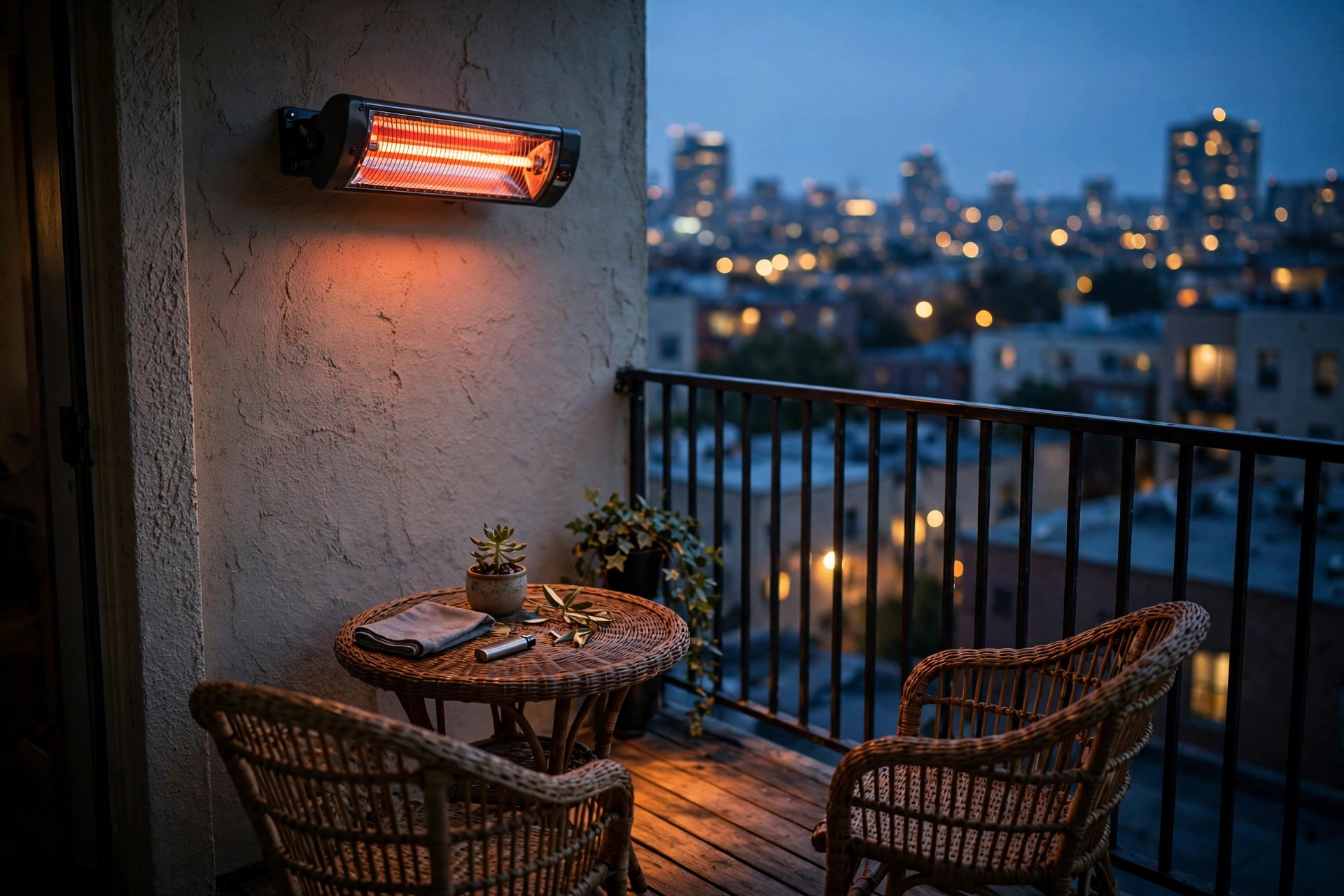
These are the most common choice for balconies. They bolt to a wall or to the balcony railing cover. They hang above the seating area. They take up no floor space at all. That is a large advantage on a small balcony.
Most use infrared heat. Infrared warms people and objects, not the air. This matters because wind blows warm air away. Infrared heat stays on the skin and the chair. Many models use a quartz or carbon element. They turn on in seconds. They glow a soft orange.
Tabletop Heaters
Tabletop models sit in the center of a small table. They are short, usually under three feet tall. They throw heat in all directions at a low level. They work well for two people seated close together.
The weak point is stability. Balconies get wind gusts. A tall, narrow heater can tip. Look for a wide, heavy base. Some models have a tip-over switch that cuts the power if the unit falls. That feature is worth the extra cost.
Freestanding Tower Heaters
Tower heaters stand on the floor like a lamp. They are slim and tall. They suit balconies with some open floor space. Many include a remote control. Some swing their head to spread heat.
Measure first. A tall tower in a tight corner can block the walkway. On a balcony less than six feet wide, a wall-mounted unit is usually the better answer.
Ceiling or Pendant Heaters
On covered balconies, a heater can hang from the ceiling like a light. These keep the floor and the walls free. They are out of the way of children and pets. They often cost more, and they need a safe mounting point. A solid ceiling joist is best.
What to Look for When You Choose
Buying the best electric patio heater for balcony use comes down to a short list of facts. Check each one before you spend money.
Wattage and Heat Output
Electric heaters are rated in watts. A small balcony usually needs 1,500 watts. That is the most a standard household outlet can handle in the United States. Larger units may need a special circuit. Avoid them unless an electrician checks your wiring first.
More watts mean more heat, but only to a point. A 1,500-watt heater will not warm a wide-open balcony in a cold wind. It will warm a sheltered corner. Wind is the true enemy. A wind screen or a glass rail helps the heater do its job.
Size of the Balcony
Measure the space. Write down the length and the width. Note how much of it is open to the sky and how much is covered. Note the height of the railing. Bring these numbers when you shop. A heater rated for a 10-by-10-foot area is too large for a 4-by-8-foot balcony. Oversized heat is wasted heat.
Mounting Options
Decide where the heater will live. Wall mounts save floor space. Freestanding units move with the sun and the seasons. Tabletop models suit small round tables. If you rent your apartment, ask the landlord before drilling into a wall. Some renters use clamp mounts that grip the railing. These leave no holes.
Safety Features
Safety is not a luxury. Look for these items on the box:
– Tip-over protection. The unit shuts off if it falls. – Overheat shutoff. The unit shuts off if it gets too hot. – Cool-touch housing. The outside stays safe to brush against. – A weighted base. Heavy bases resist wind. – Weather rating. Outdoor models should be rated at least IPX4, which means they resist splashing water.
Cord Length and Outlet Access
Most balconies have one outlet, often near the door. Measure the distance from the outlet to the planned heater spot. The heater cord must reach without an extension cord. Extension cords and heaters are a poor match. They can overheat. If the cord is too short, move the heater or call an electrician to add an outlet.
Controls and Timer
A simple on-and-off switch is fine. A remote control is a pleasure on a cold night. A timer is better still. It turns the heater off after one or two hours. That saves power and removes the worry of leaving it on. Some models have heat settings, such as 750 and 1,500 watts. Low settings save money on mild evenings.
Cost and Price: What to Expect
Prices vary by type and by brand. A basic tabletop electric heater may cost 40 to 80 dollars. A good wall-mounted infrared unit often costs 100 to 250 dollars. A ceiling pendant heater can cost 250 to 500 dollars or more.
Running cost matters too. A 1,500-watt heater uses 1.5 kilowatt-hours per hour. At a typical rate of 15 cents per kilowatt-hour, that is about 22 cents per hour. Two hours an evening, five evenings a week, adds roughly 9 dollars a month to the power bill. That is modest for most homes.
Buying cheap is tempting, but the cheapest heaters often lack tip-over switches and timers. Spending a little more buys safety and control. A mid-price unit from a known maker usually gives the best value.
Care and Upkeep
Electric heaters need little care. A few small habits will keep yours working for years.
Wipe the unit with a dry cloth at the start of the season. Dust on the element can burn and smell. Check the cord for cracks or frayed spots. A damaged cord is a fire risk. Replace the whole unit if the cord is hurt; do not tape it.
Store a freestanding heater inside during winter if you will not use it. Cold and rain wear down the finish. Wall-mounted units can stay up all year, but cover them with the cap or cover the maker supplies. This is the same habit as patio furniture storage ideas for winter: small care in fall saves money in spring.
If the heater has a glass tube element, check it for cracks. A cracked tube should be replaced before use. Keep the manual. It lists the exact part number.
Safety Rules for Balcony Use
Heat and small spaces demand respect. Follow these rules every time.
First, keep clear space around the heater. Most makers ask for three feet of clear space in front and to the sides. Keep curtains, cushions, and plants away. Fabric near a heater is the most common cause of trouble.
Second, never leave the heater running alone. Turn it off when you go inside. A timer helps, but it is not a substitute for care.
Third, keep water away. Do not set drinks on the heater. Do not spray the balcony with a hose while the heater is plugged in. If the heater gets soaked in a storm, let it dry fully before you use it again.
Fourth, respect the weight and the mount. A wall-mounted heater must sit on a solid anchor. A loose mount can drop a hot unit. Check the screws once a season.
Fifth, know your building rules. Many apartments and condos limit what can hang on a balcony. Some ban heaters outright. A quick note to the manager saves a fine. Renters should get written approval before mounting anything.
Sixth, mind the outlet. One heater per outlet is the safe rule. Do not plug two heaters into one duplex outlet. Do not use a power strip. The draw is too high.
Making the Most of a Small Balcony
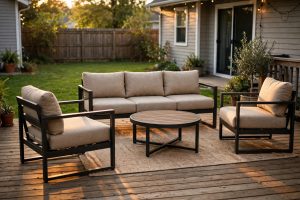
A heater works best as part of a plan. Small balconies reward smart choices. Pair the heater with compact seats and a small table, as shown in many outdoor furniture for small balcony ideas. A wind break helps more than extra watts. A glass panel or a tall planter blocks the wind that steals heat.
Soft goods matter too. Outdoor cushions and a throw blanket hold body heat. A weatherproof rug underfoot cuts the cold that rises from the floor. Together with a heater, these small items turn a balcony into a real outdoor room.
Readers who enjoy warm meals outside may also like our look at patio heater for outdoor dining reviews. It covers larger heaters for yards and full dining sets, which is useful if you also entertain on a patio or deck.
Frequently Asked Questions
Can I use any electric heater on a balcony?
No. Use only heaters rated for outdoor use. Indoor space heaters lack weather protection. Their housings and cords are not built for rain or damp air. An outdoor-rated heater carries an IP code such as IPX4. Check the box before you buy.
How many watts do I need for a small balcony?
For most balconies, 1,500 watts is the right size. That is the maximum for a standard outlet. It warms a seated area of about 40 to 80 square feet when the wind is calm. Sheltered balconies need less. Windy, open balconies may need a wind screen to make the heat count.
Are electric patio heaters safe on apartment balconies?
They are among the safest heat sources for balconies. They have no open flame and no fuel tank. Still, follow the maker rules: keep clear space, never leave the unit alone, and check your building rules first. Many buildings allow electric heaters while banning gas and fire pits.
Will an electric heater raise my power bill a lot?
Not much. A 1,500-watt unit costs about 20 to 25 cents per hour at average rates. Evening use of two hours, five nights a week, adds under 10 dollars a month. A timer and a low heat setting cut this further.
Can I mount a heater on a rented balcony?
Often yes, with permission. Many landlords allow clamp mounts or freestanding units that leave no marks. Drilling into walls usually needs written approval. Ask first and keep the answer in writing.
How long do electric patio heaters last?
A good unit lasts five to ten years with basic care. Infrared elements may need replacement after several seasons. Freestanding units last longer when stored inside during winter. Wall-mounted units last longer when covered in the off season.
A Short Final Word
The best electric patio heater for balcony life is not the most powerful one. It is the one that fits your space, mounts safely, and carries real safety features. Measure your balcony. Check your outlet. Read your building rules. Then choose a wall-mounted infrared unit for tight spaces or a stable tabletop or tower model for open ones.
A little heat goes a long way. With the right heater, a balcony can serve you in April and in November, not just in July. The morning coffee tastes better outside. The evening book reads better in warm air. Buy once, buy safe, and enjoy the extra months.
For more ideas on furnishing small outdoor spaces, browse the outdoor furniture collections at IKEA and Wayfair. For independent test results on heaters and outdoor gear, see Consumer Reports.
References
Consumer Reports. (n.d.). Product reviews and ratings. https://www.consumerreports.org IKEA. (n.d.). Outdoor furniture and balcony living. https://www.ikea.com Wayfair. (n.d.). Outdoor furniture and patio heating. https://www.wayfair.com
Was this guide helpful?

About Jennifer Lee
The My Garden US editorial team writes practical, in-depth home and garden guides for American homeowners — tested advice, no fluff.