
A ferret cage multi level for active ferrets is more than a place to sleep. Ferrets are quick, curious animals. They love to climb, tunnel, and explore. A tall cage with several floors lets them act on these natural urges. A single-story box keeps them still. A multi level home keeps them busy and fit. If you share your house with one or two lively ferrets, this guide will help you pick the right cage.
Why a Multi Level Cage Matters for Active Ferrets
Ferrets sleep long hours, but their waking time is intense. In the wild, their cousins dig and chase prey through burrows. Pet ferrets keep that same drive. They run in bursts. They scale heights with ease. They stash toys in odd corners.
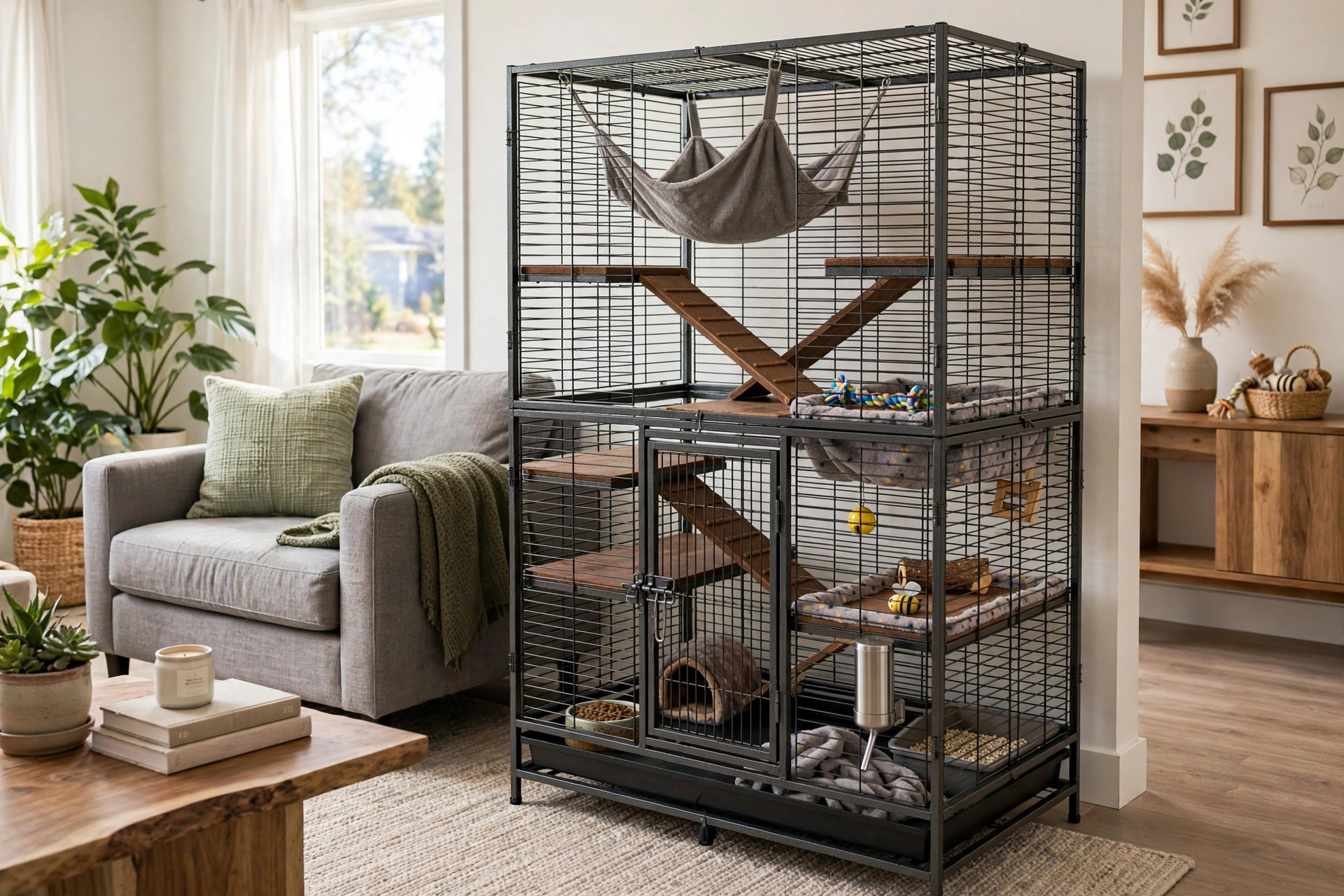
A flat cage limits this motion. The animal paces the same few square feet. Over time, boredom can set in. A bored ferret may chew bars, dig at corners, or nip during play. A ferret cage multi level for active ferrets solves this by adding height. Ramps and platforms turn a small footprint into a large living space. Your pet can climb up, rest on a middle shelf, then dash down for food.
Veterinarians and pet care writers note that vertical space counts as much as floor space for climbing species. A cage that is four or five feet tall offers far more usable room than a wide, low box of the same width. For active ferrets, this matters most in the evening when they play hard. A tired ferret is a calm ferret. It sleeps well and greets you with less frantic energy.
What to Look for When You Choose: Ferret Cage Multi Level for Active Ferrets
Size and Bar Spacing
Height is the point of a multi level cage, but the base must still be wide enough. Look for a base of at least 24 by 36 inches for two ferrets. Taller is better, up to five feet. Bar spacing is a safety issue. Ferrets can squeeze through gaps that surprise most new owners. Keep spacing at one inch or less. Wider bars risk escapes and stuck heads.
Strong Frames and Doors
Active ferrets throw their weight around. They launch off platforms and slam into walls in play. A light wire cage wobbles. A heavy steel frame stands firm. Test reviews often praise cages with thick wire and locking corner posts.
Doors should open wide. You will clean this cage every week. Large front doors let you reach every shelf without a struggle. Double doors on tall models help even more. Locks must be true locks, not simple latches. Ferrets learn to flip weak latches with their paws.
Ramps and Platforms
Check that ramps have a gentle slope. Steep ramps strain small legs. Solid covers on ramps and shelves beat bare wire. Bare wire grates can hurt feet and snag nails. Many owners cover wire shelves with fleece liners. This also cuts noise at night.
Platforms should sit at several heights. Three to four levels suit most cages. Each level can hold food, water, or a hammock. Space the levels so a ferret can hop or climb with ease.
Types and Options
Standard Wire Multi Level Cages
These are the most common. A coated steel frame holds three or four wire floors linked by ramps. They cost less than wooden models. They are easy to hose down. Look for powder-coated wire, which resists rust and is gentler on paws than raw metal.
Tall Tower Cages
Tower cages stretch up to five feet with narrow bases. They fit tight corners in small rooms. Ferrets love the height. Be sure the base is heavy. A narrow tall cage can tip if a ferret launches from the top shelf. Some models bolt to wall brackets for extra safety.
Wooden and Hybrid Hutches
Wood looks warmer in a living room. Solid wood walls block drafts. Many hybrids pair a wooden frame with wire upper levels. Wood is harder to clean and can soak up odor. If you choose wood, pick sealed surfaces and plan to wipe them often.
Playpen Style Add-Ons
Some owners pair a sleeping cage with a large playpen for waking hours. This works well if your ferrets roam free under watch. The cage stays the home base. The pen gives extra room. Panels that lock together, like the ones in our guide to dog fence panels for temporary yard enclosure, show how modular fencing can shape a safe play zone for many kinds of pets.
Cost and Price Range
Prices for a ferret cage multi level for active ferrets vary with size and build.
– Small three-level wire cages often run from 90 to 160 dollars. – Mid-size four-level cages with wide doors run from 160 to 280 dollars. – Large deluxe towers and wooden hybrids run from 280 to 450 dollars.
Do not forget the extras. Fleece liners, hammocks, and sturdy food bowls add 40 to 80 dollars. Good liners last if you wash them on a gentle cycle. Cheap thin fleece wears fast.
Buy once if you can. A strong cage serves for years. A flimsy one bends, rusts, and needs replacement. Read long-term reviews before you buy. Sites like Chewy and PetSmart carry owner reviews that tell you how a cage holds up after a year of hard use.
Setting Up the Cage
Place the cage in a room you use often. Ferrets like to watch the household. Keep it out of direct sun and away from cold drafts. A steady room between 60 and 75 degrees suits them best.
Lay the levels with a plan. Put food and water on a middle level. Ferrets drink often, and a mid-cage station stays cleaner than a floor bowl. Hang one or two hammocks on the top level. Ferrets love to pile in hammocks to sleep. Add a litter box on the lowest level, in a corner. Most ferrets pick a corner on their own. Follow their lead.
Add toys, but keep them simple. Balls, crinkle tubes, and old socks delight ferrets. Skip toys with small parts that can be chewed off. Rotate toys each week to keep interest high.
If you keep track of your pet’s weight, a tool like a pet scale for weighing small dogs at home can also help you watch a ferret’s weight. Sudden loss of weight is one of the first signs of illness in small pets.
Care and Upkeep
Clean the cage in two rounds: daily spot work and a weekly deep clean.
Each day, change soiled litter. Wipe food bowls. Shake out fleece liners. Check the water bottle or bowl. Ferrets can block a bottle spout with bedding, so look closely.
Each week, remove all liners and wash them in hot water with a mild, scent-free soap. Scrub ramps and trays. Rinse well. Dry fully before you put the cage back together. Damp cages grow mold and smell.
Check bars and welds each month. Active ferrets test every joint. Tighten loose screws. Replace bent wire panels. A cage in good repair keeps your pet safe and lasts longer.
Odor is a fact of ferret life. Regular cleaning holds it down. Baking soda under the tray helps. Air the room each day. If the smell stays strong after a deep clean, a vet visit is wise. Health issues can raise body odor.
Helpful reading on general small-pet hygiene can be found through PetMD, which covers cleaning routines for many cage animals.
Safety Rules
Ferrets are escape artists. Lock every door. Check that bar spacing is one inch or less. Look for sharp wire ends after assembly and file them smooth.
Keep the cage away from cords and blind cords. Ferrets chew. They can reach farther than you think through bars.
Never use cedar or pine shavings as bedding. The oils harm small lungs. Use recycled paper bedding or fleece. The ASPCA offers guidance on safe bedding for small pets.
Watch heat closely. Ferrets handle cold better than heat. Rooms above 80 degrees can cause heat stress. If your home runs warm in summer, place the cage in the coolest room and offer ceramic tiles for the ferret to lie on.
Do not place heavy objects on top of the cage. A tall tower can tip. Keep the area around the cage clear of chairs and tables that a loose ferret could climb.
If other pets live in the house, set clear rules. Dogs must not harass the cage. Cats should not sit on top. For ideas on keeping indoor cats busy and out of trouble, see our piece on the best catnip toys for indoor cats entertainment. A tired cat is less likely to bother a ferret cage.
Feeding and Water in a Multi Level Home
Ferrets eat often. Keep dry food out all day on a stable middle shelf. Use heavy ceramic bowls that will not tip when a ferret vaults past. Water bottles work, but many ferrets drink more from a bowl. A bowl on a raised shelf stays cleaner than one on the floor.
Wash bowls each day. Old food turns fast in a warm room. Fresh water matters more than any supplement. If you travel, set out two water sources. A jammed bottle can leave a ferret dry for hours.
The Spruce Pets site has plain guides on ferret diet basics, including why high-protein food suits these small hunters.
FAQ
How tall should a ferret cage multi level for active ferrets be?
Aim for at least three feet of height, with four feet or more being ideal. Three to four levels give active ferrets room to climb and rest at different heights. Taller cages need heavy bases or wall anchors to stay stable.
Can two ferrets share one multi level cage?
Yes, if the cage is large enough. A base of 24 by 36 inches with three or more levels suits a pair. Add one hammock per ferret, plus an extra. Two food stations cut down on squabbles. Clean more often with two animals.
Is bar spacing of one inch safe enough?
One inch is the common safe limit for adult ferrets. Young kits are smaller and may need half-inch spacing for a few months. Check each panel. A single bent bar can create a gap wide enough for an escape.
How often should I clean a multi level ferret cage?
Spot clean litter and bowls every day. Wash liners and scrub trays once a week. Do a full check of bars, ramps, and locks once a month. Ferrets in multi level cages spread mess across floors, so check every level, not just the base.
Are wire ramps bad for ferret feet?
Bare wire can sore feet over time. Cover ramps and shelves with fleece or solid mats. Wash the covers weekly. Solid covers also make the cage quieter at night, which your household will thank you for.
Should the cage door lock or just latch?
It should lock. Ferrets are clever with simple latches. Use doors with sliding bolt locks or spring-loaded latches that need a thumb press. Test the lock from the outside the way a paw would push it.
A Short Final Word
A ferret cage multi level for active ferrets is an investment in your pet’s daily joy. Height turns a small room corner into a playground. Strong wire, safe bar spacing, and solid ramps keep that playground secure. Clean it well, lock it well, and fill it with hammocks and toys. Your ferrets will repay you with the happy, bouncing dance that only a well-kept ferret performs.
For wider reading on pet product safety standards, the American Kennel Club and Petco publish care guides, while Home Depot stocks storage and cleaning gear that many pet owners use around the cage. The Humane Society also covers small-pet welfare basics worth a look before you buy.
References
American Kennel Club. (n.d.). Dog care and training resources. https://www.akc.org ASPCA. (n.d.). Pet care and animal welfare resources. https://www.aspca.org Chewy. (n.d.). Pet supplies. https://www.chewy.com Petco. (n.d.). Pet supplies and services. https://www.petco.com PetMD. (n.d.). Pet health information. https://www.petmd.com PetSmart. (n.d.). Pet supplies and services. https://www.petsmart.com The Home Depot. (n.d.). Home improvement products. https://www.homedepot.com The Humane Society of the United States. (n.d.). Animal protection and care. https://www.humanesociety.org The Spruce Pets. (n.d.). Pet care guides and product reviews. https://www.thesprucepets.com
Was this guide helpful?

About David Wilson
The My Garden US editorial team writes practical, in-depth home and garden guides for American homeowners — tested advice, no fluff.
You May Also Like

Outdoor Cat House Insulated for Winter Shelter: A Complete Guide
March 19, 2026 0 views
Best Dog Toothbrush Kit for Dental Health
June 4, 2026 0 views
Best Pet Water Bottle for Hiking With Dogs: A Complete Guide
February 13, 2026 0 views