Many dog owners never weigh their pets between vet visits. For large dogs, this may be fine. For small dogs, it can be a real problem. A pet scale for weighing small dogs at home gives you a simple way to track your dog’s weight each week or each month. Small breeds gain and lose weight fast. Even one pound can be a big change for a dog that weighs only ten pounds. A good home scale helps you catch these changes early, before they turn into health trouble.
Why Weighing Your Small Dog at Home Matters
Weight is one of the clearest signs of health in a dog. A sudden drop can point to illness. A slow climb can point to overfeeding. Small dogs face extra risk because each ounce counts more in a small body. Owners often do not notice a change of half a pound just by looking. Hands and eyes miss what a scale catches.
Vets weigh dogs at every visit, but visits come only once or twice a year. That leaves long gaps with no record. A pet scale for weighing small dogs at home fills that gap. You can log the number each week in a notebook or a phone app. When the vet asks about weight change, you have real data to share.
Weight records also help with food portions. Small dogs need small meals, and a small error in measuring food adds up over time. If the scale shows a steady rise, you can cut back a little before the problem grows. Many owners find that a regular weigh-in keeps them honest about treats. The American Kennel Club notes that breed standards include weight ranges for small breeds, which gives you a target to aim for.
Vets set target weights for many small dogs. A pet scale for weighing small dogs at home lets you track progress toward that goal between visits. If the number moves the wrong way, you can call the clinic early instead of waiting months. Owners who weigh at home often arrive at appointments with full records, which helps the vet make better choices.
New puppies need the scale most of all. Young pups should gain weight at a steady rate. A pup that stops gaining may need vet care. A pet scale for puppies helps breeders and new owners track this growth with care.
What to Look for When You Choose a Scale: Pet Scale for Weighing Small Dogs At Home
Accuracy comes first. A pet scale for weighing small dogs at home should measure in small steps, such as 0.1 or 0.2 pounds. Coarse scales that move in whole pounds miss the small changes that matter most. Look for a stated accuracy on the box and read reviews from other small-dog owners.
Size matters next. The platform must fit your dog with room to spare. A five-pound Chihuahua needs little space. A twenty-pound spaniel needs a wide tray. If the dog hangs over the edge, the reading will be wrong and the dog will feel unsafe.
Weight limit also counts. Most pet scales handle up to 50 or 100 pounds, which covers all small dogs. Do not buy a scale with a very low limit if your dog is still growing. A pup that weighs four pounds now may weigh fifteen in a year.
Stability is easy to overlook. A scale with rubber feet stays put on tile and wood floors. Wobbly scales scare dogs and give bad readings. Place the scale in the same spot each time, on a hard flat surface, never on carpet.
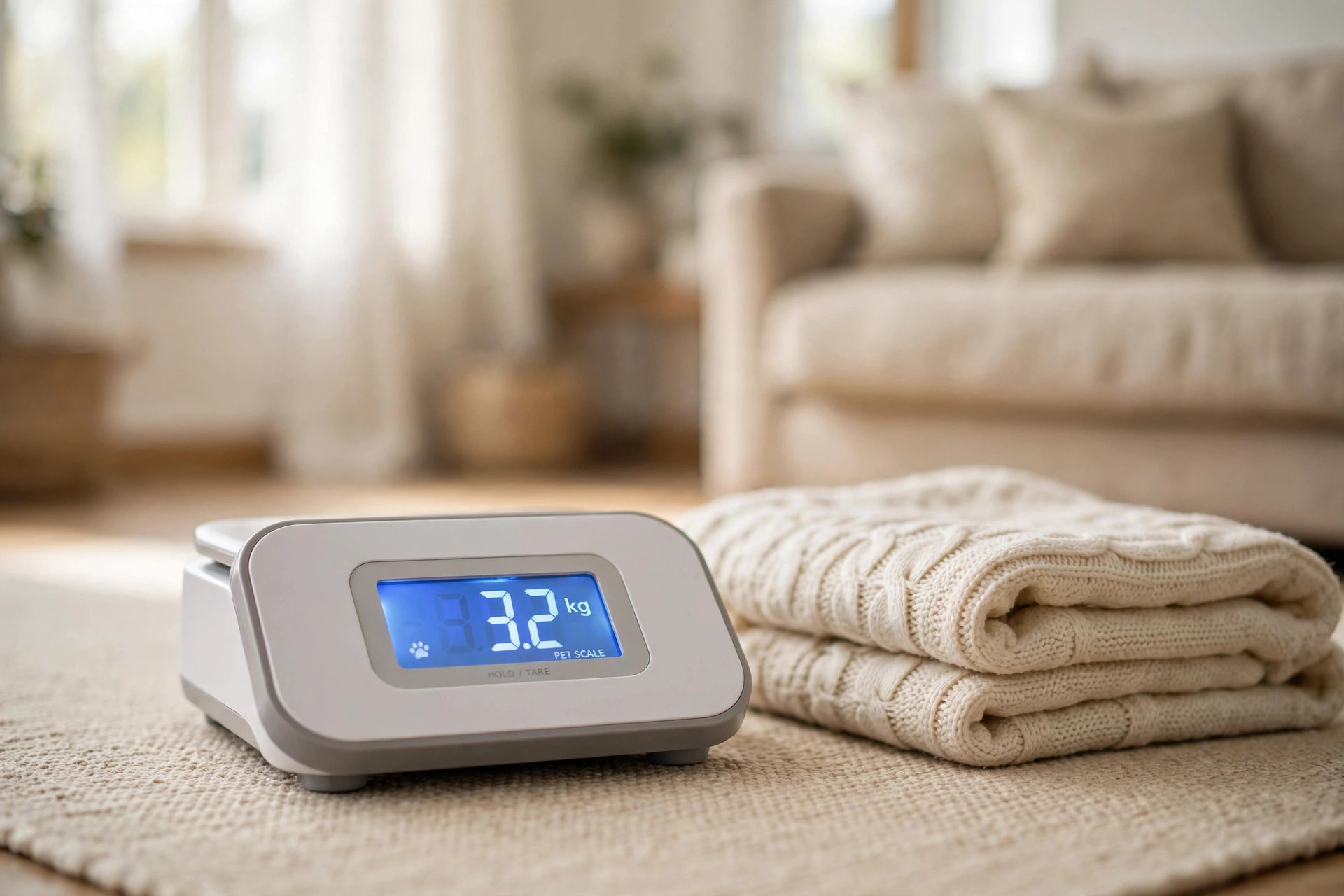
Look for a tare function. Tare lets you zero out the weight of a blanket or a basket. This helps with shy dogs that will not stand still. Put the basket on the scale, press tare, then set the dog in the basket.
A hold function is also useful. Some dogs move before the number locks in. Hold freezes the display so you can read it after the dog steps off.
Battery life and display size round out the list. A large backlit screen is easy to read in dim rooms. Batteries that last months save money and trouble.
Types of Pet Scales
Digital Platform Scales
This is the most common type. The dog stands on a flat metal or plastic platform, and the number shows on a screen. These scales suit most small dogs and cost the least. They fold flat for storage in a closet. Many owners of small breeds find this style is all they need. If you are shopping for a best pet scale for small breeds, start with a digital platform model.
Baby-Style Tray Scales
These scales have a curved tray like the ones used to weigh infants. The tray holds the dog in place and keeps wiggly pups from sliding. They suit very small dogs and young puppies. The tray shape makes them harder to store, but the added security is worth it for nervous pets.
Hanging Scales
A hanging scale uses a sling or bag hung from a hook. You lift the dog off the ground and read the weight. These suit very tiny dogs but can upset animals that fear being lifted. Use them only if your dog stays calm in a sling.
Veterinary-Grade Scales
Vet offices use large stainless steel tables with built-in scales. Home versions exist but cost far more. They offer top accuracy and a huge platform. Most homes do not need this level, but breeders who weigh many pups each week may find the price fair.
Cost and Price
A basic digital pet scale for weighing small dogs at home costs between 30 and 60 dollars. Mid-range models with trays, hold functions, and better accuracy run 60 to 120 dollars. Veterinary-grade tables cost 200 dollars or more.
Price often tracks with build quality and accuracy. Cheap scales drift and give mixed readings. Read reviews that mention long-term use. A scale that lasts five years is cheaper than one replaced each year. Stores such as Petco and PetSmart carry a range of models, and online shops like Chewy list many options with owner reviews.
Watch for sales. Pet scales often drop in price during holiday events. Buy from a seller with a clear return policy so you can test the accuracy at home.
Do not pay extra for features you will not use. A phone app link or a body-fat reading sounds nice but adds little for a basic weigh-in. Spend the money on a stable platform and a clear screen instead.
Large home-improvement stores such as The Home Depot also stock pet scales in their pet-supply aisles, which can save shipping time.
Care and Upkeep
Keep the scale clean. Wipe the platform with a damp cloth after each use. Dogs track dirt and hair onto the surface. Do not use harsh cleaners that can harm the coating or the sensors.
Store the scale flat in a dry place. Moisture in a garage or shed can damage the electronics. Remove the batteries if you will not use the scale for months. Old batteries leak and ruin the battery contacts.
Check accuracy from time to time. Place a known weight, such as a five-pound bag of flour, on the platform. If the reading is off, change the batteries first. If it stays off, the scale may need replacement. Some owners keep a small hand weight just for this check.
Keep a written log near the scale. A simple chart on the fridge works well. Write the date and the weight each time. This record shows trends that memory cannot hold.
Keep the scale in one place if you can. Moving it from room to room changes the floor surface and can shift readings by a small amount. A spot on hard wood or tile floor works best. If the scale must be stored upright, lay it flat for a few minutes before the next use so the sensors settle.
Safety Tips
Safety comes before any reading. Never leave a dog alone on a scale. A small dog can jump and fall in a second. Stay at the dog’s side the whole time.
Teach the dog to step on and off on command. Use treats to build trust. Let the dog sniff the scale for a few days before the first weigh-in. Rushing the process makes the dog fear the scale.
Lift small dogs with care. Support the chest and the rear. Avoid lifting by the legs or the skin. Older dogs with weak joints need a ramp or a low step rather than a lift. The ASPCA offers guidance on safe handling of small pets, which is worth reading before you begin.
Place the scale away from stairs and sharp edges. If the dog bolts, it should land on open floor. Keep cords out of reach so the dog cannot chew them.
Watch for stress signs. Panting, tucked tails, and trembling mean the dog is scared. Stop the session and try again another day. A forced weigh-in gives a bad reading and harms trust.
Frequently Asked Questions
How often should I weigh my small dog?
Once a week suits most adult small dogs. Weigh puppies twice a week while they grow fast. After illness or a diet change, your vet may ask for more frequent checks. Weekly monitoring of your dog’s weight gives you early warning of problems.
What is a normal weight for a small dog?
It depends on the breed. A Chihuahua may weigh four to six pounds. A French Bulldog may weigh up to 28 pounds. A small dog weight chart from a trusted source, or your vet, gives the right range for your breed. The Spruce Pets publishes breed guides that include typical weights.
Can I use a bathroom scale to weigh my dog?
You can, but it is not the best choice. Bathroom scales measure in half-pound or full-pound steps, which is too coarse for small dogs. They also scare dogs with their small platforms. A pet scale made for animals gives better numbers and feels safer for the dog.
Why does my scale show a different number each time?
Several causes exist. The dog may move during the reading. The floor may be uneven. Low batteries cause drift. Weigh at the same time of day, on the same floor spot, before meals. PetMD advises that steady habits give the most useful readings.
What should I do if my dog gains weight fast?
Cut treats first and measure food with a cup. Then call your vet. Fast weight gain can signal a health issue, not just extra food. Bring your home weight log to the visit. VCA Animal Hospitals note that vets use these logs to adjust diet plans with confidence.
Do I still need vet weigh-ins if I have a home scale?
Yes. Home scales track trends between visits, but they do not replace the vet. Your vet checks body condition, muscle tone, and health along with weight. The American Veterinary Medical Association reminds owners that weight is only one part of a full health exam.
A Final Word
A pet scale for weighing small dogs at home is a small tool with a large payoff. It costs little, takes minutes to use, and gives you facts that eyes cannot. Choose a model with fine accuracy, a stable platform, and a size that fits your dog. Weigh on a set schedule, keep a log, and share the numbers with your vet. Your small dog depends on you to notice what it cannot say. A scale helps you listen.
Related reading: if you travel with a small dog, learn about a pet stroller for small dogs and cats for easy outings. Puppy owners can also see our guide to a sturdy puppy playpen for safe indoor space, and prepare for checkups with tips on a dog muzzle for vet visits.
References
American Kennel Club. (n.d.). Dog care and training resources. https://www.akc.org American Veterinary Medical Association. (n.d.). Pet care resources. https://www.avma.org ASPCA. (n.d.). Pet care and animal welfare resources. https://www.aspca.org Chewy. (n.d.). Pet supplies. https://www.chewy.com Petco. (n.d.). Pet supplies and services. https://www.petco.com PetMD. (n.d.). Pet health information. https://www.petmd.com PetSmart. (n.d.). Pet supplies and services. https://www.petsmart.com The Home Depot. (n.d.). Home improvement products. https://www.homedepot.com The Spruce Pets. (n.d.). Pet care guides and product reviews. https://www.thesprucepets.com VCA Animal Hospitals. (n.d.). Pet health resources. https://www.vca.com
Was this guide helpful?

About David Wilson
The My Garden US editorial team writes practical, in-depth home and garden guides for American homeowners — tested advice, no fluff.