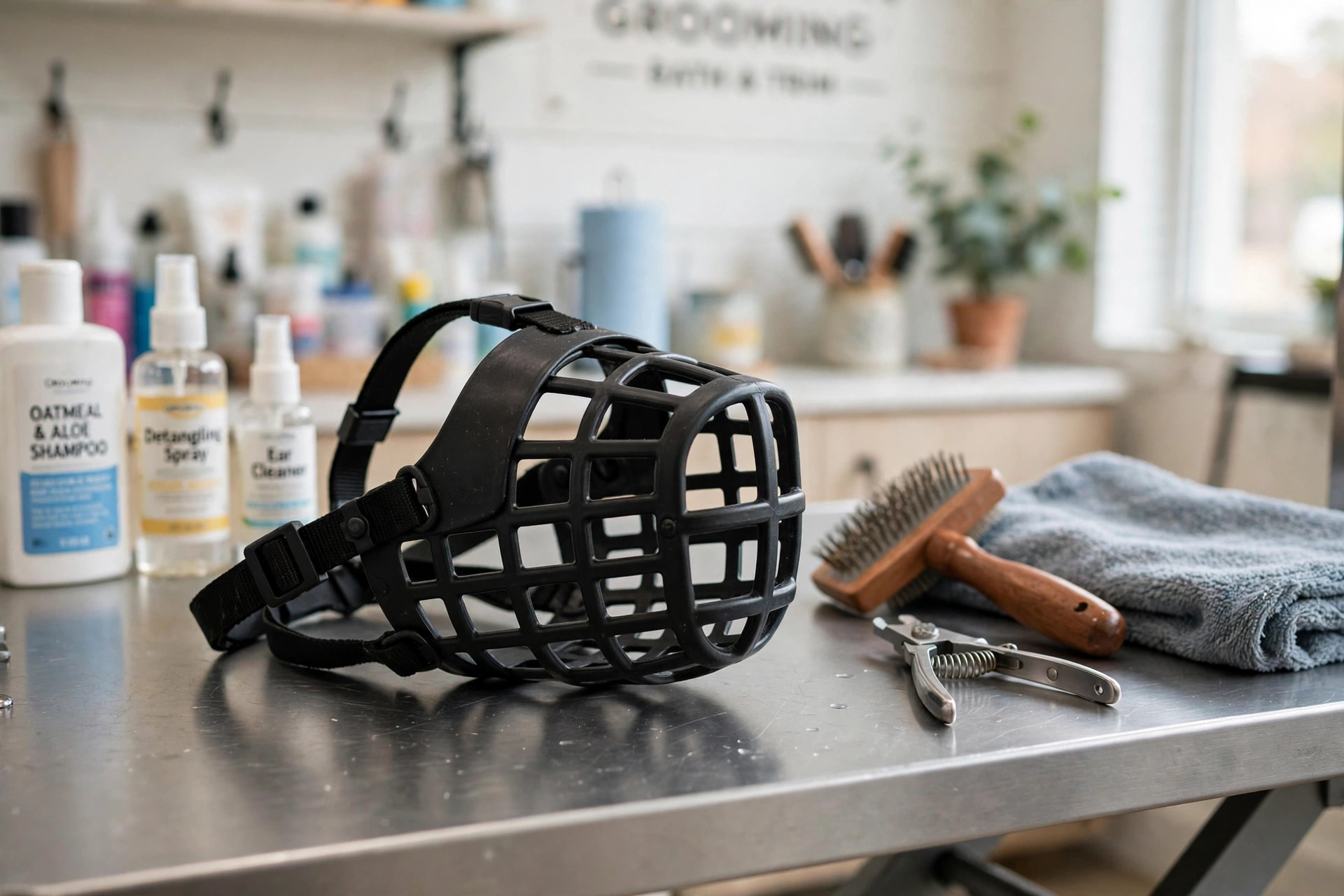

Many dog owners feel uneasy the first time the vet reaches for a muzzle. The dog tenses. The owner worries. The whole visit turns sour. That is why finding the best dog muzzle for vet visits and grooming matters more than most people think. The right muzzle keeps the vet, the groomer, and the dog safe. It also keeps the visit short and calm. A poor muzzle does the opposite. It pinches. It blocks air. It makes a nervous dog panic.
This guide walks through the whole subject in plain terms. You will learn why muzzles are used at clinics and salons. You will learn what to look for, which types exist, what they cost, and how to train a dog to accept one. By the end, you will know exactly how to pick a muzzle that fits your dog and your routine.
Why a Muzzle Matters at the Vet and the Groomer
Even the sweetest dog can snap when it feels pain or fear. A vet may need to press on a sore leg or draw blood from a trembling paw. A groomer may need to trim nails close to the quick or work around the ears and eyes. These moments arrive fast. A muzzle removes the risk of a bite before the risk appears.
The vet benefits, and the groomer benefits. Most of all, the dog benefits. A dog that cannot bite does not get into a struggle. The handler can work faster and with a steadier hand. The visit ends sooner. A calm visit today makes the next visit easier, because the dog remembers less fear.
Some owners feel guilt about using a muzzle. They should not. Vets and trainers view the muzzle as a standard tool, like a leash or a collar. Muzzle training guides from pet care sites treat it as part of good manners. The muzzle is not a punishment. It is a seat belt for a dog that is scared.
What to Look for When You Choose: Best Dog Muzzle for Vet Visits and Grooming
Shopping for a muzzle brings a wall of choices. Sizes run from toy to giant. Materials range from soft fabric to hard plastic. Prices swing wide. Focus on four points and the choice gets simple.
Fit Comes First
A muzzle must fit the length and width of the snout. Measure the snout with a soft tape. Measure the length from the tip of the nose to about one inch below the eyes. Measure the circumference around the snout with the mouth closed, then again with the mouth open in a relaxed pant.
The muzzle should leave room for the dog to pant and take treats. Panting is how dogs cool down. A muzzle that holds the mouth shut is wrong for any visit longer than a minute. If the dog cannot open its mouth at least halfway, size up or pick another design.
Check the strap as well. It should sit snug behind the ears without digging into the skin. Two straps, one over the head and one around the neck, give a steadier hold than one strap. Slippery nylon straps loosen with movement, so test them with a few head shakes.
Material and Airflow
Basket muzzles made of plastic, silicone, or wire give the most air. The dog can pant, drink, and take treats through the gaps. These are the best choice for long visits and grooming sessions.
Soft fabric muzzles close the mouth almost fully. They work for very short moments, like a quick shot or a nail trim. They should never stay on a dog for more than ten to fifteen minutes. They trap heat and block panting.
Leather muzzles sit between the two. They look classic and feel soft, but they need care. Leather stretches with wear and can hold smells. Pet supply retailers sell all three types, and their size charts help narrow the field before you order.
Types of Muzzles
Each design suits a different dog and a different job. Here are the main types and where they shine.
Basket Muzzles
The basket muzzle is the workhorse. A cage of plastic, silicone, or metal wire wraps around the snout. The dog can breathe, pant, drink water, and accept treats. Many vets keep a basket muzzle at the clinic because one design fits most dogs.
Basket muzzles also take training well. You can smear peanut butter on the inside of the basket and let the dog lick it out. The dog learns that the muzzle means good things. For grooming appointments that run thirty minutes or more, the basket style is the safest pick.
Some basket muzzles have a wide front plate that blocks the dog from picking up food or trash on walks. That is a side benefit for owners whose dogs eat everything they find.
Soft Fabric Muzzles
The fabric muzzle is a simple sleeve that wraps the snout. It is cheap, light, and easy to toss in a bag. Vets use it for quick tasks like injections. Groomers use it for fast nail trims on small dogs.
The limit is heat. Because the mouth stays mostly closed, the dog cannot pant. Use it only for short jobs in a cool room. Never leave a fabric muzzle on during a long grooming session or a warm car ride. If your dog needs a muzzle for an extended visit, choose a basket instead.
Short-Snout and Specialty Fits
Flat-faced breeds like bulldogs and pugs need special designs. Standard muzzles slide off short snouts. Makers now sell short-snout basket muzzles with extra straps that loop around the head. Measure carefully, because these breeds vary a lot in face shape.
Long-snouted breeds like greyhounds need the opposite: a deep, narrow basket. Some makers sell breed-shaped muzzles. When in doubt, pick a design with adjustable straps and several size steps.
Cost and Price
A basic fabric muzzle costs about five to ten dollars. It does the job for rare, quick vet trips. A good plastic basket muzzle costs ten to twenty-five dollars. These come with better straps and cleaner sizing.
Premium options run twenty-five to sixty dollars. Silicone baskets, leather work, and vet-grade designs sit in this range. They last longer and fit better. They suit owners who visit the groomer every month.
Price is not the whole story. A cheap muzzle that pinches will cost more in stress and wasted visits. Independent product testing groups remind buyers that fit and build quality matter more than the sticker price. Buy from a source with clear size charts and a fair return policy, since a muzzle often needs one exchange to get the fit right.
Care and Upkeep
A muzzle touches the face, so keep it clean. Rinse plastic and silicone baskets with warm soapy water after each use. Let them air dry fully. Leather muzzles need a wipe-down and an occasional leather conditioner to stay supple.
Store the muzzle in a dry spot. A damp garage or a hot car trunk warps plastic and rots straps. Check the buckles and straps each month. A cracked buckle can pop open at the worst moment, like the middle of a nail trim.
Replace the muzzle when the material shows wear. Frayed fabric loses its shape. A basket with broken struts can poke the nose. Most muzzles last one to two years with steady use. Keep a spare in your vet-visit kit so you never arrive without one.
Training a Dog to Accept the Muzzle
Training is the part most owners skip. It is also the part that matters most. A dog that meets the muzzle for the first time at the vet will fight it. A dog that has trained with it for two weeks will wear it like a collar.
Start at home. Hold the muzzle out and let the dog sniff it. Drop a treat through the basket. Do this for three or four days, one minute at a time. Next, hold a treat at the far end so the dog pushes its nose inside. Praise the dog and remove the muzzle.
Then strap it on for thirty seconds. Give treats through the basket. Take it off. Stretch the time a little each day. By the end of the second week, most dogs will wear it for ten minutes without fuss. Training articles from the American Kennel Club describe the same slow steps and note that rushed training backfires.
Practice in the car before a real visit. The car ride, the waiting room, and the exam table each add stress. Training through each stage keeps the dog steady. Owners who also travel with dogs may find that a dog car barrier for suv cargo area safety keeps the ride calmer, which makes the vet visit calmer too.
Safety Rules
Follow these rules and the muzzle stays a tool, not a risk.
Never leave a muzzled dog alone. A dog that panics can hurt itself trying to pull the muzzle off. Stay close for every minute the muzzle is on.
Watch the clock. Fabric muzzles come off within ten to fifteen minutes. Basket muzzles can stay on longer, but give the dog a break every thirty minutes if the session allows.
Watch for heat. Dogs cool themselves by panting. On a warm day, even a basket muzzle makes cooling harder. Keep the room cool and the water bowl near. Owners in hot regions who use a dog cooling mat for hot summer patios usa already know how fast heat builds in a dog. Apply the same care at the clinic.
Check the fit before every use. Dogs gain and lose weight, and straps loosen. A quick check takes ten seconds and prevents a slip.
Supervise around other dogs. A muzzled dog cannot give a warning nip, so it may feel cornered. Keep distance from unknown dogs in the waiting room.
Note that product safety rules set the baseline for anything sold for home use, and veterinary guidance from the American Veterinary Medical Association treats the muzzle as a normal part of handling. Veterinary schools teach the same handling standards. Your vet will respect an owner who arrives prepared.
Frequently Asked Questions
Will a muzzle make my dog more aggressive?
No. A muzzle does not change a dog’s temper. It only blocks the bite. Most dogs calm down once they learn the muzzle ends the visit faster. Training at home with treats keeps the dog relaxed about wearing it.
Which muzzle is best for grooming appointments?
A basket muzzle is best for grooming. The dog can pant and take treats, and the groomer keeps full access to the ears, eyes, and nails. Fabric muzzles are fine only for very short jobs. Many home and pet care advice pages give the same answer.
How do I measure my dog for a muzzle?
Measure snout length from the nose tip to one inch below the eyes. Measure the snout circumference with the mouth closed and with the mouth open in a relaxed pant. Use the open-mouth number to pick the size. Compare both numbers to the maker’s chart. When two sizes both look close, pick the larger one and adjust the straps.
Can my dog wear a muzzle on a walk?
Yes, a basket muzzle works well on walks. The dog can pant, drink, and take treats. Many owners use one for dogs that pick up trash or act tense around other dogs. Keep the walk pace easy and bring water on warm days. Owners who take dogs out often sometimes pair the muzzle with gear like a dog backpack carrier for hiking small breeds for short rest breaks.
Is it okay to muzzle a puppy?
Yes, and early training helps. Start when the puppy is young so the muzzle feels normal before the first real vet visit. Use short sessions and plenty of treats. Puppies learn fast, and a puppy trained this way will accept the muzzle for life.
Do groomers provide muzzles, or should I bring my own?
Many groomers keep muzzles on hand, but bringing your own is better. Your muzzle fits your dog. Your dog has trained with it. The groomer will thank you, and the session will go faster. Large retailers like Home Depot and home lifestyle sites are not the usual places to shop for one, but most pet shops and online pet stores stock good options.
A Final Word
The best dog muzzle for vet visits and grooming is the one that fits your dog, lets it breathe, and has been trained in at home. That combination turns a dreaded visit into a routine errand. Buy a basket muzzle in the right size. Spend two weeks on training with treats. Bring it to every appointment. Your vet will notice the difference. Your groomer will notice it too. Most of all, your dog will thank you in the only way that counts: by walking out of the clinic calm, with its tail up.
References
American Kennel Club. (n.d.). Dog care and training resources. https://www.akc.org American Veterinary Medical Association. (n.d.). Pet care resources. https://www.avma.org Chewy. (n.d.). Pet supplies. https://www.chewy.com Consumer Reports. (n.d.). Product reviews and ratings. https://www.consumerreports.org HGTV. (n.d.). Home and garden ideas. https://www.hgtv.com The Home Depot. (n.d.). Home improvement products. https://www.homedepot.com The Spruce. (n.d.). Home and garden advice. https://www.thespruce.com The Spruce Pets. (n.d.). Pet care guides and product reviews. https://www.thesprucepets.com U.S. Consumer Product Safety Commission. (n.d.). Product safety information. https://www.cpsc.gov UC Davis School of Veterinary Medicine. (n.d.). Veterinary education and research. https://www.vetmed.ucdavis.edu
Was this guide helpful?

About Robert Taylor
The My Garden US editorial team writes practical, in-depth home and garden guides for American homeowners — tested advice, no fluff.
You May Also Like
The Best Cat Food Puzzle Feeder for Mental Stimulation: A Complete Guide
May 8, 2026 0 views
Cat Window Perch for Sunny Window Lounging
August 7, 2026 0 views
Choosing a Pet Carrier Backpack for Small Dogs Hiking
March 20, 2026 0 views