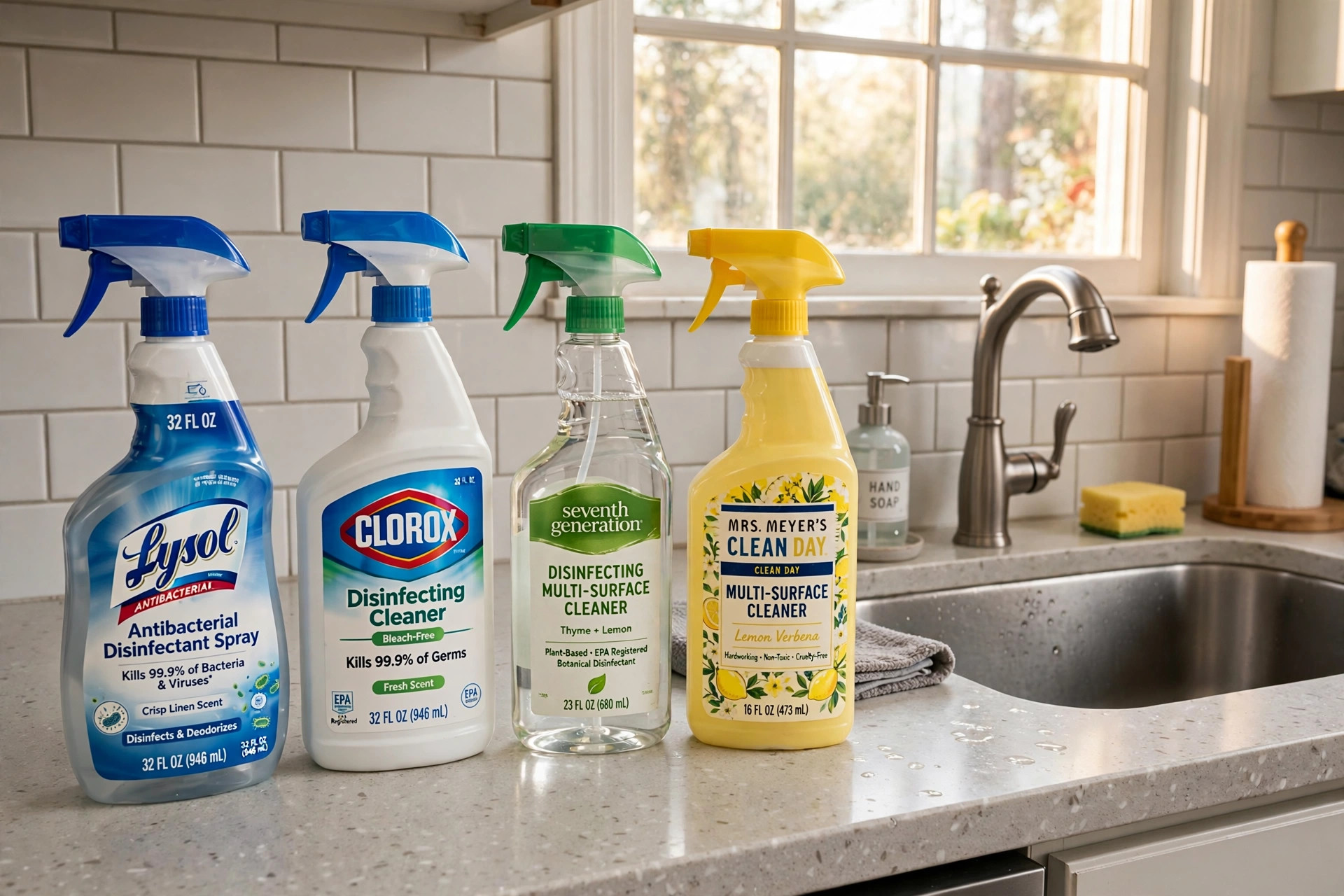

Every American home keeps some kind of spray bottle under the sink. The shelf at the store, however, can feel like a small library. Prices for antibacterial disinfectant sprays in the USA run from a dollar a bottle to more than seven, and the labels all make large promises. This antibacterial disinfectant sprays price comparison usa guide walks through what the products cost, why some cost more than others, and how to get fair value without paying for claims you do not need.
Why It Matters
A clean counter looks good, but a disinfected counter does a different job. Disinfectant sprays are made to kill germs on hard surfaces, not only to wipe away crumbs and dust. Families with small children, older relatives, or anyone with a weak immune system have extra reason to choose the right product. WebMD’s home health pages describe how germs settle on kitchen counters, doorknobs, and bathroom fixtures, which helps explain why those spots deserve more than a damp cloth.
Price matters because most homes buy these sprays again and again. A difference of two or three dollars per bottle adds up over a year. When you compare antibacterial disinfectant sprays price comparison usa figures across stores, you may find the same brand sells for much less at a warehouse club than at a corner drugstore. Knowing the range keeps you from paying full price out of habit.
There is also a safety side. The EPA keeps a list of registered disinfectant products that meet its tests for killing germs. A registered product costs a little more to make, and that shows up in the price. Paying for registration is paying for proof.
What to Look For When You Compare: Antibacterial Disinfectant Sprays Price Comparison Usa
The Active Ingredient
The active ingredient is the chemical that does the germ killing. Common ones include quaternary ammonium compounds, hydrogen peroxide, lactic acid, and bleach-based mixes. The label names it and gives a percentage. Sprays with faster kill times or newer formulas often sit at the top of the price range.
Kill Claims and Contact Time
A disinfectant must stay wet on a surface for a set number of minutes to work. This is called contact time. Some sprays claim to kill cold and flu viruses in two minutes; others take ten. Shorter contact time usually means a higher price, and it is a fair thing to compare when you shop.
Surface Suitability
Not every spray suits every surface. Some are safe on food-contact counters, others are not. Some can harm stone, wood, or stainless steel. Read the label for the surfaces you actually clean. A cheap spray that ruins a countertop is no bargain.
Scent and Residue
Unscented, lemon, and bleach-scented formulas are all common. Plant-based or “green” formulas often cost more. Residue matters too. A spray that needs rinsing adds a step; a no-rinse formula may cost a bit more but saves time.
Types of Antibacterial Disinfectant Sprays
Ready-to-Use Sprays
These are the standard bottles you find in every aisle. They cost about one to seven dollars each. They are the easiest to compare because prices sit right on the shelf tag. Store brands sit at the low end, and name brands with faster kill claims sit at the high end.
Concentrates and Refills
Concentrate bottles mix with water to fill many spray bottles. The upfront price looks high, but the cost per use is often the lowest of all. If you clean a large home or a small office, concentrates deserve a look. The Spruce offers guides on cleaning product formats that explain when a refill makes sense.
Wipes and Aerosol Foams
Wipes and foaming sprays cover uneven spots well. They tend to cost more per surface cleaned than liquid sprays. Families who value speed often accept the premium. Bob Vila’s home cleaning advice covers these formats in plain terms.
Plant-Based and Fragrance-Free Options
These use acids from plants, such as citric or lactic acid, instead of harsh chemicals. They appeal to homes with pets or sensitive noses. They usually price at the middle or top of the range because the ingredients cost more to source.
Which Type Fits Which Home
A busy family kitchen does well with a ready-to-use spray and a fast contact time. A large home with many bathrooms may save money with a concentrate and a refillable bottle. Renters who clean once a week often find wipes the simplest choice, even at a higher per-use price. Match the type to your routine, not to the ad.
Cost and Price: What the Numbers Look Like
In the United States, a standard 22- to 32-ounce bottle of antibacterial disinfectant spray typically sells for between one and seven dollars. Store brands and value packs cluster near the bottom of that range. National brands with EPA registration and fast kill claims cluster near the top.
Several things move the price:
– Brand name. Advertising and shelf space cost money, and the buyer pays for both. – Package size. Larger bottles almost always cost less per ounce. Compare the unit price on the shelf tag, not the sticker price. – Special formulas. Fragrance-free, plant-based, and fast-acting versions add one to three dollars. – Where you buy. Warehouse clubs and big-box stores beat drugstores and convenience stores on the same bottle. Online prices swing with shipping fees. – Bulk packs. Two-packs and three-packs cut the per-bottle price by a clear margin.
The Family Handyman site shares cleaning cost tips that apply here too: buy the size you will actually finish, and watch the unit price rather than the coupon.
How to Compare Prices Across Stores
Start with the unit price. Most shelf tags show the price per ounce in small print. This is the only fair way to compare a 22-ounce bottle against a 32-ounce bottle or a three-pack. Write the per-ounce price on your phone as you shop, or snap a photo of the tags and compare at home.
Store brands deserve a fair test. They often carry the same active ingredient as the national brand beside them, and many are EPA registered too. Buy one small store-brand bottle and one small national-brand bottle, and see which one you reach for twice. Your own test beats any claim on the shelf.
Watch for false savings. A large bottle that you will not finish before the expiration date wastes money. A multipack with a scent you dislike wastes money. A “deal” that adds shipping fees can cost more than the store shelf. The cheapest honest price is the per-ounce price of a product you will actually use up.
Sales follow a pattern. Cleaning products often drop in price in January, when stores push fresh-start goods, and again in late summer. If you have storage space, buying two bottles at a sale price can cut your yearly cost by a third.
For a fuller picture of what whole-home cleaning can cost, see our guide to reliable deep cleaning service packages in Colorado. If you are moving, the prices in powerful move out cleaning services for homeowners show when hiring help beats doing it yourself. And when you need the right gear, read where to buy blind cleaning tools in Texas for a buying walk-through.
Care and Upkeep of the Products Themselves
Disinfectant sprays need a little care to keep working. Heat and sunlight break down the active ingredients, so store bottles in a cool cabinet, not on a sunny windowsill or in a hot garage. Keep them away from food and out of reach of children and pets.
Check the date on the bottle. Most sprays keep their strength for about one to two years. An old bottle may still clean, but it may no longer disinfect. Good Housekeeping’s product tests note how expiration affects performance, and the same applies to what sits under your sink.
Do not mix sprays with other cleaners, especially bleach with anything containing ammonia. The mix can release harmful gas. Rinse the spray nozzle now and then so it does not clog, and wipe the bottle itself so it stays pleasant to handle.
Safety First
The CDC explains the difference between cleaning and disinfecting: cleaning removes dirt, while disinfecting kills germs. Both steps matter, and the order matters too. Clean a dirty surface first, then disinfect.
Ventilate the room while you spray. Open a window or run a fan. Wear gloves if your skin is sensitive, and keep the spray away from your eyes. The FDA writes about antibacterial product claims, which helps buyers understand what “antibacterial” on a label really means.
Read the first-aid lines on every label before you need them. Some sprays irritate the skin, some irritate the eyes, and some harm aquatic life if they wash down a storm drain. Using less than the label suggests will not disinfect, so measure by following the directions rather than by guessing.
Keep every bottle in its original container with its label. Never pour a disinfectant into a food jar or an unmarked bottle. If someone swallows it or it gets in the eyes, call the poison control number on the label right away. Reviews from the Wirecutter test how sprays perform in real kitchens, which is a useful second opinion before you commit to a brand.
Frequently Asked Questions
What is a fair price for an antibacterial disinfectant spray in the USA?
Most bottles sell for one to seven dollars. Store brands sit near one to three dollars, and leading national brands sit near four to seven. Buying a larger size or a multipack lowers the per-ounce cost.
Are expensive disinfectant sprays always better?
No. Price often reflects brand, scent, or speed of action rather than germ-killing power. An inexpensive EPA-registered spray can disinfect as well as a costly one, as long as you follow the contact time on the label.
What does “contact time” mean?
Contact time is how long the surface must stay wet for the spray to kill the germs it claims to kill. It ranges from about one minute to ten minutes. Shorter contact times are convenient but usually add to the price.
Can I use disinfectant spray on food counters?
Only if the label says it is safe for food-contact surfaces. Some sprays need rinsing after use on counters where food sits. Check the directions before you spray where you prepare meals.
How long does a bottle stay effective?
Most sprays keep their strength for one to two years when stored in a cool, dark place. After that, they may clean but no longer disinfect. Replace old bottles rather than guessing.
Is a plant-based disinfectant as strong as a chemical one?
Plant-based formulas that are EPA registered have passed the same germ-killing tests. They can cost a little more, but registration is the proof that matters, not the source of the ingredient.
Should I disinfect every day?
High-touch spots, such as doorknobs, light switches, and faucet handles, benefit from regular disinfecting. Most other surfaces need it after illness, raw food prep, or heavy use. Daily spraying of every surface is more cost than care.
A Short Final Word
Comparing prices for antibacterial disinfectant sprays is simple once you know what to look for. Read the active ingredient, check the contact time, and compare the unit price. A registered product at a fair price, used the right way, does the job. The most expensive bottle on the shelf is not always the smartest buy, and the cheapest is not always a bargain. Measure twice, buy once, and your home will be clean in the way that counts. A good spray, bought at a fair price and used as the label directs, is one of the cheapest forms of home care there is.
References
Bob Vila. (n.d.). Home improvement advice. https://www.bobvila.com Centers for Disease Control and Prevention. (n.d.). Cleaning and disinfecting your home. https://www.cdc.gov Consumer Reports. (n.d.). Product reviews and ratings. https://www.consumerreports.org Family Handyman. (n.d.). DIY home repair and maintenance. https://www.familyhandyman.com Good Housekeeping. (n.d.). Product reviews and home advice. https://www.goodhousekeeping.com The Spruce. (n.d.). Home and garden advice. https://www.thespruce.com U.S. Environmental Protection Agency. (n.d.). Protecting human health and the environment. https://www.epa.gov U.S. Food and Drug Administration. (n.d.). Antibacterial product information. https://www.fda.gov WebMD. (n.d.). Health and wellness information. https://www.webmd.com Wirecutter. (n.d.). Product reviews from The New York Times. https://www.nytimes.com/wirecutter
Was this guide helpful?

About Jennifer Lee
The My Garden US editorial team writes practical, in-depth home and garden guides for American homeowners — tested advice, no fluff.
You May Also Like
How to Buy Tile Grout Cleaning Machines Online in Arizona
January 11, 2026 0 views
Buy Chimney Cleaning Brushes Online in Arizona: A Homeowner’s Guide
August 8, 2026 0 views
Affordable HEPA Vacuum Cleaners Buying Guide
January 31, 2026 0 views