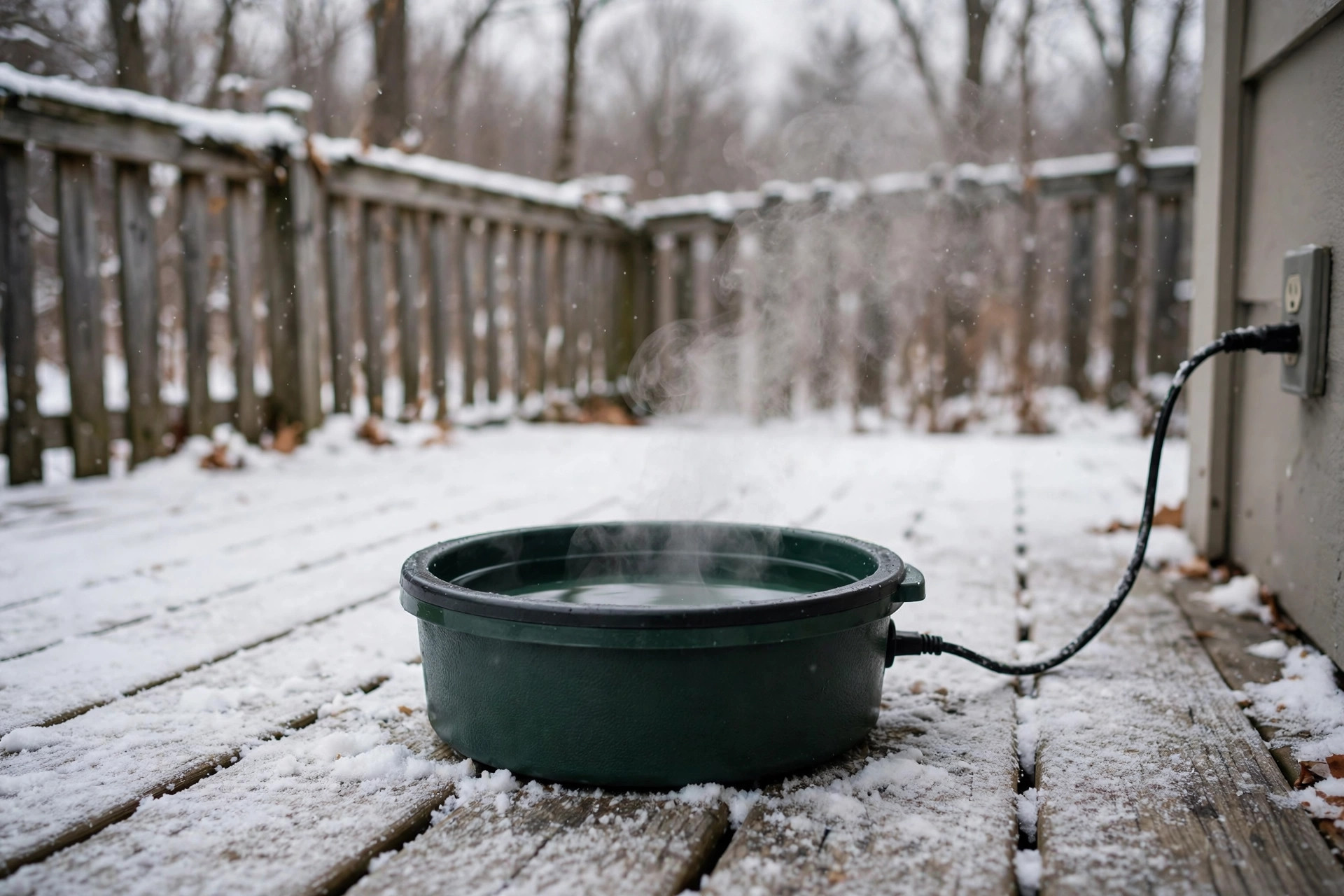

Winter brings hard mornings to every home with outdoor animals. The dog pushes his nose toward the water bowl and finds a solid sheet of ice. The barn cat paws at the same frozen surface. A heated outdoor water bowl for winter pets solves this one problem in a simple way. It keeps a small pool of water above freezing so animals can drink at any hour, in any cold snap.
Most pet owners think of food first when they plan for winter. Water matters just as much. A dog can go some time on less food. He cannot go long on less water. Ice in the bowl is the same as an empty bowl. This guide walks through why heated bowls matter, how to pick one, what they cost, and how to keep them safe.
Why It Matters
Animals lose water in winter even when the air is cold. They breathe it out as steam on cold mornings. They lose it through their paws and skin in dry air. Indoor heat dries the air and adds to the loss for house pets. Outdoor pets face dry wind on top of the cold.
When water freezes, pets drink less. They may wait for an owner to come home and crack the ice. They may lick snow instead. Snow is mostly air, and eating snow can cool a small animal fast. Dehydration can creep up in winter just as it does in summer. The signs are quiet: thick saliva, dry gums, a drop in energy, darker urine. By the time most owners notice, the pet has been short of water for days.
A heated bowl fixes the root cause. A low-watt heating element sits under or around the bowl. It holds the water at a few degrees above freezing. It does not make the water warm. It only stops ice from forming. Pets drink normal, cool water all winter.
Veterinary groups point out that outdoor dogs and farm cats need fresh water every day of the year. Many animal welfare resources stress winter water as one of the three basics of cold-season care, next to shelter and food. When the bowl stays open, the pet drinks when thirsty, which is the most natural pattern.
What to Look for When You Shop: Heated Outdoor Water Bowl for Winter Pets
Shopping for a heated bowl is not hard. A few details separate a good bowl from a weak one. Keep these points in mind as you compare models.
Power and Thermostat
Look for a bowl with a built-in thermostat. The thermostat switches the heater on only when the air turns cold. This saves power and keeps the water from getting too warm. Most units draw between 25 and 60 watts. That is about the same as a small light bulb.
Bowl Size
Size the bowl to the animal. A small bowl of one quart suits a cat or a toy breed. A medium dog needs one to two gallons. A large breed or several dogs may need a two-gallon bowl or more. Bigger bowls hold heat better, but they are heavier to carry and clean.
Cord Length and Chew Resistance
The power cord is the weak point of every heated bowl. A chewer can gnaw through a thin cord in minutes. Look for a cord wrapped in steel or a stiff spring coil. Some brands sell a cord guard as a spare part. A longer cord gives you more room to route it away from teeth.
Material
Most heated bowls are plastic. Plastic is light and holds heat well. A few are stainless steel. Steel is harder for dogs to chew and easy to clean, but it costs more. Check that the bowl is marked food grade and free of BPA.
Reviews and Testing
Independent testers measure real watt draw and cold-weather limits. Sites such as Consumer Reports sometimes review pet gear for safety and build quality. Reading a few reviews from owners in cold states helps too. They will tell you how the bowl holds up at ten below zero, not just at thirty-two degrees.
Types and Options
Heated bowls come in a few shapes. Each suits a different setup.
Electric Heated Bowls
This is the standard type. A wall plug feeds a heating plate under the bowl. Some bowls wrap the heat around the sides instead. These work down to about twenty degrees below zero in most tests. They are the best pick for kennels, porches, and barns near an outlet. Many pet care guides list electric heated bowls as the first line of defense against frozen water.
Insulated Double-Wall Bowls
These have no heater at all. Thick foam walls slow freezing for a few hours. They cost little and need no power. They are a fair backup for mild climates where the cold only bites at night. In hard winter they are not enough on their own.
Heated Dispensers
A dispenser holds a tank of several gallons with a small drinking tray. The heater keeps the whole tank open. These suit multi-dog homes and small kennels. The large tank means fewer refills. The trade-off is weight and price.
Solar and Battery Units
A few makers sell bowls with solar panels or battery packs. They appeal to owners far from an outlet. In practice they struggle. Short winter days give little sun. Batteries fade in deep cold. Treat these as a last resort, not a main plan.
Cost and Price
A heated outdoor water bowl for winter pets costs less than most owners expect. Basic one-quart bowls start near twenty dollars. Good mid-range bowls of one to two gallons run from thirty to sixty dollars. Large two-gallon steel models can reach eighty dollars or more.
Running cost is small. A 40-watt bowl with a thermostat may run half the day in deep winter. That works out to roughly five to ten cents a day in most states. Over a four-month winter the power bill rises by a few dollars. Compare that with the cost of a vet visit for dehydration, and the bowl pays for itself fast.
Spare parts matter too. A replaceable cord is worth paying extra for. Some owners keep a second bowl on hand so the pets never wait during a cleaning day. For a full winter setup, many owners pair the bowl with a heated shelter upgrade, such as a heated dog house for winter cold climates, so the animal has a warm place to rest after drinking.
Care and Upkeep
A heated bowl is low care, but it is not no care. A short routine keeps the water clean and the heater safe.
Change the water every day. Warm water grows slime faster than ice water. Algae and biofilm build up on the walls of any bowl that stays above freezing. Dump the water, scrub with a brush, and rinse. A weekly wash with mild dish soap keeps the surface clean. Rinse well so no soap taste remains.
Check the cord every week. Look for chew marks, cracks, or bare wire. Unplug a bowl with a damaged cord at once. Never tape a chewed cord and keep using it. Order a spare cord from the maker before winter starts if one is sold.
Set the bowl on flat ground. A level bowl heats evenly. Keep it out of deep mud and out of direct puddles that can reach the plug. In a kennel, place it where the dog cannot back it into a corner and sit on the cord.
Watch the outlet. Outdoor outlets need a weather cover. A ground-fault outlet adds a layer of shock protection. If the outlet trips often, call an electrician rather than working around it.
When spring comes, wash the bowl and dry it fully. Store it upright in a dry shed. Heaters last longer when they are stored clean and dry.
Safety
Electricity and water always deserve respect. A heated bowl is built for this job, but safe use starts with the owner.
Use only bowls rated for outdoor use. Indoor bowls may lack sealed wiring. Buy from known makers and look for a safety listing mark on the label. The Humane Society guidance on winter pet care and similar outdoor pet resources remind owners that any outdoor electric device should be listed for outdoor service.
Never let pets drink from a bowl with a cracked housing. If the bowl rocks, leaks, or smells of hot plastic, unplug it and stop using it. Do not repair wiring yourself unless you are trained for it.
Keep the cord off the ground where you can. Run it along a wall or under a raised edge so it does not sit in meltwater. Cord clips help. Where a chewer lives, a steel cord wrap is worth the small extra cost. Many training sites, including dog care libraries, note that cord chewing is one of the top causes of pet electric shock at home.
Unplug the bowl during storms with lightning nearby. Plug it back in after the storm passes. This small habit protects both the pet and the house.
How It Fits a Full Winter Setup
A heated bowl is one piece of a winter plan. Outdoor dogs also need wind shelter, dry bedding, and extra food in cold snaps. Cats that live outdoors need the same basics on a smaller scale.
Many owners set up a warm corner first and add the bowl beside it. A heated cat house for outdoor feral cats gives stray cats a place to sleep out of the wind. Senior dogs with stiff joints often get a heated pet bed for arthritic older dogs inside the shelter. With bed, shelter, and open water all in one spot, the pet has everything within a few steps. For questions on senior pet winter care, pet sitting and care networks and breed clubs both publish free cold-season checklists.
Place food and water a few feet apart. Dogs may splash water into food if the bowls touch. Keep both under a roof edge or porch cover when you can. A covered spot cuts wind chill and keeps blowing snow out of the bowl.
Frequently Asked Questions
Will the water get hot enough to burn my pet? No. A proper heated bowl holds water just above freezing, around forty degrees. It should never feel warm to your hand. If it does, unplug it and stop using it.
How much power does a heated bowl use? Most draw twenty-five to sixty watts, and the thermostat cycles them on and off. Expect a few dollars on the winter power bill.
Can I use an extension cord with a heated bowl? Use one only if you must, and only a heavy outdoor-rated cord. Keep the connection dry and off the ground. A direct plug into a weatherproof outlet is safer.
Do heated bowls work for chickens or rabbits? Yes, with care. Poultry and rabbits drink from open bowls too. Pick a shallow model for small animals so they cannot fall in. Supervise new setups for the first days.
What if my dog chews the cord? Unplug the bowl at once. Replace the cord if the maker sells spares. For repeat chewers, add a steel cord wrap or route the cord through conduit.
Can the bowl run all winter without being watched? It can run daily, but it still needs eyes on it. Check water level, cord condition, and cleanliness each day. No electric device should go weeks without a look.
A Final Word
A heated outdoor water bowl for winter pets is a small buy with a large payoff. It turns a daily chore of cracking ice into a one-time setup. The pet drinks when thirsty. The owner stops worrying about frozen bowls on work mornings. Pair it with dry shelter and steady food, and the animals under your care can face winter in comfort.
References
American Kennel Club. (n.d.). Dog care and training resources. https://www.akc.org American Red Cross. (n.d.). Swimming and water safety. https://www.redcross.org ASPCA. (n.d.). Pet care and animal welfare resources. https://www.aspca.org Chewy. (n.d.). Pet supplies. https://www.chewy.com Consumer Reports. (n.d.). Product reviews and ratings. https://www.consumerreports.org PetMD. (n.d.). Pet health information. https://www.petmd.com Rover. (n.d.). Pet sitting and dog walking services. https://www.rover.com The Home Depot. (n.d.). Home improvement products. https://www.homedepot.com The Spruce. (n.d.). Home and garden advice. https://www.thespruce.com The Spruce Pets. (n.d.). Pet care guides and product reviews. https://www.thesprucepets.com
Was this guide helpful?

About Lisa Anderson
The My Garden US editorial team writes practical, in-depth home and garden guides for American homeowners — tested advice, no fluff.
You May Also Like

Best Outdoor Dog Toy for Fetch in Yard
March 9, 2026 0 views
Dog Ramp for SUV and High Bed Access: A Simple Buying Guide
May 15, 2026 0 views
Indoor Dog Potty for Apartment Living Training: A Simple Guide
May 29, 2026 0 views