
A patio umbrella for high wind areas must do more than give shade. It must stay upright when gusts hit. A cheap umbrella can snap, flip, or sail across the yard in a storm. Homeowners often learn this the hard way. A calm spring day turns into a windy afternoon, and the umbrella ends up in pieces. This guide explains how to choose a model that holds its ground, what features matter most, and how much a good one should cost.
Why Wind Matters More Than Shade
Most umbrellas are built for calm weather. The average market umbrella has a light pole and a small base. In wind, that design acts like a sail. The canopy catches air and lifts. The result is bent ribs, torn fabric, or a broken pole.
Homeowners in coastal towns and open prairies face this problem often. Gusts of 25 to 40 miles per hour are common in these places. A standard umbrella is rated for winds under 20 miles per hour. That gap is where damage happens. One report from Consumer Reports notes that poor stability is a top complaint about outdoor furniture. Wind is the main cause.
Choosing the right umbrella protects your money. A broken umbrella costs you twice: once when you buy it, and again when you replace it. It can also damage other things. A flying umbrella can crack a window, dent a car, or hit a neighbor’s fence. The right choice saves repair bills and stress.
What to Look For When You Choose: Patio Umbrella for High Wind Areas
Start with the frame. The frame is the skeleton of the umbrella. Aluminum frames resist rust and bend without breaking. Wood frames look fine but crack under stress. Steel is strong but can rust unless it is coated. For wind, aluminum is the best pick.
Check the rib count. More ribs mean better support. A standard umbrella has six ribs. Wind-rated models often have eight. The extra ribs spread force across the canopy. This cuts the chance of a snap.
Look at the pole diameter. Thin poles wobble. A pole of 1.5 inches or more holds steady. Heavy duty models use poles up to 2 inches thick. Feel the pole in the store. Shake it gently. It should feel solid.
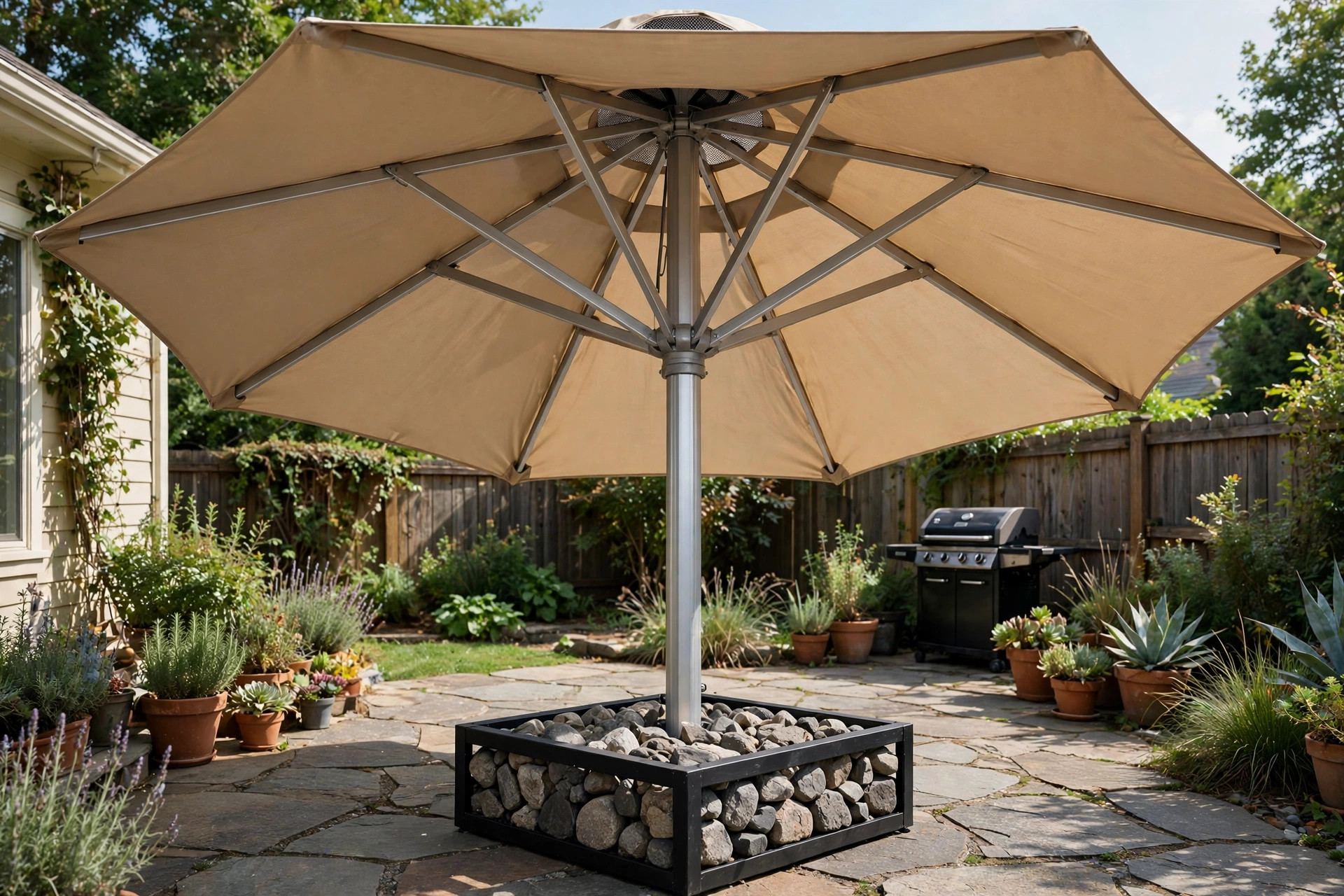
The canopy vent is key. A vent is an opening near the top of the canopy. Wind passes through the vent instead of lifting the whole umbrella. Many windproof models have a double vent. This small feature makes a big difference. Umbrellas without vents catch wind like a parachute.
Check the fabric weight. Light fabric flaps and tears. Heavy fabric holds its shape. Solution-dyed acrylic is a good choice. It resists sun fade and rain. Many guides on The Spruce list fabric weight as a top factor in umbrella life.
Test the tilt and crank. Wind-rated umbrellas often use a crank lift. The crank opens and closes the canopy with ease. Push-button tilts let you angle the shade. In high wind, close the tilt and lower the canopy a bit. A flat canopy catches less wind.
Inspect the joints and hardware. The joints are where ribs meet the hub. Cheap models use plastic hubs. Good models use metal hubs with stainless steel pins. Plastic hubs crack in heat and cold. Metal hubs hold through many seasons. Pull each rib gently in the store. It should move smooth and firm. Loose ribs mean weak joints.
Check the finial on top. The finial is the small cap at the peak. It should screw down tight. A loose finial lets rain in and wind under the canopy. Some makers add a lock ring. The lock ring keeps the finial in place.
Types of Wind-Rated Umbrellas
Market Umbrellas
The classic market umbrella has a center pole. It is the most common type. For wind, pick a model with eight ribs and a vent. These cost less than other types. They work well for small tables and decks. They need a strong base to stay put. Some wind-rated market umbrellas add a second pole section. The joint locks with a pin. This keeps the pole stiff. Cheaper models use a twist lock that slips in gusts. Ask about the lock type before you buy.
Cantilever Umbrellas
A cantilever umbrella hangs from a side arm. The pole stands to one side. This design shades large areas without a pole in the middle. It is popular for pools and lounge sets. The side arm takes stress in wind. Buy one with a heavy base and a thick arm. Our guide on cantilever umbrella base weight explains how much base weight you need for these models.
Tilting Umbrellas
Tilting umbrellas let you angle the canopy. This helps block low sun. The tilt joint is a weak point in wind. In gusts, set the canopy level. Some models lock the tilt in place. Locking joints hold better than loose ones.
Commercial Grade Umbrellas
Commercial models are built for restaurants and resorts. They use thick aluminum and heavy bases. They cost more but last longer. A windproof patio umbrella in this grade can take gusts of 40 miles per hour or more. If you live in a very windy spot, this grade is worth the price.
Cost and Price Guide
Prices vary by type and build. A basic market umbrella costs 40 to 80 dollars. These rarely hold up in wind. A wind-rated market umbrella costs 120 to 250 dollars. It has a vent, eight ribs, and a thick pole.
Cantilever umbrellas cost more. A good one runs 250 to 600 dollars. Commercial grade models can reach 800 dollars or more. Big retailers like Home Depot and Wayfair carry models in all price bands. Prices change with the season. Spring sales often bring the best deals.
The base is a separate cost. Plan to spend 50 to 150 dollars on a base. A cheap base ruins a good umbrella. Do not skip this part. Water-filled bases cost less but weigh less. Sand or concrete bases weigh more and hold better.
Think in terms of total cost. A 200-dollar umbrella plus a 100-dollar base is a 300-dollar setup. That setup can last five to eight years with care. A 60-dollar setup may last one season. The math favors the stronger buy.
Read the warranty before you pay. Good makers offer one to three years on the frame and fabric. Some cover wind damage up to a set gust speed. Cheap models often have no warranty at all. A warranty shows the maker trusts the build. Keep the receipt in case you need it.
Care and Upkeep
Close the umbrella when not in use. This is the simplest rule. An open umbrella left overnight is at risk. Even calm nights can turn gusty. Make it a habit to close and tie the canopy each evening.
Clean the fabric twice a year. Use mild soap and warm water. Scrub with a soft brush. Rinse and let it dry in the sun. Dirt weakens fabric over time. Bird droppings and tree sap should come off fast.
Check the frame each spring. Tighten loose bolts. Oil the crank if it sticks. Look for cracks in the ribs. Replace worn parts before they fail. Small repairs stop big breaks.
Store the umbrella in winter. Take the canopy off the frame if you can. Keep both in a dry shed or garage. A storage bag keeps dust off. In mild climates, you can leave the frame out with a cover on it. Heavy furniture covers from outdoor stores add a layer of guard.
In storm season, bring the umbrella inside. No umbrella is storm-proof. When high wind is in the forecast, take the canopy down. The few minutes of work beats a new purchase.
Spray the fabric once a year with a fabric guard. The spray adds water repellent and slows fade. It also helps wind slide off the canopy instead of catching it. Follow the spray maker’s steps. Let the canopy dry fully before you close it.
Safety Tips
Never sit under an open umbrella in a storm. Lightning can strike metal poles. Strong gusts can flip the canopy down on you. Move inside when the sky turns dark.
Anchor the base well. A base should weigh at least 75 pounds for a nine-foot umbrella. For larger canopies, use 100 pounds or more. If your patio is paved, a heavy stand on the slab works. On soft ground, drive stakes or use a ground anchor.
Keep the area clear. Do not place the umbrella near a grill flame or a fire pit. Fabric can catch fire. Keep kids away from the crank handle. Fingers can get pinched in the mechanism.
If you bolt the base to a deck, use the right hardware. Our piece on how to anchor gazebo to patio covers anchors and bolts that also work for umbrella bases. Tighten them each year. Wood decks loosen with age.
Frequently Asked Questions
What size base do I need for a patio umbrella in a windy area?
For a nine-foot umbrella, use a base of at least 75 pounds. For an eleven-foot canopy, use 100 pounds or more. Cantilever models need even more weight, often 150 to 220 pounds. Check the maker’s guide for the exact number.
Does a vented canopy really help in wind?
Yes. A vent lets air pass through the top of the canopy. This cuts lift. Wind tests show vented models hold steady in gusts that flip solid canopies. A double vent works best.
Can I leave my umbrella open all summer?
It is not wise in a windy area. A sudden gust can break it in seconds. Close the umbrella when you go inside. Tie the canopy with the strap. This small habit adds years to its life.
Which fabric lasts longest in sun and wind?
Solution-dyed acrylic lasts the longest. It resists fade and holds up in rain. Polyester is cheaper but fades faster. Olefin sits in the middle on price and life. Many makers list fabric grades on IKEA and HGTV product pages.
How do I stop my umbrella from spinning in the base?
Use a base with a tightening knob. The knob grips the pole and stops spin. Some owners add a rubber shim for a snug fit. Bob Vila home guides suggest checking the knob each month, since use can loosen it.
Should I buy a cover for the umbrella?
Yes. A cover shields the canopy from sun and rain when the umbrella is closed. It cuts fade and keeps bird droppings off. Pick a cover that fits the full canopy size. A good cover costs 20 to 40 dollars and adds a year or more to fabric life.
A Short Final Word
A patio umbrella for high wind areas is a smart buy, not a luxury. The right frame, a vented canopy, and a heavy base turn a fragile shade into a steady fixture. Spend a bit more up front. Close it in storms. Clean it twice a year. Do these things and your umbrella will shade your patio for many summers.
References
Article. (n.d.). Modern furniture. https://www.article.com Bob Vila. (n.d.). Home improvement advice. https://www.bobvila.com Consumer Reports. (n.d.). Product reviews and ratings. https://www.consumerreports.org Frontgate. (n.d.). Outdoor furniture and decor. https://www.frontgate.com HGTV. (n.d.). Home and garden ideas. https://www.hgtv.com IKEA. (n.d.). Home furnishings. https://www.ikea.com Polywood. (n.d.). Outdoor furniture. https://www.polywood.com The Home Depot. (n.d.). Home improvement products. https://www.homedepot.com The Spruce. (n.d.). Home and garden advice. https://www.thespruce.com Wayfair. (n.d.). Furniture and home goods. https://www.wayfair.com
Was this guide helpful?

About Sarah Mitchell
The My Garden US editorial team writes practical, in-depth home and garden guides for American homeowners — tested advice, no fluff.
You May Also Like

Outdoor Beverage Tub for Parties Reviews: How to Pick the Best One
May 13, 2026 0 views
Outdoor Sideboard for Patio Storage Reviews: A Practical Buyer’s Guide
January 26, 2026 0 views
Patio String Light Poles for Backyard: A Plain Guide
June 17, 2026 0 views