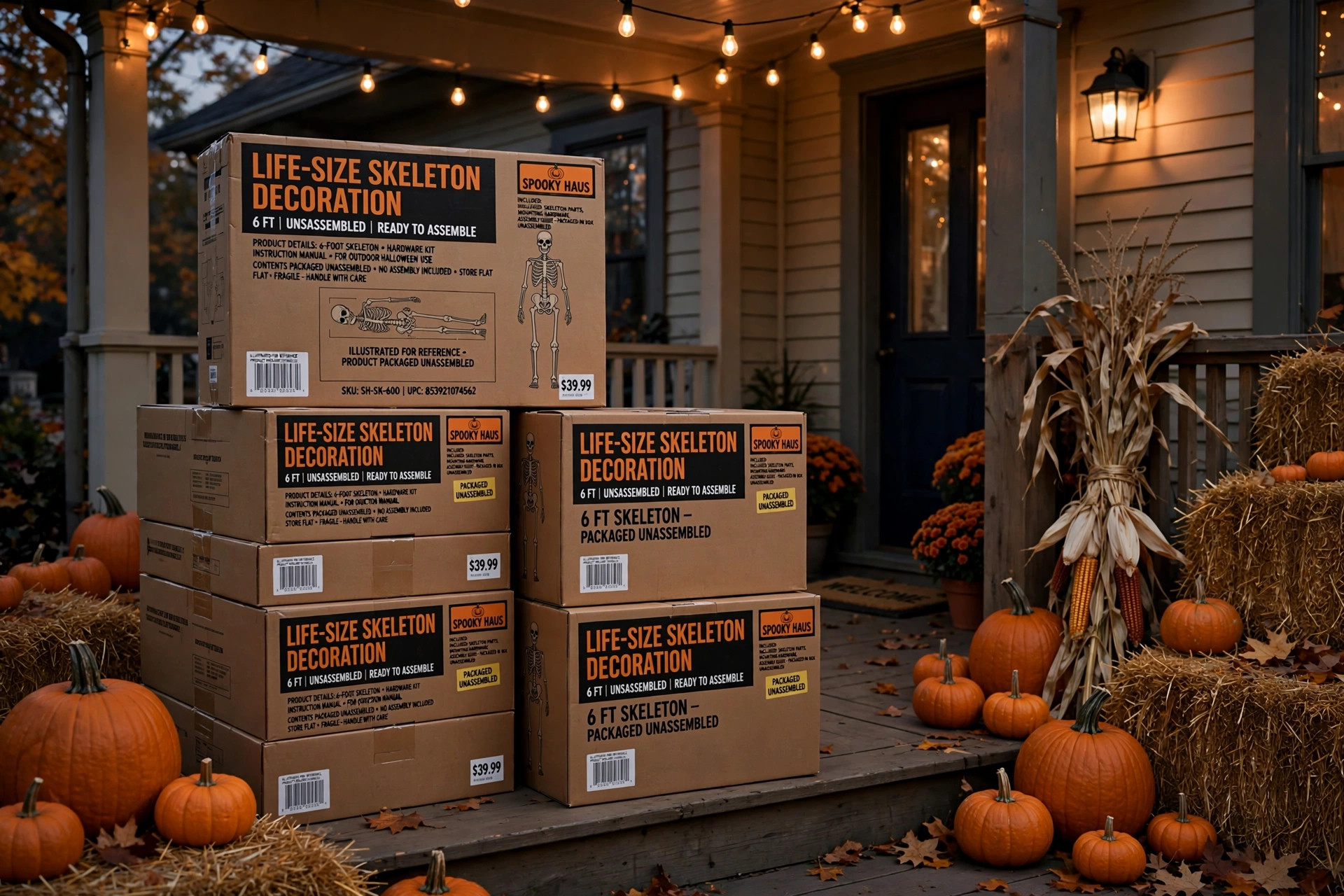

Few Halloween sights stop foot traffic the way halloween skeleton decorations life size for yard displays do. A five-foot skeleton leaning on a fence, a bony driver seated in a wheelbarrow, or a whole crew of them climbing the porch railing turns an ordinary lawn into the talk of the street. These decorations have grown from simple plastic curiosities into a beloved American yard tradition, and makers now sell skeletons in sizes, poses, and price ranges to fit nearly any home.
This guide walks through the whole business in plain terms. It covers why these decorations work so well, what to look for when buying, the main types on store shelves, what they cost, how to care for them, and how to keep the display safe. Whether this is your first year setting one up or your tenth, the steps below will help you build a yard scene that looks great and lasts.
Why It Matters
A life-size skeleton is one of the few decorations that reads clearly from the street. Inflatables are bright and tall, but they sag when the wind dies down and need constant power. Yard signs are small and flat. A five-foot skeleton standing on its own two feet, on the other hand, holds its shape day and night. Drivers slow down. Children point. Neighbors knock on the door to ask where you bought it.
The appeal is also practical. Skeletons weigh little, store flat in an attic or garage, and can be posed in endless ways. One skeleton can be a greeter by the walkway, a gardener among the mums, or a passenger on the porch swing. Buy three or four, and you can stage a full scene: a skeleton picnic, a skeleton band, a skeleton traffic stop. The display can change every year without buying much new material, which keeps the hobby fresh and the budget low.
For families, the project becomes a small tradition. Children enjoy helping pose the figures, and many households photograph the scene each October as the years pass. Unlike a fog machine or a strobe, a skeleton scene is quiet and gentle, so it suits homes where very small children or older neighbors might be put off by louder effects.
What to Look For and How to Choose: Halloween Skeleton Decorations Life Size for Yard
Size and Proportion
“Life size” usually means between four and six feet tall when standing. A five-foot skeleton reads as an adult figure from the curb and fits under a standard porch roof. Tall models, up to eight or twelve feet, need wide open ground, strong anchoring, and often two people to assemble. For a first display, two or three five-foot skeletons give the best balance of presence and manageability.
Joint Quality
Cheap skeletons have fixed joints that crack the first time you bend an arm. Look for figures with movable joints at the shoulders, elbows, hips, and knees. Better models use ball-and-socket joints or reinforced plastic hinges that hold a pose through weeks of weather. In the store, bend a few joints gently. If they feel stiff but move without cracking, the plastic is sound. If they grind or show white stress marks, put that one back.
Material and Weather Resistance
Most life-size skeletons are made of molded plastic, either polyethylene or PVC. Polyethylene resists sun damage better and feels heavier in the hand. PVC models are lighter and cheaper but can grow brittle after a few seasons in strong sun. If the display will sit out for the whole month of October, polyethylene is the safer buy. Check the box or tag for words like “weather resistant” or “outdoor use,” and favor figures whose paint is sealed rather than simply dusted on.
Stability and Anchoring
A skeleton standing on the lawn is a sail in the wind. Quality models come with a ground stake, a stand, or holes in the feet for stakes. If the model you like has none, plan to buy shepherd’s hooks, rebar stakes, or sandbags separately. A display that tips over on a windy night can crack, and worse, it can frighten or trip a visitor. Anchoring is not optional; it is part of the purchase.
Posing and Accessories
Some skeletons arrive plain, while others come dressed as pirates, brides, musicians, or astronauts. Plain white skeletons are more flexible because you can dress them yourself with thrift-store clothes, hats, and props. If you want a themed scene, such as a skeleton barbecue, buying the props at a craft store often costs less than buying a pre-dressed figure. Craft chains like Michaels carry a wide range of small props each fall, from tiny guitars to miniature coolers.
Types and Options
Standard Five-Foot Standing Skeletons
The workhorse of yard displays. These stand on their own with a stake, pose at the joints, and usually cost between twenty and fifty dollars. Buy them in pairs or trios for a scene, or buy one to stand alone as a greeter. Many households dress them in old work clothes so they look like a yard worker, a scarecrow keeper, or a gardener.
Ground-Breaker and Climbing Skeletons
These are partial figures designed to look as if they are crawling out of the earth or climbing a wall. A ground-breaker is a torso with head and arms that stakes into a mulch bed. Climbers attach to porch posts, fences, or the side of the house with straps or screws.
Giant Skeletons
Twelve-foot skeletons became a sensation a few years ago, and makers now offer them in several poses. They are impressive, but they are a project. Assembly takes two adults and a ladder, the price runs into the hundreds of dollars, and storage needs a full garage bay. Reserve a giant for a wide, open lawn where it can be seen from far away, and check local rules before placing anything that tall near the sidewalk.
Animal Skeletons
Dog, cat, horse, and dinosaur skeletons extend the theme into the pet yard or the flower beds. They are usually two to three feet long and cost less than the human figures. A dog skeleton “digging” in the garden bed or a dinosaur skeleton rising from the shrubbery gives the display variety and delights children.
Posable Hands and Accessory Packs
Separate skeleton hands, feet, and skulls are sold in bags each fall. They are useful for details: a hand gripping the mailbox, a skull in the planter, a foot poking out from under a bush. These small pieces cost little and let you spread the theme across the whole property without buying more full figures.
Cost and Price
Weather-resistant halloween skeleton decorations life size for yard models typically cost between twenty and forty dollars for a basic five-foot figure at a big-box store. Mid-range models with better joints and sealed paint run forty to eighty dollars. Premium figures with fine detail, LED eyes, or sound modules can reach one hundred dollars or more, and twelve-foot giants often sell for three hundred dollars and up.
Seasonal timing matters. Prices are highest in early September when the stock first lands. By mid-October, many stores cut prices to clear space, and the week after Halloween brings discounts of fifty percent or more. Shoppers who plan a year ahead can build a large collection for very little money by buying the day after the holiday. Year-round prices at online retailers like Walmart and Target tend to sit between the early-season and clearance prices.
Do not forget the supporting costs. Ground stakes, sandbags, outdoor extension cords, timers, and spotlights add up. A reasonable budget for a first display with three skeletons, stakes, two spotlights, and a timer lands near one hundred fifty to two hundred dollars. Pairing your skeletons with orange Halloween lights for the house exterior and a spooky entryway doormat rounds out the look without much extra cost.
Care and Upkeep
Setting Up
Choose the spots before opening the boxes. Stand where the street sees the yard and mark each skeleton’s place with a stone or a stick. Drive ground stakes into firm soil, not loose mulch, and attach the figure to the stake with zip ties or wire through the frame. Pose the limbs before the final tightening, since joints are easier to adjust while the figure is free. Step back to the curb and check the sight lines. A skeleton hidden behind the mailbox might as well not exist.
Lighting
Skeletons look best with light thrown up at them from below. A small outdoor spotlight aimed at the chest casts long shadows and makes the ribcage read clearly after dark. Avoid placing lights where trick-or-treaters will walk, and keep cords tucked along the ground with landscape staples. Solar spotlights work for small displays and need no wiring at all, though they dim on cloudy days. A plug-in timer set to dusk saves the trouble of switching lights on and off by hand. Ideas for lighting arrangements can be found at HGTV and The Spruce, which both publish seasonal yard guides each fall.
Weather
Rain does not harm plastic skeletons, but wind does. Before a storm, lay the figures down or move them close to the house. Standing water under a display can stain the feet and invite mosquitoes, so set figures on pavers or gravel rather than bare low spots in the lawn. In regions with early snow, take the display in before the first freeze; ice forming in the joints can crack them.
Cleaning
At the end of the season, wipe each figure with a damp cloth and mild soap. Mud washes off easily. Do not use bleach or harsh solvents, which dull the paint. Let the figures dry fully before storing. A soft brush clears cobwebs from the ribcage, where they love to gather.
Storage
Store skeletons indoors, away from direct sun. A garage, shed, or attic all work. Hang standing figures from a hook or lay them flat in a large bag to keep dust off. Remove batteries from any sound or light modules before storage, since leaking batteries ruin the housing. Keep the small parts, hands, and stakes in a labeled box so next October’s setup takes minutes instead of hours. Many crafters buy storage bins at JOANN sized for seasonal figures. If you also use Halloween inflatables in the front yard, store those separately in their own bags so the skeletons do not puncture them.
Safety
Safety comes first with any yard display. Keep every figure, stake, and cord clear of walkways, driveways, and the path trick-or-treaters will use. A skeleton arm at face height over the walkway is an accident waiting to happen. Drive stakes fully into the ground so no sharp tops stick up, and cap rebar ends if you use them.
Electrical safety matters wherever lights meet the lawn. Use only extension cords and timers rated for outdoor use, plug them into ground-fault protected outlets, and keep connections off the ground in weatherproof boxes. Do not overload a single outlet with spotlights, inflatables, and sound machines all at once. The U.S. Consumer Product Safety Commission publishes guidance on outdoor holiday decoration safety that every homeowner should read before the season.
Consider the neighborhood. Keep displays spooky but good-natured, and aim spotlights at your own yard, not into a neighbor’s windows. If the display uses sound, keep the volume low after dark.
Frequently Asked Questions
How long do life-size Halloween skeletons last?
A decent polyethylene skeleton kept out of the sun in storage lasts five to ten seasons. Cheaper PVC models may last three to five. The joints usually fail before the plastic does, so figures with sturdy joints are the better long-term buy.
Can skeletons stay outside in the rain?
Yes. Molded plastic shrugs off rain. The main risks are wind, which can topple and crack a figure, and standing water, which stains the feet. Anchor well and set figures on firm, drained ground.
What is the best way to keep a skeleton from falling over?
Drive a metal ground stake deep into firm soil and zip-tie the skeleton’s frame to it at the waist and ankles. For hard ground, use a heavy umbrella stand or sandbags around a freestanding base. In high wind, lay the figures down until the storm passes.
Are life-size skeletons safe around small children?
They are generally safe as decoration, but small parts can be a choking hazard for toddlers, and joints can pinch little fingers. Place the display where small children can look but not grab, and keep loose hands, skulls, and stakes out of reach. Product testing notes from Consumer Reports are a good place to check the safety record of specific brands.
Where is the best place to buy them?
Big-box home stores, craft chains, and online marketplaces all carry them each fall. Home Depot and Wayfair stock a wide range of sizes, while Country Living runs yearly roundups of the best-looking models. Shop early for the best selection and after Halloween for the best prices.
How do I light skeletons without running up the power bill?
Use LED spotlights, which draw only a few watts each, and put them on a timer so they run only from dusk to about ten at night. Solar spotlights cost nothing to run at all.
A Final Word
Halloween skeleton decorations life size for yard displays reward a little planning and pay it back in smiles all month. Start with two or three sturdy figures, anchor them well, light them simply, and let the scene grow year by year. Keep the walkway clear, keep the cords dry, and keep the tone friendly, and your yard will become one of the stops the neighborhood looks forward to each October.
References
Consumer Reports. (n.d.). Product reviews and ratings. https://www.consumerreports.org Country Living. (n.d.). Country home and lifestyle. https://www.countryliving.com HGTV. (n.d.). Home and garden ideas. https://www.hgtv.com JOANN. (n.d.). Fabric and craft supplies. https://www.joann.com Michaels. (n.d.). Arts and crafts supplies. https://www.michaels.com Target. (n.d.). Retail store. https://www.target.com The Home Depot. (n.d.). Home improvement products. https://www.homedepot.com The Spruce. (n.d.). Home and garden advice. https://www.thespruce.com U.S. Consumer Product Safety Commission. (n.d.). Product safety information. https://www.cpsc.gov Walmart. (n.d.). Everyday low prices. https://www.walmart.com Wayfair. (n.d.). Furniture and home goods. https://www.wayfair.com
Was this guide helpful?

About Robert Taylor
The My Garden US editorial team writes practical, in-depth home and garden guides for American homeowners — tested advice, no fluff.
You May Also Like

Fall Porch Decor for Harvest Season: A Simple Guide
May 31, 2026 0 views
Best Christmas Lights Indoor for Bedroom Decor: A Warm Guide
April 3, 2026 0 views
Best Christmas Tree With Lights Pre Lit 7ft: A Complete Buying Guide
March 11, 2026 0 views