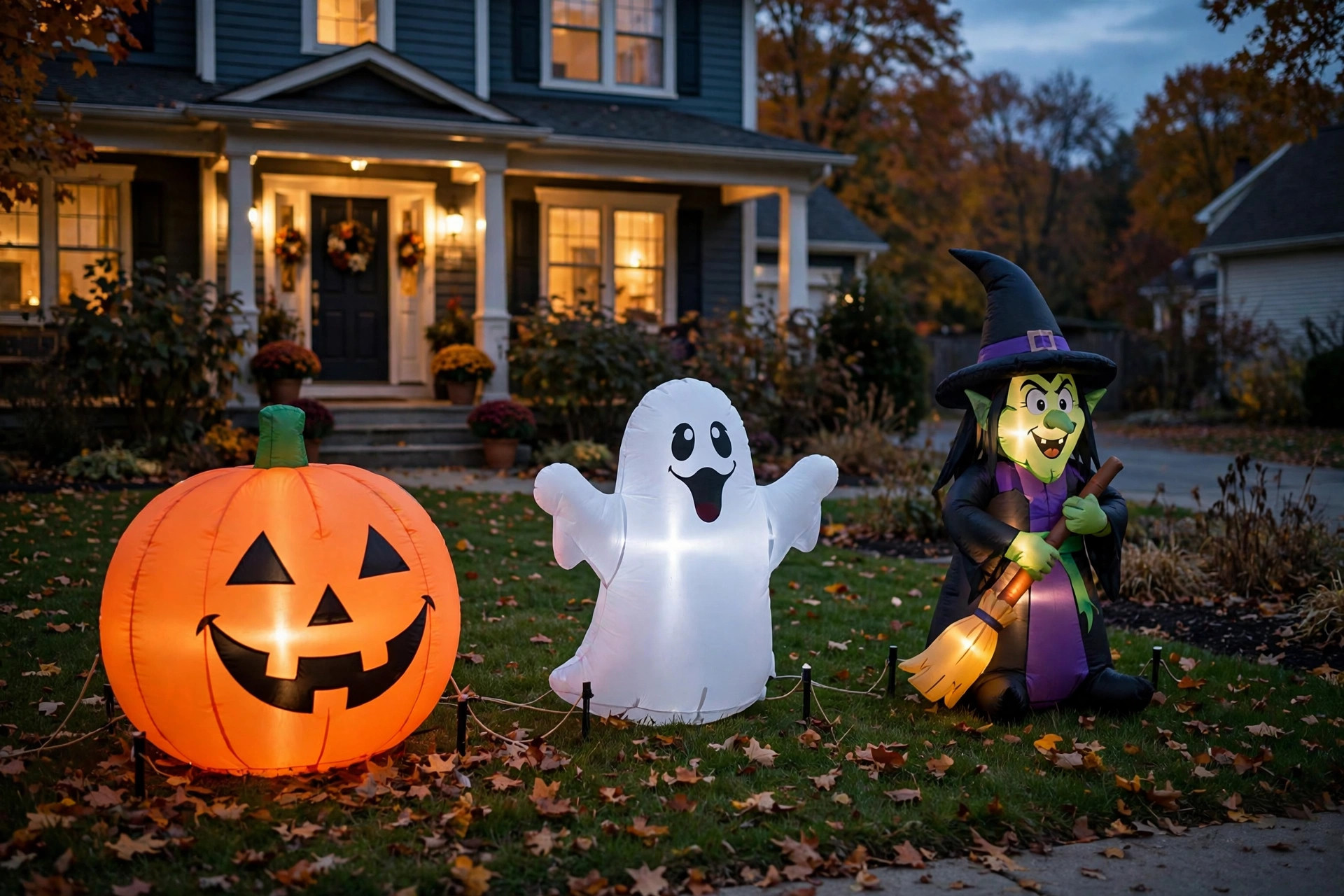

Finding the best Halloween inflatables for front yard decor is one of the simplest ways to give a home a festive look each October. A single large inflatable can be set up in under an hour and can turn a plain lawn into a scene that neighbors slow down to watch. Yet not all inflatables are built alike. Some fade fast in the sun. Some tear at the seams after one season. Some are too tall for a small yard and make the lot look crowded. This guide walks through what matters, from size and fabric to lights, fans, prices, and safety, so the money spent buys a decoration that lasts and looks right.
Why Halloween Inflatables Matter for the Front Yard
The front yard is the first thing visitors see, and in October it sets the mood for trick-or-treat night. Inflatables have become the standard choice for one plain reason: scale. A cutout or a plastic pumpkin can sit on a porch and be seen from ten feet away. A six-foot inflatable ghost can be seen from down the street. For families that want their house to stand out without spending days on a display, that scale is worth the price.
There is also the matter of effort. A full yard display of carved pumpkins, hay bales, and wooden tombstones takes days to build and hours to take down. An inflatable unfolds, plugs in, and rises in minutes. At the end of the season it folds into a bag and fits on a shelf. Many homeowners who once skipped Halloween decorating now join in each year because inflatables lowered the work involved.
Neighborhood custom plays a role too. In many streets, the houses with the best-decorated yards draw the most trick-or-treaters, and children remember which porch had the giant spider. Inflatables are an easy way to take part in that friendly contest without the cost of a custom-built haunted yard.
How to Choose the Best Halloween Inflatables for Front Yard Decor
Choosing well means looking past the bright box and reading what is inside it. The points below separate a strong buy from a poor one.
Measure the Yard First
Start with a tape measure. Note the width of the lawn and the distance from the house to the sidewalk. A four-foot inflatable suits a small lot or a space beside the front door. A six-to-eight-foot piece fits a standard suburban yard. Inflatables above ten feet belong on deep lawns where they can be seen from all sides without blocking windows or walkways. Too many buyers pick the largest size in the store and find it crowds out everything else.
Check the Fabric
Most Halloween inflatables use woven polyester or nylon. Good fabric feels thick and holds a tight weave. Thin fabric tears where the stakes pull and fades quickly under autumn sun. Look for phrases like heavy-duty polyester or weather-resistant material on the label. Double-stitched seams are another sign of a longer life.
Look at the Fan and Lights
Every inflatable runs on a small built-in fan that keeps it full of air. The fan should plug into a standard outdoor outlet and be rated for outdoor use. LED lights inside the inflatable are now common and use little power while making the piece glow at night. Energy-saving lighting is covered in plain terms by the federal Energy Star program, and guides at Energy.gov explain why LEDs beat older bulbs on power draw and heat. Check that the lights are built in rather than clipped on as an afterthought.
Note the Setup Hardware
The box should include ground stakes and tether ropes. These keep the inflatable upright in wind. If stakes are missing, the piece will lean or fall on the first gusty night. Sandbags can be bought as backup for yards with soft or sandy soil.
Read the Power Rating
Inflatables draw little power, often under 100 watts, but the cord length matters. Many come with a short lead cord that needs an outdoor extension cord. Plan the route from the nearest outlet to the spot on the lawn before buying.
Types of Halloween Inflatables for the Front Yard
The range on store shelves each fall is wide. These are the main groups.
Classic Ghosts and Pumpkins
The white ghost and the grinning jack-o-lantern are the safe picks. They fit any yard, they read clearly from the road, and they rarely offend neighbors. Ghosts with waving arms and pumpkins with painted faces are the most common designs, and they tend to be priced lower than licensed characters.
Witches, Bats, and Spiders
A witch on a broom, a cluster of bats, or a giant spider suits yards that want a spookier tone. Spiders work well stretched across a bush or hung near the porch. Witches need open space so the broom and hat keep their shape. These pieces pair well with a halloween fog machine for yard haunt effect, which fills the lawn with low fog around the inflatable.
Licensed Characters
Movie and cartoon characters draw a crowd, but the price runs higher and the designs change year to year. A licensed inflatable bought this fall may look dated next fall. They are a good pick for a house that wants one star piece, less so for a buyer who wants the same display every year.
Scenes and Archways
Some inflatables form a whole scene: a haunted house, a pumpkin patch, or an archway over the walk. These take more space and often need two fans. They look best on wide lawns where the full shape can be seen head-on. Retailers such as The Home Depot and Lowe’s carry a wide range of these larger pieces each season, and Wayfair lists many of the same styles for home delivery.
Motion and Light Features
Higher-end inflatables add moving parts: a waving arm, a spinning head, or flashing lights. Motion draws the eye, but each moving part is one more thing that can break. Buyers should weigh the extra fun against the shorter life of the mechanism.
Cost and Price of Halloween Inflatables
Prices run in clear bands. Small inflatables, two to four feet tall, usually cost between fifteen and forty dollars. Mid-size pieces, five to eight feet, run from forty to one hundred dollars. Large display inflatables, nine feet and up, start near one hundred dollars and can pass two hundred for licensed or multi-part scenes.
Two things drive the price up: size and licensing. A bigger inflatable needs more fabric, a stronger fan, and more lights. A licensed character adds a fee that the maker passes to the buyer. Timing matters too. Prices are highest in early October when demand peaks. Late October often brings sales as stores clear stock, and November brings the deepest cuts for buyers who plan a year ahead.
A fair rule of thumb: spend enough to get heavy fabric, built-in LED lights, and included stakes. The cheapest inflatables save twenty dollars and cost a replacement next year. Consumer testing groups such as Consumer Reports publish yearly notes on seasonal decor quality that can help a buyer judge which brands hold up, and hands-on project guides at Family Handyman cover outdoor setup and anchoring in plain steps.
For a full display, many families combine one or two inflatables with smaller props. A buyer who also wants best halloween outdoor decorations scary yard pieces like tombstones or skeletons can keep the inflatable budget near the middle and spend the rest on ground-level items.
Care and Upkeep Through the Season
An inflatable that is cared for will last three to five seasons. One that is left out carelessly may not last one.
Bring the inflatable in during storms. High wind tears tethers and can rip the fabric. Heavy rain can soak the fan housing. If a storm is forecast, unplug the fan, deflate the piece, and store it in the garage until the weather clears.
Keep the fabric dry when folded. Packing a damp inflatable away invites mold, and mold stains are nearly impossible to remove. After the last night of use, run the fan for an hour in dry air, then fold and bag the piece.
Clean with a damp cloth only. Soaps and bleach weaken the fabric coating. A soft wipe takes off dust and light dirt. For spots, plain water and gentle rubbing are enough.
Store indoors over winter. A dry closet or a sealed tote in the garage keeps mice and damp away. Do not stack heavy boxes on top of the bag, which can crush the fan housing.
Check cords each year. Before the first setup, look over the power cord and the plug for cracks or fraying. Replace any extension cord that shows wear.
Safety Rules for Front Yard Inflatables
Safety matters because inflatables mix electricity, wind, and foot traffic near a walk where children gather.
Keep cords off the walk. Run power along the edge of the lawn and tape the cord flat where it crosses a path. A loose cord in the dark is a trip hazard for trick-or-treaters.
Stake every piece down. Even a light breeze can topple an unanchored inflatable, and a falling piece can knock over smaller props or startle a child. Use all stakes and ropes in the box, and add sandbags in soft soil. The U.S. Consumer Product Safety Commission posts seasonal guidance on outdoor electrical decor at CPSC.gov, and it is worth a read before the first setup.
Do not overload outlets. One or two inflatables per outdoor outlet is the safe limit. A chain of extension cords feeding five pieces from one plug is a fire risk. If the display grows, run a second line from another outlet or use a power strip rated for outdoor use.
Watch the placement near driveways. An inflatable that blocks a driver’s view of the sidewalk is a danger on a busy trick-or-treat night. Keep tall pieces back from the curb and the driveway apron.
Mind pets and wildlife. Dogs like to chew tether ropes, and a chewed rope means a fallen inflatable. Check ropes each evening during the display weeks.
Turn displays off at night. Running the fan all night wears the motor and adds to the power bill. A simple outdoor timer shuts the display down at bedtime and brings it back at dusk.
Frequently Asked Questions
How long do Halloween inflatables last?
With care, a well-made inflatable lasts three to five seasons. Thin fabric, harsh sun, and rough storage shorten that life. Buyers who store pieces dry and indoors each winter get the most years out of them.
Do Halloween inflatables use much electricity?
No. Most draw between 50 and 150 watts while the fan runs, about the same as a single bright porch bulb. LED-lit models use even less. Running a mid-size inflatable six hours a night for the month of October adds only a few dollars to the power bill.
Can inflatables stay out in the rain?
Light rain is fine for pieces rated for outdoor use, but heavy rain and wind are not. The fan housing is the weak point. Bring the inflatable in or cover it when a storm passes through, and never set one up in standing water.
What size inflatable fits a small front yard?
For a small yard, a four-to-six-foot inflatable is the right range. It is tall enough to be seen from the street without swallowing the lawn. One medium piece beside the door looks better than three large pieces crowded together.
Are Halloween inflatables safe around small children?
Yes, when they are set up right. Stake the piece down, keep cords flat and out of walkways, and keep the display back from the path where children walk. Small children should not climb on inflatables, since a puncture from a shoe or toy can tear the fabric.
When should I buy Halloween inflatables?
Early September offers the best selection. Mid-October often brings the first sales. Late October and November bring the lowest prices for buyers willing to store a piece for a year. Craft and decor stores such as Michaels stock seasonal lines early, and design magazines like Country Living publish fall decor roundups that can spark layout ideas.
A Short Final Word
The best Halloween inflatables for front yard decor are not always the biggest or the brightest. They are the ones sized to the yard, built from strong fabric, lit from within, and staked down tight. A buyer who measures first, reads the label, and follows the care steps will get a decoration that earns its place on the lawn for years. For finishing touches, simple halloween window clings for spooky home decor add a low-cost accent to the porch, and seasonal how-to guides at The Spruce cover layout ideas for the whole yard. Set the display up early, keep it safe, and enjoy the season.
References
Consumer Reports. (n.d.). Product reviews and ratings. https://www.consumerreports.org Country Living. (n.d.). Country home and lifestyle. https://www.countryliving.com Family Handyman. (n.d.). DIY home repair and maintenance. https://www.familyhandyman.com Lowe’s. (n.d.). Home improvement products. https://www.lowes.com Michaels. (n.d.). Arts and crafts supplies. https://www.michaels.com The Home Depot. (n.d.). Home improvement products. https://www.homedepot.com The Spruce. (n.d.). Home and garden advice. https://www.thespruce.com U.S. Consumer Product Safety Commission. (n.d.). Product safety information. https://www.cpsc.gov U.S. Department of Energy. (n.d.). Energy efficiency and renewable energy. https://www.energy.gov Wayfair. (n.d.). Furniture and home goods. https://www.wayfair.com
Was this guide helpful?

About Michael Thompson
The My Garden US editorial team writes practical, in-depth home and garden guides for American homeowners — tested advice, no fluff.
You May Also Like
Halloween Window Clings for Spooky Home Decor: A Complete Guide
May 2, 2026 0 views
The Best Thanksgiving Dish Towels for Kitchen Decor
May 4, 2026 0 views
Spring Table Runner for Easter Brunch Decor: A Complete Guide
July 29, 2026 0 views