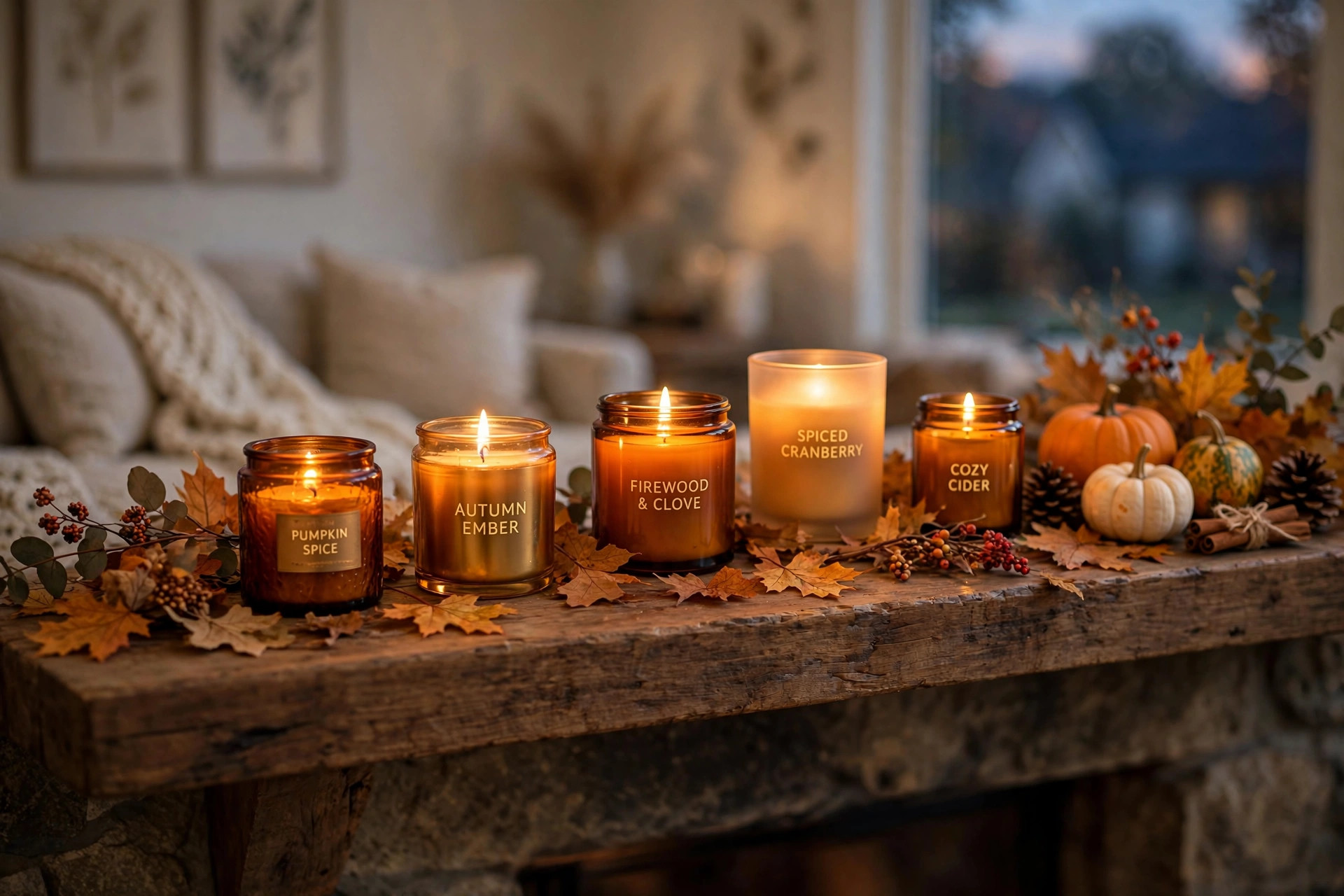

When the air turns cool and the days grow short, many people look for the best fall candles for cozy home fragrance. A good candle can change the whole feel of a room. The soft light warms the walls. The scent brings back memories of autumn walks, baked apples, and wood smoke. This guide explains how to pick safe, pleasant fall candles for your home. It covers scents, wax types, prices, and simple rules for safe burning.
Why Fall Scent Matters at Home
Scent is one of the strongest senses. It can change how a room feels in a moment. A bright lemon scent may feel like summer. A deep scent of clove and amber feels like fall. When guests enter a home that smells warm and clean, they feel welcome. When family members come home after a long day, a soft candle scent helps them relax.
Fall is the season of the home. People spend more time indoors. Windows stay shut. The air can feel stale. A candle adds life to the air. It also adds light, which matters as the days grow dark. The small flame on a table can make an ordinary evening feel calm and warm.
Home fragrance is also part of decor. The jars and tins that hold candles sit on shelves and mantels. They add color and shape to a room. A row of glass jars in amber and gold can look as nice as a vase of flowers. When you pair candles with other autumn pieces, like a fall wreath for the front door, the whole house feels ready for the season.
How to Choose a Good Fall Candle: Best Fall Candles for Cozy Home Fragrance
Choosing a candle is simple once you know what to look for. The main points are scent, wax, wick, and burn time. You do not need to buy the most costly candle to get a good one. You need to buy one that fits your room and your taste.
Scent Type
Fall scents come in clear groups. Warm food scents include apple cider, pumpkin, vanilla, and caramel. Spice scents include cinnamon, clove, and nutmeg. Wood scents include cedar, sandalwood, and pine. Fresh fall scents include crisp leaves, rain, and dried herbs.
Think about the room where the candle will burn. Food scents work well in the kitchen and dining room. Wood and spice scents work well in the living room and the study. Soft scents like vanilla work well in the bedroom. Strong scents can be too much in a small bath. Light scents may vanish in a large open room.
Test the scent before you buy if you can. Smell the candle with the lid off, but do not judge it by the cold wax alone. The true scent shows when the candle burns. Read the scent notes on the label. Notes list the top, middle, and base scents. Top notes hit first. Base notes last the longest.
Wax Type
Most candles use paraffin, soy, beeswax, or a blend. Paraffin is the most common. It holds scent well and costs less. Some people prefer soy wax because it burns longer and comes from plants. Beeswax burns very clean and has a soft honey smell of its own. Coconut and apricot blends are newer and burn with little soot.
No wax is perfect. Soy can have a weak scent throw. Beeswax costs more. Paraffin can soot if the wick is too long. The best choice is the one that burns clean in your home. Look for labels that list the wax clearly. Clear labels are a sign of a careful maker.
Wick and Burn Time
The wick is the string that burns. Cotton wicks are the most common. Wooden wicks crackle like a small fire and add to the fall mood. Some large jars have two or three wicks. More wicks mean the wax melts evenly in a wide jar.
Burn time tells you how long the candle lasts. A small 8-ounce jar may burn for 40 to 60 hours. A large 3-wick jar may burn for 60 to 100 hours. Divide the price by the hours to find the true cost. A costly candle that burns for 100 hours can be cheaper per hour than a cheap one that burns for 20.
Scent Throw
Scent throw is how far the smell travels. Cold throw is the smell of the unlit candle. Hot throw is the smell when it burns. A good fall candle fills a medium room without making the air heavy. If you must leave the room to escape the scent, the throw is too strong. If you smell nothing past two feet, the throw is too weak.
Popular Fall Scents and Options
There are many kinds of fall candles. The list below covers the most loved groups. Each group brings a different mood to the home.
Pumpkin and spice blends. These are the classic fall scents. They mix pumpkin with cinnamon, clove, and nutmeg. They smell like a warm kitchen. They suit the living room and entryway. Many makers sell this blend from late summer through the holidays.
Apple and orchard scents. Apple cider, baked apple, and apple butter bring a crisp but warm feel. They work well in open floor plans. They pair nicely with Thanksgiving table decor for a full holiday look.
Wood and fire scents. Cedar, oak, smoke, and birch smell like a cabin in the woods. A wooden wick adds a soft crackle that sounds like a fireplace. These scents suit dens, studies, and screened porches.
Warm vanilla and amber. Vanilla is soft and sweet. Amber is deep and warm. Together they make a calm scent for the bedroom. They are not too strong. They work for people who dislike spice.
Harvest and herb scents. Sage, rosemary, and dried leaves smell like a garden in October. They feel fresh but still warm. They suit kitchens and mudrooms where food and outdoor smells mix.
Beverage scents. Coffee, chai, and hot cocoa candles smell like a warm drink. They are rich and cozy. They suit reading corners and home offices. They can make a small room feel like a cafe.
Shoppers can find wide ranges at craft stores and home retailers; seasonal collections at Michaels and Lowe’s often include new fall lines each year. For ideas on styling candles with other decor, HGTV and Country Living publish seasonal room guides every autumn.
Cost and Price
Fall candles come at many price points. Small tins and votives cost a few dollars. Mid-size jars from known brands cost between 10 and 25 dollars. Large 3-wick jars and hand-poured soy candles cost between 25 and 45 dollars. Luxury brands can charge 60 dollars or more.
Price does not always mean quality. Many mid-priced candles burn clean and smell rich. Reviews from independent testers, such as those at Consumer Reports, can help you compare burn time and scent strength. Home guides at Good Housekeeping also test seasonal candles each year.
To save money, buy candles at the end of the season when stores clear stock. Buy multi-packs of votives for small rooms. Use a candle warmer for melts and tarts, which cost less than jar candles. A warmer melts wax with a light bulb, so there is no flame and the scent lasts long.
Watch for sales at big home stores. IKEA sells simple scented candles at low prices. Department stores mark down fall lines after the holidays. Keep a list of scents you like so you can buy them when the price drops.
Care and Upkeep of Scented Candles
Good care makes a candle last longer and burn cleaner. Follow these simple rules each time you light a candle.
Trim the wick to one quarter inch before each burn. A long wick makes a large flame. A large flame makes soot and smoke. Use a wick trimmer or small scissors. This one step solves most candle problems.
Let the wax melt all the way to the edge on the first burn. This takes one to two hours for a small jar and up to four hours for a large one. If you blow out the candle too soon, the wax tunnels down the middle. Tunneling wastes wax and shortens the candle’s life.
Keep the wax clean. Pick out burnt wick bits before each lighting. Do not let matches fall into the wax. Keep candles away from dust and drafts. A draft makes the flame dance and smoke.
Store candles in a cool, dark place. Heat and sun can fade the scent. Keep lids on jars when not in use. The lid keeps dust out and holds the scent in.
When only half an inch of wax remains, stop using the candle. The glass can get too hot at the end. Clean the jar with warm soapy water and reuse it for cotton balls, matches, or small plants. Many decor guides at This Old House and Bob Vila show ways to reuse old candle jars around the home.
Safety Rules for Burning Candles
Candles are safe when used with care. They are a real flame, so they need respect. The U.S. Consumer Product Safety Commission shares candle safety tips that every home should follow.
Never leave a burning candle alone. Blow it out when you leave the room or go to sleep. Keep candles at least 12 inches from anything that can burn. This includes curtains, books, and paper decor.
Place candles on a flat, heat-safe surface. Use a tray or plate under the jar. Keep candles out of reach of children and pets. A wagging tail can knock a candle off a low table.
Do not burn a candle for more than four hours at a time. Let it cool before you touch or move it. Do not use water to put out a candle. Use a snuffer or blow gently.
Consider flameless options for some spots. Window candles with timers give the warm look without a real flame. They work well in windows, on high shelves, and in homes with small children or pets. Battery candles now flicker like real flames and cost little to run.
The U.S. Environmental Protection Agency also notes that good airflow helps indoor air stay fresh. Open a window for a few minutes each day, even in fall. This clears out stale air and lets the candle scent work better when you light it again.
Common Questions
How many candles do I need for a cozy living room? One or two medium candles are enough for most living rooms. Place one on the coffee table and one on the mantel. More than three can make the scent too strong. For large open rooms, use one large 3-wick candle instead of many small ones.
Which fall scent is best for small spaces? Soft scents like vanilla, warm linen, or light apple work best in small rooms. Avoid heavy spice blends in a small bedroom or bath. They can feel thick in tight air. A small tin or a wax melt gives gentle scent without a big flame.
Are soy candles better than paraffin candles? Both can be good. Soy often burns longer and comes from plants. Paraffin often holds scent well and costs less. The key is clean burning. Trim the wick, avoid drafts, and stop at four hours. A well-made paraffin candle burns cleaner than a poor soy one.
How long should a fall candle burn each day? Two to three hours per day is a good rhythm. This melts enough wax for a full scent pool. It also keeps the candle safe. Long daily burns use up the candle fast and raise the soot risk.
Can scented candles bother allergies? Strong scents can bother some people. Choose light scents and burn for short times. Keep the room aired. Stop use if anyone gets a headache or a stuffy nose. Unscented candles with a warm glow are a fine choice for sensitive homes.
When should I start buying fall candles? Stores stock fall scents from late August. Buy early for the best choice of scents. Buy late in the season for the best prices. Many shoppers buy a few favorites early and stock up on sale items in November.
A Final Word
The best fall candles for cozy home fragrance are the ones that make your home feel warm and calm. Pick scents you love. Choose a wax that burns clean. Trim the wick, mind the flame, and enjoy the glow. With a little care, a simple candle can turn an ordinary autumn evening into something worth remembering.
References
Bob Vila. (n.d.). Home improvement advice. https://www.bobvila.com Consumer Reports. (n.d.). Product reviews and ratings. https://www.consumerreports.org Country Living. (n.d.). Country home and lifestyle. https://www.countryliving.com Good Housekeeping. (n.d.). Product reviews and home advice. https://www.goodhousekeeping.com HGTV. (n.d.). Home and garden ideas. https://www.hgtv.com IKEA. (n.d.). Home furnishings. https://www.ikea.com Lowe’s. (n.d.). Home improvement products. https://www.lowes.com Michaels. (n.d.). Arts and crafts supplies. https://www.michaels.com This Old House. (n.d.). Home renovation guidance. https://www.thisoldhouse.com U.S. Consumer Product Safety Commission. (n.d.). Product safety information. https://www.cpsc.gov U.S. Environmental Protection Agency. (n.d.). Protecting human health and the environment. https://www.epa.gov
Was this guide helpful?

About Emily Rodriguez
The My Garden US editorial team writes practical, in-depth home and garden guides for American homeowners — tested advice, no fluff.
You May Also Like

Fall Doormat for Farmhouse Porch Welcome USA: A Complete Buyer’s Guide
April 25, 2026 0 views
Outdoor Christmas Lights for House Roofline: A Plain Guide
January 12, 2026 0 views
Christmas Door Wreath With Pinecones and Berries
August 6, 2026 0 views