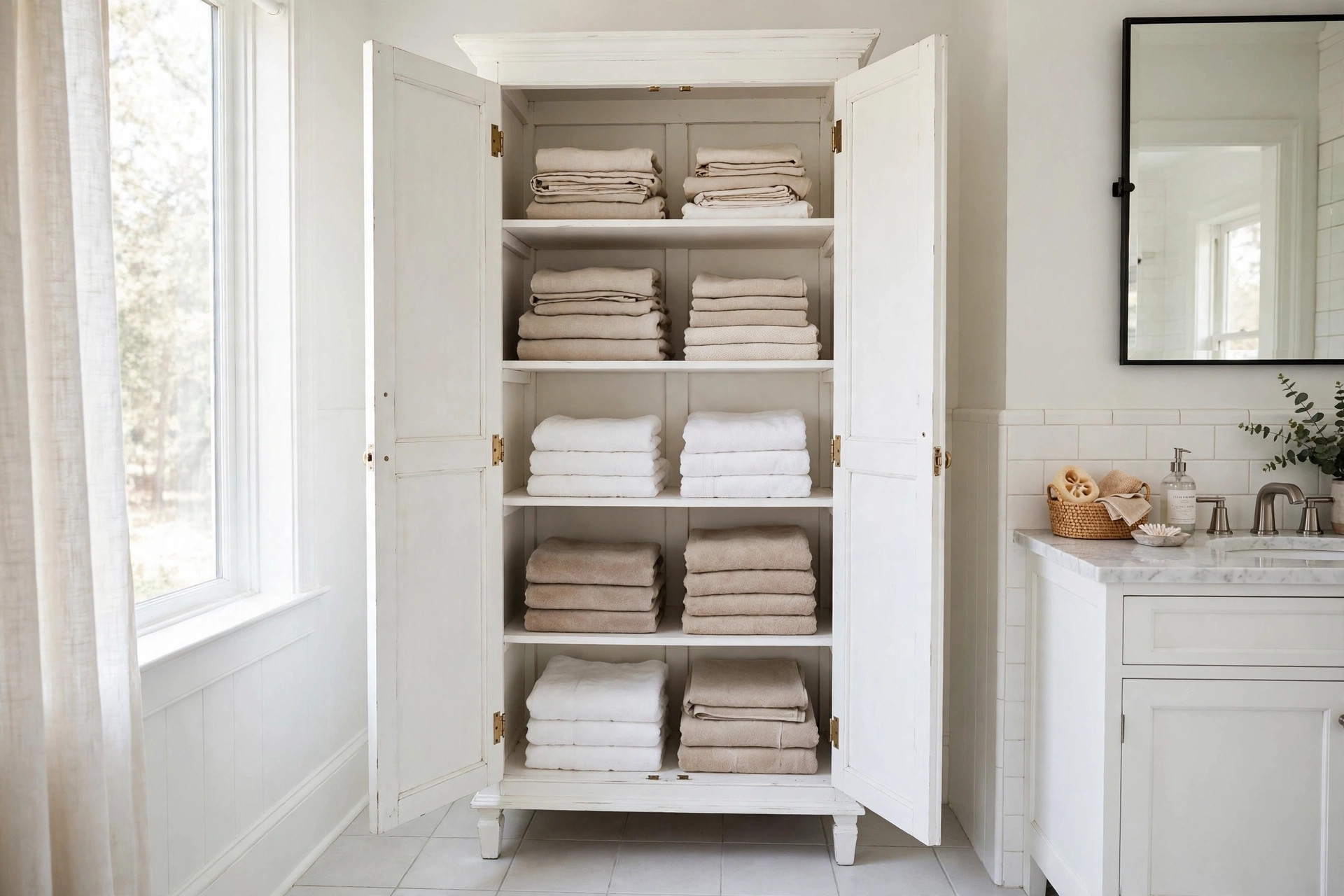
A bathroom linen cabinet keeps towels and sheets in one neat place. It is a tall, narrow cabinet that stands in the bath or in a hall nearby. Many American homes have one because it saves space and keeps things dry. This bathroom linen cabinets reviews buying guide USA is written for home owners who want to buy the right one.
Shoppers in the United States have many choices. Stores and web sites list dozens of models. Prices run from under one hundred dollars to more than one thousand. The differences come down to size, wood, finish, and small details like door style. This guide walks through each point in plain terms so you can compare models with care.
Why a Linen Cabinet Matters
A bath room is often the smallest room in a house. Wet towels pile up fast. Extra sheets and washcloths need a home. A linen cabinet answers both needs. It gives you shelves for folded towels, bath mats, and spare soap. It keeps them behind doors, away from steam and dust.
Open shelves look nice in pictures, but they do not protect fabric. Steam from a hot shower gets into open folds. Towels can smell damp after a few days. Closed cabinets with solid or louvered doors cut this problem down. That is one reason the classic tall cabinet remains popular in older and newer homes alike.
A cabinet also adds to the look of the room. A tall white tower suits a farmhouse bath. Dark wood suits a more formal bath. Many buyers pick a cabinet to match the vanity. When the pieces match, the small room looks planned and calm.
What to Look for When You Shop: Bathroom Linen Cabinets Reviews Buying Guide Usa
Reviews of linen cabinets repeat the same points. Buyers care about fit first, then wood, then details. Below are the points that matter most.
Size and Fit
Measure before you shop. Note the width, depth, and height of the spot where the cabinet will stand. Most bath linen towers are 60 to 72 inches tall, 15 to 24 inches wide, and 12 to 16 inches deep. Some are as narrow as 12 inches, which suits a tight corner.
Check the door swing too. A door that swings open may hit a toilet or a vanity drawer. Sliding doors or open fronts work better in tight rooms. Tall cabinets should be anchored to the wall. A free-standing tower can tip if a child climbs on it. Wall anchors come with many models, but not all.
Also look at shelf space. Fixed shelves are strong but limit what fits. Adjustable shelves let you store tall stacks of bath towels on one level and small washcloths on another. Some models mix both. This is a detail that reviews praise often.
Materials and Finish
Solid wood cabinets last the longest. Oak, maple, and pine are common. They hold weight well and can be refinished. Their price is higher. Many mid-range cabinets use plywood with a wood veneer. These hold up well if the bath has a fan to pull steam out.
The cheapest models use particle board or MDF with a laminate skin. They work in a dry half bath. In a full bath with daily showers, steam can swell cheap board at the joints. Read reviews for words like “swelled” or “warped” before you buy a budget model.
The finish matters as much as the wood. A good factory finish seals the surface. White and gray painted finishes hide small flaws and match most tile. Stained finishes show wood grain but need care in wet air. Water based sealers are common now and hold up fine.
Ventilation and Doors
Louvered doors let air move. They help stored linens stay dry. Solid doors protect better from dust. Some cabinets have open top shelves with closed doors below. This mix works well for display and storage at once. Glass front doors look fine but show every fold, so they need neat stacking.
Hardware is a small thing that counts. Soft close hinges stop doors from banging. Magnetic catches are cheap and work fine. Towel bars on the side of a cabinet add a useful hook for the towel in daily use.
Types of Bathroom Linen Cabinets
Tall tower cabinets are the most common. They stand on the floor and reach near the ceiling. They hold the most. They cost from about 150 to 800 dollars.
Over the toilet cabinets fit above the tank. They are short and wide. They use dead space well. They cost less, often 80 to 250 dollars. They hold less, and tall people may find them close to the head.
Corner cabinets fit where two walls meet. They suit tiny baths. They are often sold as pairs of doors with shelves inside. Their depth is small, so wide folded towels may not fit. Measure twice.
Wall mounted cabinets hang like a medicine chest. They keep the floor clear, which helps cleaning. They need strong wall anchors. A full stack of wet towels is heavy. Do not hang a full cabinet on plain drywall without finding studs.
Some buyers pair a linen cabinet with matching pieces. If you are planning a wider bath project, it helps to read up on related fixtures such as brushed towel holders for California homes and shower niche inserts for California homes, which share finish options and price ranges.
Cost and Price Guide
Prices for bath linen cabinets in the USA fall into three bands.
Budget models run 80 to 180 dollars. They are usually MDF or particle board with a painted finish. They suit a powder room or a rental. Expect a short life in a steamy bath. Assembly takes one to two hours, and reviews often note missing screws or poor diagrams.
Mid-range models run 180 to 450 dollars. These are plywood or solid pine with better hinges. They last many years with a bath fan. This is the band where most good reviews sit. Buyers call them the best value.
High-end models run 450 to 1,200 dollars or more. These are solid hardwood, often oak or maple, with soft close doors and fine joinery. Some come from bath furniture lines that match a vanity. They weigh more and may need two people to move.
Watch for shipping cost. Tall cabinets ship in large boxes. Free shipping is common from large stores. A white glove delivery service, which carries the box inside and takes the packing away, can add 50 to 150 dollars. For heavy solid wood, it is worth it.
Sales follow the home calendar. Late winter and spring bring bath fixture sales. Holiday weekends in fall bring discounts too. Set a price watch if you are not in a hurry.
Care and Upkeep
A linen cabinet needs little care, but a few habits keep it sound for years. Run the bath fan during and after every shower. This one step matters more than any cleaner. Steam is the main enemy of bath furniture. If your bath has no fan, leave the door open after use.
Dust the shelves once a month. Refold towels twice a year. Towels left folded for years develop deep creases and trap dust. Rotate stock so the bottom towels get used too. Wipe the inside of doors with a dry cloth. If you see dark spots, that is mold starting. Wash with mild soap, dry fully, and check the fan.
Do not store wet items in the cabinet. Hang wet towels on a bar until dry. Do not place the cabinet where shower spray hits it. A gap of a few inches from the tub or shower curb is enough.
For painted finishes, a small bottle of touch up paint hides chips. For stained wood, a wax stick fills small dings. Tighten hinges once a year. Doors that sag rub the frame and wear the finish.
Safety Notes
Anchor every tall cabinet to the wall. Tip over is a real risk, and bath floors are hard. Use the strap or bracket that comes in the box. If the wall is tile, use a masonry bit and a proper anchor. Do not skip this step in a home with children.
Keep medicines and cleaners out of the linen cabinet. Linens touch skin. A bottle that leaks can soak into towels. Store cleaners in a locked spot low and away from linens. This is a point that home safety guides repeat for good reason.
Check weight limits on wall hung models. A cabinet rated for 40 pounds should not hold 60 pounds of damp towels. Spread heavy stacks across wide shelves. If a shelf bows, move weight down to lower shelves.
Sharp corners on cheap cabinets can catch a hip in a small bath. Rounded edge models cost a little more but suit tight rooms. If a cabinet has glass doors, the glass should be tempered. Ask before you buy.
Frequently Asked Questions
How tall should a bathroom linen cabinet be?
Most stand 60 to 72 inches tall. Pick a height that leaves a few inches below the ceiling. A cabinet that nearly touches the ceiling looks built in. A very tall cabinet in a bath with low ceilings can feel cramped, so match the room.
What is the best wood for a bathroom linen cabinet?
Oak and maple hold up best in wet air. Solid pine is fine if the finish is good and the bath has a fan. Plywood with veneer is a fair middle choice. Avoid bare particle board in a full bath with daily showers.
Do linen cabinets need ventilation?
They do not need it, but it helps. Louvered doors let air flow and cut damp smell. If you pick solid doors, air the cabinet now and then. Leave the fan on longer after showers. This keeps stored linens fresh.
Can I put a linen cabinet in a small half bath?
Yes. A narrow 12 to 15 inch wide tower fits most half baths. It can hold guest towels, soap, and tissue. Since a half bath has no shower, steam is less of a worry, and cheaper materials last longer there.
How much should I spend on a linen cabinet?
For a main bath, 180 to 450 dollars buys a solid mid-range cabinet that will last. For a guest or half bath, 80 to 180 dollars is enough. Above 450 dollars, you pay for hardwood, fine joinery, and brand name. Reviews say the middle band is the best value.
Should the cabinet match the vanity?
It does not have to match, but it should not clash. A white cabinet works with most vanities. If the vanity is dark wood, a dark cabinet ties the room together. Many buyers pick the same finish line so paint tones agree. Finish charts from makers like Kohler and Moen help compare whites and stains.
A Short Final Word
A bathroom linen cabinet is a simple buy that pays off every day. Measure the space, pick solid wood or good plywood, and anchor it to the wall. Spend in the middle range for a main bath. Keep steam away with a fan and dry linens before you store them. For those planning larger bath work, guides on heated floor kits for American homes and fixture advice from Delta Faucet sit well beside this one. Good reviews agree on one point: the best cabinet is the one that fits your room, holds your towels dry, and still looks good ten years later.
For more background, see This Old House, HGTV, and Bob Vila. Buying guides are also published by The Spruce and American Standard.
References
American Standard. (n.d.). Bathroom and kitchen products. https://www.americanstandard.com Bob Vila. (n.d.). Home improvement advice. https://www.bobvila.com Delta Faucet. (n.d.). Kitchen and bathroom faucets. https://www.deltafaucet.com HGTV. (n.d.). Home and garden ideas. https://www.hgtv.com Kohler. (n.d.). Bathroom and kitchen fixtures. https://www.kohler.com Moen. (n.d.). Faucets and plumbing fixtures. https://www.moen.com The Spruce. (n.d.). Home and garden advice. https://www.thespruce.com This Old House. (n.d.). Home renovation guidance. https://www.thisoldhouse.com
Was this guide helpful?

About Sarah Mitchell
The My Garden US editorial team writes practical, in-depth home and garden guides for American homeowners — tested advice, no fluff.