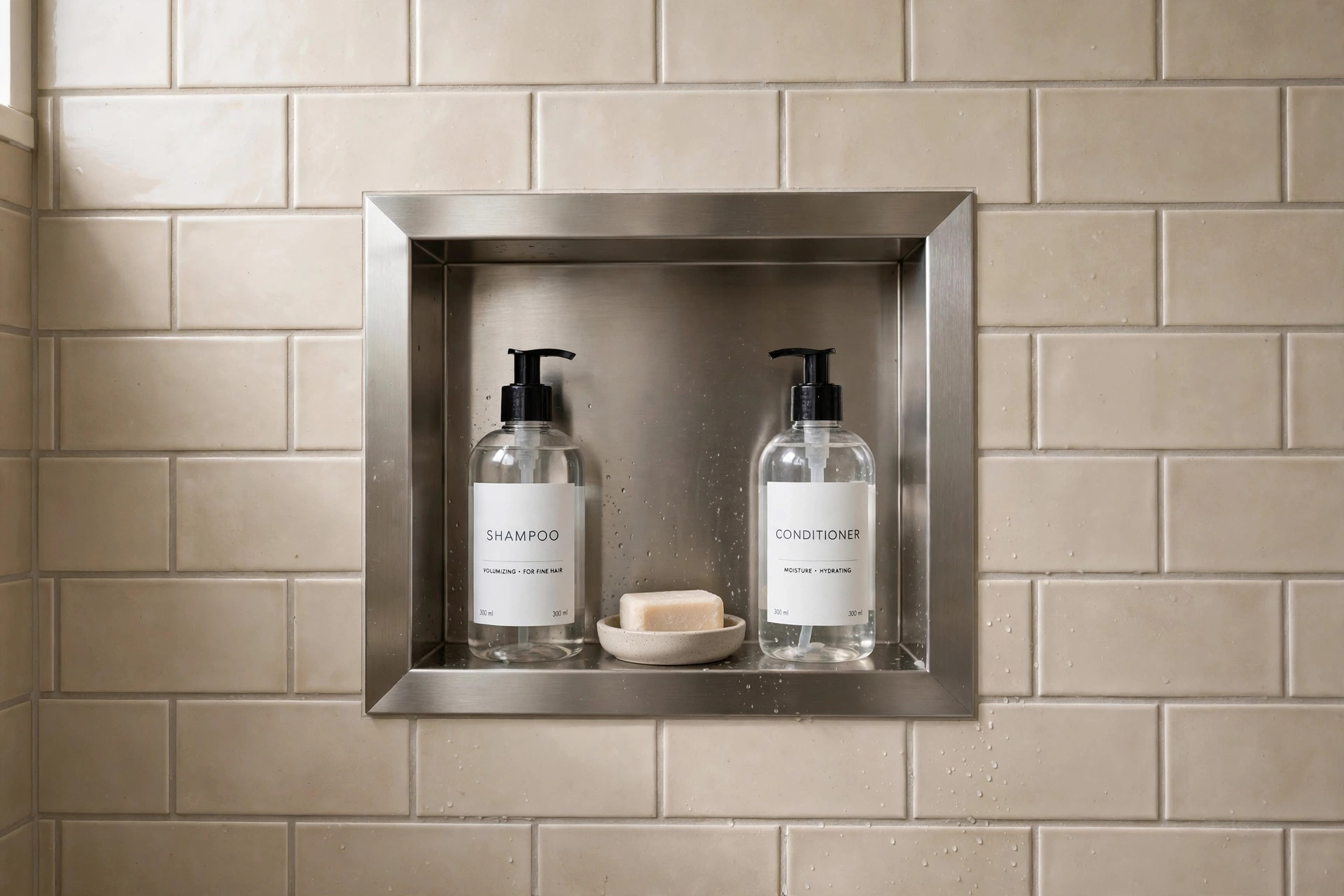

Every shower needs a place for bottles. A wire caddy hangs from the shower arm and swings each time you move. A plastic rack on suction cups falls down in the night. A corner shelf glued to tile peels off after a year. A shower niche insert solves the problem in a clean way. It is a recessed shelf built into the shower wall. Bottles sit inside the wall, flush and safe. The shower looks neat. Nothing hangs. Nothing falls.
Homeowners across the country now search for shower niche inserts usa online deals before they start a remodel. A niche insert costs far less than a tiled niche built by hand. Many models sell for the price of a family dinner. Online stores cut prices often. Sales, coupons, and bundle packs lower the cost still more. This guide explains what a niche insert is, which types exist, what to pay, and how to choose one with care.
Why a Niche Insert Matters
A shower works better when every item has a place. Bottles on the tub edge fall over. Bottles on the floor force you to bend down on a wet surface. That bend is where many slips start. A recessed shelf keeps bottles at hand height. You reach straight ahead. Your feet stay planted.
A niche insert also makes cleaning easy. There are no wires to scrub around. There are no suction cups collecting soap scum. One wipe across a flat shelf does the job. The shower looks larger too. A recessed box does not stick out into the room. The eye reads the wall as one flat surface.
For a remodel, a niche adds a finished touch that buyers notice. It costs little and photographs well. If you plan a walk in shower kit, a niche is a natural part of the design.
Plastic corner caddies last a year or two. A well-made niche insert lasts as long as the tile around it. That is the real value. You buy it once, and you forget about it.
What to Look for When You Buy: Shower Niche Inserts Usa Online Deals
Start with size. Most wall studs sit 16 inches apart, which leaves about 14.5 inches of open space between them. Makers size many niche inserts to fit that gap. Common sizes are 12 by 12 inches, 12 by 24 inches, and 12 by 28 inches. Measure your wall before you order. A unit that is too wide will not fit between studs. A unit that is too small leaves an odd gap.
Next, check the depth. A shelf should hold a tall shampoo bottle. Most inserts are 3 to 4 inches deep. That suits standard bottles. Family-size pump bottles may need more. Check the tallest bottle you own and add half an inch.
Material comes next. Stainless steel is the most popular choice. Look for 304 grade steel, which resists rust in wet air. Cheaper steel can spot and stain. ABS plastic is light and cheap, and it never rusts. Aluminum sits between the two in price and weight. Tileable inserts have a waterproof backboard face. You set tile right onto them, so the shelf matches the wall.
Finish matters in an open shower. Brushed nickel hides water spots. Matte black looks sharp but shows soap film. Chrome shines but needs wiping. White plastic blends into white tile and costs the least. Pick a finish that matches your faucet and shower head if you can. Guides from fixture makers show how finishes pair across a full bath.
Look at the edge design. Good inserts have folded or rounded edges. Sharp raw edges can cut a hand during cleaning. Check the flange, the flat rim around the opening. A wide flange seals against the wall and hides the cut line in the tile or surround. Waterproof models add a sealing gasket. That gasket keeps water from working behind the wall.
Weight rating is worth a glance. A shelf full of bottles is heavier than you think. Quality units state a load limit. Stay under it. Spread heavy items across two shelves if you buy a double unit.
Finally, note the install type. True recessed units sit between studs inside the wall. They need the wall open during a remodel. Surface-mount units stick onto finished tile with adhesive or screws. They are fine for renters and quick upgrades, but they hold less weight.
Types and Options
Tileable niche inserts. These are the choice for a full tile shower. The insert is a waterproof box, often made of foam board or coated board. You set it into the wall, seal the seams, and tile over the face and the inside. The result looks like a custom tiled niche. It costs a fraction of hand-built work. Home repair writers often rate these as the best value in a tile remodel.
Stainless steel ready-made niches. These arrive finished. You cut the opening, set the box in, and seal the edge. No tile work inside the box. They suit both tile showers and one-piece surrounds. Some models add a small raised lip at the front so bottles do not slide out.
Plastic and ABS inserts. These are the budget pick. They are light, rust-proof, and easy to cut to size. Many come with one or two snap-in shelves. They work well in tub surrounds and rental baths. The look is simple, but the price is hard to beat.
Double and triple niches. Tall units hold two or three rows of shelves. They suit families with many bottles. A 12 by 28 inch double niche can hold shampoo, conditioner, body wash, and soap with room to spare.
Horizontal long niches. These run wide instead of tall. A 24 or 36 inch wide shelf makes a strong design line across the shower wall. They need careful framing because they span more than one stud bay. Check with your tile setter before you order one.
Corner niches. These fit a shower corner and suit small showers where wall space is tight.
Brands in this space include long-standing shower hardware makers, faucet brands, and bathroom product lines that sell matching accessories. Many no-name imports also sell well online. Read the reviews and look at buyer photos before you trust an unknown brand.
Cost and Price: How to Find Real Online Deals
Prices fall into clear bands. Plastic inserts sell for 25 to 60 dollars. Stainless steel units run 60 to 150 dollars. Tileable waterproof models cost 80 to 200 dollars. Large double or extra-wide niches reach 150 to 300 dollars. Most shoppers land in the 60 to 120 dollar range for a good single stainless unit.
Online deals follow the retail calendar. Big sales land on holiday weekends: Memorial Day, July Fourth, Labor Day, and Black Friday. Major home improvement stores and large home center chains both run bath events in spring, when remodel season starts. Watch for open-box and clearance listings too. A returned unit with a small scratch can sell for half price, and the scratch often hides behind tile or caulk.
Bundle packs lower the unit price. Some sellers pack two or three niches together for multi-bath homes. If you remodel two baths, a three-pack can save 20 percent or more. Check the shipping terms. Many stores ship free over a set order total. A 45 dollar item with 12 dollar shipping is no deal.
Be wary of fake list prices. Some listings show a crossed-out price of 200 dollars on a unit that never sold for 200. Compare the same model across two or three stores. If all three sell near the same price, that is the real market price. Read the return policy before you buy. Tile and bath parts are awkward to ship back. A store with free returns removes the risk.
Set a price alert if the store offers one. Prices on bath hardware move often. A two-week wait can save 15 dollars on a stainless unit.
Care and Upkeep
A niche insert needs little care. Rinse the shelf when you rinse the shower. Soap film builds up where bottles sit. Lift the bottles once a week and wipe the shelf with a soft cloth. Mild dish soap and warm water handle most film. Home care writers at The Spruce recommend the same gentle routine for bath hardware.
Skip abrasive pads and scouring powder. They scratch steel and dull plastic. On stainless, wipe in the direction of the brushed grain. Dry the shelf after wiping to stop water spots.
Check the caulk line once a year. The seal where the insert meets the tile keeps water out of the wall. If the caulk cracks or pulls away, cut it out and lay a fresh bead of silicone made for baths. This five-minute job stops most leak problems before they start.
Avoid harsh bleach on plastic units. It can yellow the surface over time. On tileable niches, treat the inside like the rest of your tile. Use the same tile cleaner you use on the walls.
If a shelf starts to smell musty, pull everything out and let it dry fully. Poor air flow traps damp under bottles. A small gap between bottles helps air move. In a bath with no window, run the exhaust fan for 20 minutes after each shower.
Safety Notes
Check the edges before you install. Cheap metal units sometimes ship with sharp raw edges. Folded or hemmed edges are safer. Run a finger along the rim. If it feels sharp, file it smooth or pick another model.
Do not overload the shelf. A dozen full bottles can weigh more than the sealant can hold on a surface-mount unit. Follow the stated load limit. Keep the heaviest pump bottles on the lowest shelf, close to the wall.
Recessed units need solid backing. The box must sit level between studs with screws into wood on both sides. A loose box flexes, and flexing cracks the seal. Plumbing and tile guides show the framing steps in plain detail.
Keep glass bottles off high shelves in homes with small children. A falling glass bottle on tile can shatter. Plastic bottles are the safer pick where kids bathe. Make sure the shelf has a front lip if you store round bottles that roll.
Ventilation matters for every bath material. A niche that stays damp grows mildew in the corners. Good air flow keeps the insert dry between showers and extends the life of the seal.
Frequently Asked Questions
What exactly is a shower niche insert? It is a ready-made recessed shelf for the shower wall. Instead of building a niche from tile and board by hand, you buy a finished box and set it into the wall opening. It holds bottles and soap at hand height. It comes in steel, plastic, and tileable forms.
Can I add one to a shower that is already finished? Yes, with care. Surface-mount models stick onto finished tile. For a true recessed unit, you must cut into the wall, which means tile work and patching. Many owners add a recessed niche during a re-tile and use a surface-mount shelf as a quick fix until then.
What size should I buy? Measure the space between your wall studs first. Most are 16 inches apart on center, leaving about 14.5 inches of clear space. A 12 by 12 inch or 12 by 24 inch unit fits that gap. For height, stand in the shower and mark where your hand rests with ease. That is your shelf height. Tall users may want the shelf a few inches higher.
Do I need a plumber to install it? No. A handy homeowner can install most models with basic tools. You need to cut the wall opening, set the box level, screw it to the studs, and seal the edge. If the wall holds pipes or wires, call a pro before you cut. Home design programs often show the install as a weekend project, and that is fair for a standard wood-stud wall.
Will a niche insert leak behind the wall? A good unit, set right, does not leak. The risk comes from bad sealing, not from the box itself. Seal the flange to the wall with silicone. On tileable models, waterproof the seams per the instructions. Check the caulk each year. Most leak stories trace back to a skipped sealing step.
Are online deals as good as store prices? Often they are better. Online sellers compete on price in a way one local store cannot. You also see more models and more reviews. The trade-off is waiting for shipping and handling a return by mail. Buy from sellers with clear return terms.
A Short Final Word
A shower niche insert is a small buy that changes how a shower feels each day. No more bending for bottles. No more swinging caddies. Just a clean shelf where you need it. Measure your wall, pick a rust-proof material, and seal the edge with care. If you want the full picture before you shop, read a shower niche inserts buying guide alongside this page, and pair the niche with frameless shower doors for a truly open look. Watch the holiday sales, compare two or three stores, and you will land one of the many shower niche inserts usa online deals with ease.
References
American Standard. (n.d.). Bathroom and kitchen products. https://www.americanstandard.com Bob Vila. (n.d.). Home improvement advice. https://www.bobvila.com Delta Faucet. (n.d.). Kitchen and bathroom faucets. https://www.deltafaucet.com HGTV. (n.d.). Home and garden ideas. https://www.hgtv.com Kohler. (n.d.). Bathroom and kitchen fixtures. https://www.kohler.com Lowe’s. (n.d.). Home improvement products. https://www.lowes.com Moen. (n.d.). Faucets and plumbing fixtures. https://www.moen.com The Home Depot. (n.d.). Home improvement products. https://www.homedepot.com The Spruce. (n.d.). Home and garden advice. https://www.thespruce.com This Old House. (n.d.). Home renovation guidance. https://www.thisoldhouse.com
Was this guide helpful?

About James Carter
The My Garden US editorial team writes practical, in-depth home and garden guides for American homeowners — tested advice, no fluff.
You May Also Like
Shower Grab Bars Buying Guide USA: Sizes, Finishes, and Safe Installation
February 4, 2026 0 views
Shower Grab Bars for Florida Homes: A Safe Buying Guide
March 27, 2026 0 views
Shower Grab Bars USA Online Deals: How to Buy the Right Safety Bars
April 20, 2026 0 views