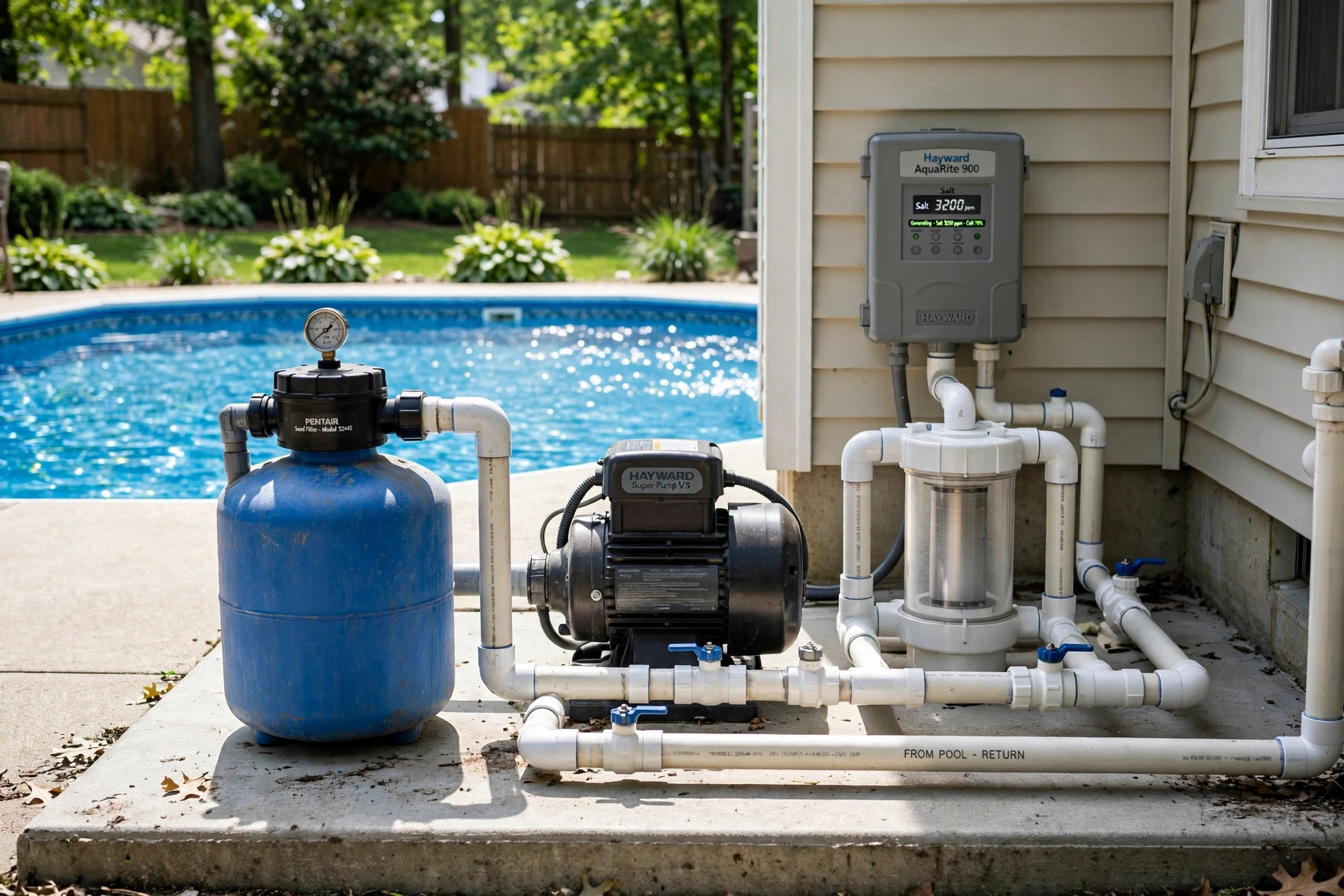
Most pool owners know the sharp sting of a chlorine pool. The smell clings to the skin. The eyes turn red after a long swim. Salt water pool generator reviews point to a gentler way to keep pool water clean. These reviews cover devices that turn ordinary pool salt into a steady, mild form of chlorine. The result is water that feels soft and smells fresh. This guide walks through how these systems work, what to look for, what they cost, and how to care for them. It draws on trusted pool care resources and honest product reviews to help you decide with confidence.
Why Salt Water Pool Generator Reviews Matter
A salt chlorine generator is a long-term purchase. Prices run from a few hundred dollars to well over a thousand. The cell must be replaced every three to seven years. A poor choice can leave a pool under-sanitized or cost far more than it should.
That is why salt water pool generator reviews matter. They report how a unit performs in real backyards, not just on a showroom shelf. Reviews note how long cells last, how simple the controls are, and how the water feels after a full season of use. Many owners find that a salt system cuts the weekly chore of adding chlorine tablets. The generator makes chlorine on its own while the pump runs. Pool care guides from Swim University explain that the water stays clearer with fewer chemical swings when the system is sized right.
Reviews also flag common complaints. Some units show fault codes in cold water. Others need the cell cleaned often when calcium is high. Knowing these points before you buy saves time and money. Before you commit, it helps to understand the related choices too, such as the salt water vs chlorine pool pros and cons and the typical salt water pool conversion cost guide if you are switching an existing pool.
How a Salt Chlorine Generator Works: Salt Water Pool Generator Reviews
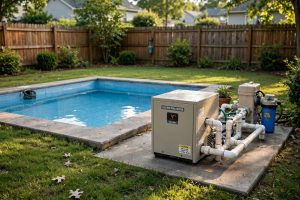
The process is simple. Pool salt, which is ordinary sodium chloride, is dissolved in the pool water at a low level. The water then passes through a cell with metal plates. A low electric current runs across the plates. This process, called electrolysis, turns the salt into chlorine.
That chlorine kills algae and germs in the pool. After it has done its work, much of it turns back into salt. The cycle repeats while the pump runs. The pool never tastes like sea water. The salt level is near that of a human tear, far below the ocean.
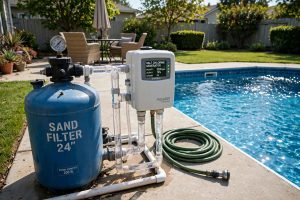
The control unit mounts near the pool pump. It lets you set the chlorine output as a percent. Most owners run the system at a modest setting and adjust it after heavy swim days or storms. Equipment makers like Hayward and Pentair publish manuals that explain the full start-up process for their cells.
What to Look for in a Salt Water Generator
Reviews agree on the features that matter most. Use this list when you compare models.
Pool Size Rating
Every generator is rated for a maximum pool size, often stated in gallons. Buyers should choose a unit rated for a pool larger than their own. A common rule in reviews is to pick a cell rated at least one and a half to two times the pool volume. An oversized cell runs at a lower setting and lasts longer. An undersized cell runs at full power all summer and wears out fast. Match the rating to an honest measure of your pool, not a rough guess.
Control Panel and Displays
The control box should show salt level, chlorine output, and fault warnings in plain text. Reviews favor panels that say “check salt” or “inspect cell” instead of flashing a code number. Some units connect to a phone app or a pool automation system. That is a nice extra, not a need. What matters is that an ordinary homeowner can read the panel and act on it.
Self-Cleaning Cells
Many modern cells reverse their electric charge at set times. This reverse action shakes calcium scale off the plates. Reviews note that self-cleaning cells need less hand cleaning, often just once a season. In hard-water regions, this feature is nearly a must. Without it, owners must soak the cell in a mild acid bath several times a year.
Warranty and Brand Support
A strong warranty often signals a strong cell. Reviews give weight to brands that stand behind the cell for several years, since the cell is the costly part. Good brands answer the phone and ship parts fast. Leslie’s Pool Supplies and Pool Warehouse both carry replacement cells and parts for the major brands, which makes long-term ownership easier.
Types of Salt Water Pool Generators
Not every salt system fits every pool. The main types differ in power and use.
Residential inline systems. These are the most common type in home pools. The cell is plumbed into the return line after the filter and heater. They suit inground and large above ground pools. Most reviews focus on this type.
Compact above ground systems. Smaller pools, often with a simple pump and filter set, can use compact units. Some thread onto the existing plumbing with few tools. They make less chlorine, so they fit pools under about fifteen thousand gallons.
Commercial grade systems. Hotels, clubs, and busy community pools use larger units. They cost much more and need professional service. Homeowners can skip these reviews unless they run a public pool.
Standalone drop-in units. A few products float in the pool or hang over the side. Reviews are mixed. They suit tiny pools or spas, but most experts favor a true inline cell for reliable results.
Your filter matters too. Salt systems work best with a filter that keeps water clear, and the best pool filter for saltwater systems guide can help you match the two. General equipment reviews at The Spruce also compare filter types side by side.
Cost and Price: What to Expect
Salt water pool generator reviews usually group products by price. Here is what the market looks like.
Entry level, roughly 300 to 600 dollars. These units fit small pools. Cells last two to four years. Controls are basic. Reviews say they work well for above ground pools and budget buyers.
Mid range, roughly 600 to 1,200 dollars. This is the sweet spot for most home inground pools. Cells last three to six years. Panels are clear and self-cleaning is common. Most positive reviews land in this range.
Premium, 1,200 dollars and up. These units suit large pools. Cells last five to seven years or more. They often tie into automation. The price stings at first, but reviews note the long cell life can lower the yearly cost.
Beyond the unit itself, budget for installation. A simple swap on existing plumbing may cost a few hundred dollars in labor. A full salt water pool conversion cost guide shows that total conversion, including salt and start-up chemicals, often runs between one thousand and two thousand dollars. Retail pricing can be checked at The Home Depot, which lists many popular salt systems.
Replacement cells cost about half the price of a whole new system. Plan for that cost from the start. A unit with a cheap body but a pricey cell is not a bargain.
Installation Basics
Many handy owners install a salt system themselves. The work involves cutting into the PVC return line, gluing in the cell unions, mounting the control box, and wiring it to the pump circuit. Always shut off power at the breaker before touching any wires. If the wiring seems unclear, hire an electrician. Reviews from self-installers say the plumbing takes an hour or two, while the wiring takes longer for those who are new to it.
Add pool salt only after the cell is in place and running. Buy salt made for pools, which is fine and free of additives. Scatter it in the deep end with the pump running and let it dissolve for a day. Then test the salt level with a meter or test strips. Target the level shown in your manual, often near 3,000 parts per million. Add salt in small steps. It is easy to add more and hard to take it away.
Keep the old chlorine tablets on hand during the switch. A new salt system needs a day or two to bring chlorine up to a safe level. Pool start-up advice from Swim University suggests testing the water daily for the first week until levels hold steady.
Care and Upkeep
A salt pool is low effort, not no effort. Reviews agree that owners who test weekly enjoy the best water. Here is a simple routine.
Test the water every week. Check free chlorine, pH, and alkalinity. Salt systems tend to push pH upward, so muriatic acid or pH reducer is used more often than in a chlorine pool. Test strips or a liquid kit both work. Salt level can be tested once a month.
Inspect the cell twice a season. Pull the cell and look at the plates. A light crust of scale is normal. If heavy scale builds up, soak the cell in a diluted acid solution per the manual. Never scrape the plates with metal tools.
Keep the pump running long enough. The generator only makes chlorine while water flows. Most pools need eight to twelve hours of pump time in summer. Run the pump less and chlorine will fall short, no matter how good the reviews of the unit were.
Watch stabilizer and calcium. Cyanuric acid, or stabilizer, shields chlorine from the sun. Calcium hardness protects plaster and equipment. Both matter in salt pools. When the water drifts out of range, simple pool care steps from The Spruce can bring it back in line.
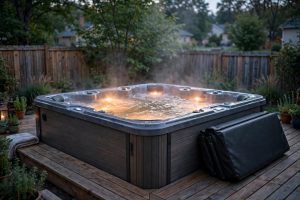
Winter care. In cold regions, salt cells rest for the winter. Remove or bypass the cell, drain the equipment, and close the pool as usual. Many spa owners keep a separate routine; spa makers such as Hot Spring and Bullfrog Spas offer guides for salt-ready hot tubs.
Salt Pool Safety
Salt systems are safe when used with care, but a few rules deserve attention.
Electrical safety. The control box and cell use household current near water. The unit must be wired to a ground fault protected circuit. Keep the area dry and let only a qualified person open the control box. The U.S. Consumer Product Safety Commission offers pool electrical safety guidance for all pool owners.
Chemical safety. Salt is gentle, but the acids used to balance pH are not. Store acid away from children and pets. Add acid to water, never water to acid. Wear gloves and eye protection.
Swimmer safety. A salt pool still uses chlorine, so standard pool rules apply. Never swim alone. Keep rescue gear within reach. Young children need constant watch. For families, the Commission’s pool safety pages are worth a read before the swim season starts.
Cell handling. The cell plates carry a coating that can be harmed by harsh tools or strong acid. Follow the cleaning steps in the manual. Rinse well after an acid soak before putting the cell back in line.
FAQ
Do salt pools have chlorine in them? Yes. A salt system makes chlorine from dissolved salt. The water feels softer and smells milder than a pool with hand-added chlorine, but chlorine is still the sanitizer at work.
How long does a salt cell last? Most cells last three to seven years, based on salt water pool generator reviews. Longer pump hours, high settings, and heavy scale shorten cell life. Running an oversized cell at a low setting stretches it out.
Can I convert my chlorine pool to salt water? In most cases, yes. The pool needs good plumbing and a sound filter. Many owners use a salt water pool conversion cost guide to plan the project. Some equipment, like certain heaters or stone finishes, needs a check before the switch.
Does a salt system work for an above ground pool? Yes, with a compact unit sized for the pool. Some steel-wall pools need a zinc anode to guard against corrosion. Check the pool maker’s advice before adding salt.
How much salt does a pool need? A typical home pool needs the salt level near 3,000 parts per million. For a 20,000-gallon pool filled with fresh water, that means roughly five hundred pounds of pool salt. Always add salt in steps and test between additions.
Will salt damage my pool equipment or deck? Salt water is slightly more corrosive than fresh water. Quality equipment handles it well. Rinse the deck and metal fittings with fresh water now and then. Stainless handrails and sealed stone cope with salt pools for years.
Final Word
Salt water pool generator reviews point to a clear pattern. Owners who size the cell generously, test the water weekly, and clean the cell when needed report soft, clear water with little fuss. The upfront cost is real, but the daily comfort is real too. Read several reviews for the size of your pool, compare warranty terms, and buy from a dealer with parts on the shelf. A careful choice now pays off for many swim seasons to come.
References
Bullfrog Spas. (n.d.). Hot tubs and spas. https://www.bullfrogspas.com Hayward. (n.d.). Pool equipment and automation. https://www.hayward-pool.com Hot Spring Spas. (n.d.). Hot tubs and spas. https://www.hotspring.com Leslie’s Pool Supplies. (n.d.). Pool supplies and equipment. https://www.lesliespool.com Pentair. (n.d.). Pool and spa equipment. https://www.pentair.com Pool Warehouse. (n.d.). Pool equipment and supplies. https://www.poolwarehouse.com Swim University. (n.d.). Pool and hot tub care guides. https://www.swimuniversity.com The Home Depot. (n.d.). Home improvement products. https://www.homedepot.com The Spruce. (n.d.). Home and garden advice. https://www.thespruce.com U.S. Consumer Product Safety Commission. (n.d.). Product safety information. https://www.cpsc.gov
Was this guide helpful?

About Sarah Mitchell
The My Garden US editorial team writes practical, in-depth home and garden guides for American homeowners — tested advice, no fluff.