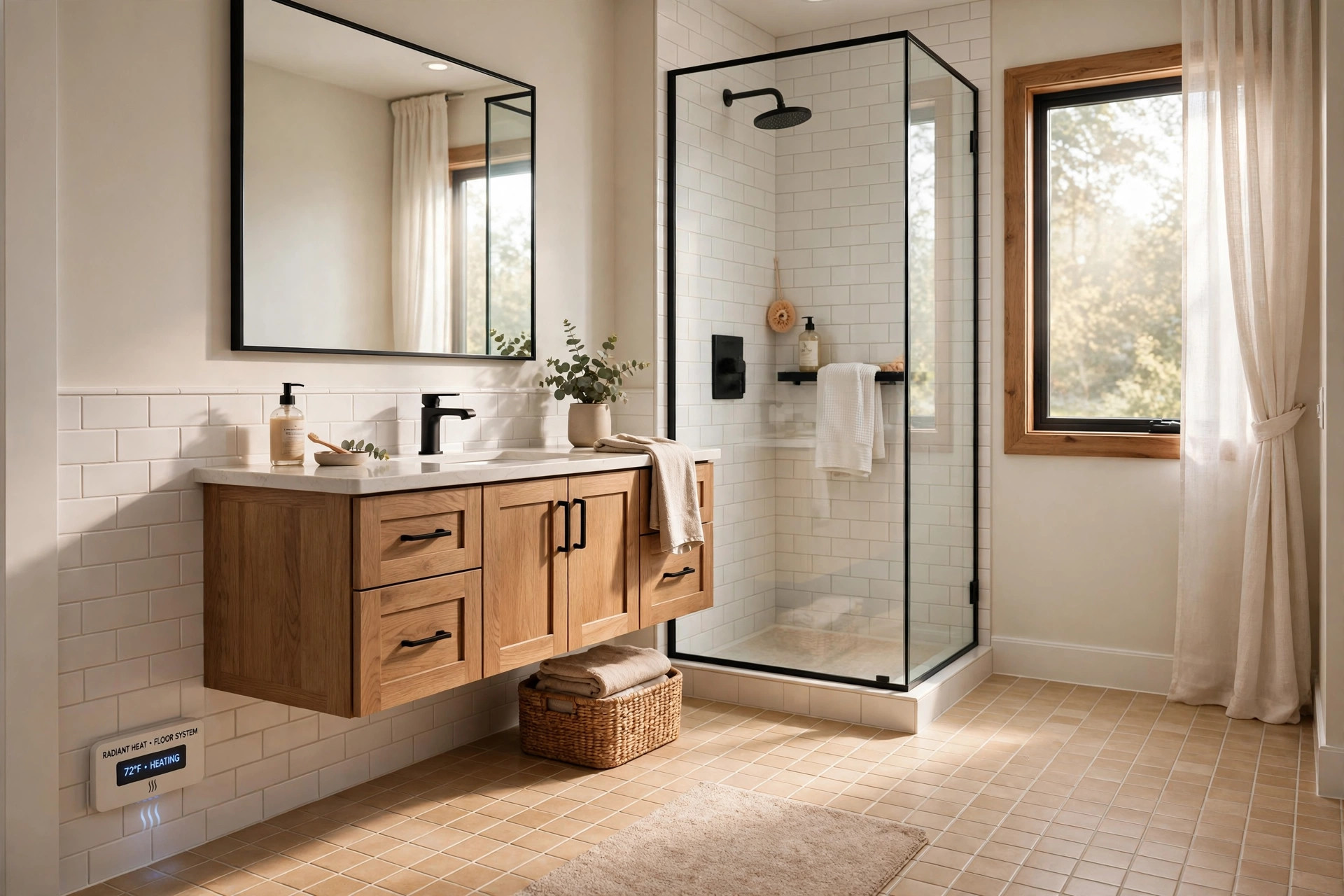

Cold tile can shock the feet on a winter morning. This happens even in California. Many homes in the state have tile floors. Tile feels cold in January and February. It feels cold at night. It feels cold after a shower. A heated floor kit warms the floor from below. It adds steady heat. It makes the room more pleasant. This guide explains heated floor kits california homes usa in plain words. It covers what they are, how to pick one, what they cost, and how to keep them safe.
Why It Matters
A heated floor kit does more than warm the toes. It spreads heat evenly across the room. Forced-air vents push warm air to the ceiling first. Warm air rises. The floor stays cool. Radiant heat works the other way. It warms the floor first. The heat then rises gently. People feel comfortable at lower room temperatures. This can cut energy waste.
California homes often have slab floors. Concrete holds cold. Many bathrooms and kitchens use ceramic or stone tile. These materials conduct heat well. That is a plus. A surface that moves heat fast will warm fast with a kit beneath it. The same floor will also cool fast when the kit is off. For mild California winters, a small kit can take the chill off a bathroom in minutes.
Warm floors also fight dampness. Bathrooms hold steam. Damp grout lines can grow mildew. A warm floor dries faster. Dry grout lasts longer. It stays cleaner. This helps in coastal towns. Ocean fog brings extra moisture into homes. A warm tile floor dries that moisture away.
What a Heated Floor Kit Includes: Heated Floor Kits California Homes Usa
A heated floor kit is a box with everything needed for one room. Most kits hold these parts. A heating mat or heating cable. The mat is a mesh roll with wire woven through it. The cable is loose wire held by straps. A thermostat. The thermostat sets the floor temperature. A sensor probe. The probe sits under the tile and reports the floor temperature. Straps or tape hold the wire in place. A manual explains each step.
Some kits also include a circuit checker. The checker tests the wire before tile goes down. This matters. A broken wire under tile is hard to fix. Test the wire before it is covered. Test it again after the tile is set. Good habits save money.
Kits come in fixed sizes. A small kit covers a bathroom of about thirty square feet. A large kit covers a kitchen of about one hundred square feet. Buy a kit that matches the room. You can trim some mats to fit. You must never cut the heating wire itself. Cutting the wire breaks the circuit. Read the manual for trimming rules.
Types of Heated Floor Kits
Two main types exist. Electric kits and hydronic kits. Electric kits use wire under the floor. Hydronic kits use warm water in tubes. Both heat the floor. They differ in cost and work.
Electric Heating Mats
Electric mats are the most common kits for California homes. They are thin. They sit under tile or stone. They run on normal house power. A thermostat turns them on and off. Installation is simple. Many do-it-yourself homeowners handle it. Electric mats cost less to buy. They cost more to run than hydronic systems in large rooms. In small rooms, the running cost is low.
Loose Electric Cable
Loose cable gives more control over layout. The wire snakes through straps across the floor. This suits odd shapes. Curved walls and tight corners are easy. The wire costs more than a mat of the same size. It takes longer to install. The result is the same warm floor.
Hydronic Systems
Hydronic systems move warm water through tubes. A boiler or water heater warms the water. The tubes spread it under the floor. These systems suit large homes. They suit new builds. They cost much more to install. They cost less to run across big areas. Few California retrofit jobs use hydronic systems. They work best when the floor is already being rebuilt.
Many homeowners also pair a floor kit with other bathroom upgrades. For example, a bathtub refinishing kit buying guide can help when the tub is as tired as the floor. Planning several updates at once can save time.
How to Choose the Right Kit
Start with the room size. Measure the open floor space. Do not count areas under fixed cabinets or the tub. Heat has nowhere to go under a cabinet. It can overheat the wire. Measure only walkable floor. Pick a kit slightly smaller than that space. A kit that is too big is a problem. You cannot fold the wire back over itself. Folding causes hot spots.
Check the voltage. Most home kits run on 120 volts. Some large kits need 240 volts. Make sure your home panel has room for the new circuit. A licensed electrician should add the circuit. This is not a place to guess. Wrong wiring can start a fire.
Check the thermostat type. Simple thermostats turn on and off by hand. Programmable thermostats follow a schedule. A programmable model warms the floor before the morning alarm. It turns off when the house is empty. This saves power. Smart thermostats connect to a phone app. They add cost. They add convenience.
Look at the warranty. Good kits carry a warranty of ten to twenty-five years on the wire. Thermostats often carry a shorter warranty. A long wire warranty shows the maker trusts the product. Keep the receipt and the manual. Some makers ask for proof of purchase to honor the warranty.
Match the kit to the floor covering. Most kits sit under ceramic tile, porcelain tile, or stone. Some work under engineered wood or vinyl. Few work under carpet. Carpet blocks heat. Check the manual for approved floor types. A heated floor kits buying guide can help compare brands side by side before you decide.
Cost and Price
Kit prices vary by size. A small bathroom kit of about thirty square feet often costs between two hundred and four hundred dollars. A medium kit of about sixty square feet costs between four hundred and seven hundred dollars. Large kits cost more. The thermostat may be included. It may be sold apart. Plan for fifty to two hundred dollars for the thermostat if it is not in the box.
Installation adds cost. A tile setter charges by the square foot. Rates in California cities run high. A small bathroom may cost a few hundred dollars in labor. A large kitchen may cost several thousand. Electrician fees add more. A new circuit can cost two hundred to five hundred dollars.
Running costs stay modest. Electric floor heat uses about twelve to fifteen watts per square foot. A thirty-square-foot bathroom at fifteen watts uses four hundred fifty watts. That is less than a hair dryer. Run for two hours a day, the cost is small. Exact numbers depend on local power rates. California power rates differ by city and by utility. Check your bill for the price per kilowatt-hour.
Compare the total with other heat sources. A space heater costs less to buy. It heats one spot. It can be a fire risk. A furnace heats the whole house. It wastes heat in empty rooms. Floor heat targets one room. It feels warmer at the same air temperature. Many families find this a fair trade.
For broader planning, sites like The Home Depot and Lowe’s list kit prices and show what each size covers. Reading consumer reports on heating products can also help you judge reliability.
Installation Basics
Installation follows a clear order. Plan, test, lay, test, cover, test. Each test protects the work.
First, plan the layout. Draw the room on paper. Mark fixed objects. Leave space near the toilet base and the vanity. Mark where the thermostat will sit on the wall. Mark where the power wire will leave the floor. Measure twice before opening the kit.
Second, test the wire with a meter. The manual gives a resistance range. The meter reading should fall inside it. Write the number down. This is your proof that the wire arrived intact.
Third, lay the mat or cable. Roll the mat flat. Cut the mesh, not the wire, to turn corners. For loose cable, fix the straps first. Then snake the wire at even spacing. Keep the wire away from floor drains and vents. Keep it a few inches from walls.
Fourth, place the sensor probe. It sits between two wires. It must not touch the wire. Cover it with thin tape. Run its lead to the thermostat box.
Fifth, test the wire again. The reading should match the first test. If it does not, find the damage before covering.
Sixth, cover with thin-set mortar. Use a trowel that does not snag the wire. Press tile into the mortar. Keep tiles level. Let everything cure as the manual says.
Seventh, test once more. Then connect the thermostat. Let a licensed electrician do the final wiring if you are not sure. Guides at This Old House and Bob Vila walk through common steps in plain detail.
Care and Upkeep
A heated floor needs little care. The wire has no moving parts. Nothing wears out. The main job is to keep the thermostat working. Check it each fall before cold weather. Set a test temperature. Wait an hour. Feel the floor. It should be warm.
Keep the floor surface clean. Dirt in grout can hold moisture. Mop tile with mild soap. Do not use harsh acids on grout. Harsh cleaners can eat grout lines. They do not harm the wire. They harm the floor above it.
Watch for signs of trouble. A cold spot may mean a damaged wire. A thermostat that will not hold a setting may be failing. Call the kit maker first. Many makers help with tests over the phone. Keep the manual nearby. It lists the resistance numbers for your exact kit.
Do not place thick rugs over a heated floor. Thick rugs trap heat. The trapped heat can stress the wire. Use thin mats if you want a rug. Leave most of the floor open. This keeps heat flow even.
Practical tips from The Spruce and HGTV cover daily care for tile over radiant heat.
Safety
Electric floor heat is safe when installed right. It is unsafe when corners are cut. Follow these rules.
Hire a licensed electrician for the circuit. Floor heat needs its own circuit with proper protection. A ground-fault protector is standard. It cuts power if current leaks. This is a must in bathrooms.
Never pierce the floor after installation. Do not drill into a heated floor. Do not drive nails into it. Mark the heated area on your house plans. Tell future workers about it. A drill through the wire is a serious repair.
Keep the thermostat in working order. A failed thermostat can leave the heat on. Modern thermostats fail in the off position. Older ones may not. Replace a thermostat that acts strange.
Follow local codes. California cities follow the state electrical code. Some cities add their own rules. A permit may be required for new circuits. Ask your city building office before work starts. Fixture makers like Kohler, Moen, Delta Faucet, and American Standard publish safety notes with their products that share the same bathroom.
When remodeling the whole bath, a shower niche inserts guide can pair well with a floor project. Plan both at once to avoid tearing up new tile twice.
Frequently Asked Questions
Do heated floor kits work in mild California winters?
Yes. They shine in mild winters. The floor reaches comfort in minutes. Short run times keep power bills low. Coastal fog mornings are the best use case.
Can I put a heated floor kit under vinyl or wood?
Some kits allow it. Many do not. Check the manual for your floor type. Vinyl needs a kit rated for its temperature limits. Engineered wood needs even heat to avoid warping. Tile and stone remain the safest choice.
How long does a heated floor last?
The wire often lasts decades. Many makers warranty it for twenty-five years. The thermostat may need replacement sooner. Plan for a new thermostat every ten to fifteen years.
Will a heated floor raise my power bill a lot?
Not in a small bathroom. A thirty-square-foot kit uses less power than a hair dryer. Two hours of morning use adds only a small amount to the monthly bill. Larger kitchens cost more to run.
Can I install a kit myself?
A handy homeowner can lay the mat and set the tile. The electrical work should go to a licensed electrician. This is the safe split. It also keeps the warranty valid. Some makers void the warranty without proper electrical work.
Does floor heat replace the furnace?
No. It is a comfort system for one room. It does not heat the whole house. Keep your main heating system. Use floor heat where cold tile bothers you most.
A Final Word
Heated floor kits california homes usa give a simple comfort. Warm tile on a cold morning changes the whole bathroom. The kits cost less than many expect. They run cheap in small rooms. They last for years with almost no care. Measure well. Test the wire. Let an electrician handle the circuit. Then enjoy the warmth under your feet.
References
American Standard. (n.d.). Bathroom and kitchen products. https://www.americanstandard.com Bob Vila. (n.d.). Home improvement advice. https://www.bobvila.com Consumer Reports. (n.d.). Product reviews and ratings. https://www.consumerreports.org Delta Faucet. (n.d.). Kitchen and bathroom faucets. https://www.deltafaucet.com HGTV. (n.d.). Home and garden ideas. https://www.hgtv.com Kohler. (n.d.). Bathroom and kitchen fixtures. https://www.kohler.com Lowe’s. (n.d.). Home improvement products. https://www.lowes.com Moen. (n.d.). Faucets and plumbing fixtures. https://www.moen.com The Home Depot. (n.d.). Home improvement products. https://www.homedepot.com The Spruce. (n.d.). Home and garden advice. https://www.thespruce.com This Old House. (n.d.). Home renovation guidance. https://www.thisoldhouse.com
Was this guide helpful?

About Robert Taylor
The My Garden US editorial team writes practical, in-depth home and garden guides for American homeowners — tested advice, no fluff.
You May Also Like
Bathroom Towel Warmers USA Online Deals: A Plain Buyer Guide
March 2, 2026 0 views
Bathtub Refinishing Kits USA Online Deals: A Plain Guide
January 16, 2026 0 views
Mirrored Medicine Cabinets USA Online Deals: How to Shop Smart and Save
July 2, 2026 0 views