
Cold tile floors are one of the small pains of winter mornings. You step out of a warm shower and your feet meet ice cold ceramic. This heated floor kits reviews buying guide usa will help you fix that problem for good. Heated floor kits, also called radiant floor heating kits, warm your tile or stone from below. They turn a cold bathroom into a warm and quiet comfort. Home buyers in the United States now look for these kits during bath remodels. Reviews show that owners love the feeling of warm floors on winter days. This guide explains the main types, the costs, and what to check before you buy. By the end you will know which kit fits your room and your budget.
Why Heated Floors Matter
A heated floor kit does more than warm your toes. It changes how a bathroom feels in the morning. Warm tile dries faster after a shower. That means less damp air and fewer slick spots. Many owners say the bathroom smells fresher too, since damp grout grows less mold when it dries fast.
Heat that rises from the floor also warms the room in a soft way. Forced air blows heat in bursts. Radiant floor heat is steady. The room feels warm at foot level first, where your body notices cold most. People with sore feet or stiff joints often say the warmth feels kind to them in the morning.
Energy use is small for most bathroom kits. A typical bathroom mat draws less power than a space heater. It runs only during the times you set on the thermostat. Reviews from owners across the USA report that the added electric cost is low, often a few dollars a month. For comfort per dollar, few bath upgrades beat a warm floor.
How to Choose a Heated Floor Kit: Heated Floor Kits Reviews Buying Guide Usa
Start With Your Floor Type
Most kits work under tile and natural stone. Ceramic, porcelain, slate, and marble all carry heat well. Some kits also work under luxury vinyl tile and engineered wood, but you must check the maker specs. Solid hardwood can dry and crack, so it needs special care. Look at the box for a list of approved floor coverings. Do not guess on this point.
Measure Your Room
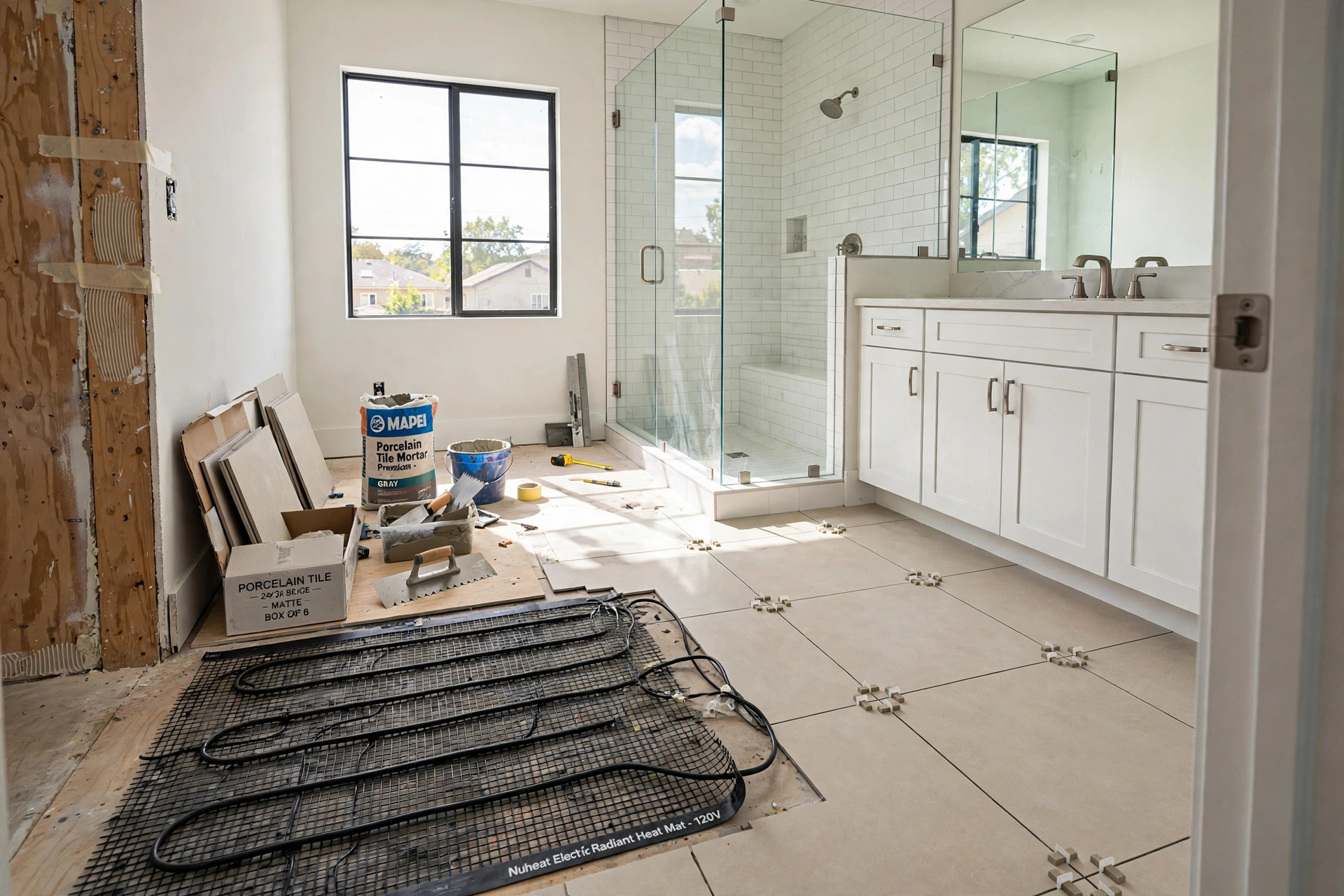
Kits come in fixed sizes. You buy the size that fits the open floor space, not the whole room. Draw a simple plan of your bathroom. Mark where the toilet, tub, vanity, and shower stand. Heated mats go only in the open walk space. They must not run under fixtures or cabinets. Most makers sell a free planning service. Send them your room sketch and they will size the kit for you. Good reviews often praise brands that help with this step.
Pick the Right Thermostat
The thermostat is the brain of the system. Basic models let you set times and floor temperature. Fancier models learn your schedule and connect to your phone. A floor sensor is the key part. It sits in the floor and tells the thermostat the true tile temperature. Buy a kit that includes a spare sensor, or buy one as a backup. If the only sensor fails inside the tile, a spare wired in place saves a costly repair.
Check Electrical Needs
Electric floor kits run on house current. Small mats often run on 120 volts. Larger kits may need 240 volts. Check what your home panel can give. You will need a dedicated circuit and a ground fault breaker in most cases. The maker manual will list the amp draw. If you are not sure, ask a licensed electrician before you buy. It is cheaper to plan the circuit now than to fix it after the tile is down.
Types of Heated Floor Kits
Electric Radiant Mats
These are the most common kits in home bath remodels. A thin heating cable is woven into a mesh mat. You roll the mat out on the subfloor and cover it with thinset mortar and tile. The mat adds almost no height to the floor. This matters at doorways and thresholds. Mats come in many widths and lengths. They suit square rooms and simple layouts best.
Loose Cable Systems
Loose cable kits give you the heating wire without the mesh. You lay the cable in loops on the floor with guides or tape. This takes more time but fits odd shapes well. Angled corners, curves around a clawfoot tub, or narrow halls are good uses for loose cable. You control the spacing, so you control the heat output. Tighter spacing means more warmth per square foot.
Hydronic Floor Kits
Hydronic kits use warm water in tubes instead of electric cable. They are common in whole house builds and large new additions. For a single small bathroom, hydronic kits are often too costly and complex. They need a boiler or water heater loop and a mixing valve. If you already heat your home with hot water, ask your installer. In rare cases it may make sense. For most bath remodels, electric is the simple and proven choice.
Under-Floor Membrane Kits
Some brands sell a waterproof membrane that holds the cable. You set the membrane over the subfloor, snap the cable into its studs, and tile over it. These kits cost more than plain mats. They add crack protection and waterproofing in one step. Reviews praise them for shower floors and steam shower benches, where water control matters most.
Cost and Price
Kit prices vary with size and brand. A small mat kit for a 30 square foot bath may cost between one hundred fifty and four hundred dollars. A large master bath kit can run six hundred to over one thousand dollars. The thermostat adds fifty to three hundred dollars more. Smart thermostats sit at the high end.
Labor is the big part of the budget. An electrician may charge two hundred to five hundred dollars to run the circuit and connect the thermostat. Tile labor adds the usual cost of setting tile over the mat. Total installed cost for a small bath often falls between one thousand and two thousand five hundred dollars. Larger baths cost more.
Operating cost is modest. A one hundred watt mat run for four hours uses less than half a kilowatt hour per day. At common US electric rates, that is a few cents a day. Running the floor only on winter mornings keeps the cost low. A good thermostat pays for itself in saved energy over a few seasons.
Compare reviews across bathroom remodeling ideas and big box stores such as Home Depot to see real owner ratings. Retail sites list both good and bad reviews. Read the one star reviews first. They show the real problems, such as thin cables that break during install or thermostats that lose their program.
Care and Upkeep
A heated floor kit needs little care once it is in. There are no filters and no moving parts. Keep the floor sensor wire safe. Do not drill into the floor after the tile is set. If you hang a new door stop or threshold, check the install map first. Mark where the cable runs with a sketch taped inside your vanity door.
Clean tile as usual. Mild cleaners and a damp mop are fine. Avoid harsh acids on the grout. The heat does not harm sealers made for tile. If a grout line cracks, seal it soon so water cannot reach the mortar bed.
Test the system each fall before cold weather comes. Turn the thermostat on and feel the floor after thirty minutes. Check that the floor sensor reading matches a warm feel underfoot. If the floor stays cold, call the maker support line. Most brands keep test steps in the manual. Keep the manual and the warranty card with your house records.
Warranty terms matter in reviews. Many kits carry ten to twenty five year coverage on the cable. Thermostats often carry shorter terms, three to five years. Read the fine print. Some warranties require that a licensed electrician did the wiring. Others require that you registered the kit online within thirty days. Register the day the tile work is done so you do not forget.
Safety
Electric floor heat is safe when installed to code. The system must connect through a ground fault circuit interrupter. This device cuts power fast if current leaks. Your electrician will place it in the circuit or the thermostat itself may include it. Never skip this step.
The cable must lie flat and free of sharp folds. Kinks can create hot spots. Follow the maker spacing rules. Do not cross cables over each other. Do not cut the heating cable to make it fit. If the run is too long, buy the next smaller size or change the layout.
Keep the kit clear of heat sources. Do not place the mat under a towel warmer vent or a baseboard heater. Do not run the cable into the wall cavity. Turn off power at the breaker before any test or repair. When in doubt, call a licensed electrician. A warm floor is a joy, but only a safe install is worth having.
Regulatory guidance from sources such as Kohler and American Standard reminds remodelers that bath products must meet US safety standards. Check that your kit lists a recognized testing mark such as UL or ETL on the box.
Frequently Asked Questions
How long does a heated floor kit last?
The cable itself often lasts twenty years or more. Many makers back this with long warranties. The thermostat is the part most likely to fail first. Buy a known brand and keep a spare floor sensor wire in place. With a good install, owners report steady heat for decades.
Can I install a heated floor kit myself?
A skilled do it yourself worker can lay the mat and set the tile. The electrical hookup is a different matter. Most local codes require a licensed electrician for the circuit and the final connection. Many warranties also demand licensed electrical work. Do the layout and tile yourself if you like, but hire a pro for the wires.
Will a heated floor kit raise my electric bill much?
Not much for a bathroom. A small mat uses about the same power as two or three old light bulbs. It runs only during set hours. Owners in reviews report a few dollars a month in winter. A programmable thermostat keeps this cost low by warming the floor only before you wake.
Can heated floors go under a shower floor?
Yes, many kits allow this. The cable runs under the shower tile just like the rest of the bath. Use a waterproof membrane under the tile in wet areas. Check the maker manual for shower approval. Some local codes have extra rules for wet zone heating, so ask your inspector.
What if the heat stops working years later?
First check the breaker and the thermostat settings. A tripped ground fault breaker is the most common cause. Reset it once. If it trips again, call an electrician. If the thermostat shows an error code, look it up in the manual. A failed floor sensor is a common fix, and that is why a spare sensor wire pays off. Cable breaks inside tile are rare but hard to fix. Some makers sell repair kits that bridge a damaged wire through a small tile cut.
Do heated floor kits add home value?
They can help at resale. Warm bathroom floors are a luxury touch that buyers notice in cold states. Appraisers may not add a set dollar value, but the feature makes a listing stand out. Pair it with other bath updates, such as new fixtures from brands like Moen or Delta Faucet, and the whole bath reads as fresh and modern. Related bath projects like bathtub refinishing kits can stretch a remodel budget further.
A Short Final Word
A heated floor kit is a small change with a big daily payoff. You pick the right size, lay it under tile, and enjoy warm feet every winter morning. Start with your room plan and your floor type. Read owner reviews with care, and give the one star reviews extra weight. Choose a thermostat with a spare floor sensor. Hire a licensed electrician for the hookup. Do these things and your warm floor will serve you well for many years.
For more bath remodel planning, look at guides on bathroom sink vanities deals and rain shower heads for California homes, or browse bathroom fixture ideas at Bob Vila, HGTV, and The Spruce. Pair your floor project with a fresh bathroom sink vanity to finish the room in one clean project.
References
American Standard. (n.d.). Bathroom and kitchen products. https://www.americanstandard.com Bob Vila. (n.d.). Home improvement advice. https://www.bobvila.com Delta Faucet. (n.d.). Kitchen and bathroom faucets. https://www.deltafaucet.com HGTV. (n.d.). Home and garden ideas. https://www.hgtv.com Kohler. (n.d.). Bathroom and kitchen fixtures. https://www.kohler.com Moen. (n.d.). Faucets and plumbing fixtures. https://www.moen.com The Home Depot. (n.d.). Home improvement products. https://www.homedepot.com The Spruce. (n.d.). Home and garden advice. https://www.thespruce.com This Old House. (n.d.). Home renovation guidance. https://www.thisoldhouse.com
Was this guide helpful?

About Lisa Anderson
The My Garden US editorial team writes practical, in-depth home and garden guides for American homeowners — tested advice, no fluff.
You May Also Like
Rain Shower Heads: How to Find the Best USA Online Deals
July 23, 2026 0 views
LED Bathroom Mirrors Buying Guide USA
April 27, 2026 0 views
Double Sink Vanities Deals Near Me: How to Find the Best Prices Close to Home
August 10, 2026 0 views