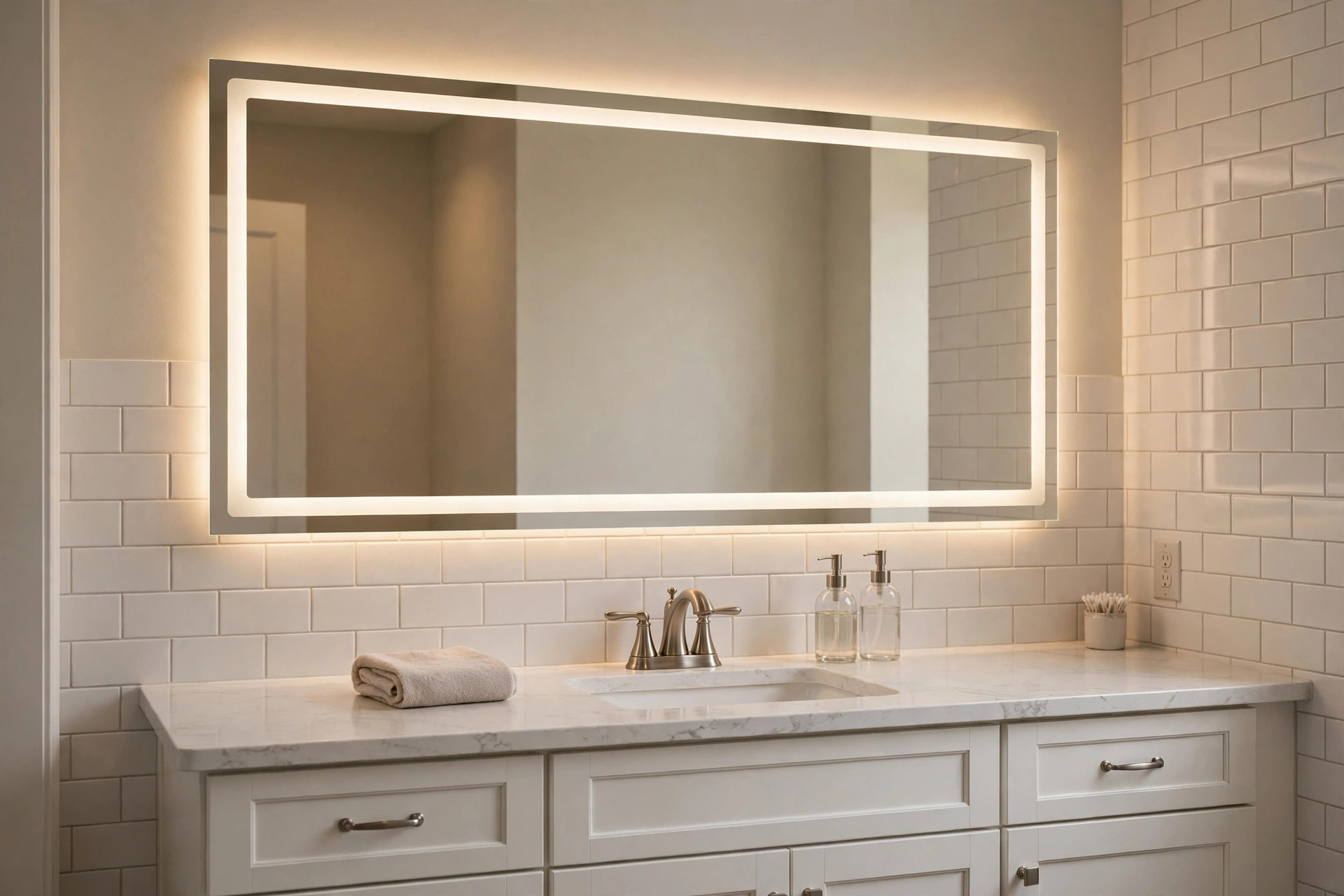

A bathroom mirror with built-in light changes the way a bathroom feels. This led bathroom mirrors american homes guide walks you through what these mirrors are, why American homeowners buy them, and how to pick one that fits your bathroom and your budget. The mirror looks like a plain mirror on the wall. Thin lines of light glow from behind the glass or around its edge. The light is soft and even. It makes the whole face easy to see. Shaving and putting on makeup become simpler. The room also looks newer and cleaner.
Homeowners across the United States have moved toward these mirrors in the last ten years. Builders put them in new houses. Owners of older homes add them during a remodel. The reason is simple. A lighted mirror removes the dark shadows that old ceiling lights leave on the face. It also saves the space and the cost of a separate light bar over the sink. This guide gives you the facts you need before you shop.
Why LED Mirrors Matter
A plain mirror reflects light. A lighted mirror gives light. That difference matters in a bathroom. Most bathrooms have one small ceiling light or a light bar above the mirror. That light comes from above. It throws shadows under the eyes, nose, and chin. A person who shaves may miss spots. A person who puts on makeup may see the wrong colors. LED bathroom mirrors fix this problem. The light comes from the mirror itself, straight at the face. Shadows fade away.
LED stands for light-emitting diode. LEDs use far less power than old bulbs. They stay cool to the touch. They also last a long time. A good LED mirror can run for many thousands of hours before the lights grow dim. For a family bathroom that gets used each morning, this means years of steady light with no bulb changes.
The light also flatters the room. A soft glow behind the glass makes the mirror seem to float off the wall. The bathroom looks wider and more modern. Many buyers choose these mirrors when they want a small bathroom to feel larger. Others choose them for safety. Bright, clear light helps older people see steps, counters, and wet floors. It helps anyone read small print on medicine labels in the morning.
Energy bills stay low. A typical LED mirror draws about the same power as a small night light. It can stay on for hours each day and still add only a few cents to the monthly bill. The mirror also turns on with a touch. Many models have a small sensor button on the glass. You tap it to turn the light on or off. Some models dim the light with a long press. This is handy late at night when full brightness feels harsh.
What to Look For Before You Buy: Led Bathroom Mirrors American Homes Guide
Buying an LED mirror takes a little thought. The market is full of shapes, sizes, and features. Start with the basics. Measure your vanity and your wall. Then think about the light itself.
Light Color and Brightness
Light color is measured in Kelvin. A low number, near 2700K, gives warm yellow light. It feels like evening lamplight. A high number, near 6000K, gives cool white light. It feels like noon daylight. Most bathroom mirrors fall between 3000K and 5000K. Warm light flatters skin tones. Cool light shows true color and helps with fine tasks.
Many mirrors now offer adjustable color. A button on the glass shifts the light from warm to cool. This is a fine feature for a shared bathroom. One person can use warm light for a relaxed evening bath. Another can use cool light for morning shaving. If you must pick one setting, choose a neutral white near 4000K. It suits most faces and most rooms.
Brightness matters too. It is measured in lumens. A small mirror needs about 500 to 800 lumens. A wide mirror over a double sink vanity may need 1000 lumens or more. A dimmer lets you turn the light down. Look for a model with memory. It will come back on at the setting you used last.
Size and Shape
Match the mirror to the vanity. A common rule says the mirror should be no wider than the vanity below it. Many designers like the mirror a few inches narrower than the sink cabinet. For a single 30-inch vanity, a 24-inch wide mirror looks balanced. For a 60-inch double vanity, a wide 48-inch mirror or two 24-inch round mirrors both work well.
Height depends on the users. The center of the mirror should sit near eye level. In a family bathroom, mount it so the shortest adult can see their face. Shape is a matter of taste. Rectangles are classic. Rounds soften a bathroom with hard lines. Arched mirrors suit farmhouse and traditional styles. Keep at least a few inches of space between the mirror and any vanity light bar above it, or skip the bar and let the mirror be the only light.
Types and Options
LED bathroom mirrors come in several forms. Each form puts the light in a different place. The right form depends on the look you want and the light you need.
Backlit Mirrors
Backlit mirrors hide the LEDs behind the glass. The light spills out around the edges and glows on the wall. The effect is soft and modern. The mirror face stays clear for the reflection. Backlit mirrors suit bathrooms where the mirror is the main source of light. They cast a gentle halo that brightens the whole wall.
Front-Lit and Edge-Lit Mirrors
Front-lit mirrors place the lights behind a frosted band on the glass surface. The light shines straight out at the face. Edge-lit mirrors run a thin light line around the rim. Both give stronger face light than backlit models. They are a good pick for people who shave or apply makeup each day. The light is direct but the frosted glass keeps it from glaring.
Round and Oval Mirrors
Round mirrors have become a favorite in American powder rooms and hall bathrooms. A round lighted mirror over a small sink makes a strong statement. Oval mirrors give the same soft look with a bit more height. Both shapes suit one-person vanities. They leave the wall corners free for paint or tile to show.
Smart and Defogger Mirrors
Some mirrors add extra features. A defogger pad behind the glass warms the mirror after a hot shower. It keeps the glass clear when the room steams up. This pad is a thin heating film. It draws a small amount of power and turns off with the light.
Smart mirrors add a clock, a temperature display, or a touch panel. A few connect to a phone by Bluetooth and play music through small speakers. These extras raise the price. They also add wires and parts that can fail. A plain lighted mirror with a defogger is the sweet spot for most buyers. It gives comfort without needless cost.
Storage is another option worth a look. A lighted mirror can pair with mirrored medicine cabinets for hidden storage, or you can pick a cabinet model that has LEDs built into its doors. Measure the depth before you buy. A cabinet sticks out further from the wall than a flat mirror.
Cost and Price
Prices vary with size and features. A small round LED mirror, about 24 inches wide, sells for 80 to 150 dollars at large home stores. A medium rectangle mirror, about 36 inches wide, costs 150 to 300 dollars. A wide backlit mirror over 48 inches wide can run 300 to 600 dollars. Smart mirrors with speakers or Bluetooth can pass 600 dollars.
Defogger pads add 30 to 80 dollars to the price. Dimmable models cost a little more than fixed-brightness models. Round and arched shapes often cost more than plain rectangles of the same size because they are harder to make.
Shop at large home improvement stores such as Home Depot and Lowe’s to compare many models in one place. Online sellers often show customer photos. These photos show how the light looks in real bathrooms. Big bathroom brands like Kohler, Moen, Delta, and American Standard also sell mirror lines that match their faucets and vanities. Matching the mirror brand to the faucet brand gives the room a planned look.
Plan for install costs if you hire help. An electrician may charge 100 to 250 dollars to wire a mirror to a wall switch. Some mirrors plug into a nearby outlet. These need no electrician. Check the product page before you buy so you know which kind you are getting.
How to Mount and Wire Your Mirror
Most LED mirrors mount on a wall bracket. The maker ships a metal bar that screws to the wall. The mirror hangs on the bar. Two people should do the lifting. Glass mirrors are heavy and hard to hold with one pair of hands.
Find the wall studs before you drill. A mirror that falls can shatter and hurt someone. Use a stud finder. Mark the stud centers with a pencil. Drive the bracket screws into the studs when you can. If the bracket lands between studs, use strong wall anchors rated for the mirror weight.
Wiring needs care. Many mirrors wire into the house circuit like a light fixture. Turn off the breaker for the bathroom before you touch any wires. Test with a voltage tester. If you are not sure about wiring, call an electrician. Bathroom wiring sits near water. A mistake can shock or start a fire.
Some mirrors plug into a standard outlet. These are simple to hang. Hide the cord behind the mirror or run it to an outlet inside a cabinet. Never run a cord across a wet counter. Some owners wire the mirror to the same switch as the ceiling light. The mirror then turns on with the room light. Others wire it to its own switch for separate control.
Advice sites like This Old House and Bob Vila publish step-by-step guides for hanging bathroom mirrors. Buying guides at The Spruce compare features side by side. Read two or three guides before you drill your first hole.
Care and Upkeep
LED mirrors need little care. Wipe the glass with a soft cloth and a small amount of glass cleaner. Spray the cleaner on the cloth, not on the mirror. Cleaner that runs down the edge can reach the electronics behind the glass. Never use scouring pads. They scratch the coating.
Keep water off the touch sensor. A wet finger can confuse the button. Dry your hands before you tap the light on or off. Check the seal around the mirror edge once a year. A broken seal lets steam reach the LED driver. The driver is the small box that powers the lights. If it fails, the whole mirror goes dark. Good mirrors carry a warranty of two to five years. Keep your receipt and the model number.
Dust the top edge of the mirror with a dry cloth. Dust collects there and dulls the glow. Do not hang heavy items on the mirror frame. Towel rings and hooks belong on the wall beside the mirror, not on the glass.
Safety
Bathrooms mix water and power. Treat a lighted mirror with respect. Buy only mirrors listed by a testing lab such as UL or ETL. The listing mark should appear on the box and in the product details. A listed mirror has been tested for safe use near water.
Keep the mirror away from direct shower spray. Most LED mirrors are made for damp rooms but not for wet zones. Mount the mirror at least a few feet from the shower or tub. If your bathroom has no window, run the exhaust fan during and after showers. Steam shortens the life of the electronics.
Check the cord and plug each year on plug-in models. Look for cracks or fraying. Replace a damaged cord at once. On hardwired models, check that the wall switch feels firm and that the light turns on and off cleanly. Flickering light can mean a loose wire. Turn off the breaker and call an electrician if you see flicker.
Children should not touch the touch sensor with wet hands. Teach them to dry their hands first. Small children may also tap the button many times for fun. This is harmless to the mirror but wears the habit of care.
Frequently Asked Questions
Do LED bathroom mirrors use a lot of power?
No. A typical LED mirror uses 10 to 30 watts. That is less than one old-style bulb. Running it two hours a day adds only a small amount to the monthly bill. The defogger pad adds a little more when it runs.
Can I replace the LED lights when they burn out?
In most mirrors, no. The LEDs are built into the mirror and sealed behind the glass. They are rated to last 30,000 to 50,000 hours. At two hours a day, that is more than forty years. If the lights fail early, use the warranty. This is why buying from a known seller matters.
Are LED mirrors safe in a bathroom with no window?
Yes, as long as the room has a working exhaust fan. The fan clears steam and keeps the air dry. Choose a mirror listed for damp locations. Mount it away from the shower spray. Wipe the glass after steamy showers.
Do I need an electrician to install one?
It depends on the model. Plug-in mirrors need no wiring. You hang the mirror and plug it in. Hardwired mirrors connect to the house wiring like a light fixture. If you have never wired a fixture, hire an electrician. The cost is modest and the work is safe.
Will a lighted mirror fog up after a shower?
The glass can fog like any mirror. A built-in defogger keeps the center clear. Without a defogger, wipe the glass with a dry cloth or run the fan longer. Some owners crack the bathroom door to let steam out faster.
What size mirror fits a 36-inch vanity?
A 30-inch wide mirror looks balanced over a 36-inch vanity. Round mirrors of 28 to 32 inches also work. Keep the mirror a few inches narrower than the vanity so the counter edge shows on each side.
A Final Word
An LED bathroom mirror is a small change with a large effect. It gives clear light for daily tasks. It makes the room look modern. It uses little power and lasts for years. Measure your space. Pick the light color that suits your face. Choose a listed model from a trusted seller. Hang it on studs and wire it with care. Done right, the mirror will serve your family each morning for a long time.
References
American Standard. (n.d.). Bathroom and kitchen products. https://www.americanstandard.com Bob Vila. (n.d.). Home improvement advice. https://www.bobvila.com Delta Faucet. (n.d.). Kitchen and bathroom faucets. https://www.deltafaucet.com Kohler. (n.d.). Bathroom and kitchen fixtures. https://www.kohler.com Lowe’s. (n.d.). Home improvement products. https://www.lowes.com Moen. (n.d.). Faucets and plumbing fixtures. https://www.moen.com The Home Depot. (n.d.). Home improvement products. https://www.homedepot.com The Spruce. (n.d.). Home and garden advice. https://www.thespruce.com This Old House. (n.d.). Home renovation guidance. https://www.thisoldhouse.com
Was this guide helpful?

About Sarah Mitchell
The My Garden US editorial team writes practical, in-depth home and garden guides for American homeowners — tested advice, no fluff.
You May Also Like

LED Bathroom Mirrors: Where to Buy Them in the USA
October 2, 2026 0 views
Brushed Towel Holders Deals Near Me
April 20, 2026 0 views
Where to Find Mirrored Medicine Cabinets Deals Near Me
February 26, 2026 0 views