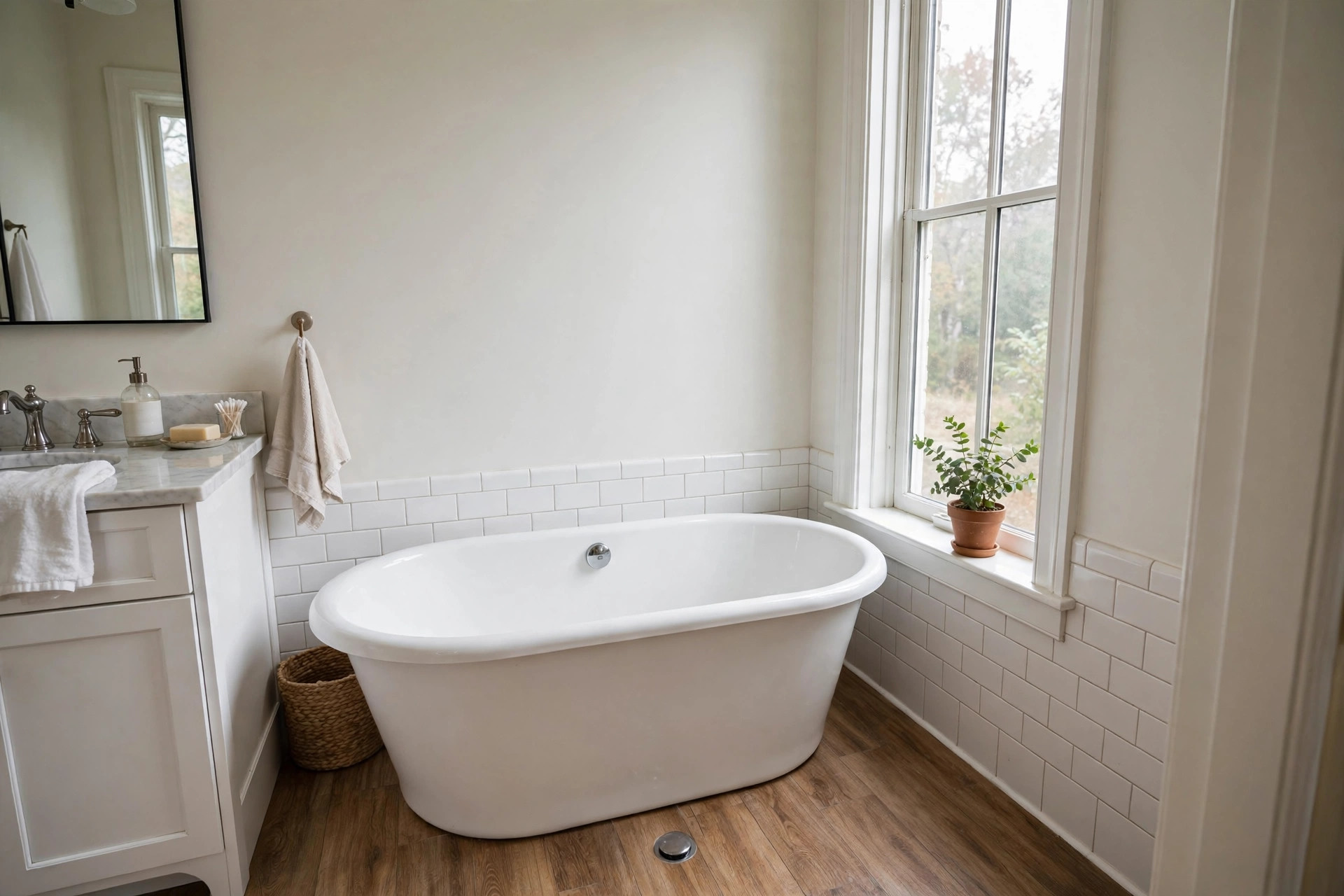

This freestanding soaking tubs american homes guide begins with a simple fact. A freestanding soaking tub stands on its own. It has finished sides on all four sides. It does not need a wall to hold it up. For many years, most American bathrooms used a built-in tub set inside a tiled alcove. The new trend is different. Homeowners now want a tub that acts as the centerpiece of the room. A freestanding soaking tub gives deep water, quiet comfort, and a clean modern look.
In this guide you will learn why these tubs matter, what to look for when you shop, and which types fit American homes best. You will also learn about costs, care, and safety. The aim is to help you make a calm and well-informed choice for your own bathroom.
When you step into a showroom, take your time. Sit in the tub. Lean back. Check the depth with your own body. A tub that feels right in the store will feel right at home.
Why a Freestanding Soaking Tub Matters
A soaking tub is deeper than a standard tub. A standard tub holds about 14 inches of water. A soaking tub holds 16 to 20 inches or more. That extra depth lets a bather sit fully under the water. The result is a warm, quiet soak that eases tired muscles after a long day.
A freestanding design also changes the look of the room. A built-in tub hides behind walls and tile. A freestanding tub shows its full shape. It becomes the first thing the eye sees. Many home improvement projects in the United States now center on the bathroom. A freestanding tub can raise the sense of luxury in the whole house. It can also add real value when the home is sold.
Another point is freedom of placement. A freestanding tub needs only a drain connection and a water line. It can sit under a window, near a corner, or in the middle of a large bathroom. This freedom lets you design the room around the tub instead of around the plumbing wall.
What to Look for When You Choose: Freestanding Soaking Tubs American Homes Guide
Shopping for a tub can feel hard. There are many shapes, sizes, and materials. Keep these points in mind.
Size and Fit
Measure your bathroom before you shop. A freestanding tub is larger than it looks in a showroom. Leave at least six inches of space on each side for cleaning. Leave 24 inches or more in front of the tub so you can step in and out safely. If your bathroom is small, look for a compact oval model. The best freestanding soaking tub for small bathroom spaces is usually 55 to 60 inches long. Longer models need a room of at least 8 by 10 feet.
Material
Acrylic is the most common material. It is light, warm to the touch, and easy to keep clean. Cast iron is heavier and holds heat for a long time. It can weigh 300 pounds or more before water is added, so the floor must be strong. Stone resin blends look like real stone and feel solid. Copper and steel tubs exist too, but they cost much more.
Water Depth and Capacity
Check the depth to the overflow drain. A true soaking tub has at least 16 inches of soaking depth. Also check the water capacity in gallons. A deep tub can hold 60 to 80 gallons. That matters if your water heater is small. A standard 50-gallon heater may need time to recover after one deep bath.
Faucet Type
A freestanding tub usually pairs with a floor-mounted freestanding faucet. The filler stands on the floor next to the tub. Some tubs also work with a wall-mounted filler if the tub sits near a wall. A freestanding tub with freestanding faucet is the most common match in American homes. Make sure the faucet height clears the tub rim with room to spare.
Water Supply and Drain Size
A soaking tub needs good water flow. Thin supply lines fill a deep tub too slowly. Ask your plumber to check the line size before you buy. Half-inch lines work for most tubs. Some large tubs need three-quarter-inch lines for a faster fill.
Also check the drain size. A freestanding tub usually uses a standard one-and-a-half-inch drain. A few deep models use a two-inch drain for faster emptying. Make sure the floor drain matches the tub. A mismatch can cause slow draining and soap buildup. This is one more reason to bring your plumber into the plan early.
Drain and Installation
A freestanding tub needs a drain in the floor. In a remodel, this can mean cutting the subfloor and moving pipes. Many homeowners learn how to install a freestanding soaking tub from their contractor first, because plumbing work is the largest part of the job. Read advice from trusted sources such as This Old House before you open the floor.
Types of Freestanding Soaking Tubs
Freestanding tubs come in several shapes. Each shape suits a different style of bathroom.
Oval Tubs
The oval is the classic soaking shape. It is soft, simple, and easy to clean. Oval tubs fit both modern and traditional rooms. Most compact models use this shape.
Round Tubs
Round tubs look like a Japanese soaking barrel. They use less floor space but still hold deep water. They suit a modern spa-style bathroom.
Rectangular Tubs
Rectangular tubs have straight lines and flat rims. They give the most bathing room per inch of length. They also match square tile patterns well.
Slipper Tubs
A slipper tub has one raised end that tilts back like a lounge chair. It is comfortable for long soaks. It needs more length, so it suits larger bathrooms.
Double-Slipper Tubs
A double-slipper tub has raised ends on both sides. Two people can face each other while they soak. It is the widest and most dramatic choice.
When you compare models, browse the ranges at large retailers such as Home Depot and Lowe’s to see real dimensions and prices side by side. Manufacturer sites such as Kohler and American Standard show detailed product lines with specifications you can trust.
Cost and Price
The freestanding soaking tub cost installed has a wide range. A basic acrylic tub can cost 700 to 1,500 dollars for the unit alone. Mid-range models run 1,500 to 3,000 dollars. High-end cast iron or stone resin tubs can pass 5,000 dollars.
Installation adds more. Moving the drain and water lines can cost 1,000 to 3,000 dollars, depending on the floor and how far the pipes must move. A floor-mounted faucet adds 400 to 1,200 dollars. Floor support work for a heavy tub adds 500 to 1,500 dollars. In total, most American homeowners spend 2,500 to 7,000 dollars for the full project.
Keep a budget for surprises. Old floors often hide damage. Drain lines may need new venting. Ask your plumber for a written quote before work begins.
One more cost to consider is water use. A deep tub uses more hot water per bath. Your water and energy bills may rise a little. Many owners find the comfort worth the small cost. If you soak often, a modern water heater with a high first-hour rating will serve you best.
Care and Upkeep
A freestanding tub is easy to keep clean because all sides are open. Wipe the tub with a soft cloth and mild soap after each bath. Do not use harsh cleaners on acrylic. They can scratch the surface and dull the shine.
For cast iron with an enamel finish, avoid bleach and abrasive pads. Clean stone resin the same way you clean acrylic. Copper tubs need special care and a wax coat now and then to keep their color.
Check the floor around the tub once a month. Look for small drips from the faucet or the drain. A small leak under a freestanding tub can go unseen for a long time. Catching it early saves the floor.
Many owners pair their new tub with updated fixtures elsewhere in the room. A guide on bathroom sink vanities can help you match the tub to the rest of the bathroom. Helpful cleaning and upkeep tips also appear on The Spruce, which covers bathroom care in plain language.
Safety
A deep tub needs more care than a shallow one. Hot water is the main risk. Set your water heater to 120 degrees Fahrenheit. Never fill the tub above the overflow drain. Test the water with your hand before you step in.
The floor can be slippery. Place a non-slip mat inside the tub and a bath mat on the floor. If an older person uses the tub, add grab bars on the nearest wall or a floor-standing grab bar. A freestanding tub has no built-in handles, so grab bars matter more.
Also think about weight. A full tub can weigh over 800 pounds. Ask a builder to check the floor joists before you install a heavy cast iron model. This step is not optional. It protects your home and your family.
Some homes combine a tub with a separate shower space. If that fits your plan, a walk-in shower kits buying guide shows how the two fixtures can work together in one bathroom layout.
Frequently Asked Questions
How much space does a freestanding soaking tub need?
Most models need at least 60 by 30 inches of floor. Add six inches around all sides for cleaning. A comfortable bathroom layout needs about 30 inches of clear space in front of the tub.
Can I put a freestanding tub in a small bathroom?
Yes, if you choose a compact model. Oval tubs under 60 inches long fit many smaller American bathrooms. Measure twice. Check the door swing and the path to the tub before you buy.
Do freestanding tubs take longer to fill?
Yes. A deep tub can take 10 to 15 minutes to fill from a standard supply line. Make sure your water heater can deliver 60 to 80 gallons of hot water in one draw.
What is the best material for a soaking tub?
Acrylic is best for most homes. It is light, affordable, and warm to the touch. Cast iron is best if you want heat to last and your floor can carry the weight. Details from makers such as Moen and Delta Faucet can guide your choice of matching fixtures in the same finish.
How do I clean a freestanding tub?
Wipe it with mild soap and a soft cloth after each use. Rinse well. Never use steel wool or strong chemicals on acrylic or enamel. A quick weekly wipe keeps the finish bright.
Is a freestanding tub hard to install?
The tub itself is simple to place. The hard part is the plumbing. You need a floor drain, supply lines, and sometimes floor support. A licensed plumber should do this work. The full guide to freestanding soaking tubs on home sites adds useful step-by-step context for what the job involves.
A Short Final Word
A freestanding soaking tub is a strong choice for an American home. It brings deep comfort, a clean look, and real value to the bathroom. Take time to measure, choose the right material, and plan the plumbing with a professional. For a broader view of bathroom fixtures and remodel ideas, see walk in shower kits buying guide usa, freestanding soaking tubs buying guide usa, and bathroom sink vanities buying guide usa. With careful planning, your new tub will serve your family for many years.
References
American Standard. (n.d.). Bathroom and kitchen products. https://www.americanstandard.com Bob Vila. (n.d.). Home improvement advice. https://www.bobvila.com Delta Faucet. (n.d.). Kitchen and bathroom faucets. https://www.deltafaucet.com Kohler. (n.d.). Bathroom and kitchen fixtures. https://www.kohler.com Lowe’s. (n.d.). Home improvement products. https://www.lowes.com Moen. (n.d.). Faucets and plumbing fixtures. https://www.moen.com The Home Depot. (n.d.). Home improvement products. https://www.homedepot.com The Spruce. (n.d.). Home and garden advice. https://www.thespruce.com This Old House. (n.d.). Home renovation guidance. https://www.thisoldhouse.com
Was this guide helpful?

About Michael Thompson
The My Garden US editorial team writes practical, in-depth home and garden guides for American homeowners — tested advice, no fluff.
You May Also Like
Bathtub Refinishing Kits American Homes Guide
April 21, 2026 0 views
Shower Grab Bars USA Online Deals: How to Buy the Right Safety Bars
April 20, 2026 0 views
Shower Niche Inserts Reviews Buying Guide USA
February 9, 2026 0 views