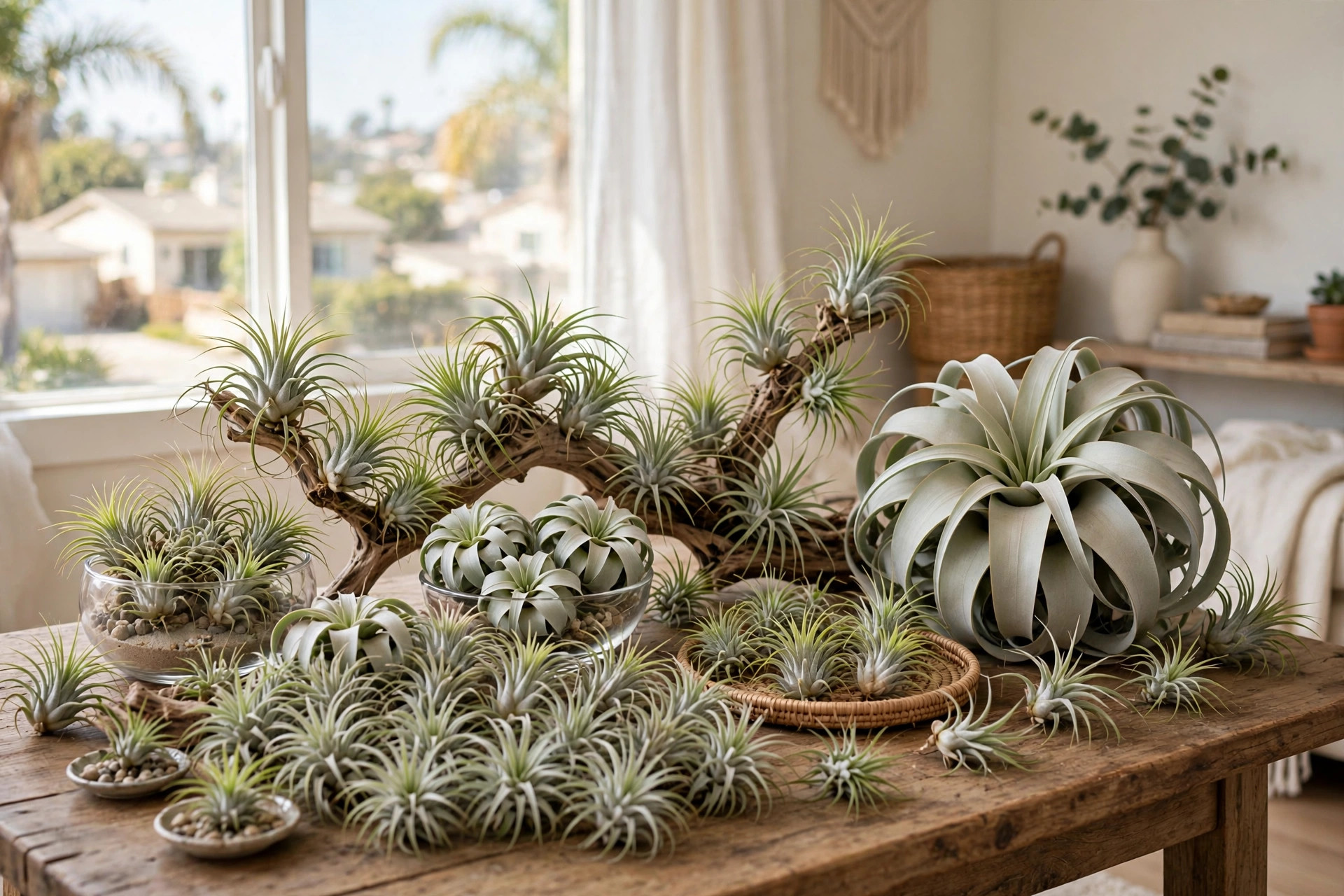

Air plants have won the hearts of plant lovers across the country. They need no soil. They ask for little water. They can sit on a shelf, hang from a window, or rest inside a glass bowl. For buyers who want many plants at once, air plants bulk California homes USA is a search phrase that keeps growing in popularity. This guide explains why these plants suit the state so well, how to buy them in large lots, what they cost, and how to keep them alive for years. It also gives simple decor ideas, care rules, and answers to common questions.
Why Air Plants Fit California Homes
California homes have many things that air plants love. The state gets long hours of bright light. Most rooms stay mild through the year. Winters are soft along the coast. Summers are warm but not cruel in many towns. These conditions suit Tillandsia, the plant family that includes all air plants.
Air plants take in water through small hairs on their leaves. They do not need a pot of soil. This makes them easy to place. A renter in Los Angeles can hang them near a window without drilling large holes. A family in San Diego can line a shelf with them. A homeowner in Sacramento can set them on a patio table in summer and move them inside when nights turn cold.
The dry air of California is no trouble either. Air plants from dry parts of Mexico and South America handle low humidity well. A weekly soak keeps them happy. Coastal homes with sea mist give them even more of what they need.
What to Look for When You Buy in Bulk: Air Plants Bulk California Homes Usa
Buying in bulk saves money, but only if the plants arrive healthy. When you shop for air plants bulk California homes USA suppliers, check the stock with care. A good lot should look alive the day it arrives.
Signs of a Healthy Plant
Healthy air plants have firm leaves. The leaves should feel stiff, not limp or papery. The base of the plant should be solid and free of black or mushy spots. Black at the base is a sign of rot. A plant with rot rarely recovers.
Look at the color. Most species are silver-green or gray-green. Some turn red or pink at the tips when they bloom. A dull brown plant is likely dead. A few dry leaf tips are normal and can be trimmed. Wide brown patches are not normal.
Size and Species Mix
Bulk lots often come in sizes marked small, medium, and large. Small plants are cheap and good for crafts. Medium plants suit most home decor. Large specimen plants cost more but make strong focal points. Ask the seller for the exact size range before you order.
Many lots mix species. A mix gives you variety. But a mix also means some plants need more light than others. If you want a uniform look, ask for a single-species lot. If you want surprise and variety, a mixed lot works well.
Popular Air Plant Species for Home Use
A few species sell best in bulk. They are tough, pretty, and easy to care for.
Tillandsia Ionantha
Tillandsia ionantha is small and round. It grows in tight rosettes. It blushes red when it blooms and grows purple flowers. It is the most common bulk air plant in the trade. It suits small bowls and wedding favors.
Tillandsia Xerographica
Tillandsia xerographica is large and silver. Its leaves curl in soft spirals. It can grow as wide as a dinner plate. It needs bright light and good air flow. It is a favorite centerpiece plant.
Tillandsia Bulbosa and Caput-Medusae
These two have wild, twisting leaves. They look like sea creatures. They do well mounted on wood or hung from wire. They like more frequent misting than the silver types.
Tillandsia Stricta and Aeranthos
These grow in star shapes and bloom with pink and blue flowers. They are hardy and forgiving. They are good picks for buyers who are new to air plants.
You can read general plant care guides at The Spruce to learn how each species behaves in a home setting. Plant sellers such as Burpee and Park Seed also share growing advice that helps new buyers start right.
How to Choose a Bulk Supplier
A good supplier makes all the difference. Look for sellers who grow their own stock or buy from trusted farms. Many California growers ship fresh plants with no long warehouse stay.
Check the shipping policy. Air plants should ship fast. Three to five days is fine. Longer trips in a hot truck can damage them. In summer, ask if the seller uses heat packs or fast shipping.
Read the return policy. A fair seller replaces dead or damaged plants. Ask how they handle claims. Keep photos of your order when it arrives. Good records make claims easy.
Compare lot sizes. Common bulk lots are 10, 25, 50, and 100 plants. Some sellers offer 500 or more for events and stores. The price per plant drops as the lot grows. But do not order more than you can care for. One hundred thirsty plants are a real chore.
Ask about pesticides. Some farms treat plants before shipping. A short quarantine on your porch keeps pests away from your other houseplants. Two weeks of watch time is enough.
Garden retailers like Gurneys and White Flower Farm are known for careful packing and plant health standards. Their shipping practices show what a good order should look like.
Cost and Price of Bulk Air Plants
Prices change with species, size, and season. Small ionantha plants in lots of 100 can cost as little as one or two dollars each. Medium mixed lots of 25 often run two to four dollars per plant. Large xerographica plants can cost eight to fifteen dollars each in bulk.
Shipping adds to the cost. A box of 50 plants may need fifteen to twenty-five dollars in shipping. Ordering from a California seller cuts shipping time and cost for California homes. Local pickup is cheapest of all if you live near a grower.
Watch for hidden fees. Heat packs, insurance, and signature delivery add up. A low plant price with high fees is no bargain. Compare the total landed cost per plant, not just the sticker price.
Season matters. Spring is peak season. Supply is high and prices are fair. Late summer can bring heat stress in transit. Winter orders need heat packs, which add cost. Plan event orders two months ahead.
How to Care for Air Plants in Your Home
Care is simple once you learn the rhythm. Air plants need light, water, and air. Get these three right and they will thrive for years.
Water
Most air plants need a soak once a week. Fill a bowl with room-temperature water. Turn the plants upside down and let them soak for twenty to thirty minutes. Then shake off the extra water. Set them upside down on a towel for an hour so no water sits in the base. Trapped water causes rot.
In dry inland homes, soak twice a week in summer. In humid coastal homes, once a week is enough. Misting helps between soaks. Use a spray bottle and mist the leaves lightly. Rainwater or filtered water is best. Tap water is fine if it is not too hard.
Light
Bright, indirect light is ideal. A spot near an east or west window works well. South windows give strong light, so keep plants a few feet back or use a sheer curtain. North windows give weak light. Plants near north windows grow slowly.
Outdoor light is stronger. A shaded patio suits most species. Direct noon sun can burn the leaves. Move plants inside when frost threatens. Most air plants suffer below forty degrees.
The Old Farmer’s Almanac publishes sunrise and frost date charts that help you plan when to move plants outdoors and back in. Home garden guides at Gardening Know How also explain light needs in plain terms.
Air Flow
Air plants need moving air. Do not seal them in closed jars with no vents. An open glass globe works. A wire holder works. A wooden frame works. After watering, good air flow dries the leaves fast and stops rot. A small fan on low helps in still rooms.
Feeding
Air plants grow slowly. A light feeding once a month helps. Use a fertilizer made for bromeliads or orchids at quarter strength. Add it to the soak water. Skip feeding in winter when growth slows.
Decor Ideas for California Homes
Air plants suit the relaxed style of California interiors. They add green life without heavy pots or soil mess.
Try a driftwood display. Mount plants on a piece of driftwood with wire or plant-safe glue. Hang it on a wall. The wood and silver leaves look natural together.
Try hanging glass globes. Hang two or three globes at different heights near a window. Each holds one plant. The glass catches the light.
Try a table centerpiece. Set a shallow bowl on a dining table. Fill it with sand or pebbles. Nestle five or six plants among the stones. It makes a living centerpiece that guests notice.
Try a bathroom garden. Bathrooms have steam that air plants love. Set small plants on a shelf above the sink. They get humidity from every shower.
Try patio styling. In warm months, place plants on outdoor tables and railings. Bring them in before the first cold night. A covered porch extends the outdoor season.
Plant breeders at Monrovia and Proven Winners showcase container and patio plantings that spark ideas for home displays. Their photo galleries help buyers picture what works.
Safety in the Home
Air plants are safe for most homes. They are not listed as toxic to people, cats, or dogs. Still, keep a few rules in mind.
Keep small plants away from small children who might put them in their mouths. The plants are not poison, but they are not food either. Teach children to look, not taste.
Some display wires and glues need care. Thin wire can poke fingers. Hot glue can burn. Use plant-safe glue and trim wire ends smooth.
Check for pests on new plants. Mealybugs look like tiny white cotton spots. A short soak and a wipe with a cotton swab removes them. Keep new plants apart from old ones for two weeks.
For sound home gardening practices, research from NIFA at the USDA supports safe methods used across the country.
Frequently Asked Questions
How long do air plants live?
Most air plants live three to five years. Some live longer. A healthy plant grows, blooms once, and then grows small pups at its base. The pups can be separated and grown on. In this way one plant becomes many.
Can I grow air plants outdoors in California year-round?
It depends on where you live. Coastal zones with mild winters can keep plants outside all year. Inland valleys with frost need to bring plants in for winter. Desert areas need shade in summer. Watch your local low temperatures.
How do I know if my air plant is dead?
A dead air plant turns brown all over and feels dry and hollow. The leaves fall off with a light touch. A living plant has some green or silver color and firm leaves. If you are unsure, soak it. A living plant often perks up after a good soak.
Do air plants need soil or pots?
No. Air plants grow without soil. They anchor to trees and rocks in the wild. In your home they can sit on wood, stone, glass, or wire. Never plant them in soil. Soil holds water against the base and causes rot.
How fast do bulk air plants grow?
Slowly. Most species add a few new leaves per year. A small plant may take two or three years to reach full size. Patience is part of the hobby. Good light and regular feeding speed growth a little.
Where can I learn more about seed and plant buying guides?
If you are also shopping for other garden stock, our heirloom vegetable seeds buying guide usa covers seed shopping basics. Our organic herb seeds buying guide usa helps with herb choices. Our wildflower seed mixes buying guide usa is useful for outdoor beds and borders.
A Final Word
Air plants give California homes an easy touch of green. They cost little in bulk. They ask for little care. They fit any style from beach cottage to city loft. Start with a small lot if you are new. Learn the weekly soak. Watch how your plants respond to your light and air. Then order more with confidence. With steady care, your air plants bulk California homes USA order will grow into a collection you enjoy for years.
References
Burpee. (n.d.). Seeds, plants, and gardening supplies. https://www.burpee.com Gardening Know How. (n.d.). Gardening guides and plant care. https://www.gardeningknowhow.com Gurney’s Seed & Nursery Co. (n.d.). Seeds, plants, and garden supplies. https://www.gurneys.com Monrovia. (n.d.). Plants for home gardens. https://www.monrovia.com National Institute of Food and Agriculture. (n.d.). Agricultural research and extension. https://www.nifa.usda.gov Park Seed. (n.d.). Seeds, plants, and gardening supplies. https://www.parkseed.com Proven Winners. (n.d.). Plants and gardening inspiration. https://www.provenwinners.com The Old Farmer’s Almanac. (n.d.). Gardening calendars and advice. https://www.almanac.com The Spruce. (n.d.). Home and garden advice. https://www.thespruce.com White Flower Farm. (n.d.). Plants, bulbs, and garden supplies. https://www.whiteflowerfarm.com
Was this guide helpful?

About Emily Rodriguez
The My Garden US editorial team writes practical, in-depth home and garden guides for American homeowners — tested advice, no fluff.
You May Also Like
Fiddle Leaf Figs USA Online Deals: How to Buy the Best Trees for Less
June 19, 2026 0 views
Lavender Seed Packets Deals Near Me: A Guide to Finding Them
July 12, 2026 0 views
Succulent Variety Packs Texas Homes USA: A Plain Guide
January 7, 2026 0 views