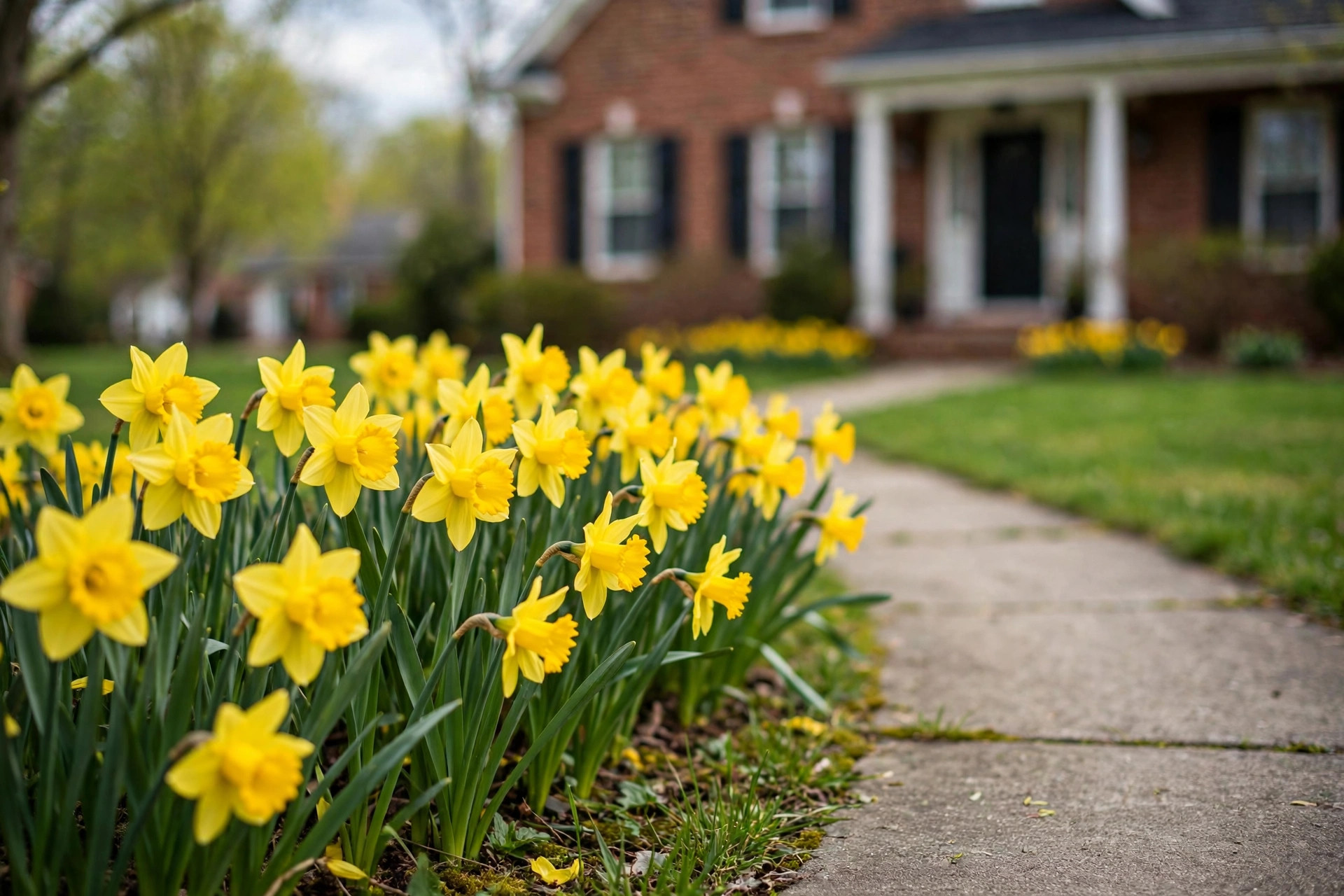

Few sights lift the spirit in early spring like a yard full of yellow daffodils. This daffodil bulb packs american homes guide walks you through buying the right packs, planting them well, and keeping them strong for years. Daffodils are among the easiest flowers a home owner can grow. They need little care, return each spring, and resist deer and most pests. A good pack of bulbs costs only a few dollars, and a single afternoon of planting can give you color for a decade or more.
Why Daffodil Bulb Packs Suit American Homes
Daffodils fit the rhythm of American home life. They bloom in March and April, just when the cold winter months come to an end. They ask for little in return. You plant them in fall, and they handle the rest on their own.
There are a few plain reasons home owners keep buying daffodil bulb packs year after year. First, the flowers are dependable. Once the bulbs settle in, they bloom again every spring without replanting. Second, they are tough. Daffodils stand up to frost, rain, and late snow. Third, animals leave them alone. The bulbs and leaves hold compounds that make deer, rabbits, and squirrels look elsewhere. This matters a great deal in suburbs and country yards alike.
Daffodils also suit many kinds of yards. They grow in beds, along walkways, under trees, and in pots on a porch. A pack of twenty-five or fifty bulbs can fill a border bed in front of a house. Larger packs of one hundred or more suit bigger yards or naturalized plantings on a slope.
What to Look for When You Buy a Bulb Pack: Daffodil Bulb Packs American Homes Guide
Not every pack on the store shelf is worth your money. A few checks before you buy will save you trouble.
Bulb Size and Firmness
Good daffodil bulbs feel heavy and firm in the hand, like a small onion. The best packs list the bulb size on the label, often as a number such as 12/14 or 14/16. Larger numbers mean larger bulbs, and larger bulbs give stronger blooms in the first spring.
Avoid bulbs that feel soft, light, or shriveled. Soft spots are a sign of rot. A moldy smell is another warning. If you can see the bulbs through a mesh bag, pick a pack where most bulbs look plump and clean.
Pack Count and Mix
Packs come in counts from ten to several hundred. Small packs of ten or twenty-five suit one bed or a few pots. Packs of fifty or one hundred are better value per bulb and suit a full border or a drift along a fence.
Some packs hold a single variety, such as the classic King Alfred. Others hold a mix of yellow, white, and two-tone types. Single-variety packs give a neat, formal look. Mixed packs give a cottage look with blooms that open at slightly different times. Both are fine. Choose what fits your taste.
Label Details
A trustworthy pack names the variety, gives the bloom time (early, mid, or late spring), and states the expected height. It should also name the hardiness zones, usually zones 3 to 8 for most daffodils. If you live in a warm state such as Florida or southern Texas, look for low-chill types made for mild winters, since most daffodils need weeks of cold to bloom well. Garden references such as the planting calendars at The Old Farmer’s Almanac can help you match bloom times to your zone.
Where to Buy
You can find bulb packs at garden centers, hardware stores, and mail-order nurseries. Fall is the peak season, and shelves fill up in September and October. Mail-order sellers such as Burpee, Park Seed, and Gurney’s ship bulbs at the right planting time for your area. Buying from established sellers lowers the risk of old, dried-out stock.
Types of Daffodils You May Find in Packs
Daffodils come in several forms. Packs in American stores usually carry a few common kinds.
Trumpet daffodils have one large flower per stem with a long central cup. They are the classic yellow daffodil of spring postcards. Large-cupped daffodils have a shorter cup and often show two colors, such as white petals with an orange center.
Small-cupped daffodils carry delicate blooms on shorter stems and suit the front of a bed. Double daffodils have ruffled, layered petals and look like small peonies. They are showy but can droop in heavy rain.
Jonquils are a fragrant group with narrow leaves and several small flowers per stem. Miniature daffodils, such as Tête-à-Tête, stand only six to eight inches tall and are ideal for pots, rock gardens, and path edges. Home owners who want pots on the porch may also enjoy reading about seed starting trays california homes usa for starting other plants indoors, though daffodils themselves do best when planted straight into the ground or into large containers.
When and How to Plant
Timing is the single most important part of growing daffodils. Bulbs go into the ground in fall, before the soil freezes.
Planting Time
In most of the United States, plant daffodil bulbs from late September through November. The rule of thumb is simple: plant after summer heat fades but at least six weeks before the ground freezes hard. In the North, that means October. In the South and mild coastal areas, November or even early December works. The NIFA garden resources note that matching planting time to your local frost dates gives bulbs the root growth they need before winter.
Planting Depth and Spacing
Plant each bulb about six inches deep, measured from the soil surface to the top of the bulb. A good rule is to plant three times as deep as the bulb is tall. Space bulbs four to six inches apart. For a natural look, drop a handful of bulbs on the soil and plant them where they fall rather than lining them up in rows.
Soil and Light
Daffodils like soil that drains well. They rot in standing water. If your soil is heavy clay, mix in compost or coarse sand in the planting hole. They prefer full sun to light shade. Under deciduous trees they do well, because they bloom and store energy before the tree leaves come out and shade them.
Watering After Planting
Water the bed well after planting. This settles the soil around the bulbs and starts root growth. After that, fall rains are usually enough. In a dry fall, water once a week until the ground freezes.
Cost and Price: What Bulb Packs Run
Daffodil bulb packs are among the cheapest ways to fill a yard with flowers. Typical prices in American stores run as follows.
– Small packs of 10 to 25 bulbs: 4 to 12 dollars – Medium packs of 50 bulbs: 12 to 25 dollars – Large packs of 100 bulbs: 20 to 40 dollars – Bulk bags of 250 or more: 50 to 90 dollars
Price per bulb drops as pack size grows. Premium or rare varieties cost more than common yellow types. Buying in fall, when stores compete for shoppers, often brings the best deals. Since daffodils multiply on their own over time, a twenty-dollar pack today can become several hundred blooming stems in five years. That makes them one of the best flower values a home owner can buy.
Care and Upkeep Through the Seasons
Daffodils are low-maintenance plants, but a few small habits keep them blooming strongly for years.
After the Blooms Fade
This is where many home owners go wrong. When the flowers fade in spring, do not cut the leaves. The green leaves feed the bulb for next year’s bloom. Leave the foliage standing for at least six weeks, until it turns yellow and pulls away with a light tug. You can remove the spent flower heads to keep the bed tidy, but the leaves must stay.
Feeding
Daffodils rarely need feeding. If your soil is poor, a light scattering of balanced garden fertilizer or bulb food in early spring, as the leaves emerge, is enough. Do not feed after blooming ends.
Dividing Crowded Clumps
After three to five years, clumps may grow crowded and produce fewer flowers. Divide them in early summer after the foliage dies back. Lift the clump with a fork, pull the bulbs apart gently, and replant the healthiest ones right away at the proper depth.
Growing in Pots
Daffodils grow well in pots on porches and patios. Use a pot at least twelve inches deep with drainage holes. Plant bulbs closer together than in the ground, tips just below the soil surface, and keep the pot in a cool spot over winter. In very cold regions, move pots into an unheated garage once the soil freezes to protect the roots.
Home owners building a full planting plan may also want to compare notes with guides on dahlia bulbs bulk reviews buying guide usa, since dahlias are planted in spring and pick up the color show just as daffodils finish.
Safety Notes for Homes With Children and Pets
Daffodils are beautiful, but every part of the plant is poisonous if eaten. The bulbs are the most toxic part. Keep unused bulbs in a labeled bag away from children and pets, and never store them where they might be mistaken for onions.
Teach children not to pick and chew the flowers or stems. The sap can also irritate skin in sensitive people, so wearing gloves while handling large numbers of bulbs is a sensible habit. Dogs that dig may unearth bulbs; fence off new plantings or supervise pets until the bulbs are well covered. If anyone eats part of a daffodil, call your local poison control center right away. Resources on safe gardening around families, such as those at Monrovia and Proven Winners, offer more guidance on plant safety in home landscapes.
Design Ideas for American Yards
A little planning turns a bulb pack into a landscape feature.
– Front walk borders: Line both sides of a walkway with a single variety for a clean, welcoming look. – Under trees: Ring the base of a shade tree with naturalized drifts. They bloom before the leaves return. – Mailbox plantings: A circle of daffodils around a mailbox post gives cheerful curb appeal. – Hill and slope cover: On a slope that is hard to mow, plant hundreds of bulbs and let them spread. – Layered beds: Plant daffodils deeper, then add shallow-rooted annuals above them for summer color in the same bed.
Pairing spring bulbs with summer plantings is a classic home garden strategy, and growers often plan their indoor starts alongside; see seed starting trays usa online deals for one approach to getting summer seedlings going while the daffodils are still in bloom.
Frequently Asked Questions
How many daffodil bulbs should I buy for a small yard? For a small yard, one or two packs of fifty bulbs will fill a border bed nicely. Start with fifty if you are unsure. You can always add more packs next fall, and the bulbs will multiply on their own.
Can I plant daffodil bulbs in spring? Spring planting is not advised. Bulbs planted in spring usually bloom poorly or not at all that year, because they missed the cold period they need. Wait until fall for the best results.
Do daffodils come back every year? Yes. Daffodils are perennials. In most climates they return each spring for many years and slowly form larger clumps. They do not need to be dug up and replanted each year.
What if I forgot to plant my bulbs in fall? If the ground is not yet frozen, plant them anyway, even in early winter. Late-planted bulbs often still bloom, though the show may be smaller. If the ground is frozen solid, store the bulbs in a cool, dry place and plant them as early as possible in spring, or chill them in a refrigerator and force them in pots indoors.
Why did my daffodils bloom the first year but not the second? The most common cause is cutting the leaves too soon after blooming. The leaves need six weeks to feed the bulb. Other causes include planting too shallow, poor drainage, or too much shade. Daffodil care guides at Gardening Know How and White Flower Farm describe these problems and fixes in plain detail.
Are daffodil bulb packs a good gift? They make fine fall gifts for gardeners. Choose a pack of a named variety with a clear label, and include a short note with the planting depth and timing. Many gardeners love receiving bulbs they would not buy for themselves.
A Final Word
A pack of daffodil bulbs is a small purchase with a long reward. Plant them in fall, leave the leaves alone in spring, and they will greet you with gold and white blooms for years to come. For an American home owner who wants beauty without fuss, few garden buys beat them.
References
Burpee. (n.d.). Seeds, plants, and gardening supplies. https://www.burpee.com Gardening Know How. (n.d.). Gardening guides and plant care. https://www.gardeningknowhow.com Gurney’s Seed & Nursery Co. (n.d.). Seeds, plants, and garden supplies. https://www.gurneys.com Monrovia. (n.d.). Plants for home gardens. https://www.monrovia.com National Institute of Food and Agriculture. (n.d.). Agricultural research and extension. https://www.nifa.usda.gov Park Seed. (n.d.). Seeds, plants, and gardening supplies. https://www.parkseed.com Proven Winners. (n.d.). Plants and gardening inspiration. https://www.provenwinners.com The Old Farmer’s Almanac. (n.d.). Gardening calendars and advice. https://www.almanac.com White Flower Farm. (n.d.). Plants, bulbs, and garden supplies. https://www.whiteflowerfarm.com
Was this guide helpful?

About James Carter
The My Garden US editorial team writes practical, in-depth home and garden guides for American homeowners — tested advice, no fluff.
You May Also Like
Sunflower Seed Packs: Reviews and a Buying Guide for USA Gardeners
May 12, 2026 0 views
How to Grow Thyme: Drought-Tough Herb Guide
October 7, 2026 0 views
Air Plants Bulk for Sale USA: A Complete Buyer’s Guide
February 13, 2026 0 views