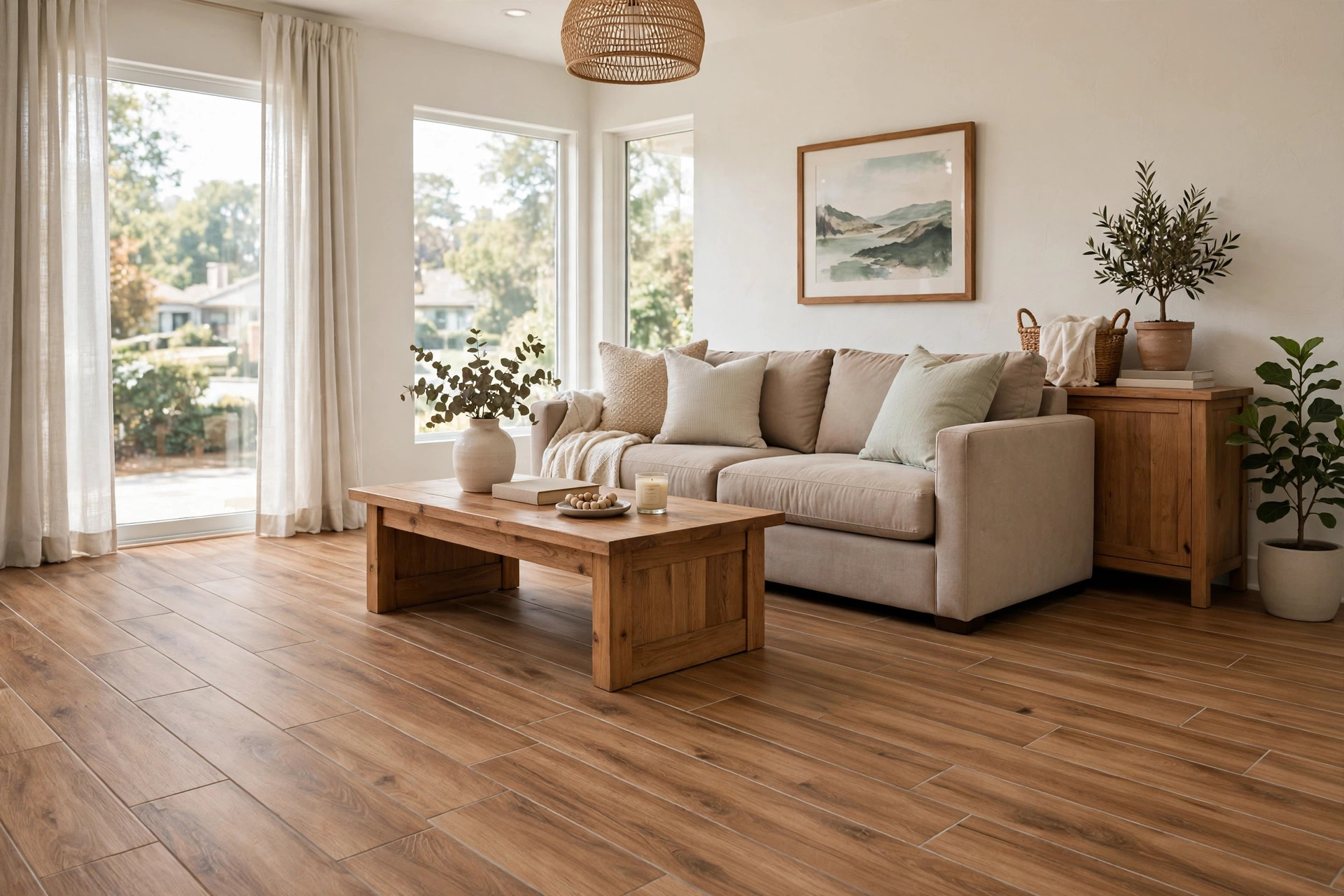

Why Wood Look Tile Keeps Winning
The best wood look tile brands USA 2026 all chase the same goal. They want a floor that looks like real hardwood but behaves like tile. Homeowners love the look of wood. They do not love what water, muddy boots, and dog claws do to it. Wood-look porcelain tile solves that problem. It carries a printed grain that copies oak, walnut, hickory, or reclaimed barn wood. It also shrugs off spills, resists scratches, and lasts for decades.
Real wood is warm and full of character. But real wood swells when it gets wet. It dents under heavy furniture. It fades in strong sun. Tile made to look like wood keeps the charm and drops the worry. Kitchens, entryways, bathrooms, and laundry rooms all become fair game. Families with kids and pets gain a floor that can take a beating and still look good at dinner.
The printing technology has come a long way. Ten years ago, wood-look tile often looked flat and fake. The grain repeated in an obvious pattern. Edges showed a giveaway sheen. In 2026, high-definition digital printing layers texture and color with fine detail. Many planks even have a registered texture, which means the surface dips and rises where the printed grain lines run. From a few feet away, even a trained eye can be fooled. Up close, the cool touch of ceramic gives it away, but the look holds.
What Wood Look Tile Really Is: Best Wood Look Tile Brands Usa 2026
Wood-look tile is porcelain or glazed ceramic made in long plank shapes. Common sizes run 6 by 24 inches, 8 by 36 inches, and 8 by 48 inches. Porcelain is the stronger choice. It is fired at higher heat and absorbs very little water. That makes it safe for wet areas. Ceramic versions exist and cost less, but they suit dry rooms better.
The face of each plank is printed with a wood design. Good brands print dozens of unique faces, so the pattern does not repeat across a room. Cheap lines may use only a handful of faces. Then the eye catches the same knot in three places at once. Ask the dealer how many unique faces a line offers. More is better.
Rectified edges matter too. A rectified plank is cut after firing so the edges are straight and sharp. That allows tight grout lines, often one-sixteenth of an inch. Tight lines make the floor read more like real wood planks. Non-rectified tile needs wider grout joints, and the grid look breaks the illusion.
What to Look for When You Choose
Shade and Print Quality
Pick your wood tone the way you would pick paint. Bring home full-size samples. Look at them in morning light and evening light. Oak tones run pale and friendly. Walnut runs dark and rich. Gray-washed planks suit modern rooms. Weathered barn-wood prints suit farmhouse styles.
Check the print for soft, natural color shifts. Real boards vary from plank to plank. A good line varies too. If every plank looks identical, the room will feel stamped rather than crafted.
PEI Rating and Slip Resistance
The Porcelain Enamel Institute rates glaze hardness from PEI 1 to PEI 5. For floors in busy homes, choose PEI 4 or PEI 5. That stands up to foot traffic, pets, and grit tracked in from the yard.
Slip resistance matters in kitchens and baths. Look for the DCOF value, the dynamic coefficient of friction. A DCOF of 0.42 or higher suits wet areas. Many wood-look lines reach that number while still feeling smooth under bare feet.
Size, Thickness, and Flatness
Longer planks look more like real wood. An 8 by 48 inch plank reads closer to hardwood than a short 6 by 24. But long planks need a flat subfloor. Any dip or hump will telegraph through and can cause lippage, where one edge sits higher than its neighbor. A good installer checks the floor with a straightedge first.
Brands Worth Knowing
No single brand wins every room. The best wood look tile brands USA 2026 each have strengths. What follows is a plain survey of names American shoppers see most often in showrooms and big-box stores.
Daltile is one of the largest tile makers in the country. Its wood-look lines cover many tones, from pale Scandinavian oak to dark espresso. The company sells through its own studios and through major retailers, so samples are easy to find. Daltile lines often carry solid PEI ratings and a wide choice of plank sizes.
Marazzi sits in the same family of makers as Daltile and runs a strong wood-look program of its own. Its prints lean toward European oak and rustic character grades with heavy grain. Shoppers who want a bold, knotty look often land here.
MSI is known for value. It imports large volumes and sells through independent dealers and home centers. Its wood-look porcelain often costs less per square foot than domestic lines while still offering long planks and varied faces. Quality can vary by collection, so read the specs on each line rather than trusting the brand name alone.
Shaw and Mohawk are flooring giants most buyers know from carpet and vinyl. Both run tile divisions with wood-look collections. Their strength is distribution. A local flooring store can usually get samples fast, and warranties tend to be clearly written.
Arizona Tile and Florida Tile serve regional markets with strong showroom networks. Their wood-look lines often include trend-forward colors, including the gray and whitewashed tones that stay popular in coastal homes.
Bedrosians and Crossville round out the field. Bedrosians imports distinctive Italian designs. Crossville makes tile in Tennessee and is known for technical quality and honest spec sheets.
When you compare brands, look past the marketing. Compare the number of unique faces, the PEI rating, the DCOF value, and the warranty terms. A plain spec sheet tells you more than a glossy brochure. Resources like The Spruce publish tile buying guides that explain these ratings in plain language, and This Old House covers installation standards worth knowing before you hire a setter.
Cost and Price in 2026
Material cost for wood-look porcelain usually runs from about two dollars to about eight dollars per square foot. Basic imported lines sit at the low end. Domestic lines with many unique faces and rectified edges sit higher. Designer collections with rare finishes can pass ten dollars, but most homeowners never need to go there.
Labor is the bigger part of the bill. Tile setting is skilled work. Expect installation to run from about six dollars to about fourteen dollars per square foot, depending on your region and the state of your subfloor. Long planks cost more to set than square tile because they demand careful leveling. If the floor needs grinding, patching, or a new underlayment, that adds to the total.
A typical 200 square foot living room might run between two thousand and four thousand dollars all in. Get at least three written quotes. Ask each installer how they handle lippage with long planks and what grout joint width they plan. Their answers tell you who has set this material before. For a deeper look at what drives the price, see our guide to tile installation cost per square foot usa.
Where Wood Look Tile Works Best
Kitchens top the list. Water, grease, and dropped pans are daily events there. Tile takes all of it. Entryways and mudrooms come next. Wet boots and sandy shoes meet a surface that does not care.
Bathrooms benefit too. Real wood has no business on a bathroom floor, but wood-look tile gives the spa-like warmth many homeowners want. Choose a line with a DCOF above 0.42 for safety.
Basements are another smart spot. Concrete slabs can wick moisture. Porcelain does not absorb it. The result is a warm-looking lower level that stays dry and clean.
Whole-house runs are common now. Running one wood-look tile through the kitchen, hall, and living areas makes a home feel larger and calmer. Fewer transitions mean fewer trip edges and an easier clean.
Some rooms still favor other materials. Bedrooms often feel better with softer flooring underfoot. If you are weighing options, our luxury vinyl plank flooring reviews 2026 compare a warmer-feeling alternative. And households with dogs may want to read our guide to the best flooring for kitchens with dogs usa before they decide.
Care and Upkeep
Wood-look tile asks little. Sweep or vacuum weekly to keep grit from dulling the glaze. Mop with warm water and a mild, pH-neutral cleaner. Skip oil soaps and wax-based products. They leave a film that attracts dirt.
Grout needs more attention than the tile itself. Sealed grout resists stains better. Reseal grout lines every year or two in kitchens and baths. Epoxy grout costs more up front but never needs sealing and shrugs off stains. It is a smart upgrade for busy floors.
Steam mops divide opinion. Most makers say occasional steam is fine, but daily blasts of high heat can stress grout over time. A damp mop does the job without the risk.
Chips are rare but possible. A heavy pot dropped on a corner can chip the glaze. Keep a few spare planks from your original batch. Dye lots shift between runs, and a box bought two years later may not match. Store spares in a dry corner of the garage.
Safety Notes
Tile is hard. A fall on tile hurts more than a fall on carpet. In homes with small children or frail elders, area rugs with non-slip pads soften the landing zones. Choose rugs with low pile so doors still clear them.
Wet tile can be slick. That is why the DCOF rating matters. In showers and at tub entries, pick textured lines and keep bath mats in place. Wipe up spills promptly. A puddle on any smooth floor is a hazard.
Cutting tile creates fine silica dust. If you set tile yourself, wear a respirator rated for fine dust, work with wet-cutting tools, and keep the work area ventilated. Better yet, hire a licensed setter. The money buys skill and keeps the dust out of your lungs.
Check local rules before a big remodel. Some condo and co-op boards limit hard flooring because of noise. A sound underlayment or an area rug policy may be required. A quick call to the building office saves trouble later.
Frequently Asked Questions
Does wood-look tile feel cold underfoot?
Yes, it feels cooler than wood. Porcelain pulls heat from bare feet. In cold climates, many owners pair it with radiant floor heat. Rugs in seating areas help too. Most people stop noticing after the first week.
How long does wood-look tile last?
Decades. Porcelain is one of the longest-lived floor materials in a home. The glaze resists wear, and the body does not rot or swell. Fifty years is a fair expectation with basic care. Real hardwood needs refinishing every decade or so. Tile never does.
Can wood-look tile go over existing flooring?
Sometimes. Tile can go over a sound concrete slab or over cement backer board. It should not go over cushioned vinyl, carpet, or a bouncy wood subfloor. The old surface must be flat, clean, and firmly bonded. An installer should test before promising anything.
Is wood-look tile good for resale value?
It generally helps. Buyers like the look of wood and the promise of low upkeep. A well-set, neutral-toned wood-look floor photographs well and shows well. Wild colors or fake-looking prints can hurt. Stay with natural oak, walnut, or gray tones for the safest return.
How do I keep grout lines from ruining the wood look?
Use the narrowest joint your tile allows, often one-sixteenth of an inch with rectified planks. Pick a grout color close to the tile tone rather than bright white. Dark grout on a dark plank nearly disappears. Sealed or epoxy grout keeps the lines clean for years.
A Final Word
The best wood look tile brands USA 2026 offer a simple trade. You get the warmth and character of wood grain with the calm of a floor that asks almost nothing of you. Shop with samples in hand. Read the spec sheets. Hire a setter who has laid long planks before. Do those three things and the floor will look right the day it goes in and still look right twenty years later.
Retailers such as Home Depot and Lowe’s stock many of these lines for easy sampling, while specialty makers like Shaw Floors, Mohawk Flooring, Daltile, and LL Flooring offer deeper collections through dealers and showrooms.
References
Daltile. (n.d.). Ceramic and porcelain tile. https://www.daltile.com LL Flooring. (n.d.). Hardwood, vinyl, and tile flooring. https://www.llflooring.com Lowe’s. (n.d.). Home improvement products. https://www.lowes.com Mohawk Flooring. (n.d.). Flooring products. https://www.mohawkflooring.com Shaw Floors. (n.d.). Flooring products. https://www.shawfloors.com The Home Depot. (n.d.). Home improvement products. https://www.homedepot.com The Spruce. (n.d.). Home and garden advice. https://www.thespruce.com This Old House. (n.d.). Home renovation guidance. https://www.thisoldhouse.com
Was this guide helpful?

About Robert Taylor
The My Garden US editorial team writes practical, in-depth home and garden guides for American homeowners — tested advice, no fluff.
You May Also Like
Tile Shower Bench Installation Cost USA: A Complete Homeowner Guide
August 28, 2026 0 views
Round Jute Rug for Entryway for Sale: A Plain Buying Guide
April 8, 2026 0 views
Ruggable vs Revivo Rug Comparison USA: Which Washable Rug Brand Wins
August 25, 2026 0 views