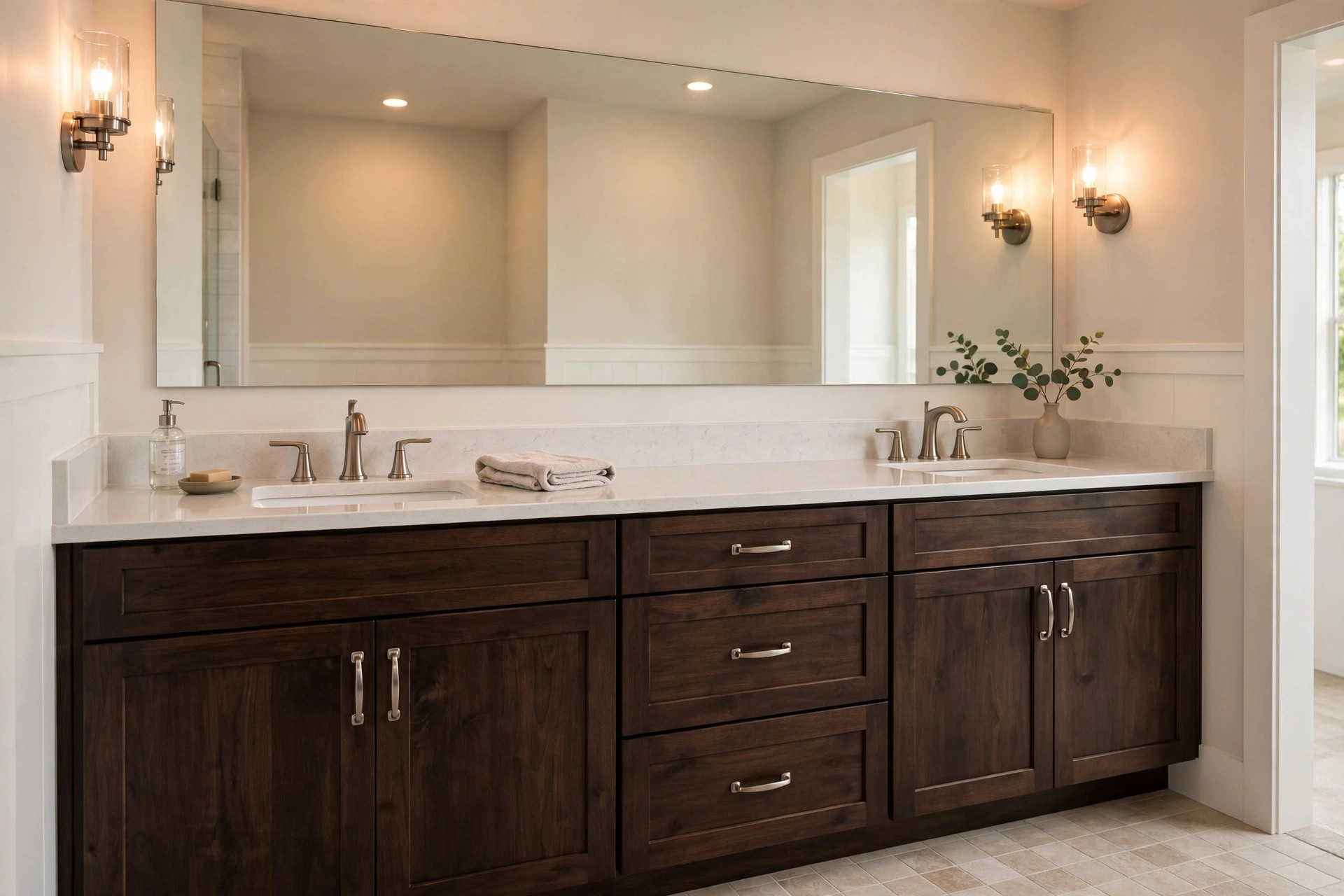

A double sink vanity is one of the best upgrades a family can make to a shared bathroom. This double sink vanities buying guide usa explains what these units are, how to measure for one, which styles fit which homes, and how much they cost. If two people use the same bathroom each morning, two sinks can end a daily battle for space. But the wrong unit can crowd a small room or waste money. Read on before you buy.
Why a Double Sink Vanity Matters
In many American homes, the master bathroom serves two adults at once. One sink means waiting. Two sinks mean both people can brush their teeth, shave, or wash their faces at the same time. This saves time on busy mornings and cuts down on mess. Toothpaste, water, and clutter get split between two basins.
A double vanity also adds resale value. Home buyers look for master bathrooms that feel roomy and practical. A single sink in a large bathroom can look cheap. A wide double vanity fills the space well and looks like a planned upgrade. Real estate agents often point out the double vanity as a selling feature.
There is a third reason: storage. A double sink vanity is wider than a single one, so it holds more drawers and cabinets. Towels, medicines, and cleaning supplies all find a home under the counter. For families, that extra storage matters as much as the second sink.
Measuring Your Space: Double Sink Vanities Buying Guide Usa
The most common mistake is buying a unit that is too wide. A double sink vanity needs at least 60 inches of wall width. Smaller units of 48 inches exist, but each sink then sits very close to the other, and elbow room is tight. Most experts suggest 60 to 72 inches for real comfort.
Measure three things. First, the width of the wall where the vanity will stand. Leave at least 4 inches of clear space on each side of the unit so the doors do not hit the wall. Second, the depth. Most vanities are 21 to 22 inches deep from the wall to the front edge. Make sure the bathroom door can still swing open. Third, check the drain and water lines. The pipes must line up with two sinks, which may mean new plumbing runs.
Also think about the mirror. A double vanity needs either one long mirror or two separate mirrors. Plan the mirror width to match the vanity. Lighting above each sink works better than one light in the middle.
Types and Styles of Double Sink Vanities
Freestanding vanities are the classic choice. They stand on the floor with legs or a solid base. They offer the most storage and the widest range of prices. Most American homes use this type.
Wall-mounted or floating vanities attach to the wall and leave the floor open below. They make a small bathroom feel larger and are easier to clean under. They hold less weight, so they suit smaller sinks and lighter tops.
Furniture-style vanities look like old dressers or sideboards with two sinks set into the top. They suit traditional and farmhouse bathrooms. They can be costly, but they give the room a warm, custom feel.
Double vanities also differ in sink style. Drop-in sinks sit in a hole cut in the countertop. Undermount sinks attach below the countertop for a smooth look. Vessel sinks sit on top like bowls and make a bold style statement. Each type needs a matching faucet height, so pick the sink and faucet together.
Materials matter too. Solid wood cabinets last the longest but cost the most. Plywood with a wood veneer is a good middle ground. Medium-density fiberboard with a sealed finish is the cheapest, but it can swell if water seeps into the edges. For the countertop, quartz resists stains and needs little care. Granite is strong but should be sealed once a year. Cultured marble is cheap and smooth, though it can scratch.
How to Choose the Right One
Start with your budget. Then match the style to the rest of the house. A modern home suits clean lines and flat-front cabinets. A older colonial home suits raised panels and warm wood tones. The bathroom should feel like it belongs to the house, not like a hotel room dropped in.
Next, look at the sink layout. Some units place the sinks far apart with a wide cabinet in the middle. Others group them closer with drawers on the sides. Wide spacing gives each person more room but needs a 72-inch unit. Check how the drawers open. Drawers that pull straight out are easier to use than deep cabinets with doors.
Check the faucet holes. Most double sink vanities come with pre-drilled holes for the faucets. Make sure the hole layout matches the faucets you plan to buy. Single-hole faucets are common with vessel sinks. Three-hole sets are common with drop-in sinks.
Look for soft-close drawers and doors. These small hinges cost little but make the unit feel high quality. They also keep the bathroom quiet at night.
Think about who will use the sinks. Children need lower heights, around 32 inches. Standard adult height is 34 to 36 inches. Some vanities come in comfort height, which suits taller adults. If you plan to stay in the home for many years, pick a height that works for the whole family.
Plumbing is the hidden factor. Two sinks need two drains. If your bathroom has only one drain line, a plumber must add a second one. This adds to the cost. Ask a plumber for a price before you order the vanity, not after. Many guides on brushed nickel faucets for Texas homes also cover faucet spacing for double setups, which is worth a look.
Cost and Price Ranges
Prices for double sink vanities in the United States vary widely. A basic 60-inch unit with a cultured marble top can cost between 600 and 1,000 dollars. These are sold at large home stores and come with sinks and a top included. They are a good choice for a guest bathroom or a rental.
Mid-range units run from 1,000 to 2,500 dollars. These often have plywood cabinets, quartz or granite tops, and better hardware. The finish is thicker and the drawers slide smoother. Most homeowners choose this range for a master bathroom.
High-end and custom units cost 2,500 dollars and up. Some reach 6,000 dollars or more. These use solid wood, stone tops, and hand-finished details. Custom units are built to fit an exact space, which helps in older homes with odd wall sizes.
Do not forget the extra costs. Two faucets cost more than one. Plumbing work for a second drain can add 300 to 800 dollars. New mirrors and lights add more. A full project often costs twice the price of the vanity itself. Big retailers like Home Depot and Lowe’s list many double vanity options with prices, which helps with budget planning.
Care and Upkeep
A double vanity lasts longer with simple care. Wipe the countertop dry after use. Standing water seeps into seams and can damage wood edges. Use a soft cloth, not rough pads, to clean the sinks and top.
Check the caulk line where the top meets the wall once a year. If it cracks, water can run behind the unit and rot the wall. A fresh line of bathroom caulk takes ten minutes and stops this damage.
Clean the drains monthly. Hair and soap build up faster with two sinks in daily use. A simple drain screen in each basin catches most of the hair. Avoid harsh chemical cleaners, which can harm the finish on the cabinet and the seals around the sink.
For wood cabinets, use a damp cloth and mild soap. Dry them right away. For painted finishes, test any cleaner on a hidden spot first. Touch up small chips with matching paint before water gets into the wood.
Tighten the faucet handles and drain parts once a year. Small leaks under the sink are easy to miss when the cabinet is full. Put a small tray or mat under each drain pipe to catch drips and protect the cabinet floor.
Safety Tips
Double vanities are heavy. A 72-inch unit with a stone top can weigh over 300 pounds. Always have two people move it. Anchor a freestanding unit to the wall studs so it cannot tip forward when children lean on it.
Wall-mounted units must be bolted into studs, not just drywall. Check the weight rating of the mounting brackets. If you are not sure, hire a professional. A falling vanity can cause serious injury.
Keep cleaning products locked away from children. The wide cabinet under a double vanity is easy for small hands to reach. Use child-proof latches on the doors.
Make sure the electrical outlets near the sinks are GFCI protected. Water and electricity are a deadly mix. If your bathroom outlets are old, have an electrician update them during the remodel. Guides on shower grab bars cover related bathroom safety topics worth reading.
Also check floor strength in older homes. A very heavy double vanity plus two full sinks adds real weight to one spot. In most homes this is fine, but in old houses with weak floors, a contractor should check first.
Frequently Asked Questions
What is the smallest width for a double sink vanity? The smallest practical width is 60 inches. Some makers sell 48-inch double vanities, but the sinks sit very close together and there is little elbow room. For two adults to use the sinks at once, 60 inches is the minimum that feels comfortable.
Can I turn my single sink vanity into a double? It is possible only if the cabinet is wide enough. A 60-inch single vanity cabinet can often hold two sinks with new plumbing. A narrow 30 or 36-inch cabinet cannot. You will also need a new countertop with two cutouts and a second set of water and drain lines. In most cases, buying a new double vanity costs less than rebuilding the old one.
Do both sinks need their own drain? Yes. Each sink needs its own drain connection. Both drains can join into one main waste line inside the wall, but a plumber must run a second drain arm from the second sink to that line. This is the most common extra cost in a double vanity project.
Should the faucets match the other bathroom fixtures? Matching finishes look best. If your shower head and towel bars are brushed nickel, choose brushed nickel faucets for the vanity. Mixed finishes can work, but they need a careful eye. When in doubt, match them. Fixture makers like Moen and Delta Faucet sell full matching sets for this reason.
How high should a double sink vanity be? Standard height is 34 to 36 inches from floor to countertop. This suits most adults. Taller people may prefer 36 inches. For a children’s bathroom, 32 inches is better. Vessel sinks add height on top, so a lower cabinet works better with them.
Is a double vanity worth it in a small bathroom? In a truly small bathroom, a double vanity can crowd the room and make it hard to move. Measure carefully. If the room is less than 8 feet wide, a single wide vanity with good storage may serve better. A double vanity shines in medium and large bathrooms. Ideas for small-bath storage in shower niche inserts can help make a tight space work harder.
A Short Final Word
A double sink vanity is a practical upgrade that pays off every morning. Measure your space, plan the plumbing, and pick a style that fits your home. Spend a little more on the cabinet material and the hardware, because those parts take the daily wear. With the right choice and simple care, a good double vanity will serve your family for twenty years or more. Trusted brands such as American Standard offer long warranties, and advice sites like This Old House, Bob Vila, and HGTV publish detailed buying guides that can help you compare models before you spend.
References
American Standard. (n.d.). Bathroom and kitchen products. https://www.americanstandard.com Bob Vila. (n.d.). Home improvement advice. https://www.bobvila.com Delta Faucet. (n.d.). Kitchen and bathroom faucets. https://www.deltafaucet.com HGTV. (n.d.). Home and garden ideas. https://www.hgtv.com Lowe’s. (n.d.). Home improvement products. https://www.lowes.com Moen. (n.d.). Faucets and plumbing fixtures. https://www.moen.com The Home Depot. (n.d.). Home improvement products. https://www.homedepot.com This Old House. (n.d.). Home renovation guidance. https://www.thisoldhouse.com
Was this guide helpful?

About Jennifer Lee
The My Garden US editorial team writes practical, in-depth home and garden guides for American homeowners — tested advice, no fluff.
You May Also Like
Bathroom Towel Warmers Deals Near Me: A Smart Buying Guide
June 10, 2026 0 views
Bathroom Linen Cabinets Deals Near Me: How to Save on Bathroom Storage
September 10, 2026 0 views
Bathroom Sink Vanities for Florida Homes
August 16, 2026 0 views