
Introduction
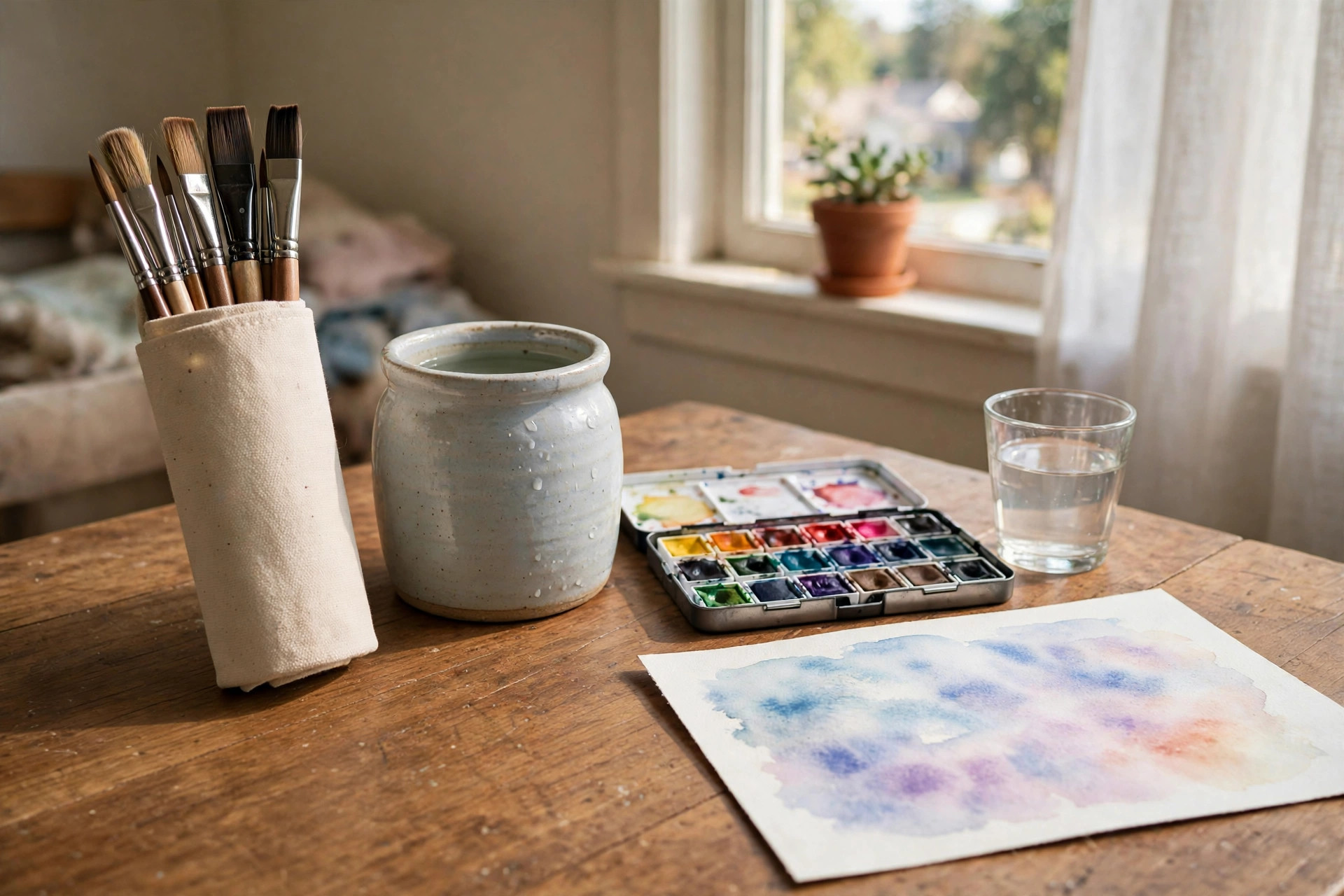
The best watercolor brushes set for beginners art is the one that helps a new painter learn without pain. It does not need to be dear. It does not need many pieces. A small set of well made brushes will teach you more than a large set of poor ones.
Watercolor is a kind brush. It asks for little. A few brushes, some paint, paper, and water are enough to start. But the brushes carry most of the work. They move the paint. They make the line. They fill the wash. A good set makes learning a joy. A bad set makes it a chore.
Many new painters buy the wrong brushes first. They pick up stiff hobby brushes made for glue. These brushes will not hold water or make a soft wash. The paint will streak and blob. The painter may think the fault is theirs. It is not. The fault is in the tool.
This guide will help you pick the best watercolor brushes set for beginners art with a clear eye. We will look at why the set matters, what to look for, the main types, price, care, and safety. At the end there is a short list of common questions and plain answers.
Why the Brush Set Matters: Best Watercolor Brushes Set for Beginners Art
A watercolor brush is a water carrier. The fine hairs in the brush head drink in the paint and water. They release it onto the paper in a smooth flow. This is the heart of watercolor. The wash, the soft sky, the wet edge, all come from a brush that holds water well.
Cheap brushes with stiff bristles cannot do this. They push the paint around. They leave dry gaps. A beginner who starts with such tools will fight the paint at every step.
A well made beginner watercolor brush set gives you the right tools from the start. You will learn how a wash spreads and how a round brush makes a fine line at its tip. These basic skills are learned through the hands, and the hands need good tools.
There is a second gain. Good brushes last. A fine brush that is washed and kept well can paint for years. Cheap brushes fall apart in weeks, and in time the cheap set costs more, because you buy it again and again.
What to Look For in a Beginner Set
When you shop for the best watercolor brushes set for beginners art, keep your eye on a few plain facts. The label may show pretty pictures. The handle may look fine. What counts is how the brush is built and how it feels in the hand.
The Three Parts of a Brush
Every brush has three parts. The handle is the stick you hold. It should be smooth and long enough for a loose grip. Short handles are common in student sets. Long handles give a looser stroke. Either is fine for a beginner. Wood handles feel warm and last well. Plastic handles are light and easy to clean.
The ferrule is the metal ring between the handle and the hair. It should be tight and smooth. It should have no sharp edge. A double crimped ferrule, with two pressed rings, will hold longer than a single one. Check that the ferrule is joined to the handle with no gap.
The brush head is the bundle of hairs. For watercolor, the head should come to a fine point or a clean edge. Look at the bristles. They should be soft and springy. Touch the tip. It should spring back into shape. If it stays bent, pass it by.
Shapes You Need
A beginner does not need twenty shapes. Five or six well chosen shapes will cover almost all work.
A round brush is the workhorse. It comes to a fine point. It can make thin lines and thick strokes. Most beginner sets include three round brushes in small, medium, and large sizes. If you buy only one shape, make it round.
A flat brush makes straight edges and bold washes. It is good for skies and fields. A medium flat brush is enough for a beginner.
A wash brush is a large soft brush for big areas of water and color. One wash brush in a set is a fine thing for backgrounds.
An angled brush has a slanted edge for sharp corners. Some sets include one. It is not vital, but it is nice to have.
A detail brush is a very small round brush for fine lines, such as veins on leaves. Use it sparingly until your hand grows steady.
Hair: Natural or Synthetic
Watercolor brushes were once made only from animal hair. Sable hair is the old prize. It holds much water and keeps a sharp point. It is also dear. A beginner should not buy sable. The cost is high, and you will not know its value until you have painted for a while.
Today, fine synthetic fibers do nearly as well. They hold water well and spring back into shape. They cost far less. For a beginner, a good synthetic watercolor brush set is the best buy. Many fine painters now use synthetics by choice.
Types of Beginner Sets
Walk into an art supply shop and you will see many sets. They look much alike. A little study will show the real kinds.
Many watercolor paint sets come with a brush in the lid. These brushes are short and meant for travel or for children. They are fine for a first try, but they are not enough for real study. If you want to grow, buy a real brush set.
Ten to Twelve Piece Sets
The most common beginner watercolor brush set holds ten to twelve brushes. This is the sweet spot. You get rounds in three sizes, a flat, a wash, an angle, and a detail brush. The case is often a roll or a zip pouch. This kind of set is sold at art supply stores like Michaels and JOANN, where you can feel the brushes before you buy.
Travel Sets and Box Sets
A travel set packs a few short handled brushes into a small case, with a water brush that holds water in its handle. These are fine for painting in the park. They are a second set, not a first set. Learn at the table first. Some sets come in a wooden box with paint pans. The brushes in such sets vary in quality, so check them one by one. A pretty box does not prove good brushes.
How to Choose: Step by Step
Here is a plain path to pick your set in one shop visit.
First, set your budget. For a beginner, a fine synthetic set of ten to twelve brushes costs between ten and thirty dollars in most American shops. More than that is not needed at the start.
Second, pick up the brushes. Hold each one and roll the handle between your fingers. Press the brush head lightly on your palm. It should spring back. The tip of a round brush should come to a clean point with no stray hairs.
Third, read the label. It should say watercolor or all media. It should name the fiber, such as synthetic sable or taklon. Avoid sets that say only craft brushes. Stiff craft bristles belong with glue guns and paper crafts; a guide to the best craft glue for paper and cardstock shows the right tools for that trade.
Fourth, count the shapes. Make sure the set has at least two round brushes, one flat, and one large wash brush. A detail brush is a bonus. If the set has fifteen brushes but only one round, it is a poor set for watercolor.
Fifth, think about the case. A roll case with ties or a zip pouch will keep the brushes safe. Brushes tossed loose in a drawer will bend. The case is part of the value.
Cost and Price
Let us talk plainly about money. You do not need to spend much to start.
A basic beginner watercolor brush set of ten to twelve synthetic brushes costs about ten to twenty dollars, at shops and online at Amazon. These sets are fine for a first year. They will teach you the moves.
A mid range set of better synthetics costs about twenty to forty dollars. The heads hold more water. The ferrules are tighter. The case is better. This is a good gift for a serious new painter. Guides at The Spruce compare many such sets with plain notes on value.
Natural hair brushes cost more. A single sable round can cost twenty dollars or more. These are for painters who have learned the craft and know what they want. A beginner should not buy them yet. Home chains like The Home Depot lean to house paint tools; for true watercolor brushes, an art shop such as Blick Art Materials gives a wider and better choice.
Watch for false bargains. A set of fifty brushes for five dollars is not a bargain. The bristles will be stiff and the ferrules will loosen. Spend a little more once, and paint with peace.
Craft is a wide field, and many painters also sew. For that trade, see our guide to the best sewing thread set for machine quilting.
Care and Upkeep
Good brushes need simple care: two minutes after each painting session.
Washing
Rinse the brush in clean water. Swirl it gently in the jar. Do not smash it against the bottom. Smash bends the hairs and ruins the point. Rinse until the water runs clear.
For a deep clean, use a mild soap. Work in a little with your fingers, shape the head to a point, and rinse well. Soap left in the head will dry and stiffen the hairs. Never use hot water, which can loosen the glue that holds the hairs.
Never leave a brush standing in the water jar. The weight of the handle will bend the head. Lay the brush flat to dry, or stand it handle down in a cup.
Drying and Storage
Shake off extra water with a gentle flick and shape the head with your fingers. Lay the brushes flat on a clean cloth to dry. Once dry, roll them in their case. Keep them out of direct sun and away from heat vents. A cool drawer or shelf is the right home.
With this care, a beginner watercolor brush set will last for years. The brushes will keep their point. They will not shed. They will be ready each time you sit down to paint.
Safety
Watercolor is one of the safest arts. Still, a few plain rules will keep you well.
Most student watercolor paints are non toxic. Some artist paints hold pigments with lead or cadmium, and these are marked with health labels. If you are new, choose paints marked non toxic.
Do not put the brush in your mouth to shape the point. Some pigments are not safe to taste. Shape the point with your fingers or on the paper.
Wash your hands after painting. Keep paint water away from food and drink. Use one jar for water and one cup for tea, and do not mix them up.
Keep small brushes and paint pans away from young children unless an adult is there. Craft safety guides from the Consumer Product Safety Commission are worth a read for parents.
Frequently Asked Questions
How many brushes does a beginner need?
Six to ten brushes are enough. Two or three round brushes, one flat, one wash brush, and one detail brush will cover most work. More brushes will not teach you faster. Learn the basic shapes first, then add as your paintings ask for them.
Should I buy natural or synthetic brushes first?
Buy synthetic. A fine synthetic watercolor brush set costs far less than natural hair and paints nearly as well for a beginner. Save natural hair for later.
Why do my brushes shed hairs?
Hairs shed when a brush is cheap and poorly made, when the ferrule has loosened from rough use, or when paint has dried and caked in the head. Wash gently, store flat, and buy from a maker with a fair name. A brush that sheds many hairs should be replaced.
Can I use acrylic brushes for watercolor?
You can, but it is not wise. Acrylic brushes are stiffer and do not hold water well. Watercolor needs a soft brush that drinks. Use each brush for the paint it was made for.
How long will a beginner set last?
With kind care, a beginner watercolor brush set will last two to five years. Wash after each use and dry flat. When the point will no longer spring back, it is time for a new brush. Keep the old one for rough work.
What else should I buy with my first brush set?
Buy a set of student watercolor pans, a pad of cold press watercolor paper, and two water jars. That is all you need to start.
A Short Final Word
The best watercolor brushes set for beginners art is simple, soft, and honest. It holds water. It keeps its point. It fits your hand and your purse. Buy it from a shop that sells art supplies, test it if you can, and care for it after each use.
Painting is a slow art. The first washes will be rough. With the right brushes, each session will teach you something true. Sit down often and watch the water move.
For more home craft ideas beyond painting, project guides at Family Handyman, This Old House, and Bob Vila show how far simple tools can take you. If your craft shelf also holds a cutting machine, see our guide to the best craft vinyl for outdoor signs cricut.
References
Amazon. (n.d.). Online shopping. https://www.amazon.com Blick Art Materials. (n.d.). Art and craft supplies. https://www.dickblick.com Bob Vila. (n.d.). Home improvement advice. https://www.bobvila.com Family Handyman. (n.d.). DIY home repair and maintenance. https://www.familyhandyman.com JOANN. (n.d.). Fabric and craft supplies. https://www.joann.com Michaels. (n.d.). Arts and crafts supplies. https://www.michaels.com The Home Depot. (n.d.). Home improvement products. https://www.homedepot.com The Spruce. (n.d.). Home and garden advice. https://www.thespruce.com This Old House. (n.d.). Home renovation guidance. https://www.thisoldhouse.com U.S. Consumer Product Safety Commission. (n.d.). Product safety information. https://www.cpsc.gov
Was this guide helpful?

About Emily Rodriguez
The My Garden US editorial team writes practical, in-depth home and garden guides for American homeowners — tested advice, no fluff.
You May Also Like

A DIY Coasters Kit for Resin Art Beginners Is the Easiest Way to Start Crafting
January 27, 2026 0 views
Best Yarn Winder for Crochet and Knitting
July 17, 2026 0 views
Best Spray Paint for Furniture DIY Makeover
September 19, 2026 0 views