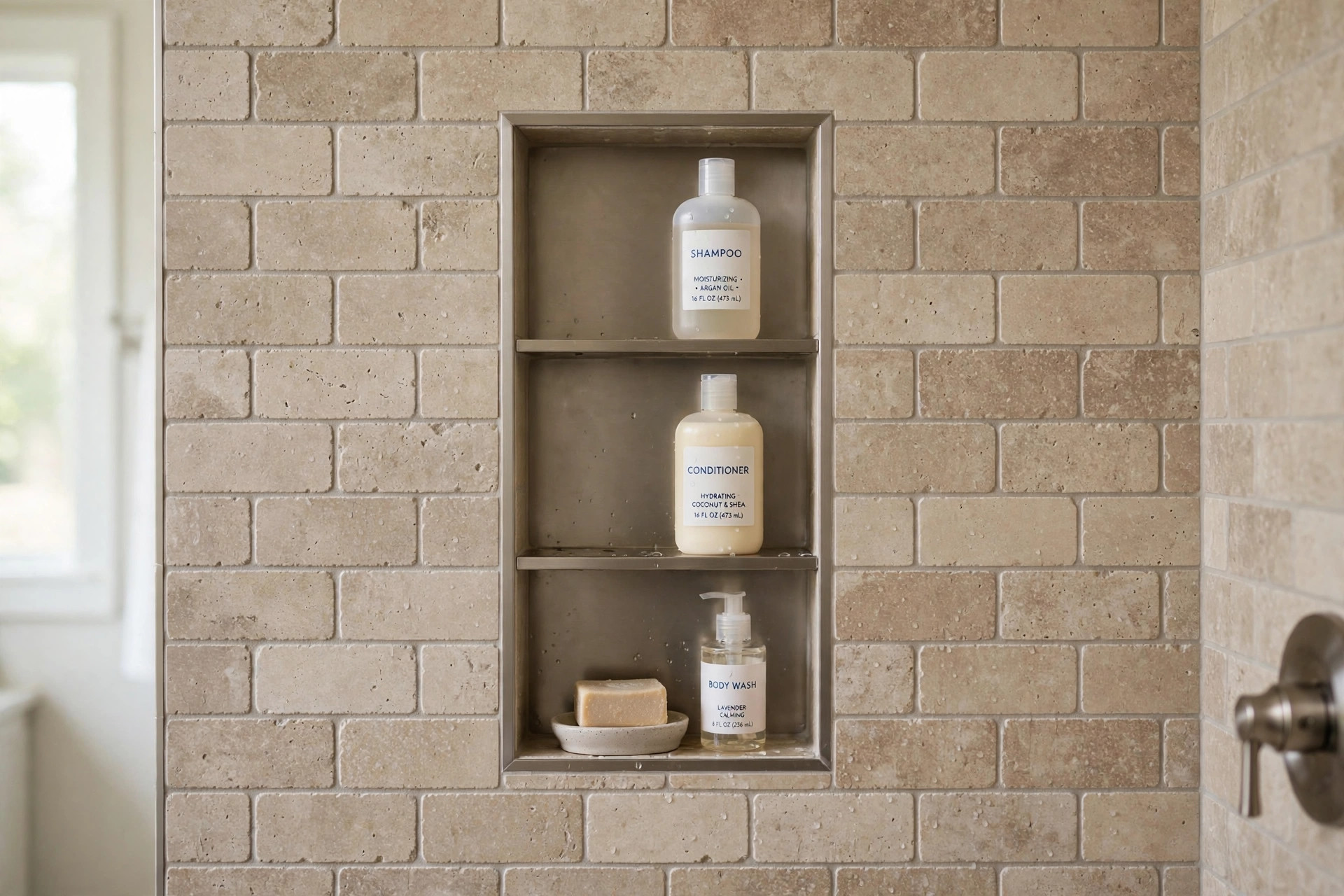

A shower niche is a shelf built into the wall of the shower. It holds soap, shampoo, and other small items. When you look for shower niche inserts for sale usa, you will find many kinds. Some are ready to set into the wall during a remodel. Some slide into a finished wall. This guide explains the types, the sizes, the costs, and the care of these inserts in plain terms.
Why a Shower Niche Matters
A shower without a shelf is a hard place to keep order. Bottles sit on the floor. Soap slides into the corner. A wire caddy hangs from the shower head and rusts. A niche solves this. It gives you a clean recess in the wall, out of the spray line but close at hand. It keeps the floor clear. It makes the shower safer, because you no longer reach over wet tile to find your soap.
A niche also adds value to a bathroom. Buyers notice it. Appraisers notice it. A well-built niche makes a small shower feel larger, because there is no shelf jutting out into the room. If you are planning a larger project, a walk-in shower kit buying guide can show how a niche fits into a full shower remodel.
What a Shower Niche Insert Is: Shower Niche Inserts for Sale Usa
An insert is the ready-made box that forms the niche. Instead of building the recess from backer board and tile, you set a finished insert into a hole in the wall. The insert gives you the floor, walls, and back of the niche in one piece. Many inserts are then tiled over or come with a finished surface you keep as is.
There are two main uses. The first is new construction and remodels, where the wall is open and the insert goes in before the tile. The second is retrofit work, where the wall is already tiled and the insert must fit a cut opening. Always check the product sheet to see which kind you are buying.
Types of Shower Niche Inserts for Sale in the USA
When you shop for shower niche inserts for sale usa, you will meet several materials. Each has its own strength.
Stainless Steel Inserts
Stainless steel inserts are thin, light, and finished on the visible side. They slide into an opening and give a clean metal shelf. They resist rust and take little care. They suit modern bathrooms. They are a good choice when you want the niche to look like a picture frame of brushed or polished metal.
Tiled Inserts and Preformed Foam Niches
Many shower niche inserts for sale usa are made of coated foam board. The box is cut to size, waterproof on its own, and ready to tile. The tile worker sets tile on the inside faces, so the niche matches the shower walls. These units are light and easy to cut. Fixture makers such as Kohler and American Standard offer accessory lines that pair with these tiled niches.
Solid Surface and Stone Inserts
Solid surface and natural stone inserts come finished and smooth. Marble, quartz, and acrylic stone are common. They need no tile. They wipe clean in seconds. They cost more, but they look like part of the wall itself.
Plastic and ABS Inserts
Plastic inserts are the lowest cost option. They are light and will not rust. Choose a thick grade that holds its shape. Cheap thin plastic can bend when set with mortar. For a guest bath on a tight budget, they do the job.
Corner and Horizontal Niches
Most niches are tall and narrow. Some are wide and low. A horizontal niche above the valve can hold a row of bottles. A corner niche fits showers where the wall space is tight. Measure first, then choose the shape that suits your wall.
How to Choose the Right Insert
Measure the Wall
Before you buy, know the stud spacing. Most interior walls in American homes have studs sixteen inches apart. The niche must fit between two studs. A twelve-inch wide niche fits a standard bay. A wide horizontal niche may need framing changes. If you are unsure, have a contractor look at the wall before you order.
Match the Depth
A niche needs depth to hold a bottle. Four to five inches of depth suits most shampoo bottles. Shallow inserts of three inches hold soap and razors. Check the rough-in depth of your wall. A standard two-by-four wall gives about three and a half inches of depth. That is enough for many inserts.
Check the Waterproofing
The niche is the wettest spot in the shower. Water must not get behind it. Preformed foam inserts are waterproof in themselves. Steel and stone inserts need sealant around the edges. The tile behind and around the niche must have a waterproof membrane. Retailers such as Home Depot and Lowes carry the membranes and sealants used with these inserts.
Pick a Finish
Match the insert to your fixtures. Brushed nickel suits brushed nickel faucets. Matte black suits dark fixtures. White solid surface suits a white subway tile shower. A tiled insert disappears into the wall, which many buyers prefer.
Cost and Price in the United States
Prices for shower niche inserts for sale usa vary by material and size. Plastic inserts often sell for twenty to sixty dollars. Stainless steel inserts often sell for eighty to two hundred dollars. Preformed foam tiled niches often sell for sixty to one hundred fifty dollars, not counting tile. Stone and solid surface inserts often sell for two hundred to six hundred dollars.
Installation adds cost. Setting a niche during a full remodel adds little, because the wall is already open. A retrofit install in a finished tile wall may cost three hundred to eight hundred dollars in labor, because tile must be cut and waterproofing restored. Big box stores and supply houses across the country stock these items, and online sellers ship to all fifty states.
If your project goes beyond one niche, look at larger fixtures too. Our freestanding soaking tub reviews and buying guide covers big-ticket bath purchases, and warm-climate buyers may like our notes on freestanding soaking tubs for Florida homes.
Installation Basics
Most inserts install in a day. The steps are simple to state but need care in the doing.
First, mark the opening between studs at a height that suits the tallest user. Second, cut the opening and check that it is level and square. Third, dry-fit the insert. Fourth, set it with thinset mortar or construction adhesive as the maker directs. Fifth, seal the edges with a waterproof sealant. Sixth, tile around it, leaving a small gap filled with sealant rather than grout at the joint. Seventh, let the sealant cure before you use the shower.
A retrofit install follows the same steps, but the tile around the opening must be cut with care so the patch looks clean. If the wall has plumbing or wiring behind it, stop and call a professional.
Renovation guides at This Old House and Bob Vila walk through bathroom waterproofing in detail, which is worth reading before you cut any wall.
Care and Upkeep
A niche needs little care. Wipe it with a soft cloth and a mild cleaner each week. Do not use harsh acids on metal inserts. Do not use steel wool on stone. Rinse soap scum before it hardens.
Check the sealant once a year. If the bead around the niche pulls away or cracks, cut it out and lay a fresh bead. A small gap lets water reach the wall cavity, and that is how damage starts. With good sealant and mild cleaning, an insert lasts as long as the shower tile.
Safety
A niche holds bottles at shoulder height. Keep glass bottles out of the shower. Use plastic bottles. A dropped glass bottle on tile can cause cuts.
Do not overload a narrow niche. Bottles can tip and fall on feet. Keep the heaviest bottles at the back.
When you cut a wall, turn off the power to any nearby outlets and lights. Wear eye protection and a dust mask when cutting tile. If the wall may have lead paint or asbestos, test it first. Home safety guidance from Delta Faucet and Moen product pages covers fixture clearances worth checking.
Where to Buy Shower Niche Inserts for Sale in the USA
You can buy these inserts at home improvement stores, tile shops, plumbing supply houses, and online. Local tile shops often stock the foam and tiled kinds. Plumbing suppliers carry the stone and steel kinds. Online sellers ship wider sizes that stores do not stock.
When you compare shower niche inserts for sale usa, read the full product sheet. Check the outside dimensions, the inside dimensions, the depth, the material, and whether the unit is waterproof on its own. Check the return policy before you cut the wall.
Design sites like The Spruce and HGTV show finished niche designs that can help you picture the result.
Common Mistakes to Avoid
Many niche jobs fail for small reasons. The most common mistake is buying before measuring. An insert that is wider than the stud bay will not fit. Measure the bay, then shop. The second mistake is placing the niche in the direct path of the shower spray. Water hits the bottles and pushes soap into the drain. Put the niche on a side wall, away from the shower head.
The third mistake is skipping the slope. The bottom of a niche must tilt a little toward the shower so water drains out. A level shelf holds standing water. That water feeds mildew. The fourth mistake is using grout instead of sealant at the joint between the insert and the tile. Grout is rigid and cracks when the house moves. Sealant flexes. The fifth mistake is hanging the niche too high. If the shortest user cannot reach it, the shelf goes unused. Set the center of the niche near chest height for the people who will use the shower most.
Frequently Asked Questions
What size shower niche insert should I buy?
The most common size is twelve inches wide by twelve inches tall. Fourteen by twenty inches suits a family shower with many bottles. Measure the space between your studs first, because the insert must fit between them.
Can I add a niche to an existing tiled shower?
Yes. A retrofit insert fits a cut opening in finished tile. The tile must be cut cleanly, and the waterproofing behind it must be restored. This is a job many homeowners give to a tile contractor.
Are foam shower niche inserts waterproof?
Preformed foam inserts are waterproof in themselves. The joints around them still need sealant and a waterproof membrane on the surrounding wall. Follow the maker’s steps exactly.
How deep should a shower niche be?
Four to five inches of depth holds most bottles. Three inches holds soap and small items. Check the depth of your wall framing before you buy.
Do shower niche inserts rust?
Stainless steel and plastic inserts do not rust. Coated steel and cheap metal can rust if the coating chips. Wipe metal inserts dry and fix chips in the finish at once.
Tile or no tile inside the niche?
A tiled niche matches the wall and hides the insert. A finished steel or stone insert needs no tile and cleans faster. Both work well. Choose the look you prefer.
A Short Final Word
A shower niche insert is a small thing that changes daily life. Bottles have a home. The floor stays clear. The shower looks finished. Take your time to measure, choose a waterproof unit, and seal it well. The work you do on day one pays you back every morning.
References
American Standard. (n.d.). Bathroom and kitchen products. https://www.americanstandard.com Bob Vila. (n.d.). Home improvement advice. https://www.bobvila.com Delta Faucet. (n.d.). Kitchen and bathroom faucets. https://www.deltafaucet.com HGTV. (n.d.). Home and garden ideas. https://www.hgtv.com Kohler. (n.d.). Bathroom and kitchen fixtures. https://www.kohler.com Lowe’s. (n.d.). Home improvement products. https://www.lowes.com Moen. (n.d.). Faucets and plumbing fixtures. https://www.moen.com The Home Depot. (n.d.). Home improvement products. https://www.homedepot.com The Spruce. (n.d.). Home and garden advice. https://www.thespruce.com This Old House. (n.d.). Home renovation guidance. https://www.thisoldhouse.com
Was this guide helpful?

About Jennifer Lee
The My Garden US editorial team writes practical, in-depth home and garden guides for American homeowners — tested advice, no fluff.
You May Also Like

Rain Shower Heads for Texas Homes: A Full Buyer’s Guide
February 11, 2026 0 views
Mirrored Medicine Cabinets Buying Guide USA
September 16, 2026 0 views
Where to Find Mirrored Medicine Cabinets Deals Near Me
February 26, 2026 0 views