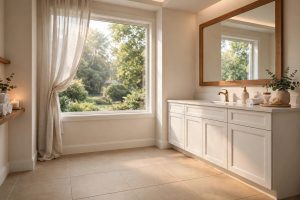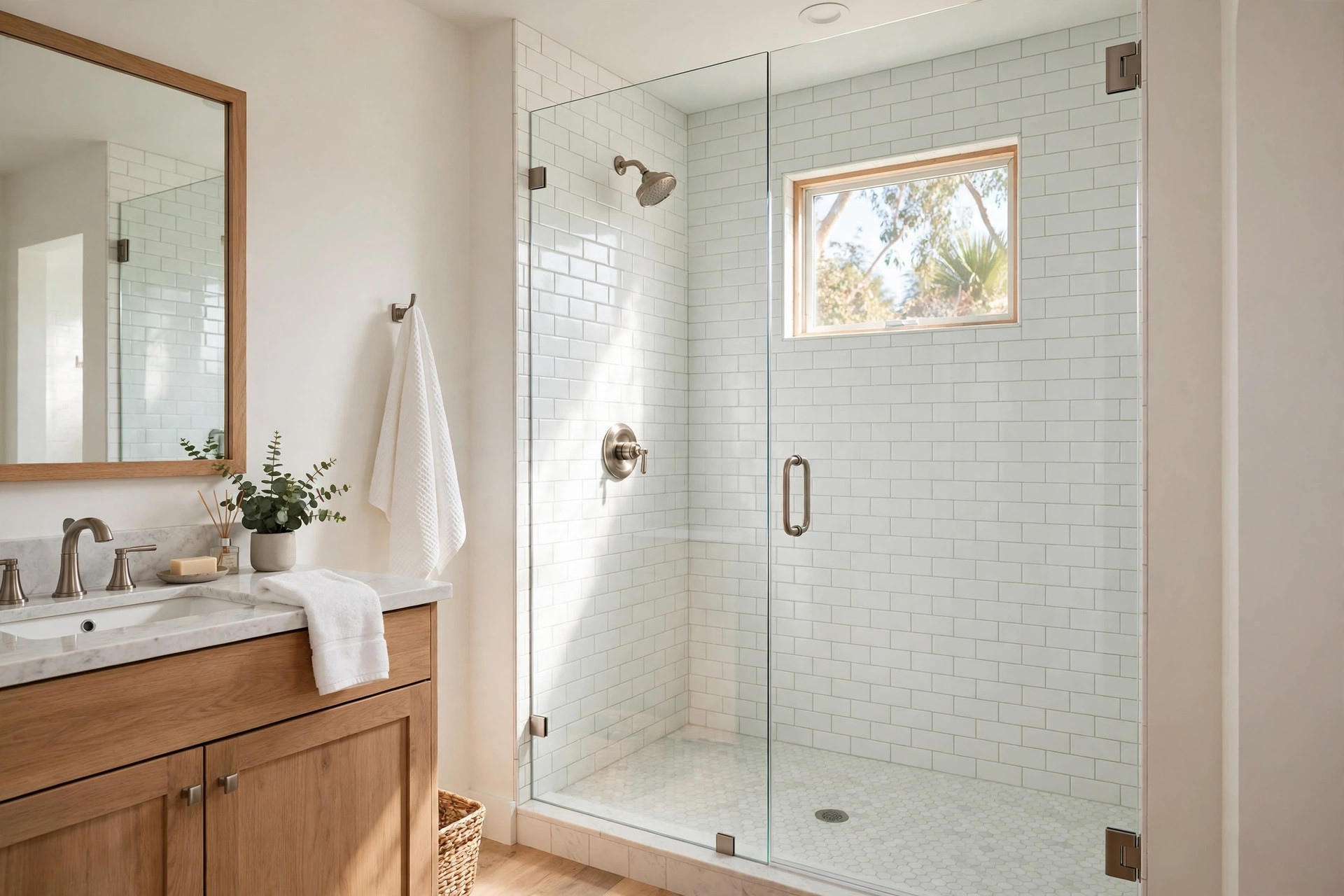

Frameless shower doors california homes usa is a search phrase that says a lot. Homeowners from San Diego to Sacramento are trading shower curtains and framed doors for clean sheets of tempered glass. The look is simple. There is no metal frame around the edge of the glass. Clamps and hinges hold the panels in place. Water stays in the shower. Light moves through the whole room. This guide explains the choices in plain terms: why these doors fit California houses, what to look for when you shop, what they cost, and how to keep them clear for years.
Why Frameless Shower Doors Suit California Homes
California houses share a few traits. Many have small bathrooms. Many were built with tubs that waste space. The light is strong most of the year. A frameless door fits all three facts at once.
First, it opens the room. A curtain or a frosted framed door cuts the bathroom in two. Clear glass does the opposite. You see the tile on the far wall. The whole room looks larger. In a hall bath that is only five feet wide, that change feels big.
Second, it matches the California style of living. The state leans toward open plans and indoor-outdoor flow. A frameless glass shower carries that idea into the bath. It works with Spanish tile, with white subway tile, and with plain painted walls. When the sun comes through a small window, the glass lets it travel. The shower feels brighter.
Third, it helps with resale. Kitchens and baths sell houses. A frameless door reads as a premium upgrade. It photographs well. In a market where online photos decide which houses get shown, a bright glass shower is an asset.
Fourth, it cuts down on mold. Shower curtains hold soap film and mildew in their folds. Framed doors hide gunk in their tracks. A frameless door has far fewer hiding places. There is glass, a few clamps, and a sweep at the bottom. Wipe it down and it is clean. In humid coastal towns, from Santa Cruz to San Diego, that matters.
None of this means the door is right for every bath. A very small shower may not have room for a door swing. But for owners who plan to stay a few years, the door pays back in daily comfort and in value.
How to Choose: What to Look For: Frameless Shower Doors California Homes Usa
A buying guide for frameless shower doors walks through the same checklist a good glass shop uses.
Glass Thickness and Quality
Most frameless doors use glass that is three-eighths of an inch thick. Some use half an inch. Thinner glass, such as a quarter inch, belongs in framed doors. It needs the frame for strength. Frameless panels stand on their own, so they need real heft. Ask the shop what thickness they quote. If they offer only thin glass, find another shop.
The glass must be tempered. Tempering is a heat process that makes the glass much stronger than plain glass. It also changes how it breaks. Tempered glass crumbles into small dull pieces instead of long sharp shards. Building codes in California require safety glass in shower enclosures. Get it in writing on the quote.
Low-iron glass is an upgrade worth knowing. Standard glass has a faint green tint at the edges. Low-iron glass is clearer, and it costs more. In a bath with white tile, the clear glass looks cleaner. Decide with a sample in your own light.
Hardware and Finish
The hardware should be solid brass or stainless steel. California water is hard in many towns, and cheap metal shows it first.
Finishes run from chrome to brushed nickel to matte black to oil-rubbed bronze. Match the finish to your faucet and towel bars. Most shops stock the common finishes. Odd finishes may add weeks to the order.
Fit and Measurement
Frameless doors are cut to fit your opening. Walls are never perfectly straight. A good installer measures in several places and notes where the wall leans. The glass is cut with small allowances for those leans. Then shims and seals take up the rest.
A wrong cut cannot be fixed. Tempered glass cannot be cut after tempering. The panel must be right the first time. This is why most owners hire a pro for the measure. Many shops measure free if you buy the door from them.
Door Style: Swing, Slide, or Fixed Panel
A swinging door, also called a pivot door, opens outward like a room door. It needs clear floor space in front. It gives the widest entry.
A sliding frameless door moves on a slim rail. It needs no swing space. It suits tight baths where a swinging door would hit a vanity or a toilet.
A fixed panel with an open walk-in entry has no door at all. One glass wall shields the spray. You step in through the open side. It needs a shower big enough that water stays inside. A good rule is at least sixty inches of shower length for a walk-in without a door.
Types and Options Worth Knowing
Beyond the three styles above, a few choices shape the final look.
Clear glass is the standard. It shows the tile and makes the room look big. It also shows water spots. If you hate spots, consider frosted or textured glass. Frosted glass hides spots and gives privacy. It still passes light. Rain glass has a wavy texture that breaks up the view.
Coatings help a lot. Many shops offer a factory coating that makes water bead and roll off. It cuts spotting and makes cleaning faster. You can reapply a store-bought version yourself. Ask whether the quote includes a coating or not.
Hardware can be minimal. Some doors hang from two small hinges and a handle. That is it. Others use a header bar across the top for extra support on very wide panels. It adds a thin metal line at the top. Decide whether you want the purest look or the extra stiffness.
Handles come in many shapes. A small knob suits a light door. A long pull suits a heavy half-inch panel. Try the handle in the showroom. You will touch it every day.
Many owners change the rain shower heads at the same time they add glass. The two changes together make the shower feel new.
Cost and Price in California
Price is the first question most buyers ask. A standard-size frameless door from a stock line may run from eight hundred to fifteen hundred dollars installed. A custom door for an odd opening often runs from fifteen hundred to three thousand. In high-cost areas like the Bay Area and Los Angeles, labor adds a clear premium over the national average.
Several items shape the final bill. Glass size and thickness set the base cost. Custom cuts add shop time. The finish of the hardware adds a little. Removing an old door or tub surround adds labor. Some owners need a new shower pan or new waterproofing before glass can go in. A glass shop will tell you if the base is sound.
Get three quotes. Make sure each quote lists the same items. Glass thickness, glass type, hardware finish, and coating should all appear in writing. Ask how long the lead time is. Custom glass often takes two to four weeks from measure to install. Ask what the warranty covers. Good shops warranty the hardware and the install for at least a year.
Do not pick on price alone. The cheapest quote sometimes means thinner glass or cheap hinges. A door that sags or leaks costs more to fix than the savings were worth. Read local reviews. Ask for photos of past work.
Financing is common. Many shops offer payment plans. Weigh the door as part of the whole project budget, not as a lone purchase.
Installation: What to Expect
Most installs follow the same path. First comes the measure. The tech checks the opening, the walls, and the base. He confirms the shower is waterproof and the curb is sound. Then the glass goes to order.
On install day, the crew sets the panels. They shim them plumb and level. They anchor hinges and clamps into studs or solid blocking. Anchors in tile alone are not enough for a heavy door. Then they run the silicone seals. Good silicone work is neat and thin.
The door needs a day to cure. Do not use the shower for twenty-four hours after the seals go in. Plan around it.
After the cure, run the shower. Watch the edges. A few drops at the sweep are normal. A stream running onto the floor is not. Call the shop back if it leaks. A good shop returns to adjust the door free within the warranty period.
Some cities in California want a permit for a full bath remodel. A simple door swap on an existing shower often needs none. If you are moving plumbing, check with the city.
Care and Upkeep
A squeegee after every shower takes thirty seconds. It stops most water spots before they form. Keep a squeegee on a hook inside the shower.
California water is hard in many areas. It leaves white mineral spots. If spots build up, use a cleaner made for glass shower doors. Avoid harsh acids and rough pads. They can scratch the glass or dull the coating. A mix of white vinegar and water handles light scale. Rinse well after.
Clean the hardware with a soft cloth. Do not use bleach on the metal. It can pit the finish. Check the bottom sweep once a year. Sweeps wear and crack. A new sweep costs little and keeps water in.
Reapply a water-repellent coating once or twice a year if your door came with one. When water stops beading and starts sheeting, recoat. The job takes ten minutes.
Grout and caulk around the shower need care too. Replace caulk that pulls away. Water that gets behind tile rots the wall. The glass door is only one part of a dry, sound shower.
Safety
Glass in a shower must be safe glass. Tempered glass is the rule. Ask the shop to confirm tempering on your order. The panels often carry a small etched mark in the corner that shows the tempering standard.
Hinges must hold the weight. A half-inch glass door is heavy. Cheap hinges sag over time. A sagging door drags on the curb or the tile and can chip the glass edge. Check the door swing once a year. If it drags, call the shop to adjust the hinges.
Homes with small children need a few extra thoughts. Teach children not to hang on the glass door or swing on the handle. A non-slip mat in the shower helps everyone. Grab bars add safety for older family members. They anchor into studs, not just tile.
Some owners add a safety film to the glass. The film holds the pieces together if the panel ever breaks. It is cheap and invisible.
Keep cleaners out of reach of children. Rinse the shower well after using strong cleaners. Slippery residue on the floor is a fall risk.
Frequently Asked Questions
How long does a frameless shower door last? The glass lasts for decades. Good hinges last fifteen to twenty years. Sweeps and silicone need refresh every few years. With basic care, the whole unit serves twenty years or more.
Can a frameless door go on a fiberglass shower stall? Sometimes. The stall walls must be stiff enough to hold the hinges. Thin fiberglass flexes. A glass shop will test the walls before quoting. Many owners replace the stall with tile when they upgrade to glass.
Will the door keep all the water in? It keeps nearly all of it in. A small gap at the door edge is normal. The bottom sweep blocks most splash. Aim the shower head away from the door. That solves most of it.
Is low-iron glass worth the extra cost? It depends on your tile. With white or light tile, low-iron glass looks clearly better. The green edge of standard glass shows against white. With dark stone or busy tile, few people notice the edge.
Do I need a pro to install it? Yes, for most owners. The panels are heavy and breakable. The measure must be exact. The anchors must hit solid wood. A pro crew does this daily. The labor charge buys skill and a warranty.
Where can I see doors before I buy? Showrooms at home improvement stores and bathroom supply shops display full-size doors. You can swing them, feel the handles, and see the finishes. For price research, check frameless shower doors for sale listings before you visit a local glass shop for the custom quote. Design sites like bathroom design ideas and bathroom makeover ideas show how the doors look in real rooms. For deeper how-to reading, try bathroom remodeling advice and home renovation guides. Fixture makers such as shower fixtures, shower hardware, glass shower doors, and bathroom fixtures show matching parts for your project.
A Final Word
A frameless shower door is a simple change with a large effect. It lets light travel. It shows off your tile. It cuts cleaning time. It fits the open, bright way California houses like to live. Shop with care. Demand tempered glass, solid hardware, and a pro measure. Keep up the squeegee habit. Your morning shower will feel a little less like a chore and more like a small luxury.
References
American Standard. (n.d.). Bathroom and kitchen products. https://www.americanstandard.com Bob Vila. (n.d.). Home improvement advice. https://www.bobvila.com Delta Faucet. (n.d.). Kitchen and bathroom faucets. https://www.deltafaucet.com HGTV. (n.d.). Home and garden ideas. https://www.hgtv.com Kohler. (n.d.). Bathroom and kitchen fixtures. https://www.kohler.com Lowe’s. (n.d.). Home improvement products. https://www.lowes.com Moen. (n.d.). Faucets and plumbing fixtures. https://www.moen.com The Home Depot. (n.d.). Home improvement products. https://www.homedepot.com The Spruce. (n.d.). Home and garden advice. https://www.thespruce.com This Old House. (n.d.). Home renovation guidance. https://www.thisoldhouse.com
Was this guide helpful?

About David Wilson
The My Garden US editorial team writes practical, in-depth home and garden guides for American homeowners — tested advice, no fluff.
You May Also Like

Freestanding Soaking Tubs for Sale USA: A Plain Guide to Choosing One
February 18, 2026 0 views
Walk in Shower Kits USA Online Deals: What to Know Before You Buy
March 8, 2026 0 views
Bathroom Wall Tiles Where to Buy USA: A Plain Guide
May 9, 2026 0 views