
The search for shower grab bars for sale usa starts the same way in most homes. A parent slips on a wet shower floor. A grandparent moves in and needs extra support. A doctor advises making the bathroom safer after surgery. Whatever the reason, a good grab bar is one of the simplest safety upgrades a bathroom can have. It costs little. It installs in an afternoon. And it can prevent a fall that changes a life.
This guide walks through everything a buyer needs to know: why grab bars matter, the types on the market, how to choose size and finish, where to buy them, what they cost, and how to keep them safe for years.
Why Shower Grab Bars Matter
Bathrooms are the most common place for falls in the home. Wet tile is slick, and soap makes it worse. Stepping over a tub edge or turning in a small shower stall throws off balance. Older adults face the highest risk, but anyone can slip.
A grab bar gives that handhold. It is a metal rail fixed firmly to the shower wall, built to support body weight when a person stands up, sits down, or steadies a foot. A bar that fails under load is worse than no bar at all, because it gives false confidence.
Doctors and occupational therapists often recommend grab bars after hip or knee surgery. They also recommend them for people with arthritis, low vision, or weak grip. Some families install them early, as a form of prevention. Others add them during a walk-in shower kits buying guide project, when the shower is already being remodeled. Either way, the bar is a small fixture with an outsized role.
How to Choose the Right Grab Bar: Shower Grab Bars for Sale Usa
Choosing a grab bar is not hard, but a few details deserve care. The wrong length, finish, or mounting method can make an otherwise good bar unsafe or ugly. The sections below cover the main points.
Weight Capacity
Check the weight rating before anything else. A quality shower grab bar supports at least 250 pounds. Many support 300 to 500 pounds. The rating should be printed on the package or listed on the product page. If no rating is given, do not buy it. The bar must also be anchored to wall studs or to solid backing behind the wall. A high rating means nothing if the screws bite only into thin drywall.
Diameter and Grip
Most grab bars are 1.25 or 1.5 inches in diameter. Both sizes suit most hands. People with arthritis or weak grip often prefer the slightly smaller 1.25-inch bar, which is easier to wrap a hand around. Some bars have a textured or knurled surface that adds grip when hands are wet and soapy. Smooth chrome looks sleek but can be slippery. A brushed or matte finish offers a middle ground between looks and grip.
Length and Shape
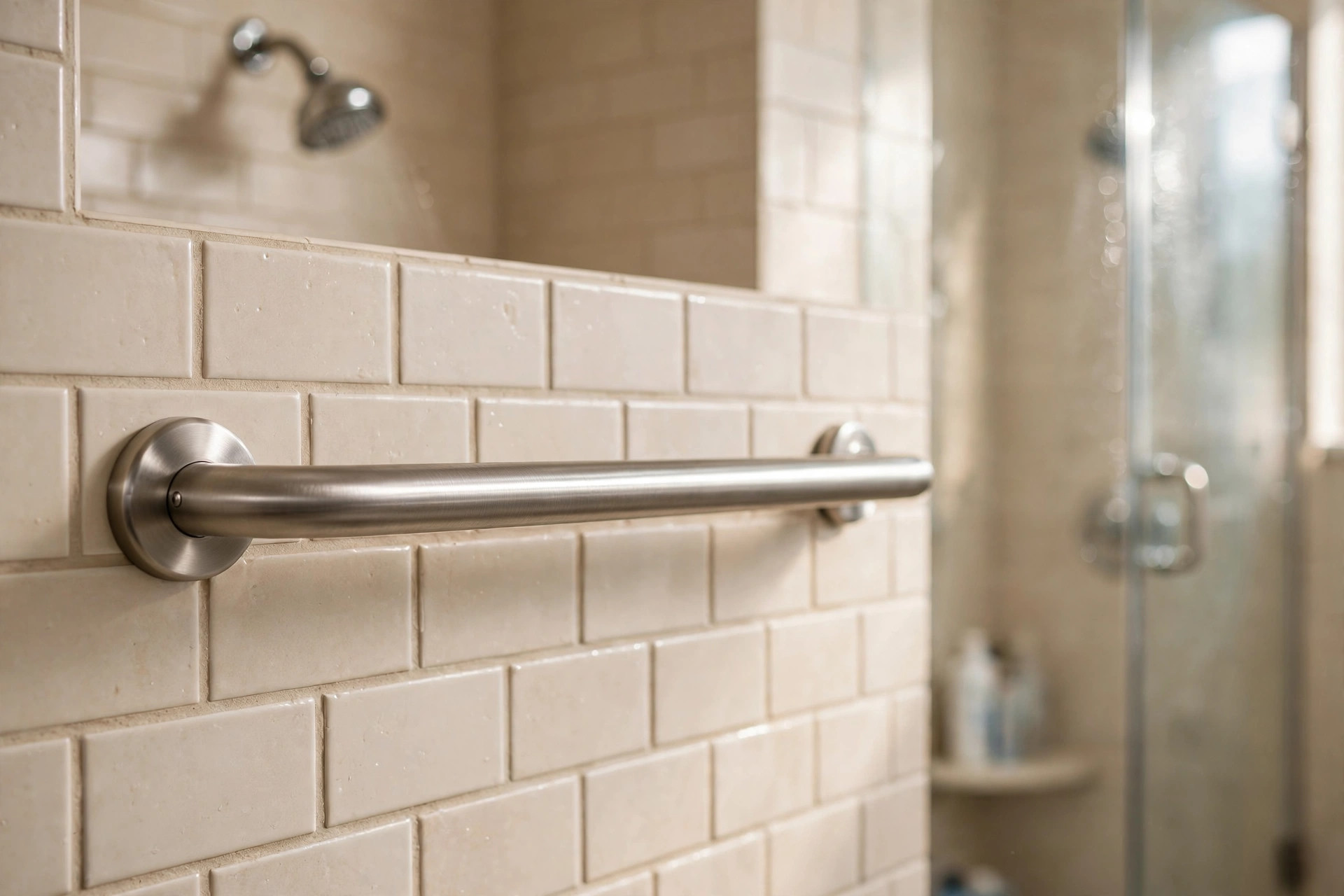
Straight bars come in lengths from 12 to 48 inches. A 24-inch bar suits most shower walls. Longer bars give more hand positions, which helps when entering and turning. Angled bars, L-shaped bars, and curved designs fit corners and tight stalls. Think about where hands naturally reach. One bar at the entrance helps with stepping in. A second bar along the back wall helps with turning and washing.
Finish and Style
Grab bars come in chrome, brushed nickel, oil-rubbed bronze, matte black, and white. The finish should match the other fixtures in the shower. Chrome is the most common and the easiest to clean. Brushed finishes hide water spots better. Some makers now design bars that look like part of the decor rather than a medical device. A quick look at design resources such as HGTV shows how modern bathrooms blend safety bars into stylish tile work.
Types of Shower Grab Bars
Wall-Mounted Screw-In Bars
These are the standard choice. They bolt through the tile into studs or backing, which makes them the strongest option and the one safety experts recommend. When installed well, they last for decades.
Suction-Cup Grab Bars
These press onto smooth tile or glass with suction cups. They install in seconds and leave no holes. But they are not true safety devices. They can loosen over time, especially on textured tile. Use them only as a temporary balance aid, never as the main support for body weight.
Clamp-On Tub Rails
These clamp over the side of a bathtub. They help people lower themselves into a tub or stand up from it. They do not help inside a walk-in shower. They suit homes where the tub is the main bathing spot.
Floor-to-Ceiling Poles
These tension poles run from the bathroom floor to the ceiling and give a vertical grip near the shower entrance or toilet. They need no drilling, which suits renters, but they must be checked often to stay tight.
Decorative Designer Bars
Several fixture brands now make grab bars that double as towel bars or corner shelves. They look like ordinary bathroom hardware but carry full weight ratings. They cost more than plain bars. For buyers who care about style, they are worth a look. Major fixture makers such as Kohler, Moen, Delta Faucet, and American Standard all offer safety bars in finishes that match their faucet lines.
Where to Find Shower Grab Bars for Sale in the USA
Shoppers in the United States have plenty of options. The choice comes down to price, selection, and how fast the bar is needed.
National Home Improvement Stores
The Home Depot and Lowe’s carry grab bars in most stores. The in-store selection covers the common lengths and finishes. Staff can point buyers to the right mounting hardware. Prices run from budget to mid-range. For an urgent need, walking into a store beats waiting for shipping.
Online Retailers
Online stores offer the widest selection. Shoppers can compare dozens of models, read reviews, and check weight ratings side by side. Delivery takes a few days. Online buying suits shoppers who know the exact length and finish they want.
Medical Supply Stores
Medical supply shops stock grab bars alongside shower chairs and raised toilet seats. Staff there understand accessibility needs. They can advise on ADA-compliant bars and placement rules. Prices may run higher than big-box stores, but the guidance can be worth it.
Plumbing and Fixture Showrooms
Showrooms let buyers see and touch designer bars before buying. The staff can match finishes to existing faucets and shower heads. This route suits full remodels. It pairs well with projects like new frameless shower doors, where every fixture is chosen at once.
Helpful buying advice also appears on remodeling sites such as Bob Vila, This Old House, and The Spruce. These sites explain mounting methods, code rules, and common mistakes in plain language.
Cost and Price
Shower grab bars are one of the cheapest safety upgrades in the home. A basic stainless steel bar costs between 15 and 40 dollars. A mid-range bar in a designer finish runs 40 to 80 dollars. High-end designer bars that double as shelves or towel holders can reach 100 to 200 dollars.
Installation adds to the total. A do-it-yourself install costs nothing beyond basic tools and the mounting hardware that often comes in the box. Hiring a handyman adds 75 to 150 dollars per bar in most markets.
Compared with the cost of a fall, these numbers are small. A single emergency room visit costs thousands of dollars. A hip fracture can cost tens of thousands. Viewed that way, a 30-dollar bar is one of the best bargains in home safety.
Buyers on a tight budget should still avoid the cheapest no-name bars. A bar with no stated weight rating is not a bargain. It is a risk. Spend a little more for a rated bar from a known brand.
Installation Basics
Most buyers can install a grab bar with basic tools. The job takes under an hour per bar. These steps outline the standard method for tile walls.
First, choose the location. Common spots include the wall beside the shower entrance, the back wall at standing height, and the wall near a built-in seat. Mark the spot with painter’s tape.
Second, find the studs. Use a stud finder through the tile, or check from an access panel behind the wall if one exists. The bar’s mounting flanges must land on solid wood or on blocking installed for this purpose. If no stud lines up, use heavy-duty tile anchors rated for the load. Better yet, add wood blocking behind the wall during a remodel.
Third, drill carefully. Use a carbide or diamond bit made for tile. Drill slowly with light pressure to avoid cracking the glaze. Some installers put tape over the drill spot to keep the bit from slipping.
Fourth, set the anchors and screws. Drive the screws firmly but do not overtighten. Overtightening can crack tile or strip the anchor.
Fifth, test the bar. Pull hard with full body weight. Twist it. It should not move at all. If it shifts even slightly, remove it and redo the mounting.
Renters should check the lease before drilling, since some landlords require written permission. Suction models avoid the issue but, as noted above, they are not a true substitute.
Care and Upkeep
A grab bar needs little care, but a quick routine keeps it safe. Wipe the bar weekly with a mild cleaner to remove soap film. Soap buildup makes even textured bars slippery. Avoid abrasive pads on brushed or matte finishes. They scratch the surface and dull the look.
Check the mounting screws twice a year. Grab the bar and pull hard. If it wiggles, tighten the screws or call a handyman. In hard-water areas, mineral deposits can build up around the mounting flanges. A vinegar wipe dissolves them.
Replace the bar if the finish bubbles, the metal pits, or the bar ever feels loose after tightening. Stainless steel bars last the longest in wet conditions. Cheaper chrome-plated bars can rust if the plating chips.
Safety Notes
A grab bar is only as safe as its installation. Never mount a bar to a towel rack location or to drywall alone. Never trust a suction-cup bar with full body weight. Never use a bar as a towel hook if that blocks the grip area.
Place bars where they match natural movement. A bar too high or too far from the entry does little good. A common layout puts one horizontal bar at the shower entrance, about 33 to 36 inches above the floor, and one along the back wall. People who need extra help may add a vertical bar at the entry for stepping over a threshold.
Households with seniors should also look at the whole bathroom. Non-slip mats, a shower seat, and good lighting work together with grab bars. For a broader look at bathroom safety upgrades, a shower grab bars buying guide can help compare options before a remodel.
Frequently Asked Questions
How many grab bars does a shower need? Most showers do well with two bars. One goes near the entrance for stepping in and out. The second goes on the back or side wall for turning and steadying. Large showers or tub-shower combos may need a third bar. A therapist or contractor can advise on placement for specific needs.
What is the best length for a shower grab bar? Twenty-four inches is the most popular length. It gives several hand positions without overwhelming a small stall. Twelve- and sixteen-inch bars suit tight corners. Thirty-two- and thirty-six-inch bars suit long back walls. Measure the wall and the reach of the person who will use it.
Can I install a grab bar on fiberglass shower walls? Yes, with care. Fiberglass walls need special hollow-wall anchors or backing plates. The bar must spread the load across a wide area so the screws do not crack the shell. Many installers add a plywood backing panel behind the wall first. If in doubt, hire a professional.
Do grab bars have to meet ADA rules in a home? ADA rules apply to public and commercial buildings, not private homes. But the ADA standards are still a useful guide. They call for bars that support 250 pounds, with specific heights and clearances. Following those standards in a home is smart even when not required.
Will a grab bar damage my tile? A proper install leaves only small screw holes under the mounting flanges. The flanges cover the holes completely. If the bar is ever removed, the holes can be filled and the tile touched up. Cracking is rare when the installer uses the right bit and drills slowly.
Are suction-cup grab bars safe? They are safer than nothing, but they are not a substitute for a bolted bar. Suction cups can lose grip without warning, especially on textured or dirty tile. Use them for light balance help or while traveling. For daily use at home, install a screw-mounted bar.
A Final Word
A shower grab bar is a modest purchase with a serious job. The right bar, fixed to solid backing, gives steady support every single day. The wrong bar, or a good bar badly mounted, gives only the look of safety. Take the time to choose a rated bar in the right length and finish. Mount it to studs or solid backing. Test it hard before trusting it.
For anyone searching shower grab bars for sale usa today, the market is full of good options at fair prices. Start with a clear plan for placement. Compare a few rated models. Then install with care or hire someone who will. It is a small project. The peace of mind it brings is anything but small.
References
American Standard. (n.d.). Bathroom and kitchen products. https://www.americanstandard.com Bob Vila. (n.d.). Home improvement advice. https://www.bobvila.com Delta Faucet. (n.d.). Kitchen and bathroom faucets. https://www.deltafaucet.com HGTV. (n.d.). Home and garden ideas. https://www.hgtv.com Kohler. (n.d.). Bathroom and kitchen fixtures. https://www.kohler.com Lowe’s. (n.d.). Home improvement products. https://www.lowes.com Moen. (n.d.). Faucets and plumbing fixtures. https://www.moen.com The Home Depot. (n.d.). Home improvement products. https://www.homedepot.com The Spruce. (n.d.). Home and garden advice. https://www.thespruce.com This Old House. (n.d.). Home renovation guidance. https://www.thisoldhouse.com
Was this guide helpful?

About Sarah Mitchell
The My Garden US editorial team writes practical, in-depth home and garden guides for American homeowners — tested advice, no fluff.
You May Also Like
Walk in Shower Kits Reviews Buying Guide USA
January 13, 2026 0 views
Double Sink Vanities Deals Near Me: How to Find the Best Prices Close to Home
August 10, 2026 0 views
Freestanding Soaking Tubs for California Homes: A Complete Buyer’s Guide
September 14, 2026 0 views