A bay window is one of the finest features a room can have. It brings in extra light. It adds depth to a wall. It gives you a small corner to enjoy. But it is also one of the hardest windows to dress. A single straight rod will not fit. The angles of the glass make standard hardware look wrong. That is why a luxury bay window curtain rods buying guide is worth reading before you shop. This guide explains what to look for, which styles work best, and how much you can expect to pay. With the right rod, a bay window can become the most elegant part of your home. Take your time with the choice. The hardware stays for years, so a careful purchase pays off every day. This luxury bay window curtain rods buying guide walks you through each step, from measuring to mounting, so you can shop with confidence.
Why It Matters
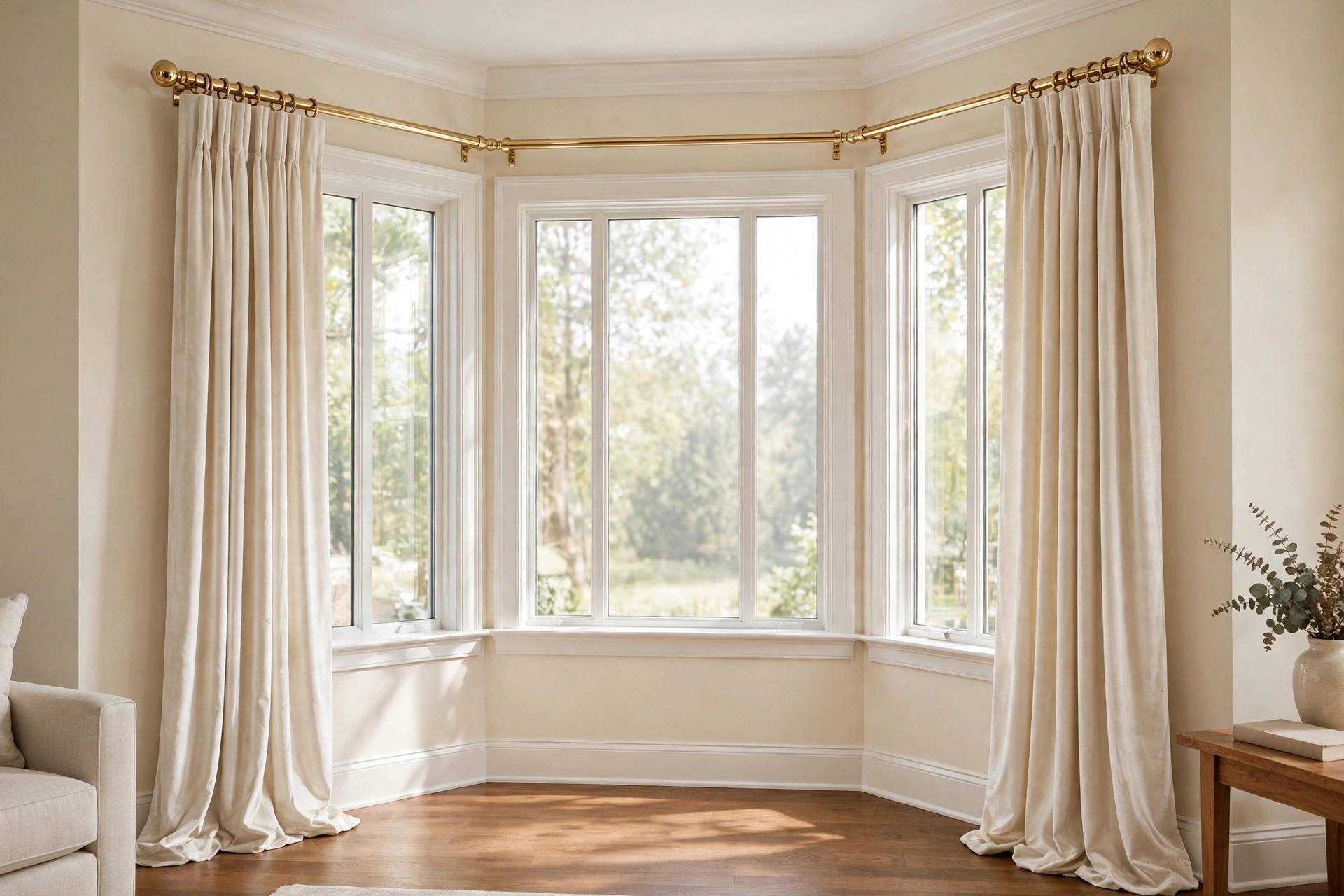
A bay window usually has three or more glass panels set at angles. Each panel lets in light from a different direction. This gives the room a bright, open feel. But it also means the window frame has bends. A cheap straight rod cannot bend with it. Gaps appear between the drapes. Fabric hangs at odd angles. The whole room looks unfinished.
A luxury rod made for bay windows solves this problem. It follows the shape of the window. Drapes hang in one smooth line across the full span. The hardware itself adds beauty. Brass, bronze, or black iron rods can look like jewelry for the window. Many owners choose rods that match other fixtures in the room, such as door handles and light fixtures. The result feels planned and calm. Photo collections of finished rooms on Houzz show how much the right rod changes a bay.
There is also a practical side. Bay windows sit close to seating and walkways. Children and pets brush against the drapes. A strong rod holds up to daily use. A weak one sags or pulls free from the wall. Quality rods use thicker tubing and sturdier brackets. They stay in place for years. That strength is what separates luxury hardware from bargain sets. Light control is another reason to get it right. A bay takes sun from three sides. In the morning, one panel glows. By noon, another does. Drapes that slide the full length let you tame glare without darkening the whole room. Privacy matters too. A bay often faces the street or a neighbor. Full coverage drapes give you privacy at night and open views by day.
What to Look for When You Choose: Luxury Bay Window Curtain Rods Buying Guide
Measure the Window First
Before you buy anything, measure. Use a steel tape measure. Measure the width of each section of the bay. Write down each number. Then measure the full width from one outer edge to the other. Note the depth of the bay, from the wall to the front of the glass. These numbers decide the size of the rod.
Decide how you will mount the rod. Some bays mount rods inside the window frame. Others mount on the wall above. A ceiling mount is a third choice. It works well when the wall above the window is short. Make this decision before you shop, because mounts are not easy to change later.
Match the Rod to the Room
Look at the style of your room. A formal living room suits polished brass or dark bronze. A farmhouse kitchen suits black iron or wood. A modern room suits slim brushed nickel. The finials at the ends of the rod are small, but they show. Pick a shape that repeats elsewhere in the room, such as round knobs that echo the door hardware. Decorating guides on HGTV are a good place to study how finishes are matched across a room.
Check the Weight Rating
Luxury drapes are heavy. Velvet, brocade, and lined silk weigh a great deal. Make sure the rod and brackets can hold them. Most quality brands print a weight limit. When in doubt, choose the stronger rod. Also check the wall material. Drywall needs anchors. Plaster may need special screws. Solid wood trim holds best. Mounting advice from This Old House can help if your walls are old plaster or lath.
Types and Options
Bay Window Rod Sets
The most common choice is a three piece set. It has a center rod and two side rods joined by corner connectors. The connectors bend at the same angle as the window. These sets come in fixed lengths and adjustable lengths. Adjustable sets fit most bays and are easier to buy. Retailers such as Home Depot and Lowe’s carry a wide range of these sets at many price points.
Custom Bent Rods
For odd angles or extra wide bays, a custom bent rod is best. A shop bends one long metal tube to match your exact window. The result has no visible joints. It looks cleaner and costs more. Many drapery workrooms offer this service. It takes a few weeks. Custom work is worth the wait on a large bay that no stock set fits well.
Track Systems
A track system hides the hardware. A slim channel mounts at the top of the window. Small carriers hold the drapes and glide along the track. Tracks bend smoothly around corners. They are a good choice for heavy drapes because the weight spreads across many carriers. Some tracks curve by hand on site. Others come pre bent to standard angles. Track systems are less visible, so they suit rooms where the fabric should be the star.
Corner Connectors and Accessories
Pay attention to the corner connectors. Swivel connectors adjust to many angles. Fixed connectors suit only one angle but look cleaner. Ball joints fall between the two. Also look at holdbacks, tiebacks, and rings. Wide rings slide easier over corner joints than narrow rings. Wooden or metal rings should match the rod finish. Small details like these decide whether the drapes glide or stick.
Wooden Poles
Wooden poles give a warm, classic look. They work best on straight bays or gentle angles. Thick poles, about two inches across, hold heavy fabric well. Stained finishes can match the wood trim in the room. Painted poles can match the wall color. IKEA sells simple wooden poles that work in casual rooms and rentals.
Double Rods
Double rods hold two layers of fabric. A sheer layer sits behind a heavier drape. You can close the sheers for privacy and keep the drapes open for light. This is a popular choice for bedrooms and living rooms. Bay window double rods need matching corner connectors for both rods, so check that the set includes them.
Related Options Worth a Look
Another layered option some owners pair with rods is energy efficient zebra dual layer shades, which combine sheer and opaque bands in one unit. If privacy is the main goal, decorative window film is a simple add-on that works under or beside any rod. How-to guides at The Spruce explain how these treatments pair with rods in a bay.
Cost and Price
Prices vary widely. A basic adjustable bay rod set costs about 40 to 80 dollars. Mid range sets from well known brands run 120 to 250 dollars. Luxury sets with solid brass or hand finished parts cost 300 to 600 dollars. Custom bent rods start near 400 dollars and can pass 1,000 dollars for wide bays.
Finials and brackets add to the cost. Decorative finials run 15 to 50 dollars a pair. Center support brackets are often sold apart. Installation is another cost. A handyman may charge 75 to 200 dollars to mount a bay rod. Custom workrooms often include measuring and install in the price.
Look for value, not just price. A rod that sags after a year is no bargain. Check the metal thickness. Check the finish warranty. Solid brass and stainless steel last the longest. Independent test reports from Consumer Reports can help you compare durability across brands. Step by step project advice from Bob Vila can save you the install cost if you are handy.
Shop sales if you can wait. Hardware stores cut prices on rods and finials in late winter and early fall. Online sellers run deals on holiday weekends. Custom work costs less if you measure well, because remakes carry fees. Bring your written measurements to the shop and keep a copy at home.
Care and Upkeep
Dust the rod once a month. Use a soft cloth. Avoid water on wood poles. Metal rods can be wiped with a damp cloth and dried right away. Check the finials now and then. They can work loose over time. Tighten the small screws that hold them.
Check brackets twice a year. Look for sag in the center of long spans. If the rod dips, add a center support bracket. Keep the drapes moving freely. Pull them open and closed each week. This keeps the fabric from settling in one place and trains the folds to hang evenly.
Drapes need cleaning too. Some can go in the washing machine. Most luxury drapes need dry cleaning. Our curtain cleaning services cost guide usa shows typical prices for professional cleaning. Clean heavy drapes every two to three years. Sheers need washing once or twice a year. Small space style ideas at Apartment Therapy offer tips for keeping bay treatments fresh in compact rooms.
Protect the finish. Keep bathroom steam and kitchen grease away from the rod. Both dull metal finishes over time. A light coat of carnauba wax on brass keeps its shine. Touch up paint chips on painted poles before rust or rot starts.
Safety
Bay windows sit low and near living space. Safety matters for the whole family.
– Corded blinds and shades can strangle small children and pets. Choose cordless options where possible. The U.S. Consumer Product Safety Commission at cpsc.gov publishes guidance on window covering cord safety. Follow it. – Mount brackets into solid material. A rod that pulls free can fall on a person below. – Keep fabric away from heaters, radiators, and candles near the window. – Test that drapes move freely. In an emergency, you want the window clear fast.
Frequently Asked Questions
Can I use a regular straight rod on a bay window? A straight rod spans only the center section. The side sections stay bare. This works in casual rooms but looks unfinished. A bay set follows the angles and covers the full window.
How far should the rod extend past the window? Extend each end by three to six inches. This lets the drapes stack on the wall when open. The window looks wider. More light enters the room.
What angle do bay window corners have? Most bays use 90 degree or 135 degree corners. Measure yours before buying connectors. Adjustable connectors fit both angles.
Are bay window rods hard to install? They take more time than straight rods. You must level three sections and set the corner joints. Many owners hire a handyman for the first install. Tracks are harder to install than rods.
Which metal lasts longest? Solid brass and stainless steel resist rust and wear. They cost more but need no replacing. Coated steel is fine indoors in dry rooms.
Can drapes hang on a track and a rod at once? Yes. Some owners use a track for sheers behind a decorative rod. The rod carries the main drapes. This gives a layered, tailored look.
A Final Word
A bay window deserves hardware that fits its shape. Take careful measurements. Choose a style that matches the room. Buy a rod strong enough for your fabric. The job takes a weekend at most. The result lasts for years. Done right, the window becomes the best feature of the room.
References
Apartment Therapy. (n.d.). Home design ideas and inspiration. https://www.apartmenttherapy.com Bob Vila. (n.d.). Home improvement advice. https://www.bobvila.com Consumer Reports. (n.d.). Product reviews and ratings. https://www.consumerreports.org HGTV. (n.d.). Home and garden ideas. https://www.hgtv.com Houzz. (n.d.). Home design and remodeling. https://www.houzz.com IKEA. (n.d.). Home furnishings. https://www.ikea.com Lowe’s. (n.d.). Home improvement products. https://www.lowes.com The Home Depot. (n.d.). Home improvement products. https://www.homedepot.com The Spruce. (n.d.). Home and garden advice. https://www.thespruce.com This Old House. (n.d.). Home renovation guidance. https://www.thisoldhouse.com U.S. Consumer Product Safety Commission. (n.d.). Product safety information. https://www.cpsc.gov
Was this guide helpful?

About Robert Taylor
The My Garden US editorial team writes practical, in-depth home and garden guides for American homeowners — tested advice, no fluff.