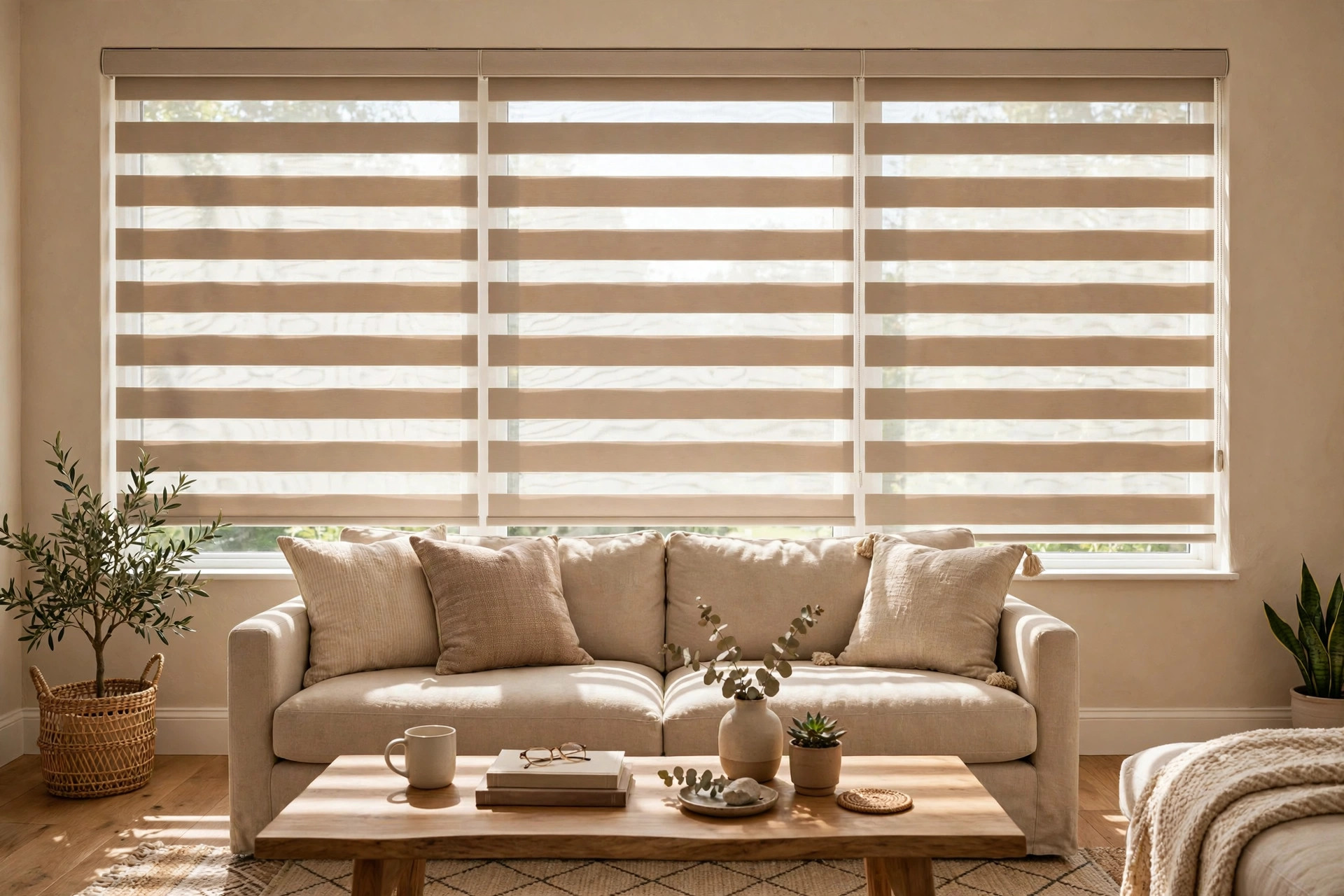

If you are looking for energy efficient zebra dual layer shades for sale, you are probably trying to solve two problems at once. You want window coverings that look modern. And you want to cut the heat that comes through the glass in summer and the warmth that escapes in winter. Zebra shades, also called dual layer shades or banded shades, do both. Their fabric has alternating stripes of sheer and solid material. When the stripes line up, light passes through. When they shift, the solid bands block the view and much of the heat. Add an energy rated backing, and they become a true insulating layer for your windows.
This guide explains how these shades work, what makes some sets more energy efficient than others, what you can expect to pay, and how to measure, install, and care for them. You will also find links to trusted sources and related guides on thermal energy efficient window treatments for sale.
Why Energy Efficient Shades Matter
Windows are one of the weakest parts of a home’s shell. In summer, sun comes through the glass and turns a room into a greenhouse. In winter, warm air sits against cold glass and loses heat fast. The United States Department of Energy notes that about 30 percent of a home’s heating energy can be lost through windows, and heat gain through windows can make cooling bills climb in warm months. You can read more about window efficiency standards at Energy Star.
A plain single layer shade does little to stop this. An energy efficient zebra shade adds a second line of defense. The solid bands in many energy rated models have a dense weave or a light blocking backing. When the shade is closed in the open position, the two layers sit close together and trap a thin pocket of air. That pocket slows heat as it tries to move through the window. It works the same way a storm window works, only lighter and simpler.
The savings are real but modest on each window. For one window, a good energy efficient shade may cut heat loss by a noticeable margin. Across a whole house, with shades on ten or twelve windows, the effect adds up. Many buyers report lower air conditioning use in summer and fewer drafts in winter. The shades pay for themselves over time through lower utility bills, and they make rooms more comfortable right away.
How Zebra Dual Layer Shades Work: Energy Efficient Zebra Dual Layer Shades for Sale
A zebra shade is made of one long loop of fabric that runs through a headrail at the top and around a bottom rail. The fabric is woven with alternating horizontal bands. One band is sheer mesh. The next is a solid, often lined strip. As you pull the cord or press the motor control, the loop slides so the sheer bands line up with each other or the solid bands overlap the sheer ones.
When the sheer bands line up, you get a view and soft filtered light. When the solid bands overlap, you get privacy and light control. You can stop the shade at any point between the two, which gives you fine control over how much light enters the room. No other common shade type gives this much range in one product.
The energy part comes from the fabric itself. Standard zebra shades use unlined polyester, which blocks little heat. Energy efficient models use thicker fabric, a reflective or thermal backing on the solid bands, or a double weave that slows heat transfer. Some models add a cellular or honeycomb structure behind the bands. When you shop, look for words like “thermal,” “insulating,” “energy saving,” or “light blocking” in the product description. If the maker lists an insulation rating, that is a good sign.
What to Look for When You Buy
Not every shade labeled “zebra” saves energy. Here are the points that matter most.
Fabric density. Hold a swatch up to a lamp if you can. The solid bands should block most of the light. Thin fabric lets heat pass as easily as light.
Backing. A thermal or reflective backing on the solid bands is the single best sign of energy performance. Light colors on the street side also reflect summer sun better than dark colors.
Fit. An inside mount looks neat, but a small gap at the edges lets air move around the shade. An outside mount that covers the whole frame traps more air and blocks more light at the sides. For energy savings, outside mount is the better choice.
Operation. Cordless and motorized options cost more but remove cord hazards and make daily use easier. Motorized shades can be set on timers so they close during the hottest part of the day even when no one is home.
Warranty. Good makers stand behind their products for several years. A long warranty on the fabric and the mechanism is worth more than a small price cut from an unknown brand. Reviews on sites like Consumer Reports can help you compare makers before you buy.
Certifications. Look for safety certifications from the Window Covering Manufacturers Association and, where claimed, third party test data for insulation. The Consumer Product Safety Commission sets rules for cord safety on all window coverings sold in the United States.
Types and Options
Light filtering zebra shades. The solid bands let some light through. These suit living rooms and kitchens where you want daylight without glare.
Room darkening zebra shades. The solid bands have a dense weave or backing that blocks most light. These suit bedrooms and media rooms.
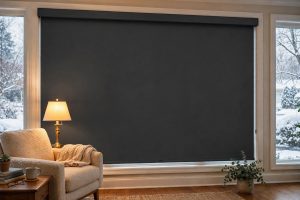
Blackout zebra shades. The solid bands block nearly all light. They give the best energy performance of the three, since dense fabric also blocks heat.
Motorized models. A small motor in the headrail raises, lowers, and shifts the bands at the push of a button or through a phone app. Some tie into smart home systems. Smart home guides at Wayfair and IKEA show how these fit into a connected home.
Custom versus ready made. Ready made shades come in set sizes and cost less. Custom shades are cut to your exact window measurements and offer more fabric choices. For odd sizes or large windows, custom is usually worth the cost.
You can compare shade types and see installation ideas at The Spruce and HGTV, which both carry detailed window treatment guides.
Cost and Price
Energy efficient zebra dual layer shades for sale usually fall into clear price bands. Ready made sets for a standard 36 by 48 inch window often run from 60 to 150 dollars each. Custom shades for the same size often run from 150 to 400 dollars each. Large windows, motorized operation, and premium fabrics push prices higher, sometimes past 600 dollars per window.
Motorization adds about 100 to 200 dollars per shade for a basic remote system. Whole home smart systems cost more but let you schedule every shade from one app.
Installation is often free from big retailers if you buy a set number of shades, or it may cost 50 to 100 dollars per window from a local installer. Many buyers install ready made shades themselves in under an hour per window with a drill and a level. For related price comparisons, see our guide to thermal insulated curtains price comparison usa and top rated cordless cellular shades for american homes. Retailers like Home Depot and Lowe’s list current prices for ready made sets.
When you compare prices, compare equal things. A cheap shade with thin fabric is not the same product as an energy rated shade with a thermal backing. Ask the seller for the fabric weight or insulation rating before you decide.
Measuring and Installing
Good measuring matters more than the brand name. Measure each window in three places: top, middle, and bottom for width, and left, center, and right for height. Use the smallest width and the largest height for an inside mount, or add three to four inches on each side for an outside mount.
Most ready made shades include brackets, screws, and simple instructions. Mount the brackets level, snap in the headrail, and test the shade before you trim any excess. For an inside mount, the brackets go on the top of the window frame. For an outside mount, they go on the wall or trim above the frame.
Motorized shades need a power plan. Battery models need fresh batteries once or twice a year. Plug in models need an outlet near the window. Hardwired models need an electrician and cost more up front but never need battery changes.
Care and Upkeep
Zebra shades are easy to keep. Dust the fabric once a month with a soft brush or the brush tool of a vacuum. For spots, dab with a damp cloth and mild soap, then let the shade dry in the open position. Never soak the fabric and never use bleach.
Keep the headrail track clean so the fabric loop moves freely. If the bands stop lining up, check that the bottom rail is level and that the fabric is centered on the tube. Most alignment problems come from a shade that was mounted out of level.
Pet owners should keep claws away from the sheer bands, which can snag. Motorized models last longer when you change batteries on schedule instead of waiting for them to die.
Safety
Cord safety is the most important point in this whole guide. Loop cords and long pull cords can strangle small children and pets. The safest choice is a cordless or motorized shade with no hanging cords. If you already own corded shades, the Consumer Product Safety Commission offers free retrofit kits that shorten or remove the hazard.
Mount shades with care. A shade that falls can hurt a child or damage the window. Use the anchors that come in the box, and use wall anchors on drywall. Keep cribs, beds, and play areas away from windows with cords, even short ones.
Frequently Asked Questions
Do zebra shades really save energy? Yes, if you buy an energy rated model. The thermal backing and the air pocket between the layers slow heat flow. Standard thin zebra shades look the same but save little. Check the product specs before you buy.
Can zebra shades make a room dark enough to sleep? Room darkening and blackout models can. Light filtering models cannot. If you need a dark bedroom, choose a blackout zebra shade with an outside mount to block light at the edges.
Are zebra shades hard to clean? No. Monthly dusting and spot cleaning handle most needs. The fabric is synthetic and resists stains better than cotton curtains.
How long do zebra shades last? A good set lasts eight to twelve years with normal use. Motorized parts may need service sooner. Sun damage is the main cause of early wear, so shades on south facing windows age faster.
Can I install zebra shades myself? Most ready made shades install in under an hour with basic tools. Custom and motorized shades are also doable, but a pro installer is worth it for large or hard to reach windows.
Do zebra shades work on sliding doors? Yes, with wide widths or linked panels. Measure the full door frame and choose an outside mount for the best coverage.
A Final Word
Energy efficient zebra dual layer shades for sale give you something rare in a window covering: style and real function in one product. They filter daylight, guard privacy, and cut the heat that moves through your glass. Buy an energy rated fabric, mount it to cover the full frame, and choose cordless or motorized operation for safety and ease. Your rooms will feel cooler in August, warmer in January, and your utility bills will show the difference.
References
Blinds.com. (n.d.). Window blinds, shades, and shutters. https://www.blinds.com Consumer Reports. (n.d.). Product reviews and ratings. https://www.consumerreports.org ENERGY STAR. (n.d.). Energy efficient products. https://www.energystar.gov HGTV. (n.d.). Home and garden ideas. https://www.hgtv.com IKEA. (n.d.). Home furnishings. https://www.ikea.com Lowe’s. (n.d.). Home improvement products. https://www.lowes.com The Home Depot. (n.d.). Home improvement products. https://www.homedepot.com The Spruce. (n.d.). Home and garden advice. https://www.thespruce.com U.S. Consumer Product Safety Commission. (n.d.). Product safety information. https://www.cpsc.gov Wayfair. (n.d.). Furniture and home goods. https://www.wayfair.com
Was this guide helpful?

About Lisa Anderson
The My Garden US editorial team writes practical, in-depth home and garden guides for American homeowners — tested advice, no fluff.
You May Also Like
Custom Skylight Blackout Blinds With Free Shipping: A Simple Buying Guide
March 24, 2026 0 views
Thermal White Linen Curtain Panels for Sale: A Plain Buying Guide
October 1, 2026 0 views
Affordable Bamboo Roman Shades Buying Guide
April 6, 2026 0 views