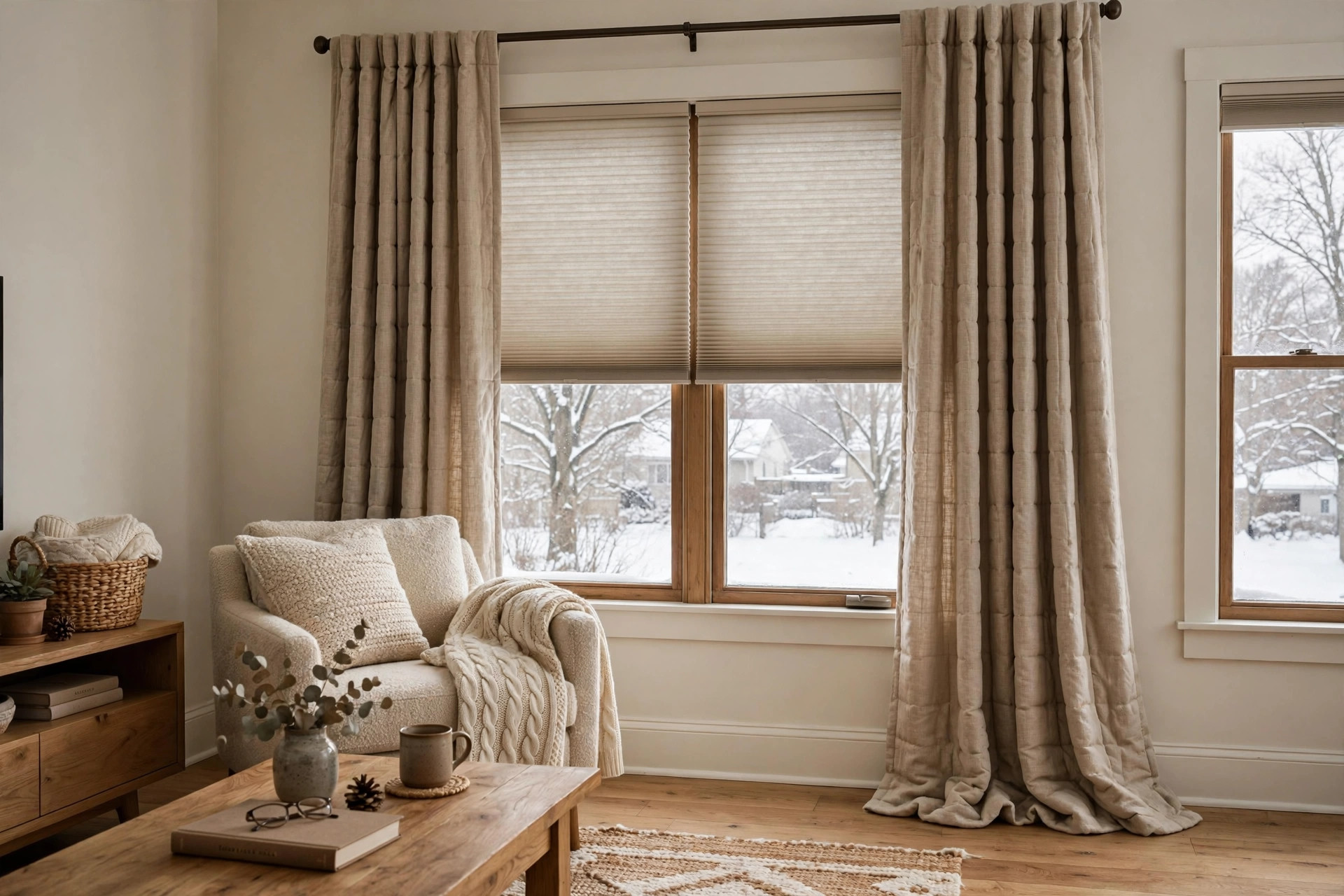

Every home has a quiet drain on money. Heat slips out of windows on cold nights. Warm air pushes in on hot afternoons. The furnace and the air conditioner work harder than they should. Many home owners never look at the glass when they think about high energy bills. They should. Windows can account for a large share of a home’s heat loss and heat gain. This is why thermal energy efficient window treatments for sale are worth a close look. The right covering on a window acts as a barrier. It slows the movement of air. It cuts glare. It keeps rooms steady in every season.
Why Thermal Window Treatments Matter
A window is a hole in the wall that we cover with glass. Glass is thin. Heat passes through it with ease. On a winter night, the glass turns cold. Cold air falls along the glass and moves across the floor. The room feels drafty even when the furnace runs. On a summer day, the sun pours heat through the same glass. The air conditioner runs longer. Both problems raise the power bill.
A thermal window treatment adds a layer between the glass and the room. The layer traps air. Trapped air is a poor carrier of heat. This is the simple science behind every insulated curtain and every honeycomb shade. The dead air sits in the fabric or in the cells. It slows heat as it tries to move through. The result is a room that stays warmer in winter and cooler in summer. The furnace cycles less. The air conditioner rests more. Savings build up month after month.
Comfort is the other gain. Rooms with bare windows often have cold spots near the glass. Chairs near the window feel chilly. A thermal covering evens out the temperature across the room. People feel more at ease. Glare drops too. Screens are easier to read. Furniture fades more slowly because harsh sun is filtered. Privacy improves, since heavy treatments block the view from outside at night. One purchase solves several daily annoyances at once.
What to Look for When You Shop: Thermal Energy Efficient Window Treatments for Sale
Start with the fit. Measure the window frame from edge to edge. Write down the width and the height. For curtains, plan to cover the whole frame and a few inches beyond on each side. This overlap stops air from leaking around the edges. For shades mounted inside the frame, the fit must be exact. A gap of even half an inch lets heat pass around the treatment and defeats its purpose. Many sellers list exact sizes in their product charts. A tape measure is the most useful tool in this project.
Look at the fabric and the build. Heavy cloth holds more still air than thin cloth. Foam backed curtains are common. They have a layer of foam sealed between the face fabric and the lining. The foam blocks heat flow. Multiple fabric layers work the same way. Check the edges and the seams. Loose stitching lets air through. A good product feels thick and lies flat. It should have a tight weave with no light bleeding through the body of the fabric.
Think about how the treatment hangs. Curtains with a deep return fold back to the wall. This closes the gap at the sides. Shades that fit inside the frame should sit flush against the sides. A tight fit at the top matters too. Warm air rises and escapes through gaps at the top of a window. Some shades add side tracks or seals that press against the frame. These small details make a real difference in how much heat the treatment stops.
Consider the direction the window faces. South facing windows take strong sun in winter. A treatment that opens easily lets free solar heat in on cold days. North facing windows get little direct sun. They lose heat all winter. Heavier coverage suits them. East and west windows get harsh morning and afternoon sun in summer. Treatments that block heat gain work best there.
Check care labels before you buy. Some insulated curtains wash in a home machine. Others need dry cleaning. Shades often clean with a damp cloth. If the treatment is hard to clean, it will look old sooner. Pick a care routine you will actually follow.
Types of Energy Efficient Window Treatments
Insulated Curtains and Drapes
Insulated curtains are the most familiar type. They look like ordinary curtains but carry extra layers. A typical insulated curtain has three layers: a face fabric, an inner layer of foam or thick batting, and a back lining. The lining often has a pale finish that reflects sun in summer. These curtains hang from a rod like any drape. They close over the window at night and pull back in the day. Prices run from modest to high, based on fabric and brand. People who live in small spaces can also look at custom thermal insulated curtains for small apartments for sizes that suit tight rooms.
Cellular and Honeycomb Shades
Cellular shades are named for their shape. When viewed from the side, the fabric folds into a row of honeycomb cells. The cells trap air in pockets. A double cell shade has two rows of cells and traps even more air. These shades pull down from the top of the window. They stack neatly when raised. They come in many colors and in light filtering or blackout grades. Many home owners pick top rated cordless cellular shades for american homes because the cordless design is clean and safe. Cellular shades rank among the best insulators of all soft window treatments.
Roman Shades
Roman shades fold up in soft pleats when raised. They lie flat when lowered. Thermal Roman shades carry a lined back or a foam layer like insulated curtains. They look softer and more formal than cellular shades. Thermal bamboo roman shades for sale give a natural woven look with a thermal lining behind the bamboo face. Roman shades suit living rooms and dining rooms where style matters. They cost more than basic shades but less than custom drapes.
Plantation Shutters and Solid Shutters
Shutters use wood or composite slats in a rigid frame. Solid panel shutters have no slats. They close like doors over the window. Wood is a fair insulator on its own. When shutters close tight to the frame, they block a good share of heat flow. Shutters last many years. They add value to a home. The cost is higher than fabric treatments. Installation takes more skill. Many buyers order them custom cut for each window.
Thermal Roller Shades
Roller shades are a single sheet of fabric that rolls onto a tube at the top. Thermal versions use thicker fabric with a reflective or foam back. They are simple and cheap. They work well in kitchens and baths where fabric curtains would collect grease or steam. They do not insulate as well as cellular shades or heavy drapes. They are a good budget step up from bare glass.
Cost and Price
Prices vary by type, size, and maker. A basic pair of insulated curtains for a standard window can cost as little as thirty dollars. High end custom drapes can run several hundred dollars per window. Cellular shades usually fall in the middle. A standard double cell shade often costs between fifty and one hundred fifty dollars per window. Roman shades run higher, often one hundred to three hundred dollars per window. Plantation shutters are the dearest choice, often two hundred to four hundred dollars per window or more.
Installation adds cost if you hire help. Hanging curtain rods is a job most home owners can do with a drill and a level. Mounting inside frame shades takes care but no special tools. Shutters often call for a professional. A pro charges by the window or by the hour. Get two or three quotes before you hire.
Think about payback. A home owner who spends four hundred dollars covering four windows may save sixty to one hundred dollars a year on heat and cooling. The treatments pay for themselves in four to seven years. They keep saving after that. Energy prices rise over time, so the savings grow. Cheaper treatments aimed at one bad window pay back even faster.
Sales lower the cost. Many large sellers run seasonal sales in spring and fall. Big home stores such as The Home Depot and Lowe’s stock thermal treatments year round and mark them down during holiday weekends. Online shops like Wayfair and IKEA also offer wide ranges at fair prices. A specialist like Blinds.com sells shades in exact custom sizes with measuring guides.
Care and Upkeep
Thermal treatments last longer with simple care. Vacuum curtains with a brush head once a month. Dust shades with a feather duster or a soft cloth. Spot clean stains right away with mild soap and water. Test soap on a hidden edge first. Wash machine safe curtains on a gentle cycle and hang them damp. Iron only on low heat if the fabric allows it.
Sun breaks down fabric over time. Linings with a reflective back slow this damage. Rotate which side faces the sun if the curtain is reversible. Keep shades partly lowered on bright days to protect the fabric. Close heavy treatments at night in winter to cut heat loss. Open them on sunny winter days to let free heat in. In summer, keep them closed on the sunny side of the house during the hottest hours.
Check the hardware once a year. Tighten loose brackets. Oil squeaky rods. Look at cords and chains for wear. Replace frayed cords at once. Cordless shades need little upkeep beyond dusting. A shade that no longer sits level may need its spring retensioned. Most makers post simple repair guides online.
Safety
Corded window treatments can harm small children and pets. Loops and long cords have caused accidents in many homes. The safest choice is a cordless or motorized treatment. If you already own corded shades, keep cords high and out of reach. Use cord cleats to wrap long cords tight against the wall. Move cribs, beds, and play areas away from windows with cords. The U.S. Consumer Product Safety Commission offers free guidance on making window coverings safe for children. When you shop, look for products labeled cordless. Many makers now sell only cordless styles for homes with children.
Fire safety counts too. Keep heavy curtains away from heaters, radiators, and candles. Fabric should not rest on a hot surface. If a window is a fire escape route, the treatment must open fast. Practice opening it in the dark. Heavy fire retardant fabrics exist for workplaces, but plain home fabrics are fine for most houses when kept clear of heat sources.
FAQ
How much can thermal window treatments really save?
Savings depend on climate, window type, and how bad the windows are. A single pane window with no storm window loses the most heat. Covering it with an insulated curtain or a cellular shade can cut that loss by a large share. The U.S. Department of Energy notes that smart window covering choices are among the cheapest ways to trim a heating and cooling bill. Home owners in cold states and hot states both see gains. Poor windows gain the most.
Are cellular shades better than insulated curtains?
Both work well. Cellular shades trap air in their honeycomb cells and sit close to the glass. This makes them strong insulators in a slim package. Insulated curtains add more fabric and cover past the frame edges, which seals side leaks. For a window with big side gaps, curtains may win. For a window that needs a slim modern look, cellular shades win. Many homes use both in different rooms.
Do I need an energy label like ENERGY STAR on window treatments?
There is no ENERGY STAR label for window coverings the way there is for appliances. Still, the ENERGY STAR site offers useful guides on cutting home energy use, and the same site lists efficient heating and cooling gear that pairs well with new treatments. Judge treatments by fabric weight, cell design, and fit rather than by a badge.
Can I install them myself?
Yes, in most cases. Curtains need a rod, brackets, and a drill. Shades come with brackets and screws. Measure twice and follow the printed guide. A level helps. Most first time installers finish a window in under an hour. Shutters and motorized shades may need a pro. If a window is very large or very high, hire help for safety.
Which side of the house benefits most?
North facing windows lose the most heat in winter because they get no direct sun. They gain the most from heavy treatments. West facing windows take brutal afternoon sun in summer. They gain the most from heat blocking shades. Cover every window you can, but start with these two sides if money is tight.
Where can I read more about styles and care?
Home advice sites cover this topic in depth. The Spruce runs buying guides on curtains and shades. HGTV posts room by room ideas with photos. Reading a few guides before you shop helps you compare fabric weights and prices with a clear eye.
A Short Final Word
Thermal energy efficient window treatments for sale are a plain, proven upgrade. They cost less than new windows. They install in an afternoon. They cut heat loss in winter and heat gain in summer. They raise comfort, cut glare, and guard privacy. Measure your windows, pick a fabric weight that suits your climate, and hang the treatment with care at the edges. The power bill will show the result within a season. The rooms will feel better the first night.
References
Blinds.com. (n.d.). Window blinds, shades, and shutters. https://www.blinds.com ENERGY STAR. (n.d.). Energy efficient products. https://www.energystar.gov HGTV. (n.d.). Home and garden ideas. https://www.hgtv.com IKEA. (n.d.). Home furnishings. https://www.ikea.com Lowe’s. (n.d.). Home improvement products. https://www.lowes.com The Home Depot. (n.d.). Home improvement products. https://www.homedepot.com The Spruce. (n.d.). Home and garden advice. https://www.thespruce.com U.S. Consumer Product Safety Commission. (n.d.). Product safety information. https://www.cpsc.gov U.S. Department of Energy. (n.d.). Energy efficiency and renewable energy. https://www.energy.gov Wayfair. (n.d.). Furniture and home goods. https://www.wayfair.com
Was this guide helpful?

About Jennifer Lee
The My Garden US editorial team writes practical, in-depth home and garden guides for American homeowners — tested advice, no fluff.
You May Also Like

Top Rated Pet Friendly Curtains for USA Homes
June 7, 2026 0 views
Affordable Kids Room Blackout Curtains for Sale: A Buyer’s Guide
March 7, 2026 0 views
Energy Efficient Zebra Dual Layer Shades for Sale: A Buyer’s Guide
January 9, 2026 0 views