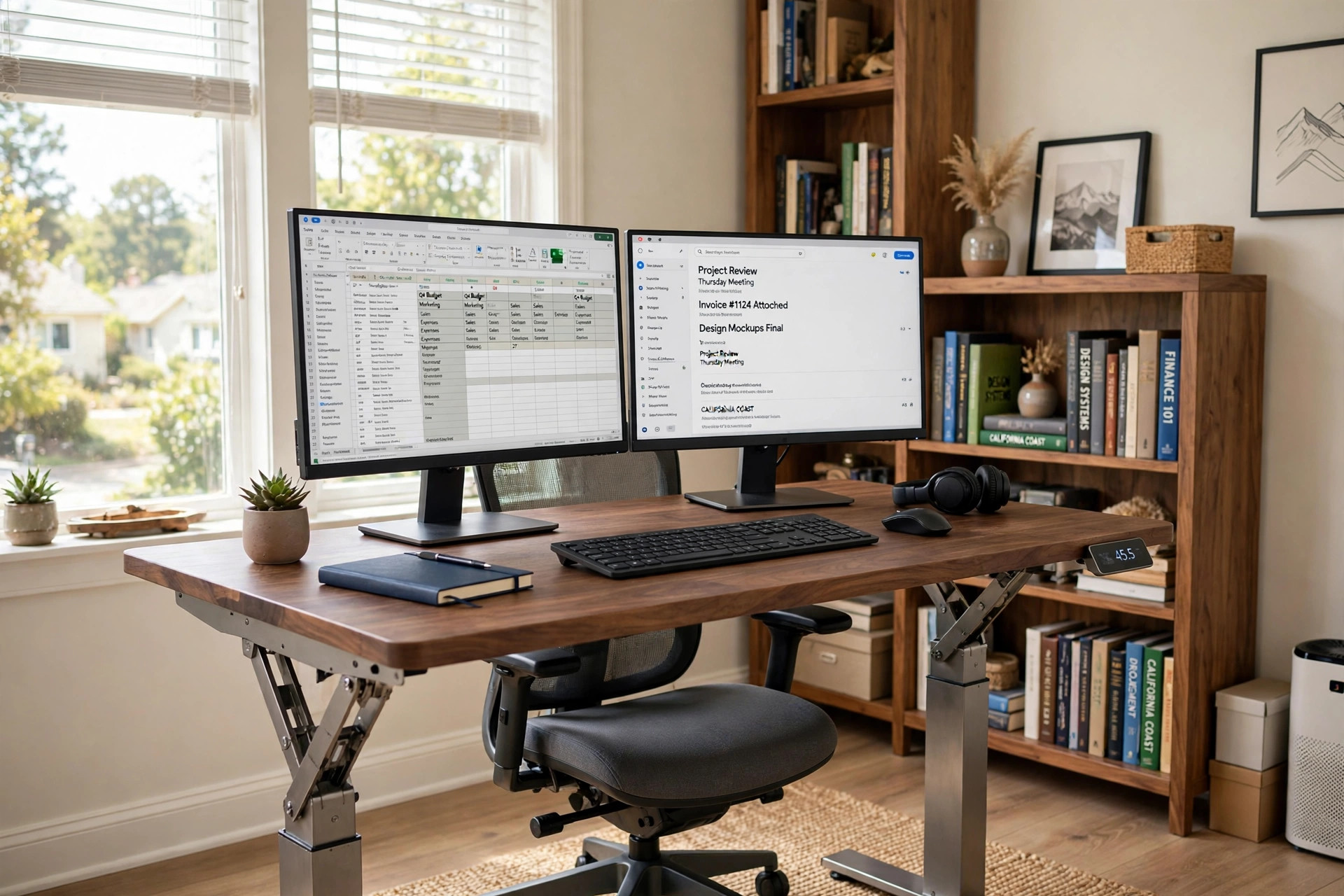

Why Height Range Matters Most
An adjustable standing desk for tall person 6ft shoppers is not the same as an ordinary desk. A six-foot worker stands taller at the desk. The elbows rest higher. The screen must sit higher too. If the desk does not rise far enough, the tall user must bend over it. That defeats the purpose of the desk.
Most standing desks rise to 46 or 48 inches. For a person who is six feet tall, that is often not enough. Elbow height while standing is about 46 to 48 inches for a person of this height. A desk top at 47 inches may sound right. But add a monitor, a keyboard tray, or thick shoes, and the numbers shift. A safe target is a desk that rises to at least 50 inches. Many desks built for taller users reach 51 or 52 inches.
This is the single most important number. Shoppers should read the stated height range before anything else. A desk that looks strong and wide is useless if it stops two inches too low.
What to Look For When You Shop: Adjustable Standing Desk for Tall Person 6ft
Height Range
Look for a range that starts near 25 inches and rises to at least 50 inches. The low end matters for sitting. A six-foot person sits tall too. Chair seat height, thigh clearance, and arm rest height all run higher. A desk that drops to 28 or 30 inches can work for sitting. One that only drops to 26 inches is fine as well. But if the high end stops at 46 inches, cross it off the list.
Frame Strength
Taller desks wobble more. Physics does not care about price. A long column of legs at full height is a lever. Cheap single-motor frames sway when they rise past 48 inches. Look for a frame with a wide foot span. Look for crossbar supports between the legs. Look for a lifting capacity of 200 pounds or more. Steel frames hold steadier than aluminum at height.
Motor Count
Two motors are better than one for a tall user. Dual motors lift evenly. They keep the desktop level as it climbs. They also tend to run quieter. Single-motor desks can tilt or bind under a heavy load. Since tall desks carry monitors, arms, and shelves higher up, even lifting matters more.
Desktop Size and Depth
Tall users often have long arms and wide stances. A desk top of 60 by 30 inches gives room to spread out. A deep top, 30 inches or more, lets the screen sit farther back. That helps posture. It also leaves room for a keyboard tray underneath, which drops the typing surface to the right level.
Memory Presets
A good desk saves two or three height settings. The user taps one button and the desk moves to sit height or stand height. This sounds small. It is not. A desk without presets gets used less. People tire of holding a button and guessing. Presets turn the desk into a habit.
Stability at Full Extension
Read reviews for the word wobble. A desk that feels rock solid at 40 inches may shake at 51 inches. Tall frames with thick leg segments and strong glides do better. Some makers publish stability ratings. Others rely on buyer reports. Either way, this detail matters more for a six-foot user than for anyone else.
Types of Adjustable Desks for Tall Users
Electric Full Desks
Electric desks use motors to raise the whole desktop. This is the most common type. They are the easiest to use. They adjust with the touch of a button. For a tall person, an electric full desk with a 50-inch plus range is the safest pick. Prices run wide, from budget models to premium frames.
Crank and Pneumatic Desks
Hand-crank and gas-lift desks adjust without power. They suit rooms with no outlet nearby. They are simple and often cheaper. But they take effort to raise. A tall user who changes position several times a day may tire of cranking. They also have fewer preset options. For many tall buyers, these are a second choice.
Standing Desk Converters
Converters sit on top of an existing desk. They raise the keyboard and monitor up when needed. They cost less than a full desk. They also work in tight rooms. But they rarely rise high enough for a six-foot person. Most top out near 20 inches above the desk surface. On a 30-inch desk, that gives 50 inches total, which can work. Still, the small platform limits space. Most tall users outgrow a converter fast.
Custom and Extended-Range Frames
Some makers sell frames built for tall users on purpose. These frames offer height ranges up to 54 or 55 inches. They cost more. They are worth it for buyers over six feet, or for those who wear work boots and stand on mats. Buyers who want a custom desk top to match a tall frame can often buy the frame alone and add their own top.
Sitting Down at Six Feet: What Else to Change
A desk is one part of the setup. A tall person needs the chair to match. An ergonomic executive office chair for home study with a high seat range keeps the hips level while sitting. Armrests should reach the desk top without lifting the shoulders. If the chair armrests dig into the desk edge, adjustable armrest pads for office chair comfort can soften the fit.
The screen height matters as well. At standing height, the top of the screen should sit at or just below eye level. A six-foot person may need a monitor arm or a tall stand. Without one, the neck bends down all day. A monitor arm also frees desk space, which helps on a tall setup where everything rides high.
Footwear counts too. Shoes add an inch. A standing mat adds another half inch. These small lifts add up. When setting the desk height, wear the shoes you will wear at work. Set the desk so the elbows rest at about 90 degrees.
Cost and Price
Prices for an adjustable standing desk for tall person 6ft buyers fall into three bands.
Budget desks cost 200 to 400 dollars. They often reach 48 inches at most. Some reach 50 inches. They usually have one motor. They suit light use. A tall buyer can use one, but should check the height range with care.
Mid-range desks cost 400 to 800 dollars. Most reach 50 to 52 inches. Most have dual motors. Frames feel steadier. Desktops are larger. This is where most six-foot buyers find the best value.
Premium desks cost 800 to 1,500 dollars and more. These reach 52 to 55 inches. They carry heavy loads. They run quiet. They include advanced controls and long warranties. Tall buyers who work at the desk all day often find the extra cost fair.
Watch for hidden costs. A separate desktop can add 100 to 300 dollars. A monitor arm adds 50 to 150 dollars. A good anti-fatigue mat adds 50 to 100 dollars. Delivery and assembly fees vary by seller. Big-box retailers such as IKEA and Wayfair often list clear shipping terms, while specialty makers like UPLIFT Desk sell frames with long warranties.
Setting Up for Good Posture
Once the desk arrives, set it with care. Stand in the shoes you wear at work. Rest your forearms on the desk. The elbows should bend near 90 degrees. The shoulders should hang loose. If the shoulders rise, the desk is too high. If the wrists bend up to type, it is too low.
Place the screen about an arm’s length away. The top edge should sit near eye level. A separate keyboard and mouse help. Laptop users should raise the laptop on a stand and use an outside keyboard. Typing on a flat laptop at standing height strains the wrists.
Alternate sitting and standing. Experts suggest changing position every 30 to 60 minutes. Standing all day is not the goal. Movement is the goal. Use the memory presets to switch fast. Keep a small stool nearby for rest breaks.
Care and Upkeep
An adjustable desk needs little care, but it needs regular care. Dust the lifting columns once a month. Dust and grit wear the glides. Wipe the desktop with a damp cloth. Avoid harsh cleaners on wood tops.
Check the bolts every few months. Tall desks carry loads high up. Bolts can loosen with daily movement. A quick pass with the included wrench keeps the frame tight. Listen for new sounds. A grinding or clicking noise may mean the motor or column needs a look.
Reset the control box now and then. Most makers include a reset routine in the manual. It syncs the motors after months of use. Keep the power cord clear of the moving legs. A pinched cord can cut power mid-lift.
Keep drinks away from the control panel. Spills kill electronics. Use a desk organizer or tray for small items so they do not slide off when the desk moves. A home office closet organizer for office supplies keeps spare cables and parts out of the way.
Safety
A tall desk at full height is top-heavy. Keep heavy items centered. Do not stack books or printers on one edge. If children or pets are near, lock the controls. Most electric desks have a child lock. Use it.
Never sit or stand on the desk. Never let a child ride it up or down. Keep hands clear of the lifting columns while the desk moves. Anti-collision sensors help, but they are a backup, not a plan.
Place the desk on a level floor. A tall desk on a sloped floor rocks more. Use the leveling feet under the frame. Route the power cord so no one trips on it. A cord across a walkway is a hazard for everyone.
Frequently Asked Questions
How high should a standing desk go for a 6ft person?
Aim for a desk that rises to at least 50 inches. Elbow height for a six-foot person is near 46 to 48 inches in shoes. A 50-inch top gives room for a keyboard tray, a mat, and monitor gear. Desks that reach 51 or 52 inches give the most comfort. Independent guides such as Wirecutter and PCMag often list tested height ranges in their desk reviews.
Is one motor enough for a tall desk?
One motor can work for light loads. But dual motors lift more evenly at full height. They keep the desk level as it climbs past 48 inches. They also tend to last longer under daily use. For a six-foot user with two monitors, two motors are the safer pick.
Can a tall person use a standing desk converter?
It depends on the numbers. A converter that adds 20 inches to a 30-inch desk reaches 50 inches total. That can work. But the small platform limits space for a keyboard, mouse, and papers. Most tall buyers do better with a full electric desk.
What size desktop is best for a tall user?
A top of 60 by 30 inches suits most tall users. The width holds two monitors and papers. The depth lets the screen sit back at a healthy distance. Taller users with wide arm spans may want 72 inches of width. Measure the room first.
How much should I spend?
Plan 400 to 800 dollars for a solid mid-range desk that reaches 50 inches or more. Budget models under 400 dollars can work if the height range fits. Premium models over 800 dollars add stability, quiet motors, and longer warranties. Trusted makers such as Steelcase sit at the premium end, while general guides at The Spruce compare value picks across price bands.
Do I need a special chair with a tall standing desk?
Yes. A tall desk needs a tall chair to match. Look for a chair with a high seat range and adjustable arms. The goal is simple: when you sit, your feet rest flat, your thighs stay level, and your arms reach the desk without lifting your shoulders.
A Short Final Word
The right adjustable standing desk for tall person 6ft buyers comes down to one number first: the top of the height range. Get 50 inches or more. Then check the frame. Then check the motors. Then pick a top big enough for real work. Set it with care, switch positions through the day, and keep the bolts tight. A desk that fits the body is a tool you will use for years.
References
Herman Miller. (n.d.). Office furniture and ergonomic seating. https://www.hermanmiller.com IKEA. (n.d.). Home furnishings. https://www.ikea.com PCMag. (n.d.). Technology product reviews. https://www.pcmag.com Steelcase. (n.d.). Office furniture and workplace research. https://www.steelcase.com The Spruce. (n.d.). Home and garden advice. https://www.thespruce.com UPLIFT Desk. (n.d.). Standing desks and ergonomic office furniture. https://www.uplift-desk.com Wayfair. (n.d.). Furniture and home goods. https://www.wayfair.com Wirecutter. (n.d.). Product reviews from The New York Times. https://www.nytimes.com/wirecutter
Was this guide helpful?

About Jennifer Lee
The My Garden US editorial team writes practical, in-depth home and garden guides for American homeowners — tested advice, no fluff.
You May Also Like
Home Office Chair Replacement Wheels for Carpet: A Complete Buying Guide
September 7, 2026 0 views
Home Office Filing Cabinet Lateral Two Drawer: A Complete Guide
February 6, 2026 0 views
Ergonomic Gaming Chair for Home Office Work
September 22, 2026 0 views