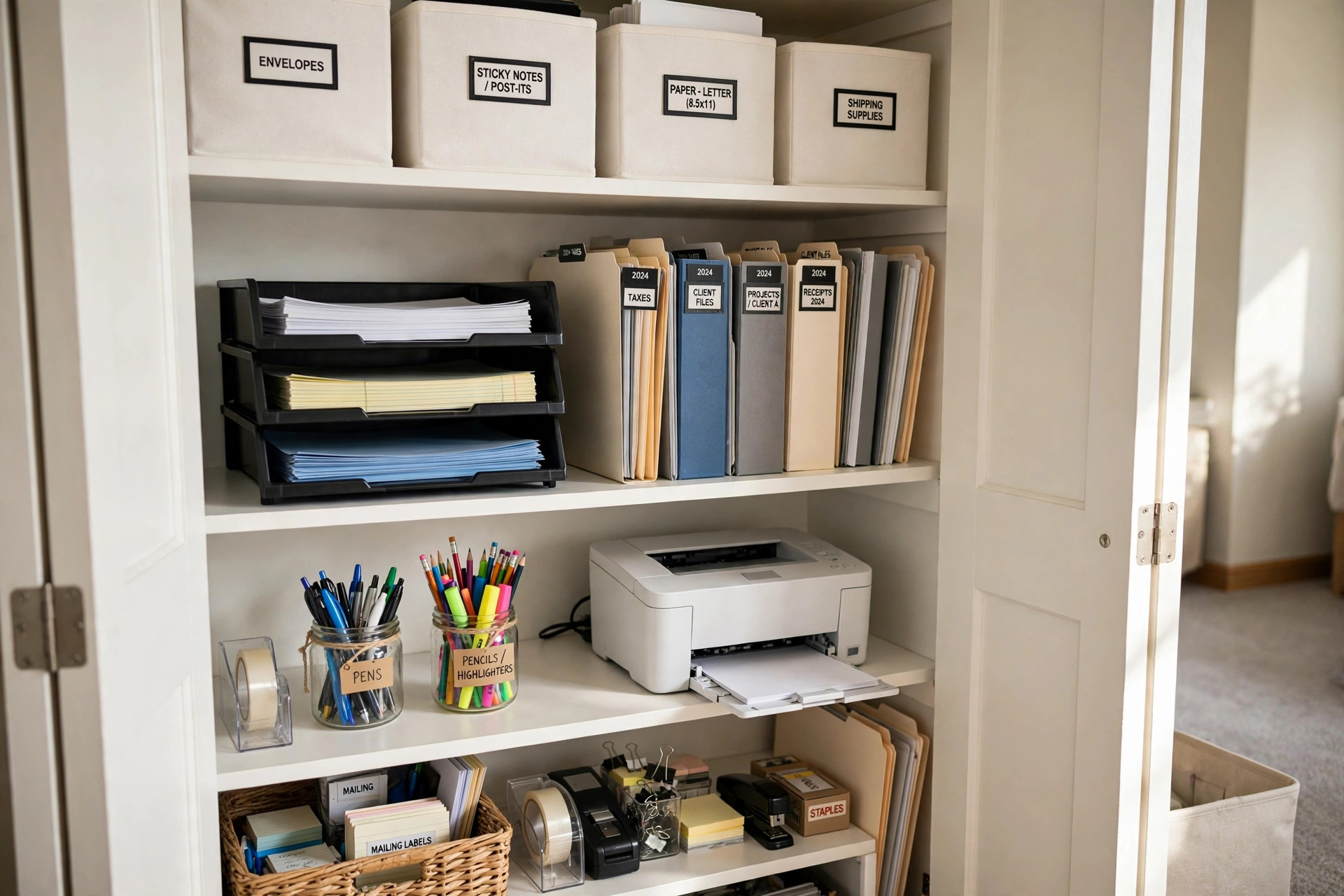

Many people now work from home. They keep pens, paper, folders, and small tools close at hand. Soon the desk fills up. Papers stack in corners. Boxes pile under the table. A home office closet organizer for office supplies solves this problem in a plain way. It turns the closet into a storage wall for all work tools.
A closet already stands in most rooms. Often it holds old coats and forgotten boxes. With the right organizer, that dead space becomes the heart of the home office. This guide explains what to look for, what types exist, what they cost, and how to set one up step by step.
Why a Closet Organizer for Office Supplies Matters
A clean work space helps clear thought. Studies of office life have long shown that clutter slows people down. When you hunt for a stapler for ten minutes, you lose time and calm. A home office closet organizer for office supplies puts every item in one fixed spot. You reach, you find, you work.
It also hides the mess. A guest may step into the room during a video call. A closed closet door keeps the office looking neat. Open it in the morning and your whole supply shelf stands ready.
Money is saved too. When supplies are seen in one place, you stop buying twice. How many times have people bought ink that was already in a drawer? With office supply storage in one closet, nothing hides.
Small homes gain the most. An extra room for a full office is rare. A closet office organizer gives the same service in a fraction of the space. Even a hall closet near the kitchen can serve as a fine work station.
What to Look For When You Choose One: Home Office Closet Organizer for Office Supplies
Measure First, Buy Second
Take a tape measure to the closet. Write down width, depth, and height. Note the door type. Sliding doors limit how far shelves can reach out. A folding door needs swing room. Leave at least two inches of free air around the frame so doors close without rubbing.
Look inside the walls. Many closets have a single rod and one shelf. An organizer kit can replace or build on that frame. If the walls are plaster over brick, you may need special anchors. Mark where studs run with a simple knock test or a stud finder.
Materials That Last
Most home office storage kits come in three materials. Wire shelves are light and cheap. Air moves through them, so dust stays low. But wire marks paper edges and small items fall through the gaps unless you add liners.
Laminated wood panels look like real furniture. They hold heavy files without bending. They cost more than wire, yet they last longer and look neat from the doorway. Solid wood is the strongest and dearest choice. It suits a home office meant to last for years.
Shelf and Drawer Layout
Count your supplies before you shop. List the big things: printer, paper reams, file boxes. Then list the small things: pens, clips, tape, stamps. A good home office closet organizer for office supplies mixes deep shelves for boxes with shallow drawers for small tools.
Adjustable shelves are worth the price. Your needs change. Today you store books. Next year you may need room for a scanner. Pins and brackets that move in one inch steps give the unit a long life.
Types of Closet Organizers
Adjustable Wire Systems
Wire systems hang from a top track fixed to the wall. Shelves and drawers clip onto the track. You can move them in minutes. They suit renters, since the track leaves only small holes. They are light enough for one person to fit in an afternoon. Prices stay low, which suits tight budgets.
Laminate Wood Kits
These kits come in flat boxes with boards, dowels, and screws. Cut sizes are fixed, but many brands sell filler panels for odd widths. The finished unit looks built in. It holds the weight of paper reams without sag. Setup takes a weekend for most people. Good brands publish clear pictures and step charts, much like the guides found on The Spruce and Wirecutter.
Cube and Bin Units
Cubes are simple open boxes that stack in a grid. Slide a cloth bin into each cube for pens or cables. This type fits narrow closets well. It costs less than most fixed systems. The weak point is weight. Stack no more than three high without a wall tie, and keep the heaviest bins at the bottom.
Rolling Carts and Towers
A rolling cart holds a drawer set that slides out of the closet and under the desk. It works best for people who share the room. Close the closet and the tools vanish. Big retailers such as IKEA, Wayfair, and Amazon carry wide ranges of these carts in many sizes.
Cost and Price: What You Should Expect to Pay
A home office closet organizer for office supplies spans a wide price range. A small wire kit for a two foot closet may cost forty to eighty dollars. A mid range laminate system for a standard reach in closet runs one hundred fifty to three hundred fifty dollars. A full custom style wood unit can pass six hundred dollars.
Add small extras to the budget. Shelf liners cost little and stop small items slipping through wire. Drawer dividers keep clips apart from stamps. Label holders turn plain bins into a filing system. These add twenty to sixty dollars in total.
Labor is the hidden cost. A hired handyman may charge one to two hundred dollars for a full fit. Most kits are built for home setup, so many buyers save this money with a free Saturday. Measure twice before you drill once, and the job goes smooth.
Watch for sales at big home stores. Closet lines often drop in price in late summer and after the new year. Buying off season can cut a quarter off the bill. Check reviews on sites like PCMag before you pick a brand, and compare storage focused ranges at The Container Store.
Setting Up Your Organizer Step by Step
Start with an empty closet. Pull out every old box and coat. Sweep the floor and wipe the shelves. Sort your office supplies on the bed or a table. Group like with like. Pens in one pile, paper in another, tools in a third. Throw out dried markers and broken clips.
Fit the kit next. Follow the printed chart one step at a time. Fix the top rail level with a small spirit level. An out of level rail makes every shelf tilt. Drive screws into studs where you can. Use wall anchors where you cannot. Test each shelf with a heavy book before you load it full.
Place items by use. Daily tools go at eye level. Pens, notepads, and the tape roll live on the middle shelf. Weekly items such as envelopes and spare ink sit one shelf down. Rare items like old tax files rest at the top. The printer gets the lowest strong shelf, close to the floor for easy paper feed.
Label every bin and drawer. A label maker is nice, but plain masking tape and a marker work just as well. Labels turn the organizer into a system the whole family can keep. When a child borrows the scissors, the empty labeled bin says where they go back.
Light the closet if it is dark. A small stick on LED bar costs little and runs on batteries. Good light keeps you from misreading labels in the back corners.
A tidy closet pairs well with the rest of the room. For instance, match your new storage to an ergonomic office chair built for tall men, so comfort and order grow together.
Care and Upkeep
Dust the shelves once a month. A damp cloth takes seconds on laminate. For wire, a dry brush works best. Wipe drawer runners now and then so they slide free.
Check screws twice a year. Wood shrinks and swells with the seasons. A quick turn of a screwdriver keeps the unit tight. Look at wall anchors too. If one feels loose, replace it before the shelf carries a full load.
Once a year, clear the whole closet and sort again. Old papers gather fast. Shred what you no longer need. Move dead stock to a box in the attic. A home office closet organizer for office supplies only works when it holds what you use now, not what you used five years ago.
Safety Notes
Keep heavy items low. Paper reams and file boxes weigh more than they look. A top heavy unit can tip if a child climbs it. Fasten tall units to the wall with the straps that come in the box.
Mind the printer and small machines. They need air space around them to cool. Do not push boxes tight against a warm printer. Keep paper away from direct heat.
Cords need care. Run power strips along the back wall, not across the floor. Use short cords where you can. If the closet holds a lamp or charger, check that no cord pinches in the door. Designers at Herman Miller and Steelcase have long shown that safe cable paths are part of a good work space, and the same care applies inside a closet. For sit stand setups, makers like UPLIFT Desk also stress tidy cable routing.
Frequently Asked Questions
Will a closet organizer fit a very small closet?
Yes, in most cases. Kits start at eighteen inches wide. Measure the inner width at three heights, since walls are rarely straight. Pick a kit a half inch smaller than the tightest measure. A filler strip can close the gap at the side.
Can renters install one without damage?
Wire track systems are the safest choice for renters. They need only a few small screw holes, which fill with putty at move out. Freestanding cube units need no holes at all. Check your lease first, as some landlords bar any wall fixings.
How much weight can the shelves hold?
It depends on the system. Wire shelves fixed to studs often hold twenty five pounds per foot. Laminate wood shelves hold thirty to fifty pounds per foot when set on proper brackets. Always read the maker chart. When in doubt, spread the load and keep the heaviest boxes on the floor.
Do I need a work light inside the closet?
Most closets are too dark for reading labels. A battery LED bar or a small plug in strip light solves it. Stick it to the under side of the top shelf. It costs little and makes daily use far easier.
Can I use the closet for both coats and office supplies?
You can, but it weakens the system. Coats take hanging room that shelves need. A split layout works in a wide closet: one side rods for coats, one side shelves for supplies. In a narrow closet, choose one use and do it well.
What pairs well with a closet office for laptop work?
If you often move around the house with a laptop, a small adjustable height coffee table for laptop work makes a fine side station. It gives you a second spot when the closet desk area feels tight. For wooden chairs, an ergonomic seat cushion adds comfort during long typing days.
A Final Word
A home office closet organizer for office supplies is a small change with a large payoff. It costs less than a new desk. It takes one weekend to fit. It gives every pen, folder, and tool a fixed home. The desk stays clear. The mind stays calm. Work starts faster each morning.
Begin with the tape measure. List what you own. Pick a system that fits the space and the budget. Set it up with care, label it, and keep it light. The closet that once held forgotten boxes will become the quiet engine of your home office.
References
Amazon. (n.d.). Online shopping. https://www.amazon.com Herman Miller. (n.d.). Office furniture and ergonomic seating. https://www.hermanmiller.com IKEA. (n.d.). Home furnishings. https://www.ikea.com PCMag. (n.d.). Technology product reviews. https://www.pcmag.com Steelcase. (n.d.). Office furniture and workplace research. https://www.steelcase.com The Container Store. (n.d.). Storage and organization products. https://www.containerstore.com The Spruce. (n.d.). Home and garden advice. https://www.thespruce.com UPLIFT Desk. (n.d.). Standing desks and ergonomic office furniture. https://www.uplift-desk.com Wayfair. (n.d.). Furniture and home goods. https://www.wayfair.com Wirecutter. (n.d.). Product reviews from The New York Times. https://www.nytimes.com/wirecutter
Was this guide helpful?

About Robert Taylor
The My Garden US editorial team writes practical, in-depth home and garden guides for American homeowners — tested advice, no fluff.
You May Also Like
Ergonomic Balance Board for Standing Desk Use: A Plain Guide
March 28, 2026 0 views
Home Office Curtain Backdrop for Video Calls
May 23, 2026 0 views
Small Desk for Bedroom Corner With Shelves: A Complete Buying Guide
February 14, 2026 0 views