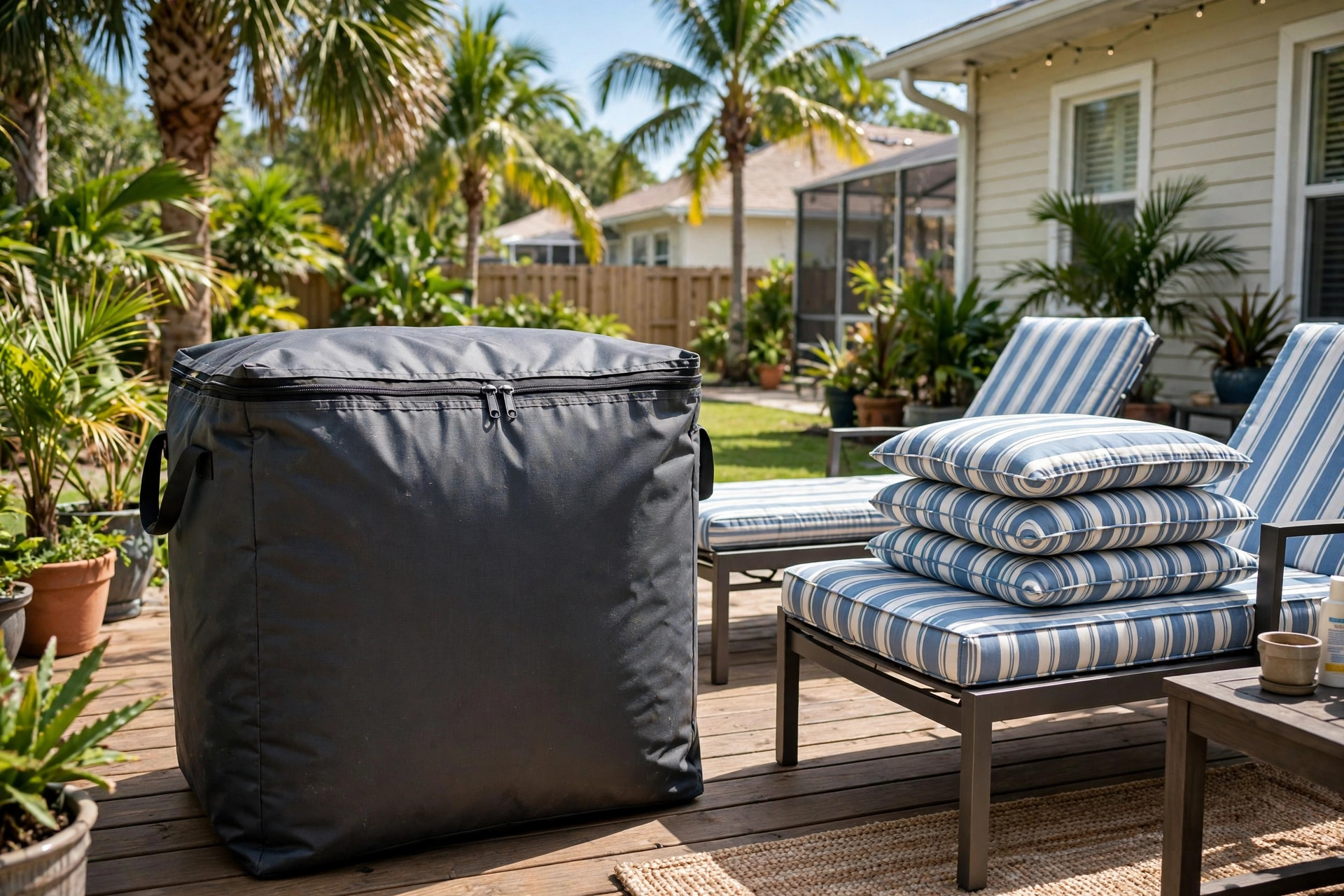

Anyone who lives in Florida knows that a sunny morning can turn into a heavy storm by noon. Patio cushions left outside soak through in minutes. The best patio cushion storage bags for florida homes solve this problem in a simple way. They keep cushions dry, clean, and out of the sun until you need them again. This guide explains what to look for, how much to spend, and how to keep the bags in good shape for years.
Why Good Storage Bags Matter in Florida
Florida presents a special set of challenges for outdoor cushions. The heat is strong. The humidity rarely drops. Afternoon storms arrive with little warning. Salty air drifts inland from the coast. Each of these factors wears cushions down.
Mildew is the most common enemy. It grows fast in warm, damp air. A cushion that sits damp for a day or two can develop a musty smell and dark spots. Once mildew sets into the foam, it is hard to remove. A dry storage bag keeps moisture out and gives the cushion a chance to stay clean.
Sunlight causes damage too. The Florida sun fades fabric colors in a single summer. Constant exposure also weakens the fibers. When cushions rest in a bag between uses, they avoid hours of direct sun each week. This small habit can add years to their life.
Sudden rain is another concern. Many homeowners set their cushions out in the morning and forget about them. A storm cell moves in, and by the time they reach the patio, the cushions are soaked. A large storage bag with sturdy handles lets one person carry all the cushions inside in a single trip. Speed matters in these moments.
There is also the question of space. Florida homes often have small lanais or limited garage space. A bag that holds four to six cushions takes up less room than loose cushions scattered across a shelf. It keeps the storage area neat and makes it easy to find everything when guests arrive.
What to Look for When You Choose a Bag: Best Patio Cushion Storage Bags for Florida Homes
Not every storage bag suits Florida weather. Shoppers should check five features before they buy.
Weatherproof Material
The fabric of the bag must block rain and resist humidity. Heavy-duty polyester with a waterproof backing is the most common choice. Polyethylene fabric, the kind used for tarps, is even tougher but less attractive. Some bags use canvas with a water-repellent coating. Canvas looks nice but may need recoating each year.
Check the seams. Stitched seams let water seep through under heavy rain. Heat-sealed or taped seams hold out water far better. If the product page does not describe the seams, treat that as a warning sign.
The Right Size
Measure your cushions before you shop. Most patio chair cushions run 20 to 24 inches wide and 18 to 22 inches deep. Lounge chair cushions can stretch 48 to 72 inches long. Many storage bags list their capacity by the number of standard cushions they hold. A bag that claims to hold six cushions may only fit four thick ones.
It is better to buy a bag that is slightly large than one that is too small. Forcing cushions into a tight bag strains the zipper and wears out the fabric. Loose cushions also trap more air, which can hold moisture. Aim for a snug but comfortable fit.
Strong Closures
Zippers are the weak point of most bags. Look for wide, heavy-duty zippers with large pulls. Metal zippers last longer than plastic in salty air, though they cost more. Double zippers, the kind that meet in the middle, give a tighter seal than a single zipper.
Some bags use roll tops or buckle straps instead of zippers. These close tight and have no zipper to jam. They are worth considering if you store cushions for months at a time, such as during the summer storm season.
Handles and Carry Straps
You will move the bag often. Wide handles spread the weight and feel better in the hand. Reinforced stitching at the handle base prevents tears. Some large bags include shoulder straps or backpack-style straps for easier carrying. Wheeled models exist for very large cushion sets.
Ventilation
A fully sealed bag traps humid air inside. A small vent or mesh panel lets the bag breathe. This feature matters most if you store cushions that are slightly damp. A vent keeps the air moving and slows mildew growth. Look for vents placed near the top of the bag, where warm air rises.
For more background on humidity-related storage needs, see our guide to bags made for humid climates.
Types of Patio Cushion Storage Bags
Storage bags come in several styles. Each one suits a different need.
Basic Zip Bags
These are simple fabric bags with a single zipper. They cost little and work fine for dry garages and covered patios. They do not stand up to direct rain or long outdoor storage. They are a good pick for homeowners who bring cushions inside every night.
Waterproof Deck Bags
Deck bags use thick, coated fabric and sealed seams. They can sit on an uncovered deck or dock through a storm. Many include tie-down loops so they do not blow away in wind. They cost more than basic bags but serve well in open Florida backyards.
Vacuum Storage Bags
Vacuum bags shrink bulky cushions down to a flat package. They save a great deal of space. They work best for seasonal storage, such as putting winter cushions away. They are less handy for daily use, since each packing and unpacking takes several minutes. Florida homeowners who use their patios year-round may find them slow.
Storage Benches and Boxes
Some buyers prefer a rigid box over a soft bag. A deck box with a hinged lid holds cushions and doubles as extra seating. Quality deck boxes cost far more than bags, but they last many years. Readers who want a broader view can look at Frontgate for ideas.
If price is your main concern, our side-by-side price comparison of patio cushion storage bags breaks down what each price tier buys.
Cost and Price Ranges
Prices vary with size, material, and brand. The ranges below reflect typical United States prices in recent years.
Budget bags, 15 to 30 dollars. These are thin polyester bags with basic zippers. They protect against dust and light moisture. They suit indoor storage in a garage or shed.
Mid-range bags, 30 to 60 dollars. This is the sweet spot for most Florida homes. Bags in this range use heavier fabric, stronger zippers, and sometimes sealed seams. Many include handles and vents. A mid-range bag used with care can last three to five years.
Premium bags, 60 to 120 dollars. Premium bags use commercial-grade fabric, metal zippers, and fully taped seams. Some are rated to sit outdoors through storms. They often carry longer warranties.
Deck boxes and rigid storage, 100 to 400 dollars. These are not bags, but many shoppers compare them. They last longer and look better on a finished patio. The higher price buys a permanent solution.
Shipping costs add up on large bags. Look for sellers that offer free shipping on bulky items. Our full reviews and buying guide covers current models in each price band.
Value does not always mean the cheapest price. A 25-dollar bag that fails in one season costs more over time than a 50-dollar bag that lasts four seasons. Check return policies before you buy. Major home improvement retailers such as Www.homedepot.com and Lowe’s let buyers inspect bags in person, which helps avoid sizing mistakes.
Care and Upkeep of the Bags Themselves
A storage bag needs some care to last. The steps are simple and take little time.
Clean the fabric twice a year. Wipe the outside with a damp cloth and mild soap. Rinse and let it dry fully in the shade. Harsh cleaners can strip water-repellent coatings, so keep the soap mild.
Dry cushions before packing. The most common cause of mildew is a cushion that went into the bag damp. If cushions feel wet after rain, stand them on edge in the sun for an hour before storing. This single habit prevents most odor problems.
Check zippers each season. Run the zipper up and down and look for stuck teeth. A little candle wax rubbed on the teeth keeps them moving smoothly. Replace the bag if the zipper splits, since a broken zipper ruins the seal.
Store the bag in shade when empty. Ultraviolet light weakens fabric over time. If the bag sits on the deck empty, toss it in the garage or under a cover. Small steps like this extend its life.
Refresh water repellent. Canvas and coated bags lose their repellent finish after a year or two in Florida weather. Spray-on water repellent, sold at outdoor stores, restores the finish in minutes. Apply it outside on a dry day and let the bag air out before use.
For more tips on keeping outdoor fabrics fresh, Www.thespruce.com publishes seasonal cleaning guides that pair well with these steps. Homeowners who enjoy hands-on projects may also like the Family Handyman covered by Family Handyman, including wooden cushion chests that complement soft bags.
Safety Notes
Storage bags are safe products, but a few points deserve care.
Keep bags away from heat. Do not store bags near grills, fire pits, or outdoor heaters. Most bag fabrics melt or catch fire at high heat. Give grills at least three feet of clearance.
Do not let children play inside large bags. Oversized bags can pose a suffocation risk to small children. Store large bags zipped shut and out of reach when not in use.
Watch for pests. Sealed bags can shelter insects and lizards in Florida. Shake the bag out before packing cushions after long storage. A quick inspection takes seconds and avoids surprises.
Check for mold on first use. New bags sometimes carry a factory smell. Air the bag out for a day before the first use. If the bag smells strongly of chemicals after a week, return it and choose another brand.
Frequently Asked Questions
How many cushions fit in a standard storage bag?
A standard bag holds four to six regular chair cushions, or two to three lounge cushions. Thick cushions take more room. Always check the listed dimensions and compare them with your own cushions.
Can I leave the bag outside all summer?
Waterproof deck bags are built for outdoor use and can stay outside through the storm season. Basic zip bags are not. They belong in a garage, shed, or covered lanai. Read the product rating before you leave any bag in the open.
Will a storage bag stop mildew completely?
No bag can stop mildew if the cushion goes in wet. The bag keeps outside moisture away, but trapped dampness still grows mold. Dry cushions fully before packing, and use a bag with a vent for extra safety.
What size bag do I need for a six-piece patio set?
A six-piece set usually needs two large bags, or one extra-large bag made for full sets. Measure the largest cushion and buy a bag at least four inches longer on each side. Two medium bags are often easier to carry than one giant one.
Are expensive bags worth the money in Florida?
In Florida, yes, more often than in dry states. The humidity, sun, and storms punish cheap fabric fast. A mid-range bag around 40 to 50 dollars usually gives the best balance of cost and life for a typical Florida home. Budget shoppers can still find solid value; our Www.ikea.com links to affordable IKEA worth a look, and Www.containerstore.com carries a wide range of The Container Store at fair prices.
Where should I store the bag during a hurricane?
Bring bags indoors before a storm. No storage bag survives hurricane winds or flooding. Move cushions and bags into a garage, an interior room, or a sturdy shed. Tie-down loops help in tropical-storm gusts, but they are not a match for a hurricane.
A Final Word
The best patio cushion storage bags for florida homes do not need to be costly or fancy. They need to block water, resist humidity, and hold up to daily use. Measure your cushions, pick a bag with strong seams and zippers, and build the habit of packing cushions away before storms roll in. Your cushions will stay clean, bright, and comfortable for many seasons. And if you are furnishing a new patio, Www.wayfair.com offers many Wayfair that work well alongside soft bags, while Polywood makes Polywood designed to handle the same Florida climate. For readers working with tight lanai space, Www.apartmenttherapy.com has thoughtful small-patio layouts that pair nicely with compact storage solutions.
References
Apartment Therapy. (n.d.). Home design ideas and inspiration. https://www.apartmenttherapy.com Family Handyman. (n.d.). DIY home repair and maintenance. https://www.familyhandyman.com Frontgate. (n.d.). Outdoor furniture and decor. https://www.frontgate.com IKEA. (n.d.). Home furnishings. https://www.ikea.com Lowe’s. (n.d.). Home improvement products. https://www.lowes.com Polywood. (n.d.). Outdoor furniture. https://www.polywood.com The Container Store. (n.d.). Storage and organization products. https://www.containerstore.com The Home Depot. (n.d.). Home improvement products. https://www.homedepot.com The Spruce. (n.d.). Home and garden advice. https://www.thespruce.com Wayfair. (n.d.). Furniture and home goods. https://www.wayfair.com Www. (n.d.). Home and garden information. https://www
Was this guide helpful?

About Jennifer Lee
The My Garden US editorial team writes practical, in-depth home and garden guides for American homeowners — tested advice, no fluff.
You May Also Like
How to Buy Heavy Duty Wire Shelving Online in Florida
May 7, 2026 0 views
Basement Shelving Units Price Comparison USA: A Practical Guide to Costs and Choices
February 27, 2026 0 views
Kids Closet Organizers Reviews and Buying Guide
May 11, 2026 0 views