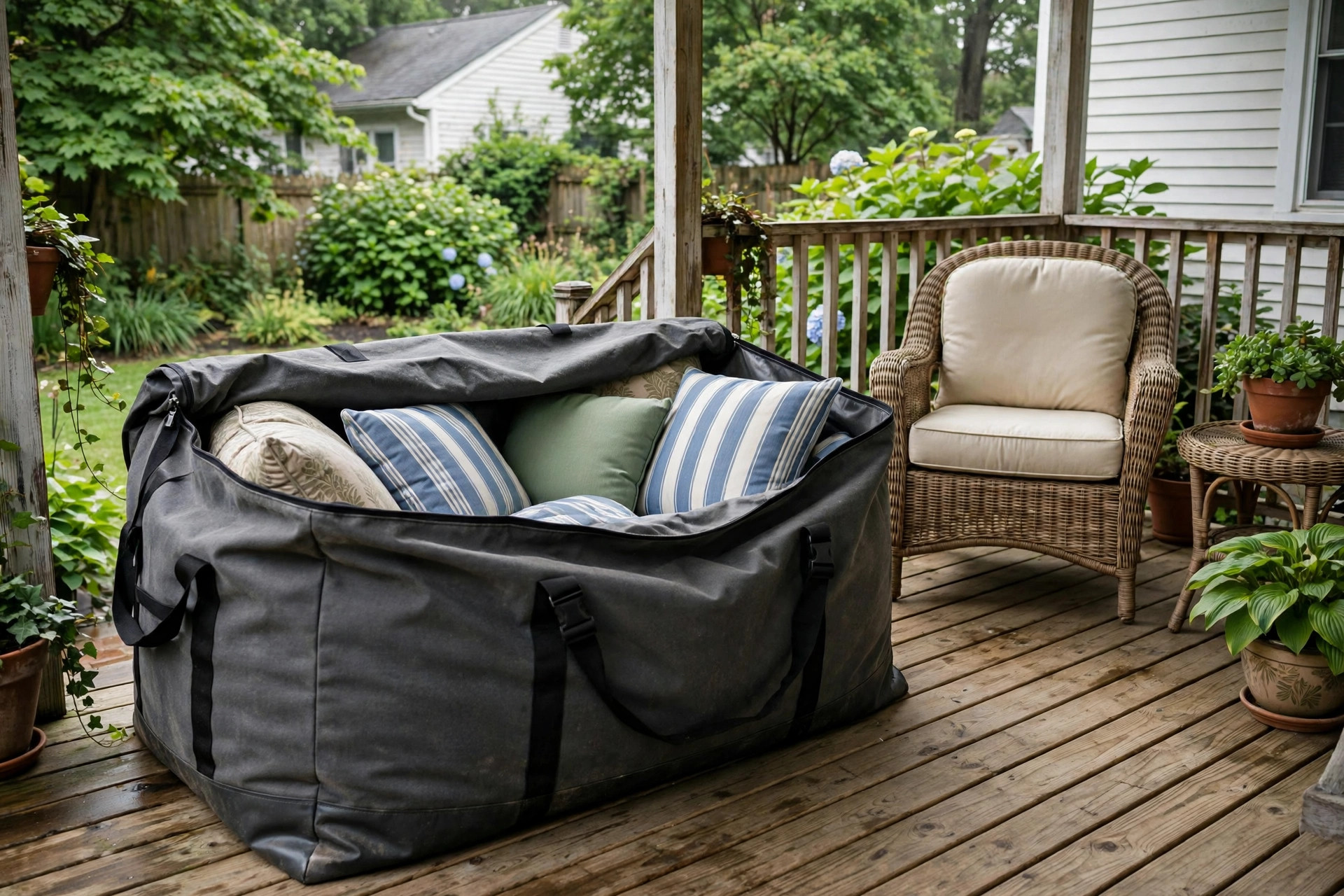

If you own patio furniture in a damp region, you need the best patio cushion storage bags for humid climates. Thick summer air does not give cushions a rest. Morning dew soaks into foam before you finish your coffee. A warm rain leaves seats wet for days. Left outside, a good cushion can turn gray, smell sour, and grow mold in a single season. A proper storage bag stops that damage. It holds out rain, cuts off damp air, and gives your cushions a dry place to wait out the wet months. This guide explains how these bags work, what to look for, and how to pick the right one for your home.
Why Damp Air Ruins Patio Cushions
Most patio cushions are built from open-cell foam wrapped in fabric. The foam acts like a sponge. It takes in water and holds it deep inside, where sun and wind cannot reach. In dry air the moisture escapes. In humid air it stays. Damp foam breeds mold and mildew. The cushion starts to smell. Stains appear that no wash can remove. The fabric weakens and tears. A cushion that cost good money becomes trash within two years.
Storage bags break this cycle. A sealed bag keeps rain off the cushion. A water-resistant fabric blocks the damp air around it. Inside the bag, the cushion stays at a steady dry state. You do not fight mold every spring. You open the bag, shake out the cushions, and sit down. Retail guides like Target’s outdoor storage section show how many households now treat cushion bags as part of regular patio care rather than an extra.
The savings add up. A full set of replacement cushions for a sofa and two chairs can cost several hundred dollars. A set of good storage bags costs a fraction of that. One avoided replacement pays for the bags many times over. Storage advice from The Container Store puts it plainly: protecting what you own is cheaper than buying it again.
What to Look For When You Choose: Best Patio Cushion Storage Bags for Humid Climates
Not every bag sold for cushions can stand up to real humidity. The best patio cushion storage bags for humid climates share a set of features. Learn them before you shop.
Water-resistant or waterproof fabric. The bag shell is the first line of defense. Look for polyester or Oxford fabric with a sealed coating. Polyester resists rot. Coated fabrics shed rain instead of soaking it up. Cheap woven bags let water through and then trap it inside, which is worse than no bag at all. Home improvement guides from Bob Vila stress that a bag’s fabric rating matters more than its price.
Sealed seams and a strong zipper. Water finds every weak point. Seams that are only stitched will leak in a hard rain. Better bags use sealed or taped seams. The zipper should be heavy duty, and a flap over the zipper keeps driving rain from working through the teeth. Test the zipper in the store if you can. A bag you cannot close well is no bag at all.
Breathable vents. This sounds strange for a waterproof bag. Yet in humid air, a fully airtight bag can sweat. Warm days and cool nights make moisture form inside a sealed space. Small mesh vents placed high on the bag let humid air escape while keeping rain out. Some designs pair vents with a water-repellent flap. Product tests at Consumer Reports often note ventilation as the difference between a bag that works in the South and one that works only in dry states.
Right size and shape. Measure your cushions before you buy. A bag that is too small crushes the foam. Crushed foam loses its spring and never fully comes back. A bag that is far too large lets cushions slide and fold. Most makers sell bags in chair, loveseat, and sofa sizes. Buy the size that fits with a few inches to spare. If your set has odd shapes, a roomy rectangular bag beats a tight fitted one.
Handles and structure. Full bags are heavy. Wide stitched handles make the carry from patio to garage a safe job. Some bags hold their shape with light internal frames. These stand open while you load them, which saves time and temper. Storage experts at Apartment Therapy recommend handles on at least two sides so two people can share a heavy load.
UV resistance. Bags often sit in sun between uses. Cheap fabric breaks down in sunlight and cracks within a year. A bag rated for outdoor use will hold up for several seasons. Check the label for UV protection or outdoor-grade material.
Mold-resistant lining. Some premium bags add an inner lining treated against mildew. This gives extra cover if a cushion goes in slightly damp. It does not replace drying, but it buys you margin for error.
Types and Options
Storage bags come in several styles. Each fits a different need.
Zip-Closure Cushion Bags
These are the most common type. A heavy fabric box with a zip lid opens wide so you can stack cushions inside. They hold two to six cushions depending on size. They work well for chair and sofa sets. Most of the top sellers on large retail sites like Amazon and Walmart follow this simple design.
Vacuum-Seal Bags
Vacuum bags shrink cushions by pulling air out with a vacuum cleaner. They save a lot of space in a shed or closet. They suit renters and small homes. But they have a trade-off. Long months of compression can flatten foam. Reserve them for short storage or for thin cushions. For thick foam in humid climates, a standard bag keeps the shape better.
Trunk and Deck Boxes
A hard trunk or deck box doubles as patio seating or a side table. It holds cushions and keeps them ready at arm’s length. Trunks cost more and take floor space. They suit homeowners who want fast daily access during the season and who store cushions elsewhere in winter. Outdoor catalogs at Wayfair list many models with weather-rated seals.
Duffel-Style Bags
Long duffel bags carry seat cushions laid flat or rolled. They are easy to drag through a narrow garage door. Their round shape leaves dead space. They work best for single chairs or a pair of loungers.
Heavy-Duty Tarp Bags
Tarp-style bags use thick woven material with roll-top closures. They are cheap and very tough. They lack vents and shaped lids, so air flow is poor. In humid regions they need extra drying steps. Use them as a second line of defense or for short moves.
For most humid-climate homes, the zip-closure bag with vents wins. It balances protection, air flow, and price. Shoppers comparing models on IKEA often land on this type for year-round use.
Cost and Price
Prices run on a clear scale. Small single-cushion bags start around ten to fifteen dollars. Medium bags that hold a loveseat set run twenty to forty dollars. Large sofa-size bags with sealed seams and vents run forty to eighty dollars. Premium models with mold-resistant lining and frames can pass one hundred dollars.
Do not judge a bag by price alone. A thirty-dollar bag with sealed seams beats a sixty-dollar bag with open stitching. Read the label. Look for fabric weight in denier or ounces. Higher numbers mean thicker cloth. Ask about seam sealing. Check return policies before you buy several.
Sets and bundles can save money. Many sellers offer two or three bags as a kit. A kit covers a full seating group at a lower cost per bag. Just confirm each bag in the kit has the same quality. Some kits pair one good bag with two thin ones.
Season matters. Prices drop in late fall when stores clear patio stock. Buy then if you can plan ahead. Cleaning guides from Good Housekeeping often remind readers to pair off-season purchases with a deep clean of the cushions themselves.
Care and Upkeep
A bag only works if the cushions going in are dry. Follow this routine each time you store.
Dry cushions fully. Set them in sun and wind for several hours. Press the foam with your hand. If you feel any dampness, give it more time. Do not bag a cushion that feels cool or heavy. Hidden moisture is the main cause of mold in storage.
Clean before you store. Brush off dirt, pollen, and leaves. Spot-clean stains with mild soap and water. Let the cushion dry after washing. Stains set in during long storage, so a small effort now saves a cushion later.
Add moisture absorbers. Drop one or two silica gel packs or a tub of moisture absorber into each bag. They pull stray dampness from the trapped air. Replace them each season. They are cheap and they work.
Store bags off the floor. Set bags on a shelf, pallet, or rack. Garage and shed floors collect water. Cold concrete can make moisture form under the bag. A few inches of air under the bag make a big difference.
Check monthly. Open each bag once a month during the damp season. Feel for moisture. Smell for mildew. A quick check catches trouble early, when a day in the sun still fixes it. Leave the bag open for an hour to air out, then close it again.
Repair small damage. A torn seam or broken zipper is a small job if you catch it fast. Patch kits for outdoor fabric are sold at most hardware stores. A bag with a failed closure should not go back into service until it is fixed.
If you keep cushions in a spare room or closet indoors, the same rules apply on a lighter scale. Indoor air in humid regions still carries moisture. A bag with a vent keeps the balance right.
Safety
Mold is not just a smell problem. Mold spores can irritate eyes, noses, and lungs. People with asthma or allergies feel it first. Children playing on moldy cushions can develop rashes or breathing trouble. Never ignore a musty bag. If a cushion grows mold, take it outside before you open the bag so spores do not spread through the house.
Work with gloves when you clean mold. A mask helps in bad cases. Wash your hands after. If mold has grown deep into foam and will not wash out, replace the cushion. Foam is cheap compared to a doctor visit.
Keep bags away from heat sources. Do not store them against a furnace, water heater, or hot exhaust vent. Fabric bags can melt or catch fire. Keep them clear of sharp tools that could tear the shell.
Lift with care. A large bag full of wet-season cushions can weigh more than you expect. Bend your knees. Ask for help when the bag is heavy. Two-person handles exist for a reason.
FAQ
How long can cushions stay in storage bags?
With dry cushions and monthly checks, a full season is fine. Many owners store cushions for five or six months each year. In very damp regions, open the bags on dry days to let fresh air in. Change the moisture absorbers halfway through the season for best results.
Do storage bags work in covered but open porches?
Yes, with care. A covered porch keeps rain off but lets humid air flow through. A sealed bag with vents handles this well. Keep bags away from the open edge where wind drives rain sideways. If storms hit your area, move bags further inside or into the house.
Can I store cushions that are slightly damp?
It is better not to. Even a little moisture can start mold in a closed bag. If you must store quickly before rain, add extra moisture absorbers and open the bag at the first dry day. Sun and air are the only real cure for damp foam.
Are expensive bags always better for humid climates?
Not always. The features matter more than the price tag. Sealed seams, a good zipper, vents, and thick fabric decide the outcome. Some mid-price bags carry all of these. Some costly bags charge for style and add little function. Read labels and reviews before you decide.
How many bags do I need for a full patio set?
Count your cushions, then match bags to their size. A typical set of a sofa, two chairs, and a coffee table needs two to three bags: one large for the sofa cushions, one medium for the chairs. Measure each cushion and buy bags with a few inches of extra room.
Should bags stay outside all year?
It depends on your climate and the bag. In mild regions with short wet seasons, a good bag can stay on the porch year round. In regions with long rainy seasons or hard freezes, move bags into a garage or shed. Even the best fabric lasts longer out of the worst weather.
A Final Word
The best patio cushion storage bags for humid climates are not a luxury. They are cheap insurance for furniture you already own. Pick a bag with water-resistant fabric, sealed seams, a strong zipper, and a vent. Dry your cushions before they go in. Check them once a month. Do that, and your cushions will come out of storage as fresh as the day you packed them, season after season. If your garage also holds work gear, a garage workbench with storage keeps tools close while the bags keep cushions safe. For soft goods elsewhere in the house, space saving fabric storage cubes handle blankets and linens, and a mudroom storage bench gives wet-season gear a dry home of its own.
References
Amazon. (n.d.). Online shopping. https://www.amazon.com Apartment Therapy. (n.d.). Home design ideas and inspiration. https://www.apartmenttherapy.com Bob Vila. (n.d.). Home improvement advice. https://www.bobvila.com Consumer Reports. (n.d.). Product reviews and ratings. https://www.consumerreports.org Good Housekeeping. (n.d.). Product reviews and home advice. https://www.goodhousekeeping.com IKEA. (n.d.). Home furnishings. https://www.ikea.com Target. (n.d.). Retail store. https://www.target.com The Container Store. (n.d.). Storage and organization products. https://www.containerstore.com Walmart. (n.d.). Everyday low prices. https://www.walmart.com Wayfair. (n.d.). Furniture and home goods. https://www.wayfair.com
Was this guide helpful?

About David Wilson
The My Garden US editorial team writes practical, in-depth home and garden guides for American homeowners — tested advice, no fluff.
You May Also Like

Buy Under Sink Organizers Online in Colorado: A Simple Guide
May 30, 2026 0 views
A Practical Bathroom Vanity Organizers Price Comparison USA Shoppers Can Trust
October 1, 2026 0 views
Linen Closet Organizers: Reviews and Buying Guide
May 27, 2026 0 views