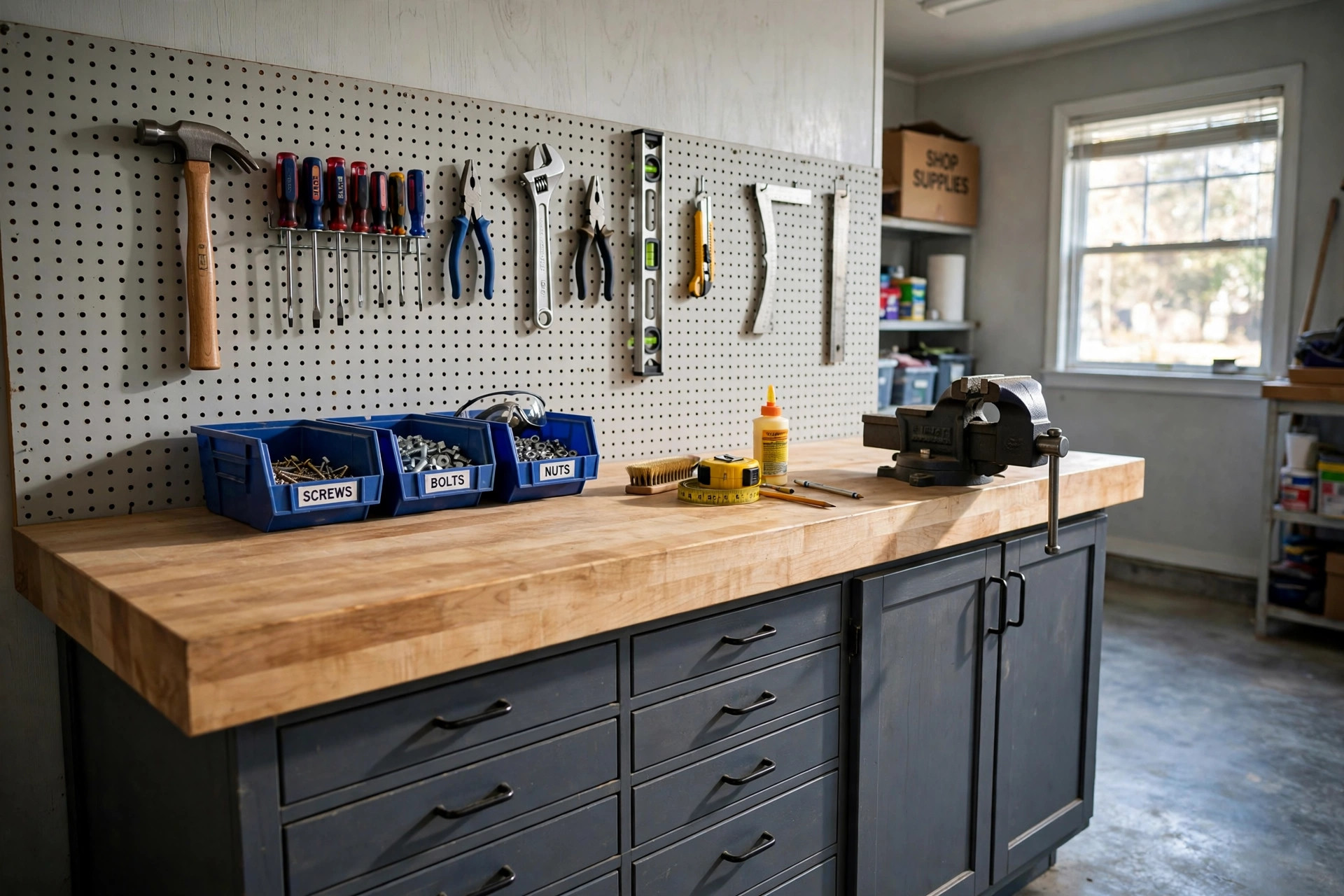
A good workbench is the heart of a garage shop. Every repair, every small build, and every weekend project starts there. This garage workbench with storage reviews and buying guide will help you choose one with care. It explains the main types, the features that matter, the prices you can expect, and the upkeep that keeps a bench solid for years. Whether you fix cars, build shelves, or only hang pictures now and then, the right bench makes the work easier and safer.
Why a Workbench With Storage Matters
A bare bench is only half a work station. Tools must go somewhere. Screws, clamps, oil cans, and hand tools pile up fast. When the top is crowded, work slows down. When tools lie in drawers and bins, you can find them in seconds.
A workbench with storage joins two needs in one unit. The top gives you a flat, strong surface. The drawers, shelves, and cabinets below hold your gear. The floor stays clear. Trips and falls become less likely. The garage looks neat, and a neat shop is a safer shop.
Storage also guards your tools. Metal tools rust in damp air. Blades dull when they bang together in a box. A drawer with dividers keeps each tool apart. A cabinet with doors keeps out dust. Many benches come with a pegboard wall organizers price comparison usa panel above the back edge, so hand tools hang in plain sight. Small parts stay in bins that slide into labeled drawers.
For people who share a garage with parked cars, a bench with storage matters even more. Space is tight. Every square foot counts. One unit that holds both the work surface and the supplies beats a plain table plus three loose boxes.
How to Choose the Right Workbench: Garage Workbench with Storage Reviews and Buying Guide
Start with size. Measure the wall or corner where the bench will stand. Leave room to walk around it and to open car doors. Most home benches are four, five, or six feet wide. The top is usually two feet deep. Height runs from 30 to 38 inches. Taller workers may want 36 inches or more to save their backs.
Think about the work you will do. Light work, such as model building or small repairs, needs only a modest bench. Heavy work, such as engine repair or wood cutting, needs a thick top and a strong frame. If you will pound, hammer, or clamp, pick a top at least an inch and a half thick. Solid maple, beech, or laminated hardwood tops are the classic choice. Steel tops suit greasy automotive work because they wipe clean.
Check the frame. Wood legs are quiet and kind to floors. Steel tube legs hold more weight and adjust to uneven floors with leveling feet. A frame rated for 500 pounds or more handles most home jobs. Bolted joints last longer than simple screws, though good screws in hardwood still serve well.
Storage layout is the next big choice. Ask what you own. Deep drawers fit drills and sanders. Shallow drawers suit wrenches and screwdrivers. Open shelves hold paint cans and oil bottles. A cabinet with doors hides the mess. A mix of drawers and shelves is the most useful plan for most shops.
Look at the back and sides. A back pegboard holds hammers, pliers, and squares. Side shelves hold parts bins. A lower shelf gives bulk storage for heavy items such as battery chargers. Some benches include a power strip on the back rail, which is a fine touch if you run many small tools.
Think about the future. A modular bench that takes add-on drawers or a second cabinet grows with your shop. Brands that sell parts for years are a plus. Many shoppers start by reading best workshop tool chests for american homes to compare storage styles before they pick a bench.
Types of Garage Workbenches With Storage
Makers sell several broad types. Each fits a different kind of shop.
Steel drawer benches. These have a metal top or a wood top over a bank of steel drawers. They look like the rolling cabinets in auto shops, only wider and fixed. The drawers glide on ball bearings and lock with one key. They suit mechanics and anyone with many hand tools. The main drawback is cost. Steel drawer benches run higher than plain wood benches.
Wood cabinet benches. These pair a hardwood top with wood cabinets and drawers below. They look fine in a garage that doubles as a laundry or hobby room. Wood drawers slide on wood runners or metal slides. They hold plenty, though they do not take the abuse of a full metal shop bench.
Open-shelf benches. The frame holds one or two open shelves under the top. They are cheap, simple, and strong. You add your own bins and boxes. They suit garden tools and bulky supplies. For small items, add your own drawers or check guides like where to buy garden tool organizers in texas for bin ideas.
Fold-down and mobile benches. Fold-down benches mount to the wall and fold flat when not in use. They suit one-car garages. Mobile benches ride on locking casters, so you can roll the work to the driveway. Storage is usually lighter on these, since heavy drawers would tip a small frame.
Workbench-and-hutch combos. A hutch is a raised cabinet that sits on the back of the bench. It adds shelves and small drawers above the work surface without taking floor space. It is ideal for small parts, glues, and finishes.
Trusted home sites carry wide ranges. Shoppers often compare models on Home Depot and Lowe’s, where both wood and steel benches are listed with load ratings. Design ideas for organizing the rest of the shop appear at The Spruce and Apartment Therapy.
Cost and Price Guide
Prices spread wide. A simple open-shelf bench of two-by-fours and plywood can cost under 150 dollars in lumber. Store-bought open benches run from 120 to 350 dollars. They are the budget pick and still serve light duty well.
Mid-range benches cost 300 to 800 dollars. This band holds most wood cabinet benches and entry steel drawer benches. You get a solid top, decent drawer slides, and a load rating of 500 to 1,000 pounds. For most home shops, this band is the sweet spot. Buy the best bench you can afford here rather than a cheap bench you will replace.
Heavy steel drawer benches cost 800 to 2,000 dollars and up. They suit serious hobbyists and small pro shops. Thick tops, full-extension ball-bearing drawers, and 1,500-pound frames are common. The price hurts once, but the bench may outlast the car.
Watch for hidden costs. Delivery fees add up on heavy units. A bench that ships flat will need an hour or two of assembly. Anchoring kits, pegboard hooks, and drawer liners add 30 to 100 dollars. Power strips and task lights add more. Some stores run free delivery events, so timing your purchase can save real money.
Price also depends on materials. Solid maple tops cost more than pressed wood tops. Ball-bearing slides cost more than friction slides. Locking drawers add to the bill but pay back in security. Read buyer reviews before you order. Sites such as Wayfair, IKEA, and The Container Store show photos and ratings from real buyers, which help you judge build quality.
Care and Upkeep
A workbench lasts decades with simple care. Start with the top. Wood tops drink up oil and glue. Seal a wood top with boiled linseed oil or a hard wax. Reapply once a year. Wipe spills the same day. A thin sacrificial sheet of hardboard on top saves the wood from cuts and burns, and you can swap it when it wears out.
Keep drawer slides clean. Dust and metal shavings jam them. Vacuum the slides twice a year and add a drop of dry lubricant. Do not overload drawers beyond their rating. A sagging drawer bends its slides and never runs right again.
Tighten bolts yearly. Wood shrinks and swells with the seasons. Bolts loosen. A loose frame wobbles and stresses joints. Walk around the bench with a wrench each spring and snug every bolt.
Fight rust and damp. Garages breathe moist air. Wipe steel parts with a light oil film. Keep paper and cloth goods off concrete floors. In humid regions, a small dehumidifier or a box of silica gel in tool drawers helps a lot. Repair guides on Family Handyman show step-by-step fixes for wobble and wear.
Keep the bench organized. Once a year, pull every drawer out and sort it. Throw away dried glue, dead batteries, and worn sandpaper. An orderly bench invites work. A cluttered bench kills it.
Safety Tips for the Garage Shop
Safety starts with setup. Anchor tall benches to wall studs so they cannot tip. Lock casters on mobile benches before you work. Keep the floor around the bench clear of cords and clutter.
Mind the weight limits. Load ratings are real. A top rated for 500 pounds should never carry an engine block. Put the heaviest items on the lowest shelf to keep the center of gravity low.
Store chemicals with care. Paints, solvents, and fuels belong in a closed cabinet, away from heat and sparks. Keep a fire extinguisher within reach of the bench, not behind it. Never run a gas engine in a closed garage.
Protect your body. Wear safety glasses when grinding or hammering. Use hearing protection with loud tools. Lift heavy vises and parts with your legs, not your back. Keep a first aid kit in a drawer you can reach blind.
Good light prevents mistakes. A task light over the bench beats a dim ceiling bulb. LED shop lights are cheap and bright. Project advice at Bob Vila covers lighting layouts for small garages.
Frequently Asked Questions
What size workbench do I need for a home garage? Most home garages suit a bench four to six feet wide and two feet deep, with a top at 34 to 36 inches high. Measure your space first. Leave at least three feet of clear floor in front of the bench so you can stand and move.
Is a wood top or a steel top better? It depends on the work. Wood tops are kind to tools, quiet, and easy to repair. Steel tops wipe clean and stand up to oil and grease. Many owners choose a thick wood top for general work and add a steel plate only over one section for greasy jobs.
How much weight should a garage workbench hold? A good home bench holds 500 to 1,000 pounds on the top and frame together. Check both numbers in the listing. Heavy drawers add weight too, so count the tools when you judge the load.
Are drawer benches worth the extra cost? Often yes. Drawers keep tools sorted, dry, and easy to reach. They cost more than open shelves, but they save time every day. If your budget is tight, start with an open bench and add a small drawer unit later.
Can I build my own workbench with storage? Yes. A weekend builder can frame a strong bench from lumber and add store-bought drawer units or cabinet boxes. Plans are free on many workshop sites. Building your own lets you set the exact height and size, though it rarely costs much less than a mid-range store bench.
How do I keep tools from rusting in garage drawers? Keep drawers dry. Line them with anti-rust drawer liner or toss in silica gel packs. Wipe tools with a light oil cloth before you store them. In damp climates, a dehumidifier in the garage helps every tool in the shop.
A Short Final Word
The best workbench is the one that fits your space, your work, and your budget. Measure first. Pick a top that suits your jobs. Choose storage that matches your tools. Buy the strongest bench you can afford, and keep it clean and tight. Do these things, and your bench will serve you for twenty years or more.
References
Apartment Therapy. (n.d.). Home design ideas and inspiration. https://www.apartmenttherapy.com Bob Vila. (n.d.). Home improvement advice. https://www.bobvila.com Family Handyman. (n.d.). DIY home repair and maintenance. https://www.familyhandyman.com IKEA. (n.d.). Home furnishings. https://www.ikea.com Lowe’s. (n.d.). Home improvement products. https://www.lowes.com The Container Store. (n.d.). Storage and organization products. https://www.containerstore.com The Home Depot. (n.d.). Home improvement products. https://www.homedepot.com The Spruce. (n.d.). Home and garden advice. https://www.thespruce.com Wayfair. (n.d.). Furniture and home goods. https://www.wayfair.com
Was this guide helpful?

About Lisa Anderson
The My Garden US editorial team writes practical, in-depth home and garden guides for American homeowners — tested advice, no fluff.