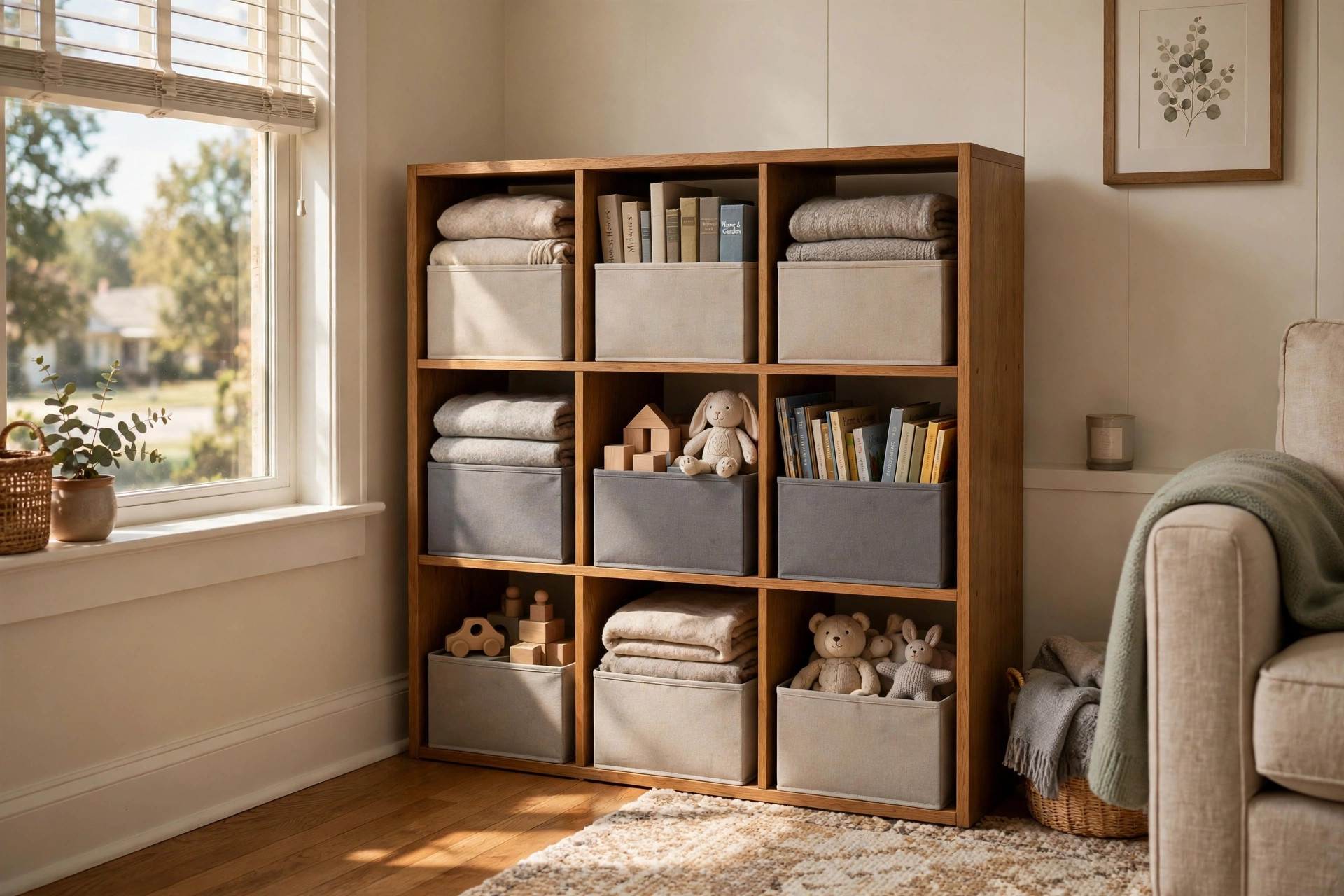

Closets overflow. Rooms feel tight. Space saving fabric storage cubes for Midwest homes give families a plain, low cost way to take back order. These light boxes slide into shelves, closets, and corners. They hold toys, clothes, papers, and craft goods. They fold flat when not in use. This guide walks through why they fit Midwest houses so well, how to pick the right ones, what they cost, and how to keep them in good shape.
Why These Cubes Matter in Midwest Homes
Many houses across the Midwest were built when closets were small. Older homes in Chicago, Des Moines, and Columbus often have shallow bedroom closets and few built in drawers. Families still need room for winter coats, board games, and school supplies. Fabric cubes fill that gap. They turn open shelves into tidy rows of soft bins. They make a plain bookcase work like a dresser.
Renters gain most of all. A renter in a Kansas City apartment cannot tear out walls or build new closets. Cubes need no tools. They slide into a cheap shelf unit and come right out on moving day. Landlords never mind them. College students in dorm rooms use them the same way. One shelf of cubes can hold a whole semester of clothes.
Seasonal change is another reason. Midwest winters call for boots, scarves, and heavy blankets. Summers call for light clothes and outdoor gear. Fabric cubes let a family swap whole sets at once. Label one cube “winter scarves” and slide it to the back of the closet in May. The swap takes minutes. Basements in the region often stay damp, so cubes stored upstairs keep fabrics dry and clean.
They also help in small rooms. A child bedroom with a desk, a bed, and a dresser has little floor left. Cubes stack on shelves or under beds. They add storage without taking floor space. For a busy family, that means less clutter on the floor and faster cleanup. Many parents say a row of cubes turns a ten minute pickup into a two minute one.
What to Look for When You Buy: Space Saving Fabric Storage Cubes for Midwest Homes
Not all cubes are the same. A few plain facts decide whether a cube lasts one year or five.
Size and Fit
The common cube is 11 inches on each side. Most cube shelf units sold today use that size. Measure your shelf first. A cube that is a half inch too wide will not slide in. If your shelf has odd sized openings, look for cubes in 10 inch or 13 inch sizes. Shallow shelves call for shorter depth cubes, often 9 inches deep.
Count how many cubes you need before you shop. A single closet shelf may take three or four. A full bookcase may take eight or nine. Buying one set of matching cubes looks neater than mixing brands, since colors and sizes differ a little from maker to maker. Retailers like The Container Store and IKEA list exact inside and outside sizes on their pages, which makes matching simple.
Fabric and Frame
Most cubes use non woven polypropylene fabric. This cloth is light, cheap, and holds its shape. Some use canvas or polyester blends. Canvas feels stronger and looks nicer, but it costs more. Non woven fabric works fine for clothes and toys.
Look inside the cube before you buy. A good cube has stiff side panels, often thin cardboard or plastic sheets sewn into the walls. These panels keep the cube square when full. Cheap cubes skip the panels. They sag after a few months and lean against their neighbors. A stiff cube also stands up on its own when empty, which makes filling it much easier.
Handles matter too. Cut out handles on two sides let you pull the cube from a high shelf with one hand. Stitched handles last longer than glued ones. If you plan to move cubes often, handles are worth the extra cost.
Color and Style
Cubes come in gray, beige, navy, black, and many prints. Plain colors hide dust and stains best. Gray and beige fit most rooms. For a child room, bright colors or prints make cleanup feel like a game. Match the cube color to your shelf frame for a clean look. The design ideas at Apartment Therapy show how matching cubes turn an open shelf into a built in look.
Types and Options
Space saving fabric storage cubes for Midwest homes come in several types. Each type suits a different job.
Open front cubes have no lid. They slide into shelf units and act as drawers. You pull the whole cube out to see inside. These are the most common type and the best choice for shelves and closets.
Lidded cubes close at the top with a fabric flap. They stack on floors and in basements. The lid keeps dust off blankets and off season clothes. Lidded cubes cost a little more than open ones.
Under bed cubes are low and wide. They slide under a standard bed frame. They suit shoes, board games, and gift wrap. Measure the space under your bed before you buy. Some beds sit too low for these.
Hanging cubes hang from a closet rod with straps or hooks. They need no shelf at all. They work in dorm closets and laundry rooms. Each tier holds folded shirts, socks, or small towels. Check the weight limit, since a full hanging cube can stress a cheap rod.
Collapsible cubes with lids and handles fold fully flat for storage. Travelers and dorm students like them. They ship flat in the mail, which cuts shipping cost. Look for these when shelf space is tight: guides on The Spruce often list fold flat models among the top picks.
A related idea is the rolling storage cart, which moves room to room. For a kitchen, sealed pantry food storage containers pair well with open cubes. And a bedroom gets extra drawers from a budget friendly nightstand with storage drawers.
Cost and Price Guide
Fabric cubes are among the cheapest storage goods you can buy. Prices change with size, fabric, and brand.
A single basic open cube sells for 3 to 6 dollars at big stores. Walmart and Target carry these in their home aisles all year. Sets of four or six run 12 to 25 dollars. Sturdier canvas cubes cost 8 to 15 dollars each. Designer sets with lids can reach 20 to 30 dollars per cube, though most homes never need that level.
A full shelf unit plus cubes is the common bundle. A nine cube shelf with nine cubes often costs 40 to 80 dollars. That is less than one wooden dresser. For a child room or a first apartment, the bundle is hard to beat.
Shop sales for the best price. Back to school season in August brings deep cuts on dorm storage. January brings clearance on holiday prints. Buying online lets you compare fast: Amazon and Wayfair list dozens of cube sets side by side with buyer reviews.
One note on price and life. A three dollar cube may last a year. A ten dollar cube with stiff panels may last five. For daily use items like toys and school supplies, the sturdier cube pays for itself. For light use, such as guest room blankets, the cheap cube is fine. Home improvement stores like The Home Depot carry both grades, so you can feel the difference in the aisle.
Care and Upkeep
Fabric cubes need little care, but a few habits keep them square and clean.
Vacuum the outside now and then with a soft brush head. Dust settles on the top and sides. For small stains, wipe with a damp cloth and a drop of mild soap. Let the cube air dry fully before you put it back on the shelf. Do not put non woven cubes in a washing machine. The heat and spin break down the fabric and the stiff panels. Canvas cubes may survive a gentle hand wash, but check the tag first.
Do not overload them. Most makers list a weight limit between 10 and 20 pounds. Books weigh a lot. A full cube of hardcover books can pass 25 pounds and stretch the seams. Spread books across several cubes or use plastic bins for heavy loads. Cubes hold clothes, linens, toys, and papers best.
Keep cubes away from damp basements when full of cloth goods. Non woven fabric breathes, so damp air can reach the contents. In a damp room, use lidded cubes or add a small dehumidifier. Direct sun can fade bright colors over time, so turn printed cubes or keep them out of strong window light.
Rotate heavy cubes once a year. Pull each cube out, check the seams and panels, and swap the top and bottom rows. This small habit keeps panels from bending in one spot. Advice from Family Handyman on closet care backs this up: even light storage lasts longer with a yearly check.
Safety Notes
Fabric cubes are soft and light, which makes them safer than wooden boxes in most cases. Still, a few rules keep children and pets safe.
Anchor tall shelf units to the wall. A full set of cubes adds weight, and a climbing child can tip a shelf. Every maker sells anti tip straps. Use them. This is the single most important safety step.
Keep small parts out of cubes a toddler can reach. Toys with tiny pieces belong on high shelves. Cubes with cut out handles can pinch small fingers if a child pulls hard, so teach young children to pull gently.
Watch for cheap imports with a strong chemical smell. Air new cubes outside or in a garage for a day before you bring them in. If the smell lasts a week, return them. Quality cubes smell like nothing at all.
Do not use cubes near heat. Keep them off radiators and away from space heaters. Fabric melts or burns if it touches a hot surface. In a garage or utility room, keep cubes clear of furnaces and water heaters.
Frequently Asked Questions
How many fabric cubes do I need for one closet?
A standard reach in closet with one shelf takes three to four cubes. Walk in closets may take six to ten. Measure the shelf width and divide by 11 inches for the common cube size. Buy one spare. Sizes differ slightly by brand, so one spare covers a tight fit.
Do fabric cubes work in a damp basement?
They work for short term use, but they are not the best choice for a damp basement. The fabric breathes, so damp air can reach clothes and papers inside. Use lidded plastic bins for long term basement storage. If you must use cubes downstairs, pick lidded ones and run a dehumidifier.
Can I wash fabric storage cubes?
Most non woven cubes cannot go in a washing machine. The spin breaks the stiff side panels and wrinkles the fabric. Wipe stains with a damp cloth and mild soap, then air dry. Canvas cubes can often be hand washed. Always read the care tag first.
How long do fabric cubes last?
A cheap cube used daily lasts about one year. A mid grade cube with stiff panels lasts three to five years. Canvas cubes can last even longer. Overloading is the main cause of early failure. Keep loads under the listed weight limit and the seams stay strong.
Are fabric cubes better than plastic bins?
Each has its place. Fabric cubes look nicer on open shelves and cost less. Plastic bins seal out dust and damp, stack higher, and hold heavy loads. Many homes use both: cubes in living rooms and bedrooms, plastic bins in basements and garages.
Where can I buy space saving fabric storage cubes for Midwest homes?
You can find them at nearly any large retailer. Big box stores, home goods chains, and online sellers all carry several sizes. Compare exact inside sizes before you order online, and feel the fabric in a store if you can. Sets bought together in one brand look the most even on a shelf.
Final Word
Space saving fabric storage cubes for Midwest homes solve a plain problem with a plain tool. They cost little. They need no tools. They fit old closets, dorm rooms, and small bedrooms. Pick the right size, do not overload them, and give them a wipe now and then. A house with tidy cubes feels larger, calmer, and easier to live in. Start with one shelf. You will soon want them in every room.
References
Amazon. (n.d.). Online shopping. https://www.amazon.com Apartment Therapy. (n.d.). Home design ideas and inspiration. https://www.apartmenttherapy.com Family Handyman. (n.d.). DIY home repair and maintenance. https://www.familyhandyman.com IKEA. (n.d.). Home furnishings. https://www.ikea.com Target. (n.d.). Retail store. https://www.target.com The Container Store. (n.d.). Storage and organization products. https://www.containerstore.com The Home Depot. (n.d.). Home improvement products. https://www.homedepot.com The Spruce. (n.d.). Home and garden advice. https://www.thespruce.com Walmart. (n.d.). Everyday low prices. https://www.walmart.com Wayfair. (n.d.). Furniture and home goods. https://www.wayfair.com
Was this guide helpful?

About Sarah Mitchell
The My Garden US editorial team writes practical, in-depth home and garden guides for American homeowners — tested advice, no fluff.
You May Also Like
Workshop Tool Chests Price Comparison USA
January 6, 2026 0 views
Stackable Wall Mounted Storage Shelves With Free Shipping: A Practical Guide
March 10, 2026 0 views
Where to Buy Ottoman Storage Benches in Arizona
May 25, 2026 0 views