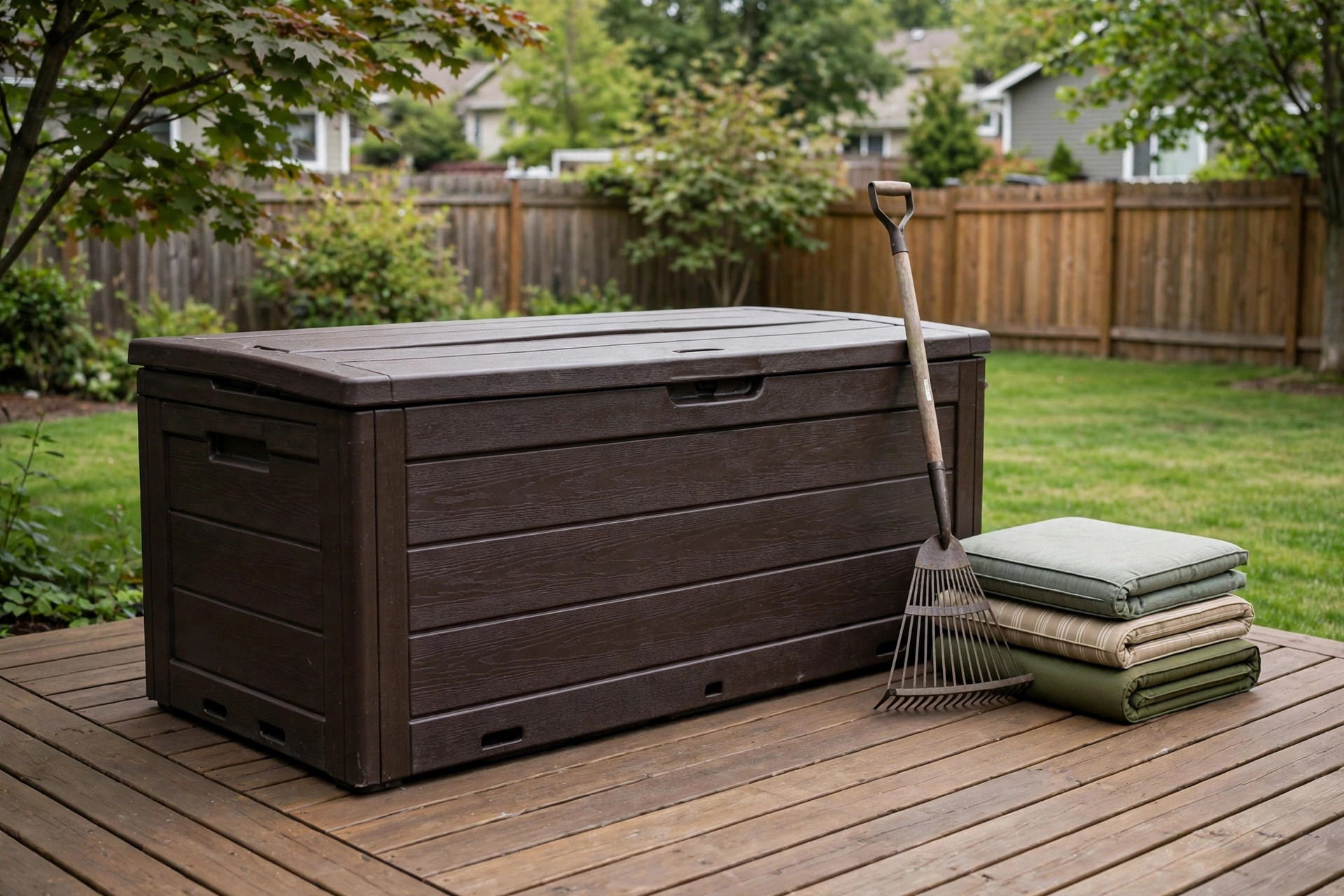
Every deck owner knows the same trouble. The cushions pile up in the corner. The garden tools lean against the railing. The grill cover blows away in a storm. A good deck box solves these problems in one move. But the market is full of boxes that look alike and act very different in real weather. Some keep their contents bone dry for ten years. Others let in rain within one season and warp by spring.
This outdoor deck storage boxes reviews and buying guide was written to help you tell the two kinds apart. It explains why a deck box matters, what to check before you buy, the main types on the market, what fair prices look like, how to keep the box in good shape, and how to use it safely. It draws on common-sense standards for outdoor furniture, not on claims made by any one seller. Read it once, and you will walk into the store or shop online with a clear head.
Why an Outdoor Deck Storage Box Matters
A deck box does three simple jobs. It keeps things dry. It keeps things neat. And it keeps the deck safe to walk on. When patio cushions sit out in the rain, the fabric holds water and grows mold. When cushions sit in the sun all summer, the color fades and the foam breaks down. A box with a lid blocks both rain and sun, and cushions last years longer.
Tools and pool supplies also gain from covered storage. Garden shears, spray bottles, and pool test kits stay clean and ready. Small toys and sports gear stop rolling underfoot. On a busy deck, clear floor space is not just neat. It is safer. A lid also keeps most pests away from anything soft or sweet-smelling.
There is a less obvious point, too. Many buyers pick a box that is too small and learn the hard way that their thick lounge cushions do not fit. Others pick a box that is far too large and find it eats the whole deck. The right box fits your load and leaves walking room. That is the heart of this buying guide.
What to Look for When You Buy a Deck Storage Box: Outdoor Deck Storage Boxes Reviews and Buying Guide
Walk through the points below before you spend money. Each one has a real effect on how long the box lasts and how well it works.
Size and Capacity
Makers state capacity in gallons or cubic feet. A small box of 30 to 50 gallons holds seat cushions and a few garden tools. A mid-size box of 70 to 120 gallons holds two or three lounge chair cushions and pool toys. Large boxes of 130 gallons and up hold a full set of deep-seat cushions or a folded outdoor rug.
Before you buy, stack up what you want to store and guess its size. Then add a quarter more. It is better to have some room to spare than to force the lid shut. Also measure your deck. Leave at least two feet of walkway in front of the box so you can open it without stepping off the deck. Check whether the lid opens upward or swings forward. Upward-opening lids need headroom and cannot sit under a low table.
Material and Build
Three materials rule this market. Each has strengths and weak points.
Resin or high-density plastic is the most common. It resists rot, never needs paint, and shrugs off rain. Cheap thin-walled boxes can crack in cold weather, so look for walls that feel thick and solid. Boxes made of resin or recycled plastic are easy to find at big home stores, and buying guides at places like Home Depot often show which models rate well for strength. The Home Depot site carries a wide range with customer reviews you can read before you visit.
Wicker-look boxes are plastic woven to look like rattan. They look nicer than plain resin and suit furnished patios. The weave can snag on rough items, and very cheap versions fade in strong sun. Wooden boxes, often cedar or acacia, look the most natural. They need oil or sealant every year or two. Without care, wood grays and can develop soft spots.
Metal boxes, usually steel or aluminum, are the toughest against animals and theft. Steel must be coated well or it will rust where the paint chips. Aluminum resists rust but costs more. Review sites such as The Spruce publish material comparison guides that explain how each option ages outdoors. A look at The Spruce can help you weigh resin against wood for your climate.
Weather Sealing and Drainage
A lid alone does not keep water out. Good boxes have a raised rim or a rubber gasket where the lid meets the body. Wind-driven rain finds every gap. Some boxes ship with a seal and others sell it as an add-on. Read the product notes.
Drainage matters just as much as sealing. A small amount of water will get in over time. Boxes with drain holes or a sloped floor let it run out instead of pooling. If you store anything that must stay perfectly dry, such as paper records or fabric that molds easily, add a plastic tub inside the box as a second layer.
Style, Color, and Lid Strength
Pick a color that fits the house. Dark boxes heat up in the sun and can get hot enough to soften cheap plastic. Light colors stay cooler but show dirt sooner. A flat, reinforced lid doubles as a bench, which is a real plus on small decks. Check the weight limit printed on the box. A lid rated for 200 pounds or more works fine as a seat. Thin lids sag and crack.
Locks and Child Safety
Many boxes have hasps for a padlock. If you store anything of value, a lock is worth it. Some lids have slow-close hinges or hydraulic struts that keep the lid from slamming. This is an important safety feature if children play near the box. The lid of a large box can be heavy enough to hurt a small hand.
The Main Types of Deck Storage Boxes
Basic Resin Boxes
These are the workhorses. They cost the least, need no upkeep, and come in every size. Most have double-wall panels for strength. They suit buyers who want function first. Reviews on retail sites show they hold up well in rain and snow, though the lids can fade after years of sun.
Wicker-Look Resin Boxes
The same plastic core, dressed up. The woven pattern hides scuffs and looks at home next to patio furniture. They cost a bit more than plain resin. Watch for thin weave strips on bargain models, which can break and leave sharp edges.
Wooden Deck Boxes
Cedar, acacia, and eucalyptus are the usual woods. They look warm and natural and match wooden decks. They need sealing against water. Expect to sand and re-oil every one to two years. In wet climates, wooden boxes can last a decade with care and only a few seasons without it. Do-it-yourself guides at Family Handyman explain how to re-seal and repair wooden outdoor furniture, which applies to wooden boxes as well.
Metal Boxes
Steel and aluminum boxes suit buyers who worry about raccoons, rats, or theft. They are heavy and stay put in wind. Powder-coated steel resists rust for years, but touch up any chips quickly. Aluminum costs more and weighs less. Metal boxes can get very hot in the sun, so think twice before storing anything heat-sensitive inside.
Storage Bench Boxes
These combine a box with a seat. They are shorter than full-size boxes but hold a fair load. They work well on small decks and near entry doors. Make sure the seat height feels right and the lid latch is easy to work. If you like this style but want something fancier indoors, you might also look at luxury mudroom storage benches for sale, which use the same box-and-seat idea for the home entry.
Cost and Price: What You Should Expect
Prices move with size, material, and brand. Small resin boxes often sell for 40 to 90 dollars. Mid-size resin boxes run 90 to 180 dollars. Large resin boxes and wicker-look models run 150 to 300 dollars. Wooden boxes start near 150 dollars and climb past 400 for large cedar models. Metal boxes sit between 120 and 350 dollars.
Do not judge by price alone. A cheap box that cracks in two years costs more than a mid-price box that lasts eight. Read reviews that mention the second or third year of use, not just the first week. If you want a side-by-side view of what different models cost, our outdoor deck storage boxes price comparison usa page lists current price ranges by size and material.
Watch for seasonal sales. Late summer and early fall often bring discounts as stores clear patio stock. Freight and delivery fees add up on large boxes, so check the delivered price before you compare. Budget big-box retailers such as Walmart and Target often undercut specialty stores on basic resin models, while Wayfair and IKEA carry design-forward options that cost a bit more.
If you are buying online, factor in assembly. Many boxes ship flat and take 15 to 45 minutes to put together. Look for reviews that mention the instructions. Boxes with snap-together panels go up fast. Boxes with dozens of screws test your patience.
How to Keep Your Box in Good Shape
A deck box needs little care, but a little care goes far.
Wash the outside once or twice a year with mild soap and water. This stops grime from baking into the surface. For resin and wicker-look plastic, a soft brush works well. For wood, use a wood cleaner and let it dry fully before you re-apply oil or sealant.
Check the hinges and latches each spring. Tighten loose screws. Oil metal hinges with a drop of household oil so they move smooth and quiet. Look at the lid seal or gasket. If it is cracked or flattened, replace it. A failed seal is the most common reason a dry box starts leaking.
Keep the inside dry. In damp climates, drop a bag of silica gel or a small moisture absorber inside. Air the box out on a dry day now and then. If you store cushions, fold them loosely so air can move. Do not stack heavy items on a lid that is not rated as a seat.
In winter, remove what you can and leave the lid closed. If the box sits in snow country, brush snow off the lid so the weight does not strain the hinges. Wooden boxes gain from a cover in the worst months. Online marketplaces such as Amazon sell fitted covers cheaply, and Lowe’s stocks care products for outdoor furniture.
Safety Tips for Deck Storage Boxes
A deck box is simple, but a few rules keep everyone safe.
Never let a child climb into a box and close the lid. Airtight lids can trap a child inside. Many safety groups advise removing latches from old boxes that children might play with, or drilling small air holes. Teach children that the box is not a toy chest to hide in.
Do not store fuels, gas cans, pool chlorine, or flammable chemicals in a deck box. Heat builds up inside a closed box in the sun. Fuel vapors can gather and pose a fire risk. Keep chemicals in a ventilated shed instead.
Place the box on a flat, stable surface. A box that rocks can tip when the lid is open and the wind catches it. In storm country, weigh down light boxes or strap them to the railing. Keep the area in front of the box clear so no one trips when reaching in.
If you store tools with sharp edges, keep blade guards on. Place heavy items on the bottom so the box stays steady. And check the box after storms. A shifted lid may look closed while leaving a gap for rain.
Frequently Asked Questions
Do deck storage boxes keep water out completely?
No box is perfect. Good boxes with gaskets and raised rims keep out nearly all rain. In hard storms, a little water can still find its way in. For items that must stay bone dry, seal them in plastic bags or tubs inside the box.
What size box do I need for patio cushions?
Measure your cushions. Two thick lounge cushions often need 70 to 100 gallons. A full set of four to six deep-seat cushions may need 130 gallons or more. When in doubt, buy the larger size. You will find things to fill the extra room.
Can I sit on my deck storage box?
Only if the maker says so. Look for a weight rating on the box or the product page. Many mid-size and large boxes are built to serve as benches and rate for 200 pounds or more. Sitting on a thin, unrated lid will crack it.
Will a deck box survive winter outside?
Most resin and plastic boxes do fine in cold and snow. Wooden boxes need sealant before winter. Metal boxes do fine but can rust where paint is chipped. Brush snow off the lid and check the seal in spring.
How do I stop mold inside my deck box?
Keep the inside dry and let air in now and then. Do not store damp items. A small moisture absorber helps in humid places. If mold appears, scrub the inside with a mix of water and white vinegar and let the box dry in the sun before you close it.
Are expensive deck boxes worth the money?
Often, yes. Higher prices usually mean thicker walls, better seals, and stronger hinges. A mid-price box that lasts eight years costs less per year than a cheap box you replace twice. Read long-term reviews to see which models hold up. Home-improvement voices such as Bob Vila regularly test and review outdoor storage, and their write-ups are a good second opinion before you buy.
A Short Final Word
A deck box is one of the simplest purchases a homeowner makes, and one of the most useful. Pick the right size. Pick a material that fits your climate and your taste for upkeep. Check the seal, the hinges, and the lid strength. Spend a little time on reviews, and your box will serve you for many years. If you plan to store seasonal items beyond the deck, you may also want to read our guide to buy holiday decoration storage boxes online in Colorado for a related storage topic. Choose well once, and the deck stays neat every day after.
References
Amazon. (n.d.). Online shopping. https://www.amazon.com Bob Vila. (n.d.). Home improvement advice. https://www.bobvila.com Family Handyman. (n.d.). DIY home repair and maintenance. https://www.familyhandyman.com IKEA. (n.d.). Home furnishings. https://www.ikea.com Lowe’s. (n.d.). Home improvement products. https://www.lowes.com Target. (n.d.). Retail store. https://www.target.com The Home Depot. (n.d.). Home improvement products. https://www.homedepot.com The Spruce. (n.d.). Home and garden advice. https://www.thespruce.com Walmart. (n.d.). Everyday low prices. https://www.walmart.com Wayfair. (n.d.). Furniture and home goods. https://www.wayfair.com
Was this guide helpful?

About Jennifer Lee
The My Garden US editorial team writes practical, in-depth home and garden guides for American homeowners — tested advice, no fluff.