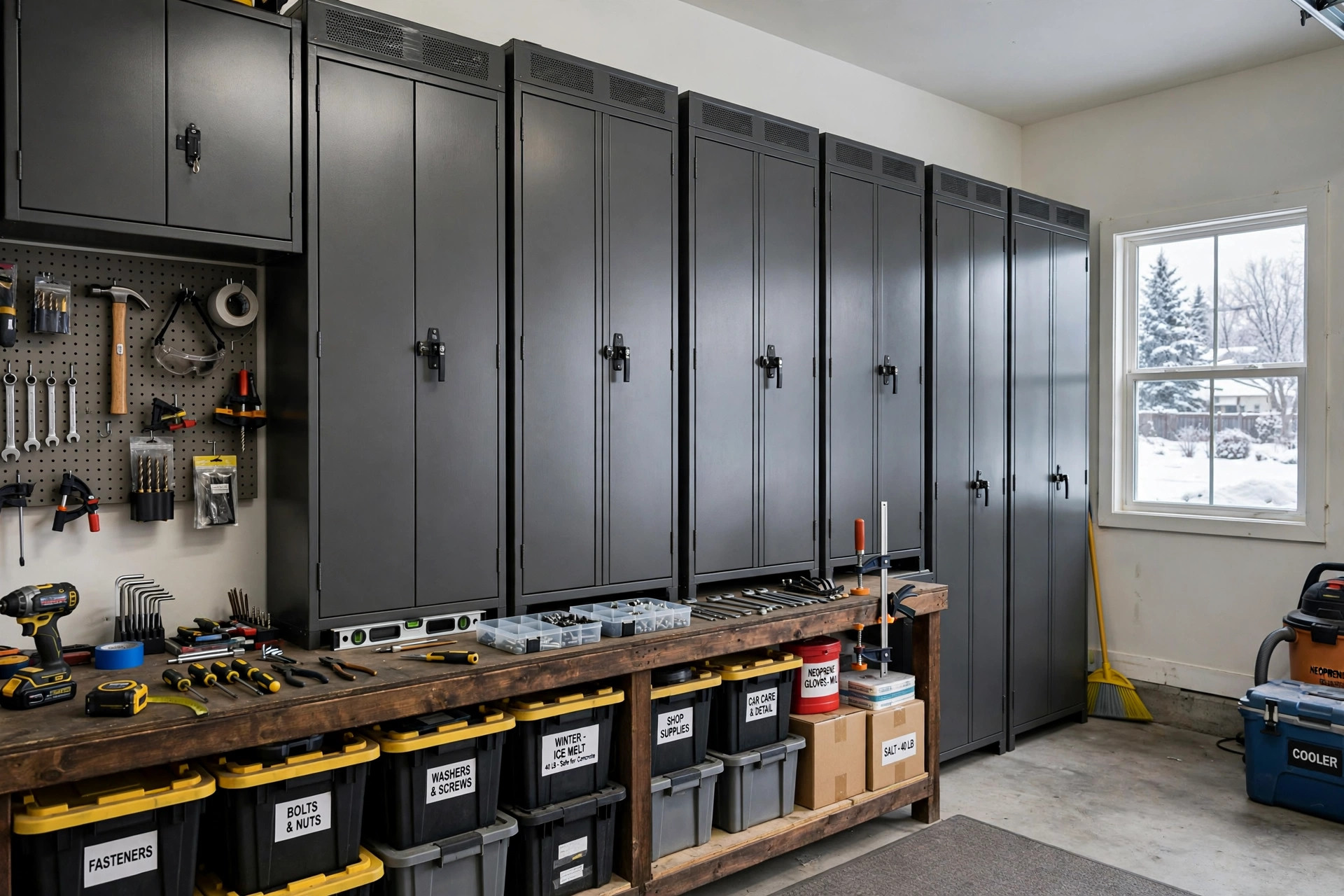

Cold garages are hard on storage. Winter brings damp air, melting snow, road salt, and long months of freezing air that can crack cheap wood and rust thin steel. Many families in the northern states keep half their life in the garage: tools, sports gear, paint, cleaning supplies, and holiday boxes. If the cabinets fall apart after two winters, money is lost and the mess returns. This guide explains the top rated garage storage cabinets for cold climates and what makes them last.
Why Cold Climate Storage Matters
A garage in Minnesota or Maine is not the same as a garage in Texas. Temperatures swing from far below zero to warm spring air in one season. Each swing pushes damp air in and out of joints, screws, and seams. Wood swells and shrinks. Thin metal panels sweat with condensation when the garage door opens on a cold morning and warm air rushes in.
Salt is the second enemy. Snow melts off the car and carries road salt across the floor. It splashes up against cabinet bases and eats into bare metal. Cabinets that sit flat on a cold concrete floor draw damp air upward through their feet. In time, the bottom edge rusts and the doors no longer close straight.
Cheap cabinets also fail at the hardware. Drawer slides freeze or seize when grease thickens in cold air. Plastic handles crack when hit with a shovel at twenty below. Locking parts stick. A cabinet rated only for a heated basement may fail quickly in a real winter garage.
Good cabinets solve all of this. Heavy steel resists dents. Powder coat finishes stand up to salt and damp air. Adjustable feet or raised bases keep water off the bottom edge. Quality hinges and slides work in cold air. When you choose from the top rated garage storage cabinets for cold climates, you buy once and keep them for twenty years.
What to Look for in Cold Climate Garage Cabinets: Top Rated Garage Storage Cabinets for Cold Climates
Start with the material. Welded steel is the best choice for cold garages. Look for cabinets built from thick sheet steel, often listed as 16 or 18 gauge. A lower number means thicker metal. Thicker metal resists dents from tools and keeps doors hanging straight.
The finish matters as much as the metal. Powder coat paint is much stronger than plain spray paint. It seals the steel against damp air and salt. Ask for rust resistant coating on both sides of the panels, including the inside of the doors where you cannot see it.
Check the base. Cabinets that sit flat on concrete pull damp air up into the metal. Look for adjustable leveling feet that lift the cabinet an inch or more off the floor. A raised base keeps melting snow away from the bottom edge. Some owners set cabinets on plastic shims for extra lift.
Look at the hinges and slides. Ball bearing drawer slides glide well even in cold air. Soft close parts can fail in freezing weather, so plain full extension slides are often the safer pick. Hinges should be metal, not plastic. Test the doors before you buy if you can.
Storage needs shape the choice too. Deep drawers hold wrenches and hand tools. Tall lockers hold skis, rakes, and brooms. Wide shelves hold paint cans and oil jugs that must stay off the cold floor. Measure your wall space and the height of your garage ceiling before you order.
If you also store work tools nearby, you may want cabinets that match your best workshop tool chests for American homes so the whole wall looks like one system. Many brands sell matching sets with the same finish.
Types of Garage Storage Cabinets That Handle Winter
Welded Steel Cabinets
Welded steel cabinets are the strongest option. The frame is welded into one piece, so joints cannot loosen when the temperature swings. They cost more, but they carry heavy loads and last decades. Powder coated welded cabinets are the top pick for harsh winters.
Freestanding Modular Cabinets
Modular systems let you start small and add pieces later. Tall lockers, base cabinets, and wall units share one look. For cold garages, choose metal modular lines with leveling feet. Keep the units a short step away from the garage door, where snow melt pools.
Wall Mounted Cabinets
Wall mounted cabinets hang on rails bolted to the studs. They keep everything off the wet floor, which is a real plus in a snowy climate. The wall must be strong enough to hold loaded cabinets. This style works well above a workbench and pairs nicely with entry storage like mudroom storage benches with price comparison usa if your garage doubles as a mudroom.
Resin and Plastic Cabinets
Heavy resin cabinets never rust, which sounds perfect for cold damp air. They work well for light loads such as sports gear and garden supplies. But thin resin can turn brittle in deep cold and crack if struck hard. If you choose resin, pick thick heavy duty models rated for unheated spaces.
Cost and Price Expectations
Prices for the top rated garage storage cabinets for cold climates cover a wide range. Small single door wall cabinets in metal often start near one hundred dollars. Mid range freestanding metal cabinets with leveling feet run from two hundred to five hundred dollars per unit.
Tall welded steel lockers and full wall systems cost more. A single tall welded locker can run four hundred to eight hundred dollars. A full wall of matching cabinets with a workbench top can pass two thousand dollars. That sounds steep, but spread over twenty years it costs less than replacing cheap cabinets three times.
Watch for sales at large home stores. Late winter and early spring often bring storage sales when stores clear space for garden goods. Shopping guides at The Home Depot and Lowe’s list cabinet specs side by side, which makes price comparison simple.
Delivery and assembly add cost. Welded cabinets arrive ready to use, which saves hours. Flat pack cabinets cost less to ship but need a full afternoon with a wrench. For a whole garage, hiring a local handyman for assembly can be money well spent.
Care and Upkeep Through the Winter
Even the best cabinets need some care. Sweep snow melt away from cabinet bases so it does not pool. A simple floor squeegee used after each storm keeps the floor dry. In spring, wash salt stains off cabinet sides with warm water and dry them at once.
Check door alignment once a year. Freezing and thawing can shift a cabinet on its feet. Turn the leveling feet until the doors close evenly again. Tighten hinge screws before they work loose. A drop of oil on hinges each fall keeps them moving in cold air.
Do not overload shelves past the rated weight. Cold metal is strong, but a shelf that sags in January will not straighten in July. Spread heavy items like toolboxes and paint cans across several shelves. Keep the heaviest items low for safety.
If you store chemicals, check labels for safe storage temperatures. Many paints, glues, and cleaners lose strength after a deep freeze. Some owners keep a small insulated cabinet near the house wall, the warmest spot in the garage, for items that must not freeze. Readers with low ceiling spaces may also like our guide to top rated attic storage solutions for cold climates, which covers similar freeze concerns overhead.
Ventilation helps too. A slightly open vent or a small fan keeps damp air from settling on metal surfaces. If your garage stays very damp, a dehumidifier in summer prevents the rust that shows up the next winter. Guides at Family Handyman explain simple garage ventilation projects step by step.
Safety in a Cold Garage
Heavy cabinets can tip if a child climbs them or if a top drawer pulls out with a heavy load. Bolt tall cabinets to wall studs with the brackets most brands include. This one step prevents the most serious garage accidents. The U.S. Consumer Product Safety Commission offers free tip over prevention tips for storage furniture.
Keep fuels, solvents, and fertilizers in a locked cabinet away from the furnace or water heater. Gasoline vapors sink low and can travel across a cold floor to a pilot light. A lockable metal cabinet keeps children out and contains small spills. Never store propane tanks inside the garage at all.
Lift with care. Moving a loaded steel cabinet is a two person job. Empty the drawers first, then use an appliance dolly. Keep fingers clear of door edges, which can pinch hard when the doors swing in cold stiff hinges.
Lighting matters for safety in winter’s dark months. If you cannot see into the back of a cabinet, you will reach in blind and cut a hand on a sharp tool. A battery stick on light inside a dark locker is a cheap fix. Lighting ideas at Apartment Therapy show simple battery options for garages.
Frequently Asked Questions
Will regular metal cabinets rust in a cold garage?
Thin bare metal can rust within one or two winters. Powder coated steel with a sealed finish holds up far better. Raise cabinets off the floor on leveling feet and sweep away snow melt to slow rust. Resin cabinets never rust, but they may crack in deep cold.
Should I heat my garage to protect my cabinets?
You do not need full heat. A garage that stays just above freezing most of the winter is much kinder to cabinets than one that swings between deep freeze and thaw. A small vented heater used on the coldest nights can cut condensation. Full heating costs too much for most families and raises fire risk near stored fuels.
What gauge steel is best for garage cabinets?
For cold climates, 16 to 18 gauge steel is a good range. Sixteen gauge is thicker and stronger. Anything thinner than 20 gauge dents easily and may warp at the doors after a few winters. Thicker steel also holds shelf weight without sagging.
Can I install cabinets myself in winter?
Yes, but cold weather slows the work. Metal is stiff and screws bite harder in cold air. Work in the middle of the day when the garage is warmest. Let flat pack parts sit inside the house overnight so plastic parts do not crack during assembly. Anchor tall units to studs before you load them.
How do I keep drawer slides working in freezing weather?
Wipe old grease off the slides in the fall and apply a thin coat of cold rated lubricant. Ball bearing slides work better in cold air than cheap roller slides. If a drawer sticks, check that the cabinet is level before you force it.
Are resin cabinets a good pick for unheated garages?
They are fine for light loads if you buy heavy duty models rated for unheated spaces. Avoid thin cheap resin, which turns brittle below freezing. For heavy tools, welded steel still lasts longer and dents less.
Final Word
The top rated garage storage cabinets for cold climates share a few traits: thick steel, powder coat finish, raised bases, metal hardware, and solid wall anchoring. They cost more up front than budget cabinets, but they survive the freeze, the salt, and the damp that destroy cheaper units.
Start with your biggest need. One tall locker for tools, or one wide base cabinet for paint and oil, can change a whole garage. Add pieces over time as the budget allows. Keep snow melt away from the bases, bolt tall units to the wall, and check the level each spring. Do that, and your cabinets will serve you through many winters.
For more storage ideas through the house, browse the planning guides at Wayfair, IKEA, and The Container Store. Real world garage makeovers at The Spruce and This Old House show how families lay out whole walls of cabinets. Reviews at Consumer Reports compare build quality across brands before you spend.
References
Apartment Therapy. (n.d.). Home design ideas and inspiration. https://www.apartmenttherapy.com Consumer Reports. (n.d.). Product reviews and ratings. https://www.consumerreports.org Family Handyman. (n.d.). DIY home repair and maintenance. https://www.familyhandyman.com IKEA. (n.d.). Home furnishings. https://www.ikea.com Lowe’s. (n.d.). Home improvement products. https://www.lowes.com The Container Store. (n.d.). Storage and organization products. https://www.containerstore.com The Home Depot. (n.d.). Home improvement products. https://www.homedepot.com The Spruce. (n.d.). Home and garden advice. https://www.thespruce.com This Old House. (n.d.). Home renovation guidance. https://www.thisoldhouse.com U.S. Consumer Product Safety Commission. (n.d.). Product safety information. https://www.cpsc.gov Wayfair. (n.d.). Furniture and home goods. https://www.wayfair.com
Was this guide helpful?

About Jennifer Lee
The My Garden US editorial team writes practical, in-depth home and garden guides for American homeowners — tested advice, no fluff.
You May Also Like

Affordable Bathroom Vanity Organizers With Free Shipping: A Practical Buying Guide
June 3, 2026 0 views
Kitchen Cabinet Organizers Price Comparison USA: What They Really Cost
October 5, 2026 0 views
Top Rated Attic Storage Solutions for Cold Climates
October 1, 2026 0 views