
A man who works with tools knows the cost of disorder. A lost socket. A missing wrench. Hours gone. If you are asking where to buy workshop tool chests in Florida, you are already on the right road. The Sunshine State is full of shops that sell them. Home centers, tool dealers, warehouse clubs, and online sellers all serve Florida buyers. This guide walks you through each choice. You will learn what matters in a tool chest, how much to pay, and which stores give you the most for your money.
Why a Good Tool Chest Matters
Tools are an investment. A mechanic may own thousands of dollars in hand tools. A home repair man may own hundreds. Without a proper chest, that investment sits in boxes and buckets. Rust finds it. Theft finds it. Loss finds it. A workshop tool chest puts an end to that.
The Florida climate adds its own pressure. The air is damp for much of the year. Salt air drifts inland from both coasts. Bare steel rusts fast in such air. A chest with tight-fitting drawers and a solid finish protects your tools from the humidity. Many Florida shops add a simple moisture absorber to each drawer. That small habit pays off.
Order saves time too. When every tool has a home, a job moves faster. You reach. You find. You work. Mechanics in busy shops swear by this. Weekend workers learn it with time. A well-kept chest is the quiet backbone of any garage.
What to Look for When You Choose: Where to Buy Workshop Tool Chests in Florida
Not all chests are built the same. Before you spend, study these points.
Steel Gauge and Build
Steel thickness is measured in gauge. A lower number means thicker steel. Good chests use 18 to 22 gauge steel for the body. Cheap chests use thin steel that dents and sags. Open the drawers in the store. Press the walls. A solid chest feels firm. A weak one feels like tin.
Check the corners and seams. Welded corners beat folded and screwed joints. Look at the top. If you plan to set heavy parts on it, the top must hold the weight. Some chests have a butcher-block top or a stainless top. Those are fine choices for a workshop.
Drawer Slides and Weight Capacity
The slides are the heart of the chest. Ball-bearing slides glide smooth and last long. Friction slides stick and wear out. Every drawer should open fully and close without force. Load a drawer with tools if the store allows. That test tells you more than any label.
Read the weight rating. A wide bottom drawer may hold 100 pounds or more. The whole chest may hold 1,000 to 2,500 pounds. Match the rating to your tools. A die-hard mechanic with deep sockets needs more than a light home user.
Drawer Layout
Count the drawers and study their sizes. Deep drawers suit large tools and power tool cases. Shallow drawers suit sockets, wrenches, and pliers. A mix works best for most buyers. Chest makers sell drawer liners that stop tools from sliding. These liners are cheap and worth every cent.
Locks and Security
A lock keeps honest people honest and slows down thieves. Tubular locks resist picking better than simple cam locks. Some large chests use two locks, one per bank of drawers. In Florida, where garage break-ins happen, a lock is not optional. Anchor the chest if you can. Bolt it to the floor or the wall.
Casters and Mobility
If you want to roll the chest around the garage, the casters matter. Look for four heavy casters, with at least two that lock. Rubber wheels roll quiet and do not mark concrete. Small hard wheels jam on cracks. Test the roll on the store floor.
Finish and Rust Protection
Powder-coated paint resists chips better than plain paint. In Florida humidity, this matters. Check the edges for bare metal. Bare edges rust first. Some buyers add a light coat of paste wax to the outside once a year. That is an old shop trick and it works.
Types of Workshop Tool Chests
Stores in Florida carry several styles. Know them before you shop.
Top Chests
A top chest sits on a bench or on a rolling cabinet. It holds small tools within reach. It is the classic first buy for a young mechanic. Top chests are light and cheap. They do not hold much.
Rolling Cabinets
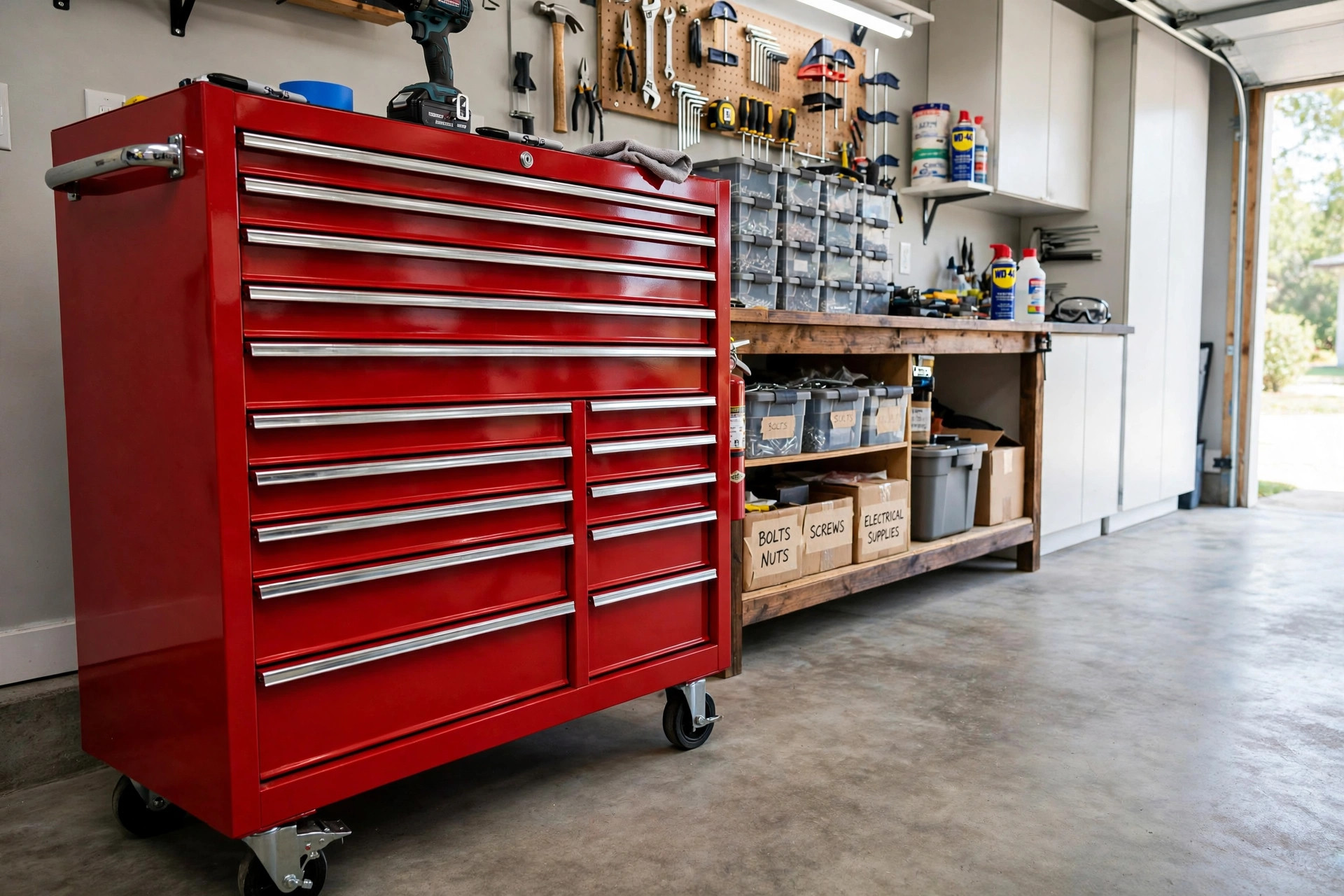
A rolling cabinet is the workhorse. It stands on casters and holds the bulk of a tool set. Widths run from 26 inches to over 70 inches. Deep drawers at the bottom take heavy items. Many buyers start here.
Combo Units
A combo pairs a top chest with a rolling cabinet. The pair locks together and moves as one. This is the standard setup in professional shops. It costs more but stores more.
Side Lockers and Side Cabinets
A side locker adds tall storage for long tools. A side cabinet adds a work surface. Both bolt to the main cabinet. Buy them later if you outgrow the first chest.
Wall-Mounted Chests
Small wall cabinets hold light tools off the bench. They suit tight Florida garages where floor space is dear. They do not replace a rolling cabinet.
Where to Buy Workshop Tool Chests in Florida
Now the main question. Where to buy workshop tool chests in Florida? You have several good roads.
Big Home Centers
Home centers are the easiest answer. Home Depot has stores in nearly every Florida city, from Miami to Jacksonville to Tampa. The tool aisle carries chests from well-known brands in many sizes. You can open the drawers and test them in person. Delivery to your home is easy to arrange.
Lowe’s serves Florida just as well. Its stores stock rolling cabinets, combos, and top chests. Prices run close to Home Depot. Watch for holiday sales. Both chains cut prices around Memorial Day, Labor Day, and Black Friday.
Tool Dealers and Auto Parts Stores
Tool trucks visit professional shops each week. Brands sold this way cost more, but the steel is thick and the warranty is strong. If you earn your living with tools, ask your shop mates which dealer they trust.
Auto parts stores also sell chests. They carry mid-range brands at fair prices. The staff can order sizes the store does not stock.
Warehouse Clubs
Warehouse clubs sell large chests at sharp prices. The selection is narrow, often one or two models. But the value per drawer can beat every other store. A club membership pays for itself on one big buy.
Specialty Storage Stores
The Container Store focuses on home storage. It carries garage and workshop organizers, liners, and small cabinets. For a full rolling chest, the home centers give you more choice. For drawer organizers and labels, the specialty store shines.
Online Sellers
Wayfair ships a wide range of workshop tool chests to Florida addresses. Prices are clear and reviews are many. Read the reviews with care. Look for buyers who mention the steel gauge and the drawer slides.
IKEA sells garage storage systems rather than classic tool chests. Its metal cabinets suit light workshop use and small spaces. Delivery across Florida is well set up.
Used and Auction Markets
Florida has a lively used market. Retiring mechanics sell fine chests for half the new price. Check local classifieds and estate sales. Inspect used chests in person. Open every drawer. Roll it on its casters. Check for rust along the bottom edge. A used chest from a dry inland garage beats a new cheap chest every time.
For help picking the right size, see our guide on best workshop tool chests for american homes. If price is your main worry, our workshop tool chests price comparison usa lays out what each tier costs. And if you also need garden storage, read where to buy garden tool organizers in texas for ideas that work in any state.
Cost and Price in Florida
Prices move with size and brand. A small top chest may cost 100 to 250 dollars. A mid-size rolling cabinet runs 300 to 800 dollars. A large professional combo can reach 1,500 to 4,000 dollars. Tool truck brands cost more still.
Florida buyers should budget for delivery. A 500-pound chest is not a trunk item. Home delivery from a big store often costs 50 to 100 dollars. Some stores deliver free over a set amount. Ask before you buy.
Sales follow the calendar. The deepest cuts land on holiday weekends. New models arrive in spring. Last year’s models go on clearance then. A patient buyer saves real money.
Do not forget the small costs. Drawer liners run 20 to 40 dollars for a large chest. A moisture absorber costs a few dollars. A good padlock for the garage adds more. These small buys protect the big one.
Care and Upkeep
A tool chest lasts decades if you treat it well. Start with the drawers. Wipe them out twice a year. Toss the dust and metal chips. Replace torn liners.
Oil the slides once a year. A drop of light machine oil on each ball-bearing slide keeps the glide smooth. Do not use heavy grease. Grease collects grit.
Fight the Florida humidity. Place a small desiccant pack in each drawer. Recharge or replace them as the maker directs. Keep the garage door closed in the damp months. A small dehumidifier in the garage pays for itself in rust it stops.
Wax the outside once a year. Paste wax on powder coat adds a shield against salt air. Buff it light. The chest will look new for years.
Check the casters. Hair and grit wind around them. Cut it free. Tighten the bolts. A chest that rolls smooth gets used more.
Keep an inventory list. Tape it inside the top drawer. When a tool goes missing, the list tells you fast. Shops that keep lists lose fewer tools. That is a fact old mechanics will confirm.
Safety
A loaded tool chest can weigh half a ton. Respect it.
Lock the casters before you open the drawers. Open one wide drawer at a time. Two heavy drawers out at once can tip a narrow chest. This is how injuries happen.
Bolt tall chests to the wall. Florida storms shake buildings. A top-heavy chest can fall in high wind. Two lag bolts into a stud end the risk.
Keep the lock engaged when the chest is idle. Children are drawn to shiny drawers. A locked chest keeps small hands off sharp tools.
Lift with care. Move a chest with help. Empty the top drawers before a long roll. Watch door thresholds and ramps. A runaway chest breaks toes and walls.
Store chemicals right. Do not keep fuel or solvents inside the drawers. Fumes build up. Heat builds up. Keep such cans in a separate metal cabinet made for the job.
Frequently Asked Questions
What size tool chest do I need for a home garage?
Most home users do well with a 41 to 46 inch rolling cabinet. It holds a full mechanic’s set with room to grow. Measure your wall space first. Leave room to open the drawers and to walk past.
Is it cheaper to buy a tool chest online or in a Florida store?
In-store buys let you test the drawers and skip shipping damage. Online buys give you more choice and easy price checks. For large chests, in-store pickup often wins because freight shipping is costly. Compare the total with tax and delivery before you choose.
How do I stop my tools from rusting in Florida humidity?
Keep drawers closed, use desiccant packs, and wipe tools with a light oil cloth before storage. A dehumidifier in the garage helps a great deal. The Spruce and Family Handyman both publish sound guides on garage moisture control worth a read.
What brands hold up best for the money?
Mid-range brands sold at home centers give most buyers the best mix of steel thickness and price. Pro brands from tool dealers last longest but cost two to three times more. Consumer Reports tests tool storage from time to time, and Bob Vila reviews popular models with a practical eye.
Can I put a tool chest in an outdoor shed in Florida?
You can, but the risk is high. Sheds swing hot and damp. Rust comes fast. If you must, choose a shed with vents, seal the chest edges, and double the desiccant. A garage is far better.
Do tool chests need assembly?
Most rolling cabinets ship whole. You only bolt on the handle and the casters. Top chests ship ready to use. Combo units may need the top chest set and locked onto the cabinet. Keep the manual. Spare keys hide in odd spots.
A Short Final Word
The search for where to buy workshop tool chests in Florida ends with a simple plan. Decide your size. Test the drawers in a store. Check the steel, the slides, and the lock. Compare prices across two or three sellers. Then buy the best chest your budget allows and keep it dry.
For design ideas on fitting a chest into a tidy garage, browse Apartment Therapy. A good chest, kept clean and dry, will serve you for thirty years. Your tools deserve no less.
References
Apartment Therapy. (n.d.). Home design ideas and inspiration. https://www.apartmenttherapy.com Bob Vila. (n.d.). Home improvement advice. https://www.bobvila.com Consumer Reports. (n.d.). Product reviews and ratings. https://www.consumerreports.org Family Handyman. (n.d.). DIY home repair and maintenance. https://www.familyhandyman.com IKEA. (n.d.). Home furnishings. https://www.ikea.com Lowe’s. (n.d.). Home improvement products. https://www.lowes.com The Container Store. (n.d.). Storage and organization products. https://www.containerstore.com The Home Depot. (n.d.). Home improvement products. https://www.homedepot.com The Spruce. (n.d.). Home and garden advice. https://www.thespruce.com Wayfair. (n.d.). Furniture and home goods. https://www.wayfair.com
Was this guide helpful?

About Michael Thompson
The My Garden US editorial team writes practical, in-depth home and garden guides for American homeowners — tested advice, no fluff.
You May Also Like

Pantry Shelving Units Price Comparison USA
February 13, 2026 0 views
Heavy Duty Kitchen Cabinet Organizers for California Apartments
June 9, 2026 0 views
Best Pantry Shelving Units for Humid Climates
July 29, 2026 0 views