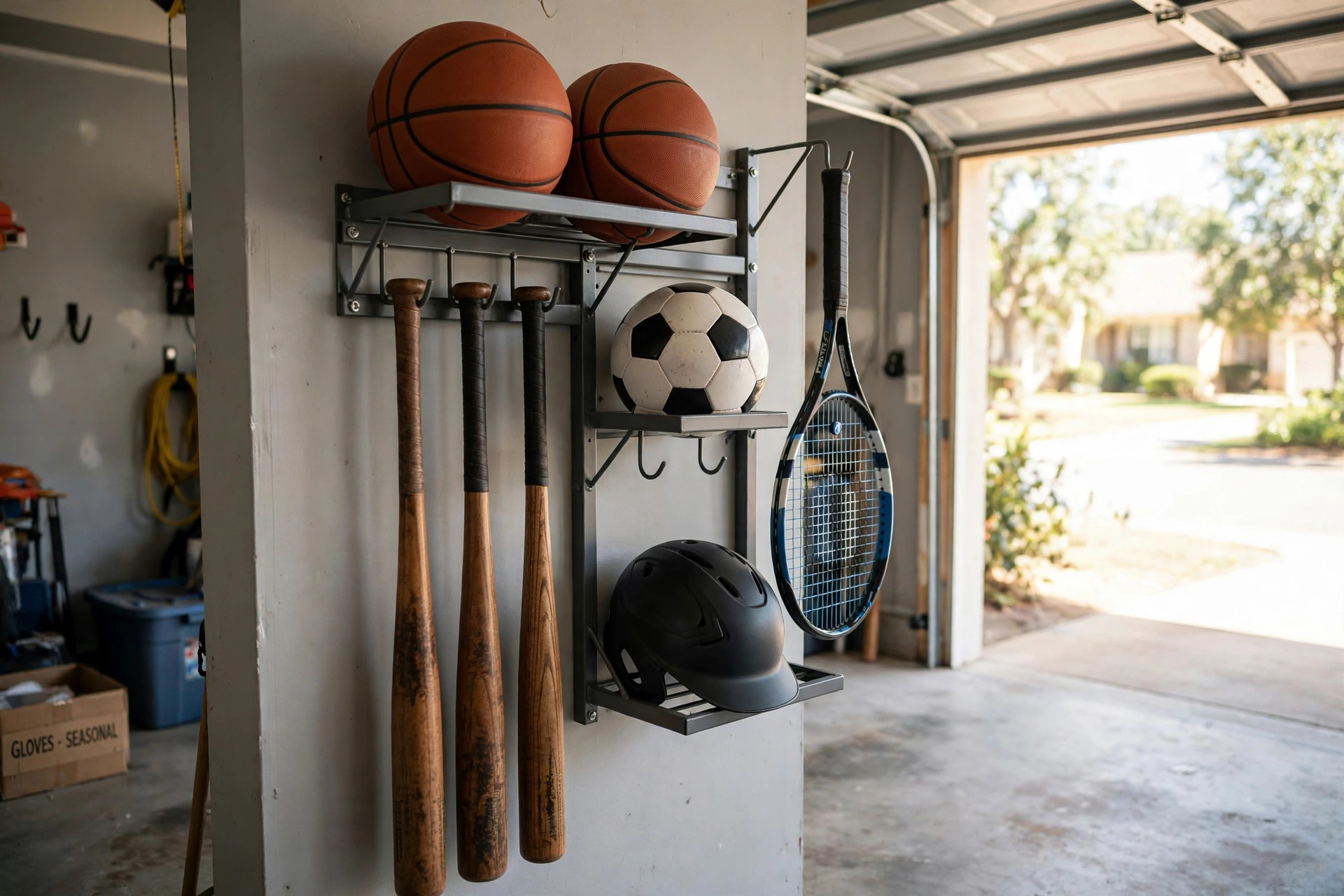

If you want to buy sports equipment organizers online in California, you have more choices today than ever before. Sports are a way of life in this state. Children play soccer and baseball almost all year. Adults surf, cycle, and play tennis. Over time the balls, bats, helmets, and shoes pile up in garages and spare rooms. A good organizer puts an end to the clutter. It keeps gear off the floor, protects it from damage, and saves you time when game day arrives. This guide walks you through every step of buying one online, from choosing the right type to having it shipped to your door.
Why Sports Gear Organizers Matter in California
California weather invites people outdoors twelve months a year. In most states the garage fills with sports gear only in spring and summer. In California the season never ends. That means your storage system must work hard all year round.
Clutter is more than a nuisance. A baseball bat leaning in a corner can fall and dent a car door. Wet soccer cleats left in a pile can grow mold. Expensive golf clubs can warp when they rest on damp concrete. An organizer lifts gear off the floor and gives every item a home. The result is a cleaner garage and gear that lasts longer.
There is also the matter of space. Many California homes, especially near the coast, have small garages. Vertical organizers that hang on the wall use space wisely. They keep the floor clear for a car or a workbench. For families with three or four athletes, this kind of system is not a luxury. It is a need.
What to Look for When You Shop: Buy Sports Equipment Organizers Online in California
Shopping online for storage has one drawback. You cannot touch the product before you pay. Good planning makes up for this. Before you click buy, study the points below. They decide whether the organizer will serve you for years or break within months.
Size and Capacity
Measure your space first. Take a tape measure to the garage or closet where the unit will stand. Write down the width, depth, and height of the free area. Compare these numbers with the product dimensions listed on the store page. Many buyers skip this step and end up with a rack that blocks a door or sticks out too far.
Count your gear as well. List the balls, bats, rackets, helmets, skis, or boards you own. A small family may need only a single rack for a dozen items. A youth coach may need a large unit for a whole team. Buy a little more capacity than you think you need. Collections grow.
Material and Build Quality
Most organizers are made of steel, plastic, or wood. Steel frames with powder-coated finishes hold the most weight and resist rust. This matters in coastal areas where salty air eats bare metal. Heavy-duty plastic units are lighter and cheaper, but they may wobble under a full load. Wood looks warm and fits nicely inside a home, yet it can warp in a damp garage.
Check the weight limit on the product page. A unit rated for one hundred pounds will hold several basketballs, a pair of helmets, and a set of golf clubs with room to spare. Read customer reviews that mention long-term use. A rack that still stands firm after two years is a sign of solid build quality.
Wall-Mounted, Freestanding, or Rolling
Wall-mounted racks save floor space and stay out of the way. They need sturdy wall studs and a drill to install. Freestanding racks need no tools and can move from corner to corner, but they take up floor area. Rolling racks add wheels, which help when you clean the garage or lend gear to a friend.
Think about who will use the organizer. Small children reach wall hooks better when they sit at a low height. Adults may prefer a tall tower that holds skis and snowboards. Choose the style that fits your household.
Types of Sports Equipment Organizers
Manufacturers offer several designs, each built for certain kinds of gear. Knowing the types helps you narrow the search.
Ball racks are the most common. They hold basketballs, soccer balls, and footballs in angled rows, like a small grocery display. This keeps balls from rolling around the garage. Some models hold as many as twelve balls in a single frame.
Bat and stick holders come next. These units have vertical slots or hooks for baseball bats, tennis rackets, lacrosse sticks, and hockey sticks. The best ones keep grips apart so they do not tangle. A few include a separate shelf for gloves and balls.
Sports towers and corner units combine shelves, hooks, and ball bins in one tall cabinet. They suit families with many sports. A tower can hold golf clubs, a basketball, two helmets, and a pair of skates at once. Corner designs fit snugly where two walls meet, using dead space well.
Board racks serve surfers, skaters, and snowboarders. These padded wall mounts hold boards flat or upright. Given how many Californians surf, a board rack may be the first organizer a household buys. Look for soft foam padding that will not scratch fiberglass.
Gear lockers work like gym lockers. They give each family member a private compartment. If you are looking for lockable sports equipment organizers, a locker with a latch and padlock loop keeps expensive items safe when the garage door stays open.
If budget is your first concern, many stores carry affordable sports equipment organizers under fifty dollars. These simple racks use basic steel or plastic and still do a fine job for light loads.
Cost and Price Ranges
Prices for sports equipment organizers in California range widely. Simple plastic ball bins start near twenty dollars. Mid-range steel racks with hooks and shelves run from fifty to one hundred fifty dollars. Large multi-sport towers and wooden lockers can cost two hundred to five hundred dollars or more.
Shipping changes the final price. Many large retailers ship free to California addresses on orders above a set amount. Smaller sellers may add ten to thirty dollars for freight, especially for heavy steel units. Always check the shipping line before you compare prices between stores.
Sales follow the calendar. January brings clearance prices as stores clear holiday stock. Late summer sales target back-to-school shoppers. Black Friday and Cyber Monday offer some of the deepest discounts of the year. If you can wait a few weeks, you may save a quarter of the cost.
Used organizers are another option. Online marketplaces often list garage racks at half price. Inspect photos closely and ask the seller about rust or missing parts. A solid used steel rack can serve for many more years.
How to Buy Online and Ship to California
Buying online is simple, but a few steps protect your money and time.
First, choose a reputable store. Large home goods retailers, sporting goods chains, and well-known storage brands have clear return policies. A store with a California warehouse will deliver faster and charge less for shipping.
Second, read the product page fully. Check the material, dimensions, weight limit, and assembly requirements. Look at the photos from several angles. Customer reviews tell you what the glossy photos do not. Pay special attention to reviews from other California buyers who mention heat, humidity, or garage conditions.
Third, compare total cost, not just the sticker price. Add shipping, tax, and any assembly service fee. California sales tax applies to online orders, and rates vary by county. A lower price from an out-of-state seller can vanish once freight is added.
Fourth, check delivery times. Standard ground shipping to California usually takes three to seven business days. During holiday seasons it can take longer. If you need the unit for a birthday or the start of a sports season, order early.
Fifth, understand the return policy before you buy. A good store gives you at least thirty days to return an unused item. Keep the box until you finish assembly and test the unit. If parts are missing, contact customer service right away. Most stores ship replacement parts free.
Finally, protect your payment. Use a credit card or a trusted payment service. Never wire money to a stranger from a classified ad. Save your order confirmation email until the return window closes.
Many buyers also browse entryway storage at the same time. A bench with cubbies near the front door holds shoes and bags, and shoppers often pair it with a garage rack. If that sounds useful, you can also buy mudroom storage benches online in arizona or check similar options for California delivery.
Care and Upkeep
A sports organizer needs little care, but a small routine keeps it strong for years. Wipe metal frames with a damp cloth every few months to remove dust. In coastal towns, check for rust spots once a season. A touch of spray paint on a small chip stops rust from spreading.
Tighten bolts and screws twice a year. Heavy use loosens joints over time. A loose rack wobbles and may tip. Keep a basic wrench in the garage so the job takes five minutes.
Plastic bins and fabric shelves need a wash now and then. Warm water and mild soap remove the grime that comes off muddy gear. Let parts dry fully before you reload them. Trapped moisture breeds mildew, which gives the garage a sour smell.
Rotate your gear with the seasons. When basketball season ends, move those balls to the back and bring the surf gear forward. This habit keeps the organizer from turning into a forgotten pile again.
Safety Tips
Storage seems harmless, but heavy gear can hurt. Follow these safety points.
Anchor tall units to the wall. A tower loaded with golf clubs and helmets is top-heavy. An earthquake, common in California, can tip it onto a child or a car. Most racks include a wall strap or bracket. Use it.
Place sharp items with care. Ski edges, ice skates, and bat ends can cut skin. Point sharp ends down or toward the wall. Keep these racks away from play areas where small children run.
Do not overload the unit. Respect the stated weight limit. An overloaded rack can collapse without warning. If you keep adding gear, buy a second unit instead of stacking more on the first.
Store chemicals away from sports gear. Garage fertilizers, paint, and car fluids should sit on a separate shelf. Fumes can damage leather gloves and helmet padding.
Keep a clear path to the exit. Even a neat organizer fails if it blocks the door. Leave enough room to walk out quickly in an emergency.
Frequently Asked Questions
How much does a good sports equipment organizer cost in California?
Expect to pay between fifty and one hundred fifty dollars for a solid steel rack that holds a family-sized collection. Basic plastic bins cost less than thirty dollars. Large towers and lockers run from two hundred dollars upward. Shipping to California is often free from major retailers.
Where is the best place to buy sports equipment organizers online?
Large home improvement stores, sporting goods retailers, and storage specialists all sell them. Stores like the big home centers carry wide selections with California delivery. Storage-focused brands offer deeper expertise. Compare reviews and total delivered cost before you choose.
What size organizer do I need for a family of four?
A mid-size multi-sport tower or a wall rack with at least twelve ball slots and several hooks usually works. Measure your space and count your items first. Buying slightly larger than you need leaves room for new gear.
Can these organizers hold heavy items like golf clubs?
Yes, if you buy a steel unit rated for the weight. Check the product page for the weight limit. Cheap plastic racks may bend under a full golf bag. Steel frames with reinforced joints handle heavy loads well.
How do I stop my garage organizer from rusting near the coast?
Choose powder-coated steel or plastic. Wipe the frame dry when it gets wet. Touch up paint chips quickly. A dehumidifier or good ventilation in the garage also helps keep metal dry.
Do I need tools to assemble a sports equipment organizer?
Most models need only basic tools, such as a wrench or a screwdriver, and take under an hour to build. Wall-mounted racks need a drill and a stud finder. Some stores offer assembly service for an extra fee.
A Final Word
To buy sports equipment organizers online in California is to buy back your garage. A good unit ends the daily hunt for a missing ball or glove. It protects the gear you paid good money for. It makes the whole house feel calmer. Measure your space, pick honest materials, and order from a store you trust. With a little planning, your sports gear will have a proper home by next weekend, and it will stay that way for years to come.
For more background, see Wayfair, The Spruce, and Apartment Therapy. For more background, see Family Handyman, IKEA, and The Container Store. See The Home Depot for more detail. See also Target for further detail.
References
Apartment Therapy. (n.d.). Home design ideas and inspiration. https://www.apartmenttherapy.com Family Handyman. (n.d.). DIY home repair and maintenance. https://www.familyhandyman.com IKEA. (n.d.). Home furnishings. https://www.ikea.com Target. (n.d.). Retail store. https://www.target.com The Container Store. (n.d.). Storage and organization products. https://www.containerstore.com The Home Depot. (n.d.). Home improvement products. https://www.homedepot.com The Spruce. (n.d.). Home and garden advice. https://www.thespruce.com Wayfair. (n.d.). Furniture and home goods. https://www.wayfair.com
Was this guide helpful?

About Lisa Anderson
The My Garden US editorial team writes practical, in-depth home and garden guides for American homeowners — tested advice, no fluff.
You May Also Like
A Guide to Stackable Makeup and Cosmetics Organizers with Free Shipping
June 9, 2026 0 views
Space Saving Attic Storage Solutions for Sale: A Practical Guide
March 16, 2026 0 views
Over the Door Organizers Price Comparison USA: A Plain Guide for Smart Shoppers
September 2, 2026 0 views