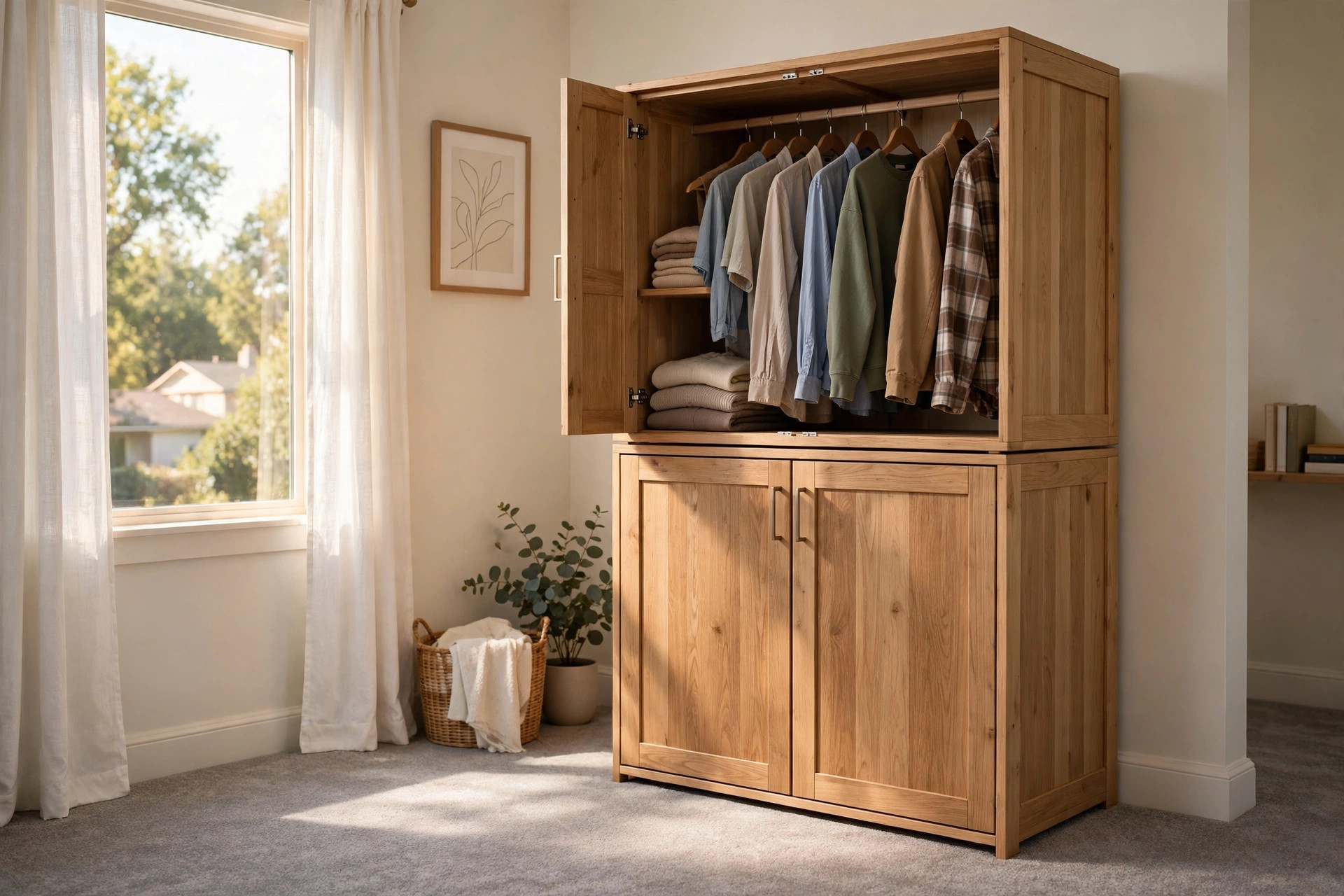
Most homes never have enough closet space. Coats pile on chairs. Shoes line the hall. Sweaters sit in laundry baskets for weeks. Stackable freestanding wardrobe closets with free shipping solve this common problem in a simple way. They add a full closet where none existed, and they do it without tools, without a contractor, and without a freight charge. A stackable unit comes in parts. You set the base on the floor. You set the top on the base. You add doors, shelves, and a hanging rod. The whole piece stands on its own, so it can go in a bedroom corner, a spare room, a basement, or a rental apartment. Because the box ships free, the price you see is close to the price you pay. That makes these wardrobes one of the most honest bargains in home storage today.
Why It Matters
A home that stays tidy feels larger and calmer. Studies of home life have long shown that order reduces daily stress. When clothes have a home, mornings run faster. Children get dressed with less fuss. Guests see a neat room instead of an overflowing chair. A freestanding wardrobe gives you that order without changing the house. You do not cut into walls. You do not call a carpenter. You simply place the unit where it fits and load it up. If you move, the unit moves with you. Landlords approve of this. Nothing is screwed into their walls.
Stacking adds a second advantage. A single low cabinet takes floor space but gives little height. A stackable set doubles the height on the same footprint. That is real value in small bedrooms and dorms. The upper unit often holds folded clothes, blankets, or out of season coats. The lower unit holds the daily wear on a rod. The system grows with your needs. Start with one set. Add another set next year. The look stays matched.
Free shipping changes the math. A large wardrobe can cost thirty to sixty dollars to ship by truck. Sellers who offer free shipping fold that cost into the listed price, which lets you compare units side by side without surprise fees at checkout. It also means delivery crews or parcel carriers bring the boxes to your door. Many heavy wardrobes ship flat in two boxes, each light enough for one person to carry.
What To Look For: Stackable Freestanding Wardrobe Closets with Free Shipping
Size And Shape
Measure your wall before you shop. Note the width, the depth, and the ceiling height. A standard stackable wardrobe unit is about thirty to forty inches wide and sixteen to twenty inches deep. Two stacked units reach about sixty to seventy two inches tall. Leave two inches above the top for air flow and easy stacking. Check door swing too. Hinged doors need eighteen to twenty inches of clear space in front. Sliding doors need none, which helps in tight rooms.
Build Material
Three materials dominate this market. Particle board with a foil or paper finish is the most common. It looks clean and costs the least. Solid pine and other softwoods cost more but take wear better and can be refinished. Steel frame wardrobes with fabric covers are the lightest and the cheapest to ship, but they look less like real furniture. For a bedroom piece you will see every day, a wood or wood panel unit is usually the better pick. It blends with dressers and nightstands.
Stacking Hardware
A true stackable unit has a way to lock the top box to the bottom box. Look for metal dowels, locking brackets, or a tongue and groove frame. Avoid units that simply rest one box on another with no fastener. That setup can shift when you pull a heavy door. Check the weight rating. Each shelf should hold at least twenty five pounds. The hanging rod should hold at least fifty pounds of clothes. Heavier is better.
Back Panels And Feet
A nailed on back panel keeps the frame square. It also stops dust and keeps the unit from racking sideways. Some cheap units ship without a back panel to cut cost. Buy the panel version if you can. Adjustable feet are a small luxury that pays off on old floors. They let you level the unit so doors close true.
Types And Options
Two Box Stackable Sets
The classic form is a pair of identical boxes. One becomes the base. One becomes the top. Many brands sell the pair as a kit with one set of hardware. This form is simple, sturdy, and easy to move. Each box alone is light enough for one adult. For more ideas on matching storage pieces, see our guide to stackable ottoman storage benches buying guide.
Rod Top And Shelf Bottom
In this form the upper box carries the hanging rod and two doors. The lower box carries shelves and sometimes drawers. It works like a real built in closet. Daily clothes hang up top at eye level. Shoes and folded items sit below. This is the most popular form for bedrooms.
Tall Single Stack Units
Some brands sell one tall unit that stacks a narrow tower onto a wider base. The tower might hold long coats or dresses. These are good for narrow walls and corners. They use less floor than two full width sets.
Fabric And Frame Hybrids
A steel frame with canvas shelves and a zip cover stacks well and ships very light. It suits dorm rooms, attics, and short term rentals. It is not as dust tight as a wood unit. It also sags over time if loaded past its rating. Buy it for light duty use.
Corner And Sliding Door Models
A few makers offer corner shapes that turn ninety degrees, which fills dead corner space well. Sliding door models need no swing room and read modern. Their tracks can wear, so check that replacement rollers are sold.
Cost And Price
Prices run in clear bands. A basic two box particle board set with free shipping costs about one hundred to one hundred eighty dollars. A mid range set with better hardware, drawers, and a richer finish costs about one hundred eighty to three hundred fifty dollars. Solid pine or rubberwood sets cost about three hundred fifty to seven hundred dollars. Large three stack systems or wide double rod models can reach nine hundred dollars or more.
Free shipping is now common at online furniture sellers. Major retailers fold delivery into the price on items above a certain weight class, and many smaller shops match them. Watch for two traps. First, some sellers show free shipping but add a handling fee at checkout. Read the final total before you pay. Second, a very low price with free shipping may mean thin panels and weak hardware. A ten dollar saving at the door is not worth a wardrobe that wobbles in a year.
Sales follow the calendar. August brings back to school sales that favor small wardrobes and dorm storage. January brings clearance of fall furniture lines. Holiday weekends often carry site wide free shipping codes that stack with sale prices. If you can wait a month, you may save fifteen to twenty percent.
Delivery time matters too. In stock sets from large warehouses arrive in three to seven days. Custom colors or special sizes can take four to eight weeks. If you need the storage for a move in date, order early. The big box stores listed below keep common models in stock year round, and their project guides explain what to expect on delivery day. Good planning advice also appears in best closet organizer systems for midwest homes, which covers sizing a closet project from start to finish.
Care And Upkeep
A wardrobe asks little. Dust the tops once a month. Wipe shelves with a damp cloth. Dry them at once so moisture does not swell the board. Keep the unit away from direct heat vents, which dry out wood and warp thin panels. In damp basements, leave two inches between the back panel and the wall so air moves. A small box of baking soda on a shelf absorbs musty smells.
Check hardware twice a year. Tighten the bolts that join the stacked boxes. Tighten hinge screws. Oil sliding door tracks with a drop of silicone spray. Replace missing shelf pins at once. A shelf that drops on one side can crack the panel. If a door starts to sag, adjust the hinge screws before the holes strip. Most hinges allow side and height adjustment with a single screwdriver.
Fabric covers need a different routine. Vacuum the canvas shelves every few months. Spot clean stains with mild soap and water. Let the fabric dry fully before you load clothes back in. A damp cover can mildew in a closed room.
Safety
A tall wardrobe can tip. This is the main safety risk, and it is easy to prevent. Every unit should ship with anti tip straps or brackets that fasten the top box to the wall. Install them. Use a stud, not just drywall. The federal safety agency publishes plain guidance on anchoring tall furniture, and their home safety pages are worth a visit for any household with small children. Heavy items go low. Light items go high. This simple rule keeps the center of gravity near the floor.
Do not climb the unit to reach the top. Use a step stool. Do not hang from the doors. Teach children that a wardrobe is not a ladder. Keep the doors closed when the unit holds heavy coats, since an open door shifts weight forward. If the floor is uneven, level the feet before you load the shelves. A leaning stack is a falling stack.
Ventilation counts too. A packed wardrobe in a humid room can grow mildew on leather shoes and wool coats. Leave the doors open for a few hours once a week in summer. Cedar blocks or balls help with moths and add a clean smell. They do not replace cleaning, but they are a good extra step. For small item storage that pairs well with a wardrobe, our look at space saving rotating lazy susan turntables buying guide shows how turntables keep shelves neat.
Frequently Asked Questions
How hard is assembly?
Most two box stackable wardrobes take one to two hours for one adult. The boxes arrive flat with labeled parts, cam locks, and an Allen key. You build the base, build the top, stack them, and fit the doors last. A second person helps when you lift the top box into place, but many buyers manage alone by standing the top box on a chair first. Read the manual fully before you start. Sorting all parts at the start saves real time.
Will it fit in a small bedroom?
Yes, if you measure first. A standard set is about three feet wide and less than two feet deep. That is smaller than a twin bed and smaller than most dressers. Sliding door models need no swing space, so they fit walls that hinged models cannot. Sketch the room on paper with the wardrobe footprint marked. Leave at least two feet of walkway in front for dressing.
Can I stack units from different brands?
This is not advised. Stacking hardware differs by brand and by model year. Dowels, bracket holes, and frame profiles rarely match. A mismatched stack can slip or lean. If you want a taller system, buy a second set from the same brand and the same product line. Keep the model number on file in case you order more later.
How much weight can the rod hold?
Most wood panel wardrobe rods hold fifty to seventy five pounds. That is about twenty to thirty shirts or ten heavy winter coats. Steel frame and fabric units hold less, often twenty to thirty pounds. Spread heavy coats across two rods if you have them. If the rod bows in the middle, you have overloaded it. Move heavy items to shelves.
Is free shipping really free?
In most cases, yes. The seller builds the freight cost into the listed price. The total at checkout should show zero dollars for standard shipping. Check the fine print for remote area surcharges. Some sellers add a fee for addresses far from their warehouses. Also check the return terms. Free outbound shipping does not always mean free return shipping. A wardrobe that does not fit may cost real money to send back.
Wood or fabric, which lasts longer?
A wood panel wardrobe lasts longer under daily use. It resists dust, holds shape, and takes cleaning well. Expect five to ten years from a mid range unit. A fabric and frame unit lasts two to four years of daily use before zippers and shelves wear. Fabric units win on price, weight, and easy moving. Match the material to the job. A master bedroom deserves wood. A dorm room does fine with fabric.
A Final Word
A stackable freestanding wardrobe closet is one of the simplest upgrades a home can get. It adds real closet space in an afternoon, moves with you to the next address, and costs less than built in work by a wide margin. Measure your wall, pick a sturdy build, anchor it to a stud, and load it with care. With free shipping on most models, the price on the screen is the price you pay. That is a rare and welcome thing in furniture shopping. Take your time, compare two or three models, and buy the one that fits your room and your life. Your mornings will thank you.
For more background, see The Container Store, The Home Depot, and Wayfair. For more background, see The Spruce, Apartment Therapy, and Family Handyman. See IKEA for more detail. See also Target for further detail.
References
Apartment Therapy. (n.d.). Home design ideas and inspiration. https://www.apartmenttherapy.com Family Handyman. (n.d.). DIY home repair and maintenance. https://www.familyhandyman.com IKEA. (n.d.). Home furnishings. https://www.ikea.com Target. (n.d.). Retail store. https://www.target.com The Container Store. (n.d.). Storage and organization products. https://www.containerstore.com The Home Depot. (n.d.). Home improvement products. https://www.homedepot.com The Spruce. (n.d.). Home and garden advice. https://www.thespruce.com Wayfair. (n.d.). Furniture and home goods. https://www.wayfair.com
Was this guide helpful?

About Sarah Mitchell
The My Garden US editorial team writes practical, in-depth home and garden guides for American homeowners — tested advice, no fluff.