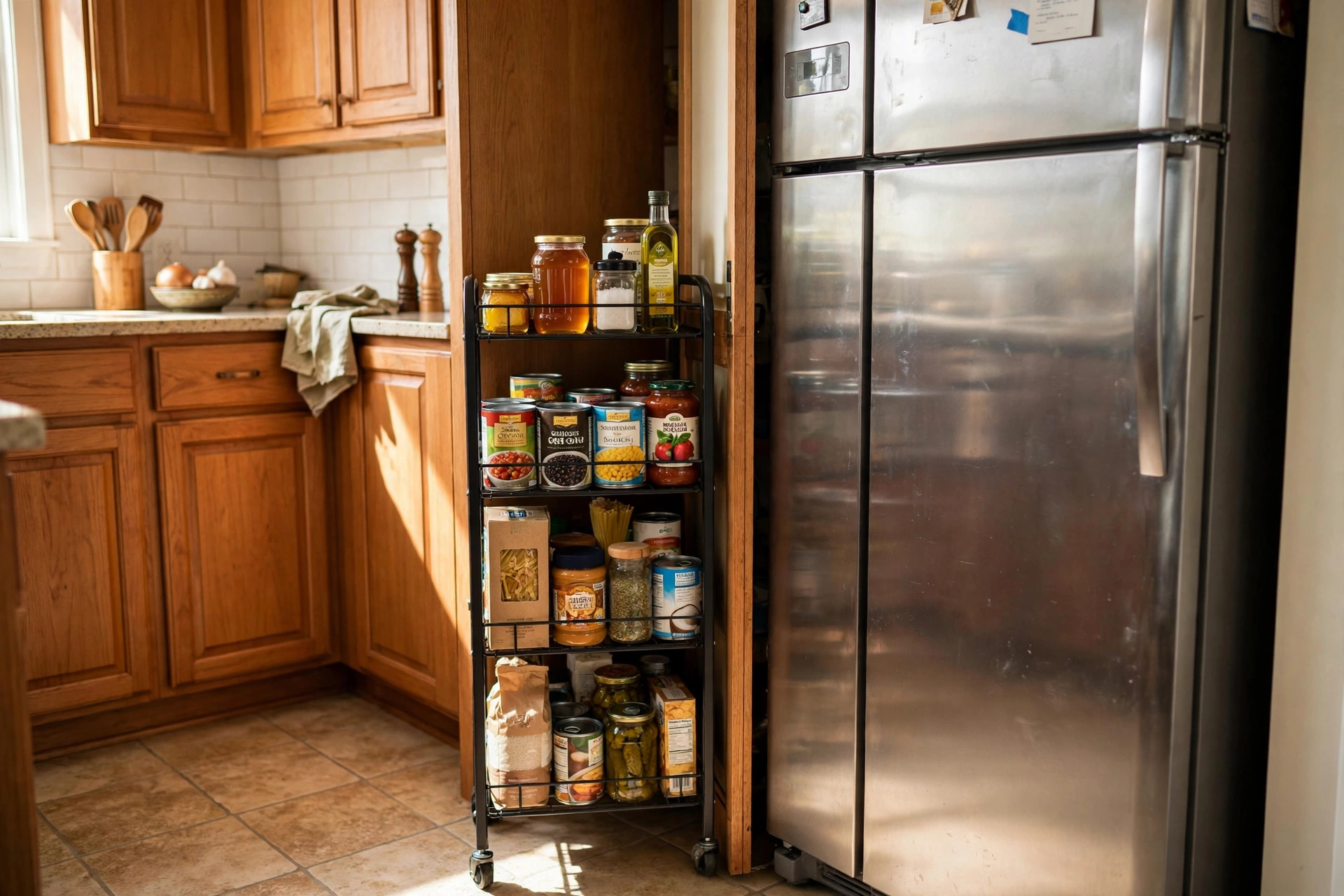

A slim rolling pantry carts price comparison usa buyers can use should start with one fact: these narrow carts are made to fit in gaps most storage ignores. If you have a gap of four to eight inches between the fridge and the wall, a slim rolling cart can turn that dead space into working storage. This guide compares the main types, sizes, materials, and prices you will see in American stores today.
Why Slim Rolling Pantry Carts Matter
Kitchen space is dear in most American homes. Renters in city apartments and owners of older houses often face the same problem: a long, thin gap beside the refrigerator or between cabinets that holds nothing but dust. A slim rolling cart fills that gap with four or five tiers of shelving.
These carts matter for three reasons. First, they use vertical space, so a footprint of just one or two square feet can hold dozens of cans and jars. Second, they roll out on wheels, so everything is easy to reach without bending or stretching. Third, they are cheap compared to built-in cabinet work, which makes them a strong choice for renters.
A slim cart also helps you keep food in view. When cans hide at the back of a deep cabinet, they expire before you use them. On an open cart, you see what you have. That can cut food waste and save money over time. Readers looking at wider options may also like our top rated rolling storage carts for small apartments, which cover larger carts for tight rooms.
How to Choose a Slim Rolling Pantry Cart: Slim Rolling Pantry Carts Price Comparison Usa
Measure the Gap First
Measure the width, depth, and height of the space where the cart will live. Write the numbers down. A cart that is even half an inch too wide will not fit, and a cart that is too short wastes space. Allow one extra inch for the wheels and the handle. Depth matters too: many American refrigerators are about 28 to 33 inches deep, and a cart that is much shorter will look lost beside them.
Check the Materials
Most slim pantry carts use one of three materials. Powder-coated metal is the most common and the strongest. It holds heavy cans and cleans with a damp cloth. Plastic carts are lighter and often cheaper, but they can sag under weight. Bamboo or wood carts look warm and suit open kitchens, but they cost more and need care to stay free of stains.
Look at the Wheels
The wheels are what make the cart useful. Look for four smooth caster wheels that turn fully. Two of them should lock, so the cart stays put on a hard floor. Cheap wheels stick and squeak. If your floor is tile or hardwood, rubber or soft wheels will not scratch the finish.
Count the Tiers and the Weight Limit
A slim cart usually has three to five tiers. Each tier should hold at least 10 to 15 pounds if you plan to store cans and bottles. Check the listed weight limit per shelf and for the whole cart. Stronger carts cost a little more, but they last longer and do not bend.
For a fuller look at ratings and tests, see our rolling storage carts reviews and buying guide.
Types and Options
Tiered Metal Carts
The classic slim pantry cart is a metal frame with four or five open wire or solid tiers. It is light, strong, and easy to clean. Prices are fair. Most come with a small top tray that works as extra counter space. This is the type most shoppers choose first.
Multi-Drawer Slim Carts
Some carts replace open shelves with shallow drawers. Drawers hide clutter and keep dust off small packets. They work well for spice packs, tea bags, and snacks. They cost more than open carts and hold a little less, but they look tidy in open kitchens.
Wood and Bamboo Carts
Wood carts bring a warm look. They are often sold as kitchen islands on wheels rather than pantry carts, but slim models fit the same gaps. They cost the most. They suit homes where the cart will always be seen, because the finish is part of the decor.
Pull-Out Pantry Units
A few makers sell slim carts that fit inside a tall cabinet and roll out like a drawer. These are not freestanding. They need a cabinet frame to sit in. They cost more and often need simple assembly, but they give the cleanest look of all.
Retailers such as Wayfair and Target carry a wide range of these types, from budget metal carts to wood models. The home improvement chains, including Home Depot and Lowe’s, stock them in store, so you can see the frame before you buy. Design shops like Crate and Barrel and IKEA focus on carts that look good in open rooms, and The Container Store sells slim carts made for tight pantries.
Cost and Price
This slim rolling pantry carts price comparison usa section is based on prices commonly seen in American stores and online shops in 2026. Prices move with sales and shipping costs, so use these bands as a guide, not a fixed quote.
Budget metal carts with three to four tiers sell for about 25 to 40 dollars. They are plain but sound. They suit a first apartment or a laundry room. Wheels and locks are basic at this price.
Mid-range carts with four to five tiers sell for about 40 to 80 dollars. This is the sweet spot for most buyers. You get a stronger frame, better wheels with two locks, and a higher weight limit per tier. Many of the best-reviewed models sit in this band.
Premium wood, bamboo, or heavy-duty steel carts sell for about 80 to 150 dollars. At this price you pay for finish, design, and strength. A well-made wood cart can last for years and move from kitchen to office to bathroom as your needs change.
Shipping can change the real price. A cart that costs 30 dollars with free shipping beats a cart that costs 25 dollars with 12 dollars of shipping. Store pickup at a local shop avoids this problem. If you shop only online, compare the delivered price, not the shelf price. Homeowner guides at Family Handyman often remind readers to check return terms too, because a cart that does not fit is common enough that a free return matters. For decorating ideas that show how carts look in real rooms, The Spruce has photo guides worth a look.
Care and Upkeep
A slim cart needs little care, but a few habits will keep it sound for years. Wipe metal shelves with a damp cloth each month so dust does not build up. Dry the shelves after cleaning, because standing water can spot the finish. Check the wheels twice a year. Hair and thread wrap around casters and make them stiff; pull it free and add a drop of light oil if they squeak.
Do not overload the top tier. A tall cart with heavy cans on top can tip when a child pulls on it. Keep heavy cans low and light boxes high. If your cart has a wood top, wipe spills at once so the finish does not stain. Tighten the screws once a year, because rolling loosens joints over time. In damp homes, check the frame for rust spots each season. A small spot of rust can be sanded and touched up with paint before it spreads. Plastic carts need a different check: look for cracks along the shelf edges, which show when a shelf is carrying more than it should. Move heavy items down a tier if you see white stress marks in the plastic.
Storage works best when each tier has a job. Put daily items on the middle tiers where you reach them without bending. Put backup stock on the bottom tier and light items, such as paper towels or snack bags, on the top. This simple order makes the cart faster to use and easier to clean.
Safety
Anchor tall carts if small children are in the home. A five-tier cart is top-heavy when full. Some models include a wall strap; use it. Keep the brake locks on two wheels engaged when the cart is parked, so it does not roll across a sloped floor.
Keep hot items off the cart. A slim cart is storage, not a side table for a hot pan. Keep cleaning sprays on a low shelf away from food, or better, in a separate cart. If the cart holds medicines or vitamins, choose a model with drawers that close, and keep it where children cannot reach.
Frequently Asked Questions
What width fits between a fridge and a cabinet?
Most gaps run four to eight inches wide. Measure your own gap with a tape measure. Choose a cart at least half an inch narrower than the gap so the wheels and handle have room. A six-inch cart is the most common size in American stores.
How much weight can a slim pantry cart hold?
A mid-range metal cart holds about 40 to 60 pounds in total, with 10 to 15 pounds per tier. Budget carts hold less. Check the maker’s stated limit and stay under it. Heavy cans belong on the lowest tiers.
Are slim rolling carts good for renters?
Yes. They need no screws in the wall and no built-in work. When you move, you roll the cart out and take it with you. This is why renters in small apartments buy them so often. Shoppers in the Sunshine State can see local buying notes in our buy rolling storage carts online in florida page.
Metal or wood: which lasts longer?
Powder-coated metal resists water and stains and usually lasts longer in a working kitchen. Wood looks better but needs more care. If the cart will sit next to a stove or sink, metal is the safer pick.
Can I use a slim cart outside the kitchen?
Yes. These carts work in bathrooms for towels and bottles, in laundry rooms for soap and supplies, and in offices for paper and files. Just keep the load within the weight limit and lock the wheels.
Can a slim cart roll on carpet?
It can, but poorly. Casters sink into thick carpet and make the cart hard to pull. Slim carts work best on tile, wood, or vinyl floors. If your only gap sits on carpet, look for a cart with larger wheels, or place a firm plastic mat in front of the gap to give the wheels a smooth path.
Do the wheels scratch hardwood floors?
Cheap hard plastic wheels can mark soft floors. Choose rubber or soft caster wheels, or lay a thin mat under the cart’s path. Locking wheels should be soft too, since they drag a little when you engage them.
How long do these carts usually last?
A mid-range metal cart used in a normal kitchen lasts five to eight years. Budget plastic carts last two to four years of daily rolling. Wood carts last as long as their finish is kept dry and clean. The wheels wear first, so buy a cart with standard-size casters that are easy to replace.
A Final Word
A slim rolling pantry cart is a small buy that solves a real problem. Measure your gap, pick a sturdy frame, and compare the delivered price across two or three sellers before you order. For most kitchens, a mid-range metal cart with five tiers and locking wheels is the best value. It fills the gap you already have, holds the food you already buy, and moves with you when you go.
References
Crate and Barrel. (n.d.). Furniture and home decor. https://www.crateandbarrel.com Family Handyman. (n.d.). DIY home repair and maintenance. https://www.familyhandyman.com IKEA. (n.d.). Home furnishings. https://www.ikea.com Lowe’s. (n.d.). Home improvement products. https://www.lowes.com Target. (n.d.). Retail store. https://www.target.com The Container Store. (n.d.). Storage and organization products. https://www.containerstore.com The Home Depot. (n.d.). Home improvement products. https://www.homedepot.com The Spruce. (n.d.). Home and garden advice. https://www.thespruce.com Wayfair. (n.d.). Furniture and home goods. https://www.wayfair.com
Was this guide helpful?

About David Wilson
The My Garden US editorial team writes practical, in-depth home and garden guides for American homeowners — tested advice, no fluff.
You May Also Like

Stackable Toy Storage Bins for Sale: A Practical Guide for American Homes
May 29, 2026 0 views
Top Rated Shoe Storage Racks for Sale: How to Pick the Right One
September 13, 2026 0 views
Best Kitchen Cabinet Organizers for American Homes
September 18, 2026 0 views