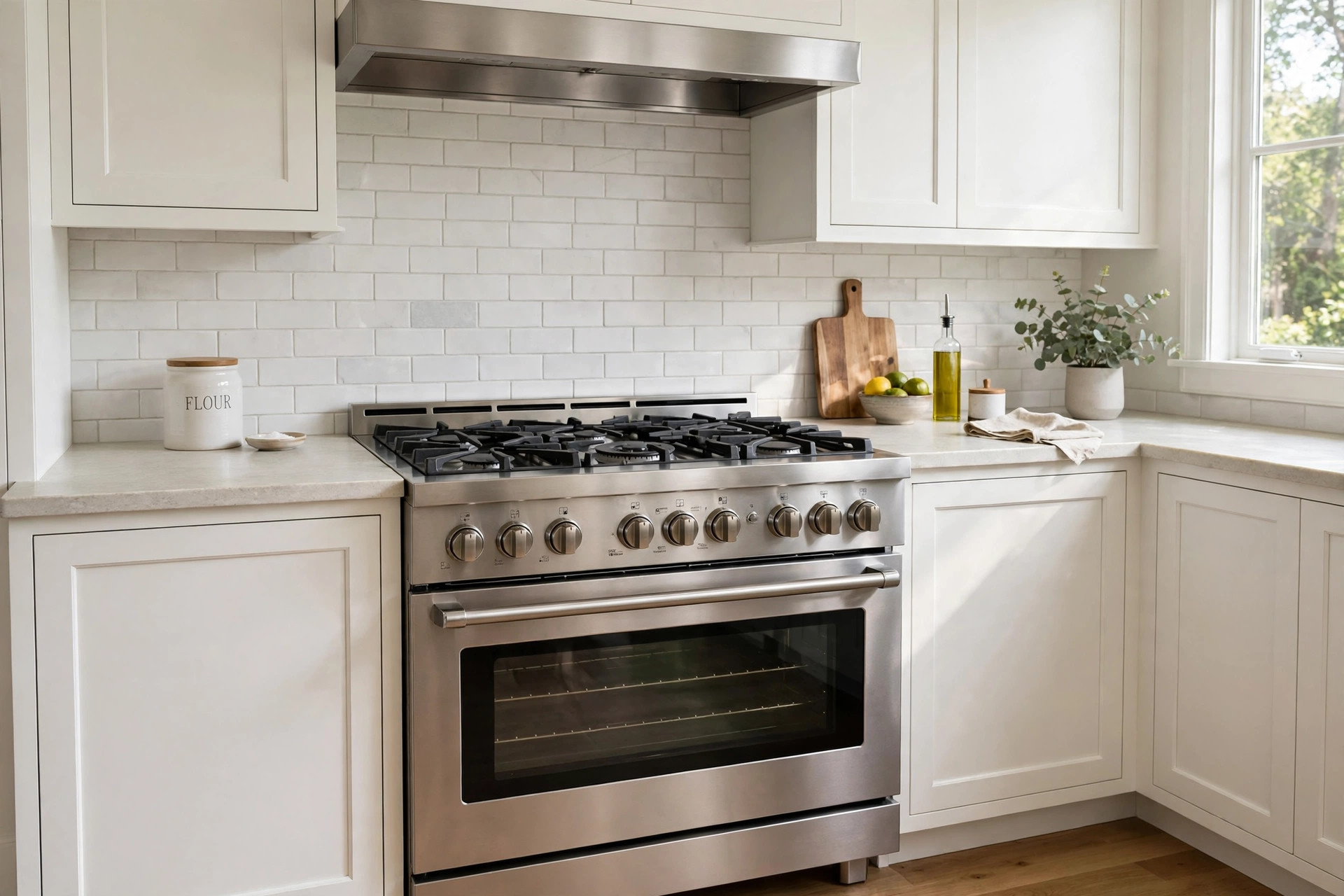

Shoppers who search for dual fuel ranges for sale usa want the best of two worlds. They want the quick, responsive heat of a gas cooktop. They also want the even, steady heat of an electric oven. A dual fuel range gives both. It pairs gas burners on top with an electric oven below. This guide explains what these ranges offer, what to look for, what they cost, and how to shop with confidence.
Why Dual Fuel Ranges Matter
Cooking well depends on control. Gas burners give instant control. When you turn the knob down, the flame drops at once. This makes gas ideal for searing meat, stir-frying vegetables, and simmering sauces. Many serious home cooks prefer gas on the cooktop for this reason.
Electric ovens give even control of a different kind. Electric elements hold a steady temperature. They cycle on and off in a smooth way. This makes them ideal for baking. Cakes rise evenly. Cookies brown at the same rate on every tray. Roasts cook through without hot spots. Guides from The Spruce note that even heat is one of the main reasons bakers choose electric ovens.
A dual fuel range combines these strengths in one appliance. You do not have to choose between them. You get a gas cooktop for daily cooking and an electric oven for baking and roasting. For a busy family kitchen, this combination is hard to beat.
There is also the matter of resale value. Kitchens sell homes. A quality range is often the center of the kitchen. Home improvement experts at This Old House often point out that a well-chosen appliance package lifts the whole feel of a kitchen. A dual fuel range signals that the kitchen was built for real cooking.
What to Look for When You Shop: Dual Fuel Ranges for Sale Usa
Gas and Electric Hookups
A dual fuel range needs both a gas line and a 220-volt electric outlet. Many kitchens have one or the other, not both. Before you shop, check what your kitchen has. If you need a new gas line or a new outlet, have a licensed professional install it. This adds cost, so factor it into your budget.
Cooktop Layout and Burner Power
Look at the number of burners and their power. Most dual fuel ranges have four to six burners. Burner power is measured in BTU. A high BTU burner, often 15,000 to 20,000, heats large pots fast. A low BTU burner, often 5,000, gives a gentle simmer. A good range offers both ends. Sealed burners are easier to clean than open burners.
Oven Size and Features
Oven capacity is measured in cubic feet. A standard range oven holds about 5 to 6 cubic feet. Larger families may want more. Look for convection fans, which move hot air around the oven. Convection helps food cook faster and more evenly. Self-cleaning modes use high heat to burn off spills. Steam clean modes use water and lower heat. Both save scrubbing time.
Controls and Build Quality
Check that knobs and handles feel solid. Look for heavy oven racks that glide smoothly. Digital controls should be easy to read. Some models include a temperature probe that stays in the roast and reports when it is done. Stainless steel is the most common finish. It matches other appliances and resists stains. Major makers such as Whirlpool and GE Appliances publish detailed spec sheets that list these features.
Types and Options on the Market
Slide-In Models
Slide-in ranges sit between cabinets with no finished sides. Their controls sit at the front. This gives a clean, built-in look. Slide-in models are popular in kitchen remodels because they blend into the cabinetry line.
Freestanding Models
Freestanding ranges have finished sides and a back panel with controls. They fit into a standard range opening. They are usually less expensive than slide-in models. They work well as a direct replacement for an old range.
Professional-Style Ranges
Professional-style ranges are wider and heavier. They often measure 36 to 48 inches wide. They carry more burners and larger ovens. They use heavy grates and thick metal. They suit large kitchens and serious cooks. Brands in the professional space include lines carried by Bosch Home.
Width and Size Choices
The standard width is 30 inches. This fits most American kitchens. Wider models at 36 inches give more cooktop space. Very wide models at 48 inches often include two ovens. Measure your opening before you shop. Allow a small gap on each side for air flow.
If you are comparing gas-only models as well, see our guide to gas kitchen ranges for sale usa. For a deeper look at dual fuel features, read our dual fuel ranges buying guide usa.
Cost and Price
Dual fuel ranges cost more than gas-only or electric-only ranges. The extra wiring, controls, and oven elements add to the price. Entry models often start near 1,500 to 2,500 dollars. Mid-range models run from 2,500 to 4,500 dollars. Professional-style models can reach 6,000 dollars or more.
Watch for sales events. Holiday weekends often bring strong appliance discounts. Floor models and open-box units can save hundreds of dollars. Ask about package deals when you buy a range with a refrigerator and dishwasher. Retailers such as Home Depot and Lowe’s run frequent promotions and price matching.
Remember the full cost. Delivery may be free or may cost extra. Haul-away of the old range often has a fee. Installation of a gas line or a 220-volt outlet can add several hundred dollars. Get quotes before you buy so the final bill holds no surprise.
Energy use matters too. ENERGY STAR offers guidance on efficient appliances. A well-insulated oven wastes less heat. This saves money over the years and keeps the kitchen cooler in summer.
Think about long-term value, not just the sticker price. A range that lasts twenty years costs less per year than a cheap range replaced twice. Look at warranty length. Many makers offer one year of full coverage. Some extend parts coverage on burners and elements. Read the warranty before you buy. Ask the store about service plans and who does repairs in your area.
Compare total cost of ownership. Gas is often cheaper than electricity for cooktop cooking in many regions. Electric ovens bake well but run on a 220-volt circuit. Your utility rates decide which fuel costs less in your home. A quick call to your gas and electric companies can give you current rates. Then you can weigh the cost of each cooking task with real numbers.
For local deals, check our page on dual fuel ranges deals near me.
Care and Upkeep
A dual fuel range lasts longer with simple care. Wipe the cooktop after each use. Spills left on burners bake hard and block the flame. Use a soft cloth and mild soap. Avoid harsh pads on stainless steel. Wipe with the grain of the metal.
Clean the oven as the maker directs. Self-clean cycles reach very high heat. Remove racks first unless the manual says they can stay. Run the cycle when the house can be aired out. For light soil, a steam clean mode works well and takes less time.
Check the gas connection once a year. If you smell gas, leave the house and call the gas company or the fire department. Do not try to fix a gas leak yourself. Have a licensed technician inspect the line and fittings.
Keep the oven door seal clean. A worn seal lets heat escape. This makes baking uneven and wastes energy. Replacement seals are inexpensive and easy to install. Repair guides from Bob Vila walk through common range maintenance tasks step by step.
Check the oven light and replace burned-out bulbs promptly. A dark oven tempts you to open the door to check food. Each open door lets heat escape and lengthens cook time. Clean the oven window with a gentle glass cleaner so you can see inside without opening the door.
Treat stainless steel surfaces with a cleaner made for stainless. Spray the cleaner on a cloth, not on the range. Wipe in the direction of the grain. This keeps the finish bright and free of streaks. For porcelain cooktop surfaces, use a non-abrasive cleaner. Rinse with a damp cloth and dry with a soft towel to prevent water spots.
Once a year, pull the range out and clean behind it. Dust and grease collect on the back panel. A vacuum with a brush head clears it well. While the range is out, look at the power cord and gas line. Call a technician if you see damage or wear. Regular care like this keeps a dual fuel range working safely for fifteen to twenty years.
Safety
Gas and electricity both demand respect. Always turn burners fully off when you finish cooking. Keep a fire extinguisher in or near the kitchen. Never leave food cooking on high heat unattended.
Teach children to stay away from a hot range. Use the back burners for pots with handles turned inward. This keeps small hands from grabbing a hot handle. Many ranges have control lock features. Use them when children are near.
Install a carbon monoxide detector near the kitchen. Gas appliances produce small amounts of carbon monoxide. A detector gives early warning of a problem. Test it monthly and change batteries as needed. Consumer Reports rates detectors and other home safety products.
Frequently Asked Questions
Do I need both a gas line and a 220-volt outlet? Yes. A dual fuel range uses gas for the cooktop burners and electricity for the oven. You need a gas supply line and a 220-volt electric outlet behind the range. If your kitchen lacks one of them, a licensed professional must add it.
Are dual fuel ranges better than gas ranges? It depends on how you cook. Dual fuel ranges give you gas burners plus an electric oven. The electric oven bakes more evenly than most gas ovens. If you bake often, dual fuel is the better choice. If you rarely bake, a gas range may suit you fine.
How much does installation cost? Delivery and basic hookup often run 100 to 300 dollars. Adding a new gas line can cost 300 to 800 dollars or more. Adding a 220-volt outlet can cost 200 to 500 dollars or more. Costs vary by region and by the work needed. Get a written quote first.
Can I convert my kitchen to dual fuel? In most cases, yes. An electrician can add the 220-volt outlet. A licensed gas fitter can run a gas line. Older homes may need a panel upgrade to handle the load. Have both trades inspect your kitchen before you buy the range.
Do dual fuel ranges use more energy? They use gas and electricity, so both bills are affected. A well-insulated oven and sensible cooking habits keep costs low. Convection modes cut cooking time. Turning the oven off a few minutes early lets stored heat finish the job.
What size should I buy? A 30-inch range fits most kitchens and suits most families. Choose 36 inches if you cook large meals often and have the space. Choose 48 inches only for very large kitchens with two-oven needs. Measure twice before you order.
A Final Word
Dual fuel ranges for sale usa give home cooks a strong pairing. Gas burners answer fast. Electric ovens bake true. When you shop, check your hookups, compare burner power and oven features, and count the full cost of delivery and installation. With the right model and simple care, your range will serve your kitchen well for many years.
References
Bob Vila. (n.d.). Home improvement advice. https://www.bobvila.com Bosch. (n.d.). Home appliances. https://www.bosch-home.com Consumer Reports. (n.d.). Product reviews and ratings. https://www.consumerreports.org ENERGY STAR. (n.d.). Energy efficient products. https://www.energystar.gov GE Appliances. (n.d.). Kitchen and home appliances. https://www.geappliances.com Lowe’s. (n.d.). Home improvement products. https://www.lowes.com The Home Depot. (n.d.). Home improvement products. https://www.homedepot.com The Spruce. (n.d.). Home and garden advice. https://www.thespruce.com This Old House. (n.d.). Home renovation guidance. https://www.thisoldhouse.com Whirlpool. (n.d.). Home appliances. https://www.whirlpool.com
Was this guide helpful?

About Robert Taylor
The My Garden US editorial team writes practical, in-depth home and garden guides for American homeowners — tested advice, no fluff.
You May Also Like

Kitchen Island Hanging Lights for Florida Homes USA: A Plain Guide
March 30, 2026 0 views
Kitchen Island Hanging Lights: How to Find the Best Deals Near You
February 20, 2026 0 views
Quartz Countertop Installation for California Homes
September 25, 2026 0 views